

Domestic violence rises in Colorado, state rep. seeks to fight back | A LOOK BACK
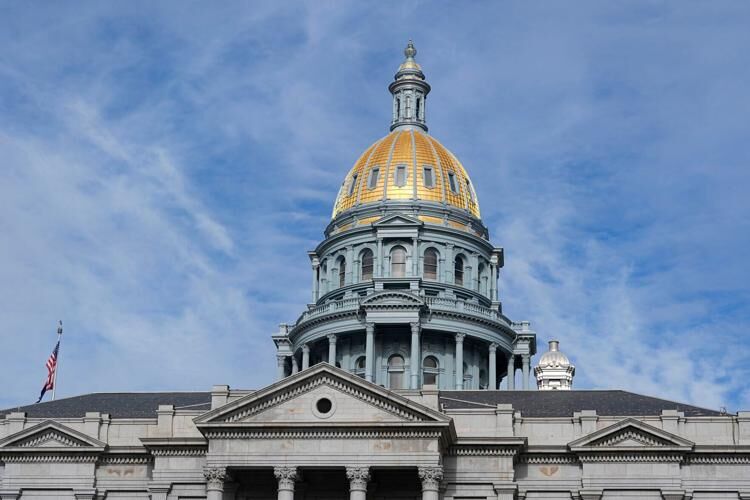
Forty-Five Years Ago This Week: A bill sponsored by Rep. Jeanne Faatz’, R-Denver, House Bill 81-1336, was the final compromise bill intended to counteract the rising tide of domestic violence in Colorado.
According to FBI figures, 40,000 women in 1980 were the victims of domestic violence. Every 18 seconds, a domestic violence incident was reported, the FBI indicated. Shockingly, over 90% of violence went unreported.
Faatz’s bill sought to provide state matching funds to existing local domestic abuse programs. Rep. Jeanne Marks, D-Northglenn, a co-sponsor of the bill, said that the number of victims of domestic violence was expected to rise as energy development in rural communities brought the social pressures common to booming communities. In the small town of Craig, domestic violence complaints had increased 350% between 1973 to 1976.
“Domestic violence crosses … all lines,” Marks wrote in an opinion editorial published in The Colorado Statesman. “The stereotype of the unemployed, often drunk, unshaved batterer … just doesn’t hold. The domestic abuse shelter in Adams County has a counseling program for men who want to change their behavior … participants have included a minister with a master’s degree in theology, an FBI agent, a few police officers and an attorney.”
Marks argued that simply recognizing the problem of men’s violence toward women was not enough and that citizens across Colorado were entitled to protection and support in order to leave dangerous situations.
Most of 20 or so existing programs, Marks wrote, saw their operating budgets slashed because of budget constraints. Safe House, one of three shelters in Denver, had shuttered in January 1981, and the Adams County shelter had cut the number of clients it could serve by half. On the entire Western Slope there was not a single residential shelter for battered women and children.
“The state has not, to this point, provided financial support for domestic violence programs,” wrote Marks. “This is a very difficult time to ask for ‘new money’ in the statehouse. But there are hidden cost factors … which may make prevention or containing domestic violence cheaper than merely responding to it.”
Marks referenced figures from the Jefferson County Sheriff’s Department, which found that it cost $100 each time a police officer responded to a domestic dispute call, and in Denver, over 40% of all police department calls were domestic disputes.
This is in conjunction with FBI statistics that showed that 25% of police officers killed were responding to domestic disturbances.
“Ignoring the problem won’t make it disappear,” Marks wrote. “Domestic violence is not only on the rise, but it tends to be a recurring problem, both within the same family and between generations. Without appropriate services, we’re bound to see the same family over and over again at a cost to the taxpayer.”
Twenty Years Ago: State Reps. Michael Merrifield, D-Manitou Springs, and Liane McFayden, D-Pueblo West, introduced HB06-1382 the “Right to Rest in Peace Act,” which protected families at funeral services by allowing them to mourn peacefully and privately.
Twenty-six other states had proposed similar legislation in response to protests by groups like the Westboro Baptist Church and its pastor, Fred Phelps, who argued that the deaths were God’s vengeance against the United States.
“It is simply unspeakable for anyone to try to disrupt grieving families during funerals,” said Merrifield. “This bill will help shield families from such disrespectful and despicable acts and assure Colorado families that they can mourn the loss of their loved ones without offensive and disrespectful interruptions.”
McFadyen said, “Our goal is to protect the privacy of families in mourning and the constitutional right to free speech. “Grieving families have a fundamental right to mourn peacefully at the most difficult moment of their lives.”
Rachael Wright is the author of several novels including The Twins of Strathnaver, with degrees in Political Science and History from Colorado Mesa University, and is a contributing columnist to Colorado Politics, the Colorado Springs Gazette and the Denver Gazette.

Divided Colorado Supreme Court finds parental anonymity in ‘safe haven’ law
Michael Karlik
michael.karlik@coloradopolitics.com
Updated 5 hours ago
Parents who surrender their newborns under Colorado’s “safe haven” law are entitled to anonymity and confidentiality in any subsequent adoptive proceedings involving the child, the state Supreme Court ruled on Monday. Colorado’s law, like its counterparts across the country, is...
Unaffiliated voters have a growing influence on Colorado elections, research shows
Marissa Ventrelli
marissa.ventrelli@coloradopolitics.com
Updated 9 hours ago
Unaffiliated voters now make up more than half of Colorado’s registered electorate, and for the first time, more primary ballots are going to voters without a party affiliation than to registered Democrats or Republicans. Colorado began allowing unaffiliated voters to...
Safe2Tell tip, corroborated details provided grounds to search backpack, Colorado justices rule
Michael Karlik
michael.karlik@coloradopolitics.com
Updated 5 hours ago
The Colorado Supreme Court decided last week that a tip submitted through the state’s confidential school safety system, plus a Douglas County administrator’s corroboration of some details, provided reasonable suspicion to search a student’s backpack for drugs. Someone submitted a...

Bennet campaign finance case delayed again as Colorado Elections Division amends complaint
Marianne Goodland
marianne.goodland@coloradopolitics.com
Updated 8 hours ago
A campaign‑finance complaint alleging that U.S. Sen. Michael Bennet’s Senate committee improperly paid for travel tied to his gubernatorial bid won’t get a public hearing until after the June 30 primary. The latest development followed months of delays and a...
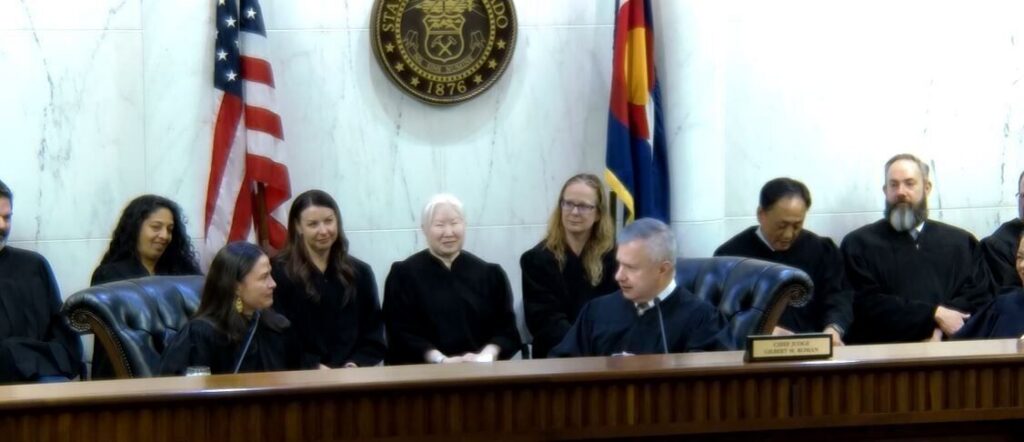
Appeals court finds opening in Colorado Supreme Court’s framework for child neglect cases
Michael Karlik
michael.karlik@coloradopolitics.com
Updated 8 hours ago
Colorado’s second-highest court squeezed through an opening last week in a controversial state Supreme Court decision from 2025, concluding that the justices had not prohibited a child’s legal representative from being the one to request termination of parental rights in...
DOJ targets disparate impact hiring practices at odds with ‘color-blind Constitution’
Jack Birle and Kaelan Deese, Washington Examiner
jack.birle.and.kaelan.deese.washington.examiner@gazetteedit.wpenginepowered.com
Updated 12 hours ago
The Department of Justice declared this week that the Equal Employment Opportunity Commission’s “disparate impact” policies are unconstitutional, tossing aside a rule, long criticized by conservatives, that saw racial discrimination whenever a policy resulted in outcomes that differed among people...
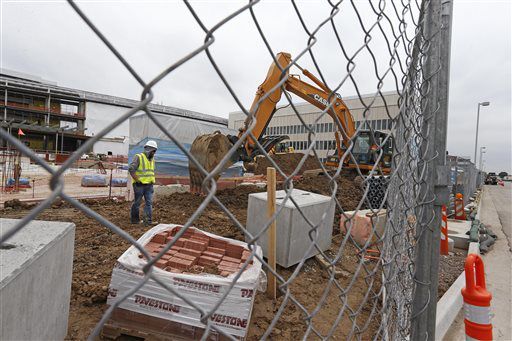
Aurora voters to decide on sales tax hike to fund projects
Kyla Pearce
kyla.pearce@gazette.com
Updated 13 hours ago
Aurora voters will decide in November whether to raise sales taxes for the first time since 1993 to help pay for infrastructure, transportation and public safety improvements. If voters approved the tax increase, the money will go toward “Build Up...
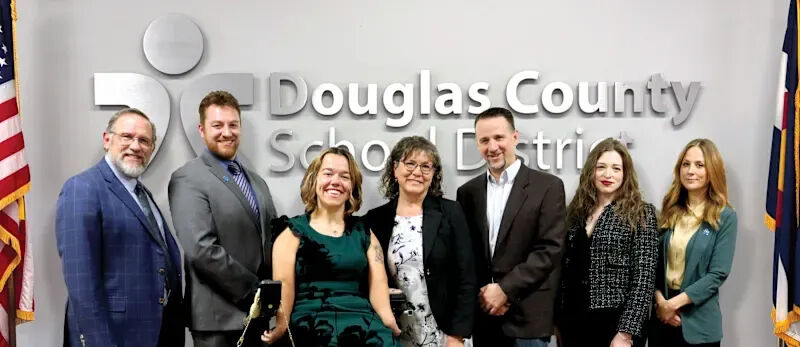
Douglas County School District board weighs return to collective bargaining
Nicholas Fogleman
nicholas.fogleman@denvergazette.com
Updated 13 hours ago
The Douglas County School District board plans to consult a labor attorney and survey staff as it considers whether to resume negotiations with the Douglas County Federation, a local teacher’s union. The federation first urged the board in April to...
Cherry Creek hires search firm for new superintendent
Nico Brambila
nico.brambila@denvergazette.com
Updated 13 hours ago
The Cherry Creek School District board earlier this week approved a nearly $30,000 contract with McPherson & Jacobson to conduct a national superintendent search. The measure was unanimously passed on Monday without discussion. Founded in 1991, McPherson & Jacobson is an...
Colorado Supreme Court upholds police search of car based on arm movements
Michael Karlik
michael.karlik@coloradopolitics.com
Updated 1 day ago
The Colorado Supreme Court decided last week that Denver officers’ search of a vehicle was constitutional, based on their perception of the occupants’ arm movements that a trial judge found to not be credible. Officers Keegan Grubb and Richard Eberharter...
PREV
PREVIOUS

Passenger train service from Denver to Fort Collins? | Cronin and Loevy
A “Joint Service” plan is being developed that would bring passenger rail service from Denver north to Fort Collins by 2029. The passenger trains would be paid for with existing funds from the Denver Regional Transportation District (RTD) and other Colorado agencies that are working to institute passenger train service in Colorado. No voter-approved tax […]

Mountain Lion/Pheasant Green Chile a hit! | Capitol M | Week of April 25, 2026
The lighter side of the state Capitol, although if you were eating at the barbecue Thursday, you are probably not any “lighter.” With the arrival of spring comes outdoor barbecues at the state Capitol, and the most unusual is the annual chowdown hosted by the Sportsmen’s Caucus and about a dozen groups in support of […]