

Colorado’s role in Spirit Airlines’ demise should not be ignored | GUEST COLUMN
By Robin Rossenfeld
At a time when Colorado families are already struggling with rising transportation costs, the collapse of Spirit Airlines could not come at a worse moment.
According to the U.S. Bureau of Labor Statistics, prices in the Denver-Aurora-Lakewood area rose 4.2% over the past year, with public transportation specifically identified as a major contributor to the increase. Energy prices rose 13.2% year-over-year, while gasoline prices surged nearly 20%. National airfare prices have also continued climbing in recent months, with one recent analysis finding ticket prices in some markets rising between 15% and 124%.
One Colorado travel agent recently told CBS news that, due to the ongoing war in Iran, airfare prices are taking off because of rising jet fuel costs, and that prices are only poised to get higher. AAA Colorado provided similar warnings about expected climbs in airfares.
And those warnings were made before May 2, 2026, when Spirit — long one of America’s most aggressive low-cost carriers — cancelled all its flights and permanently ceased its operations with less than 24-hour notice.
One recent analysis found airfare rose an average of 14% in markets where Spirit exited service, so for millions of travelers, especially budget-conscious families, Spirit’s shutdown marks the loss of one of the few airlines willing to consistently compete on price.
These events should prompt a serious reassessment of the modern antitrust philosophy championed by many regulators, including Colorado Attorney General Phil Weiser, and the resultant unintended consequences based on faulty assumptions about the effects of those actions on the market at large, not just on the targeted corporation.
During the past several years, antitrust enforcement has increasingly shifted away from a consumer-focused standard centered on prices, output and market realities, and toward a broader skepticism of corporate consolidation itself. The battle over Spirit Airlines became one of the clearest examples of that approach in action.
To save itself, Spirit planned to merge with fellow low-cost airline JetBlue in 2022. But a challenge from the federal government and a handful of states prohibited the merger from moving forward, which ultimately pushed the company into bankruptcy and led to the company closing its doors.
Though Attorney General Weiser didn’t co-sign the federal lawsuit to block the merger, he positioned himself as a vocal advocate for aggressive scrutiny of mergers in the airline industry. During the earlier proposed merger between Frontier and Spirit, he urged federal regulators to closely examine the deal, warning it could reduce competition and harm low-budget travelers who rely on affordable airfare options. More recently, Weiser endorsed the challenge to Spirit-JetBue, calling it a “guidepost” for future actions involving consolidation across major industries. Weiser proved to be a very poor prognosticator of the actual effects of the refusal to permit the merger. The irony is the citizens of Colorado are the worse off for it.
The legal rationale behind blocking JetBlue’s acquisition of Spirit was straightforward. Regulators argued Spirit, as a stand-alone ultra-low-cost airline, exerted downward pressure on fares throughout the market. Eliminating Spirit through acquisition, they argued, would reduce competition and ultimately increase prices.
Yet that theory depended entirely on Spirit remaining viable as an independent business.
It did not.
Spirit had already been under severe financial pressure from inflation, rising fuel costs and operational challenges. Its business model operated on notoriously thin margins. Spirit shut down its Colorado routes shortly before the merger was formally blocked, an early warning sign the airline’s financial condition was deteriorating faster than many regulators appeared willing to acknowledge.
The proposed JetBlue acquisition may not have solved every challenge facing the airline industry. But it would have provided Spirit with capital, scale and a potential path forward in an increasingly difficult marketplace.
Instead, regulators blocked the merger in the name of protecting competition. Today, consumers have fewer choices than they did before the government intervened.
That outcome deserves reflection.
Antitrust law exists to protect consumers, not to preserve abstract market structures disconnected from economic realities. A competitor that cannot survive is not meaningful competition. And consumers do not benefit from maintaining a company on paper if the company itself disappears shortly thereafter.
None of this means every merger should automatically receive government approval. Some consolidations genuinely do threaten competition and harm consumers. Regulators play an important role in ensuring markets remain competitive.
But the collapse of Spirit Airlines illustrates the risks of an antitrust philosophy that treats consolidation as inherently suspect without adequately considering whether the companies involved can realistically survive on their own. Reflective responses are good. Reflexive responses are not.
When the merger was blocked, supporters celebrated it as a victory for consumers. With Spirit now gone entirely, regulators should ask whether preserving a legal theory came at the expense of the very competition they claimed to protect.
Robin Rossenfeld is an attorney, a former Deputy Attorney General and served on the State Bar Board of Governors.

The outrages mount | Hal Bidlack
Hal Bidlack
hal-bidlack@coloradopolitics.com
Updated 9 hours ago
My kindly and forgiving editors understand that, from time to time, I can’t help myself from leaping atop my rickety soapbox to vent. And, like many other political commentators have already done, I could easily fill this entire missive with...

Rural Colorado deserves a tax holiday | GUEST COLUMN
Eric Mulder
jstooksberry@gmail.com
Updated 9 hours ago
Spend enough time in Colorado’s Eastern Plains, the San Luis Valley, or the Western Slope, and you’ll see boarded-up storefronts, schools consolidating classrooms, and small rural communities stretching every dollar to keep basic services afloat. Once the backbone of Colorado’s...
Colorado board permits state to appeal injunction against arthritis drug price cap
Marissa Ventrelli
marissa.ventrelli@coloradopolitics.com
Updated 13 hours ago
A Colorado board voted Friday to allow the Attorney General’s Office to fight an injunction against a price cap on a drug that treats arthritis. A U.S. district court judge had granted the company Amgen a preliminary injunction, temporarily blocking...

Colorado schools receive $24 million for free meals program
Marissa Ventrelli
marissa.ventrelli@coloradopolitics.com
Updated 13 hours ago
The Colorado Department of Education is providing Colorado schools with nearly $24 million in grant funding to implement a free lunch program. Approved by voters in 2022, the Healthy School Meals for All provides free breakfast and lunch to all...
‘Be prepared to march in the streets’ | Miller Hudson
Miller Hudson
miller-hudson@coloradopolitics.com
Updated 3 days ago
It was early in 1974 when I first met Tim Wirth as he announced his candidacy for Congress, challenging Republican incumbent Don Brotzman. Although I had only resided in Colorado two years, I was drafted to serve as a Democratic...

Colorado districts prepare for school year amid mental health cuts. But will less cellphone distractions help?
Marissa Ventrelli
marissa.ventrelli@coloradopolitics.com
Updated 4 days ago
The signs of a new school year are everywhere — buses in the shop, teachers unpacking boxes, families ticking through supply lists — but behind the familiar rituals, Colorado districts are preparing for a year defined less by routine than...
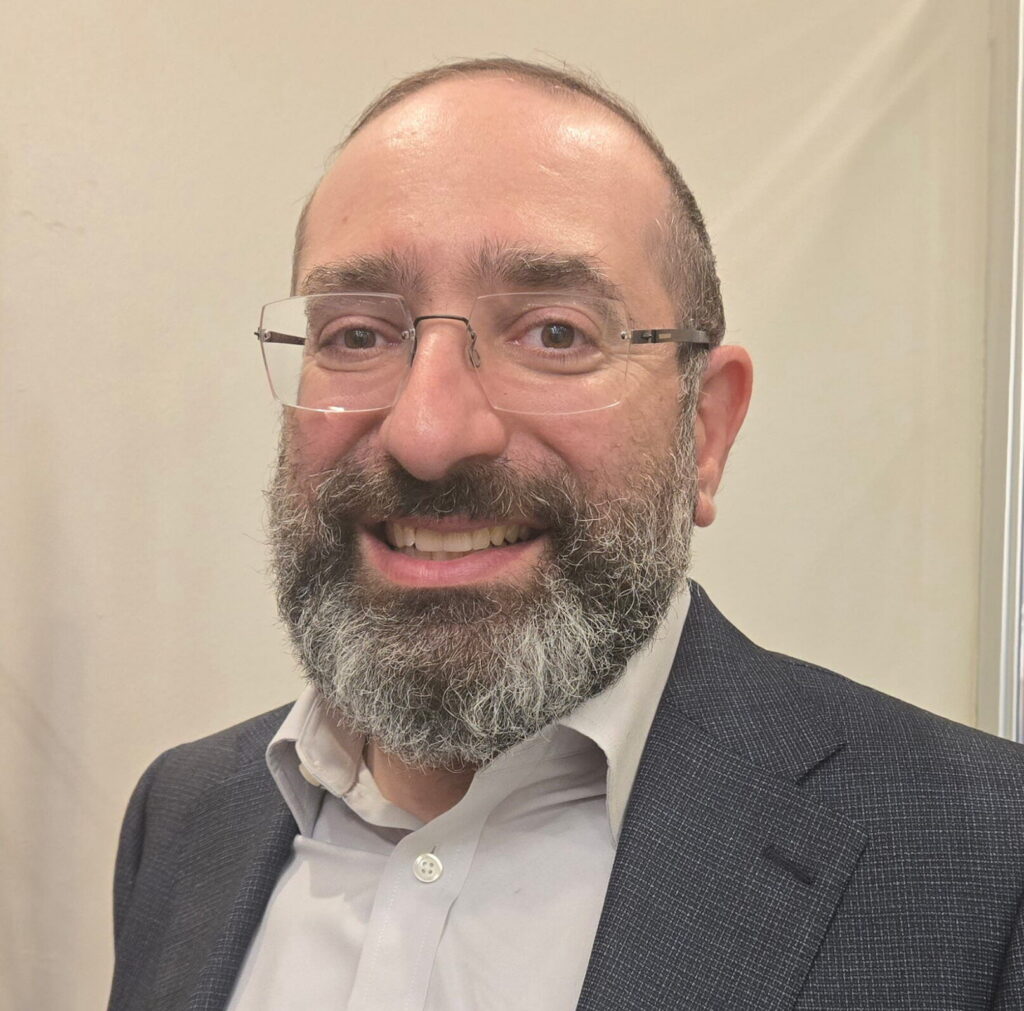
Surprise candidate Shimon Blau cleared to face off against Melat Kiros in November
Ernest Luning
ernest.luning@coloradopolitics.com
Updated 4 days ago
Unaffiliated congressional candidate Shimon Blau, a Denver doctor, has qualified by petition for the general election in Colorado’s 1st District, where Democrat Melat Kiros defeated 15-term U.S. Rep. Diana DeGette in last month’s primary, the Colorado Secretary of State’s Office...

UNC opens College of Osteopathic Medicine
Marissa Ventrelli
marissa.ventrelli@coloradopolitics.com
Updated 4 days ago
The University of Northern Colorado held a grand opening for its new College of Osteopathic Medicine on Friday, with Gov. Jared Polis in attendance to celebrate the culmination of a two-year, $127.5 million project. The project was funded through legislation...
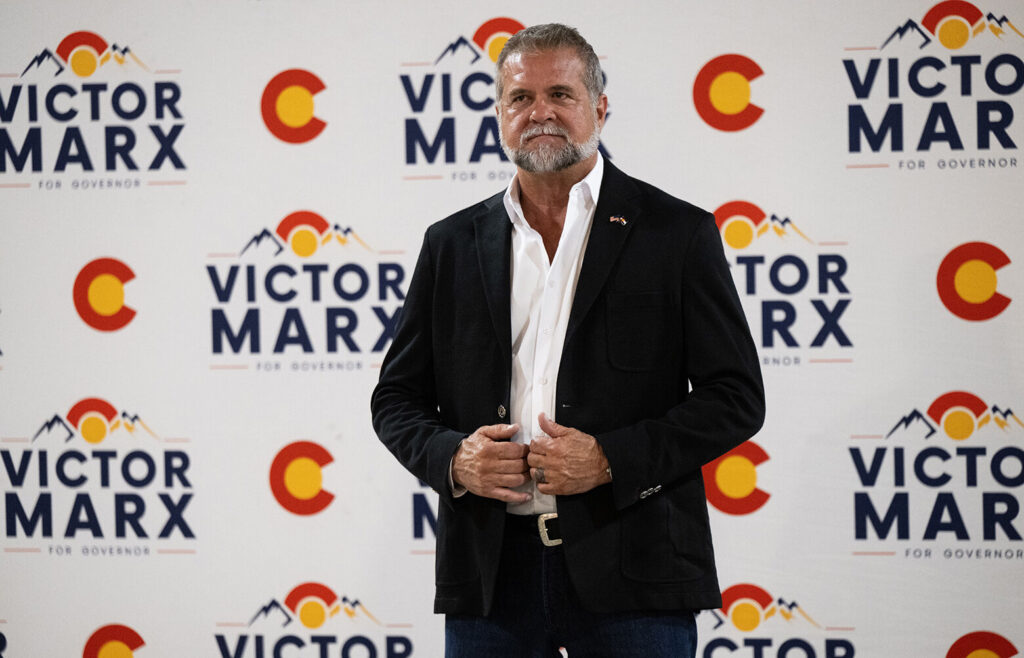
Victor Marx, GOP candidate for governor, faces 100-plus campaign finance complaints
Marianne Goodland
marianne.goodland@coloradopolitics.com
Updated 12 hours ago
Victor Marx’s gubernatorial campaign has been hit with more than 140 campaign finance complaints, although most have been consolidated by the state’s election office because they follow similar alleged violations. Marx faces Attorney General Phil Weiser, who won the Democratic...
Primary voters rejected big money in politics | Paula Noonan
Paula Noonan
paula-noonan@coloradopolitics.com
Updated 3 days ago
While we’re in an election campaign lull between now and Labor Day, we have time to consider the impact of $102 million in campaign contributions in the primary. In the general election, more money will fill candidate campaign coffers, and...
PREV
PREVIOUS
As number of unaffiliated voters grow in Colorado, experts note patterns, behavior
For the first time in Colorado’s history, more primary ballots are going to voters without a party affiliation than to registered Democrats or Republicans. As such, political experts said, candidates today need to appeal to a new block of people — unaffiliated voters are not monolithic in their political views — who have begun to […]

House District 14: Businesswoman, consultant square off in GOP primary
Firearms training company owner Ava Flanell will face Troy Vanderhule, the chief fundraising officer for Dobson Philanthropic, in the June 30 Republican primary for state House District 14, an area in northern Colorado Springs. Flanell was appointed to the seat in the fall after Minority Leader Rose Pugliese stepped down from her position representing the […]