

Susan Blanco signals views on role of appellate courts in first opinion as Colorado justice
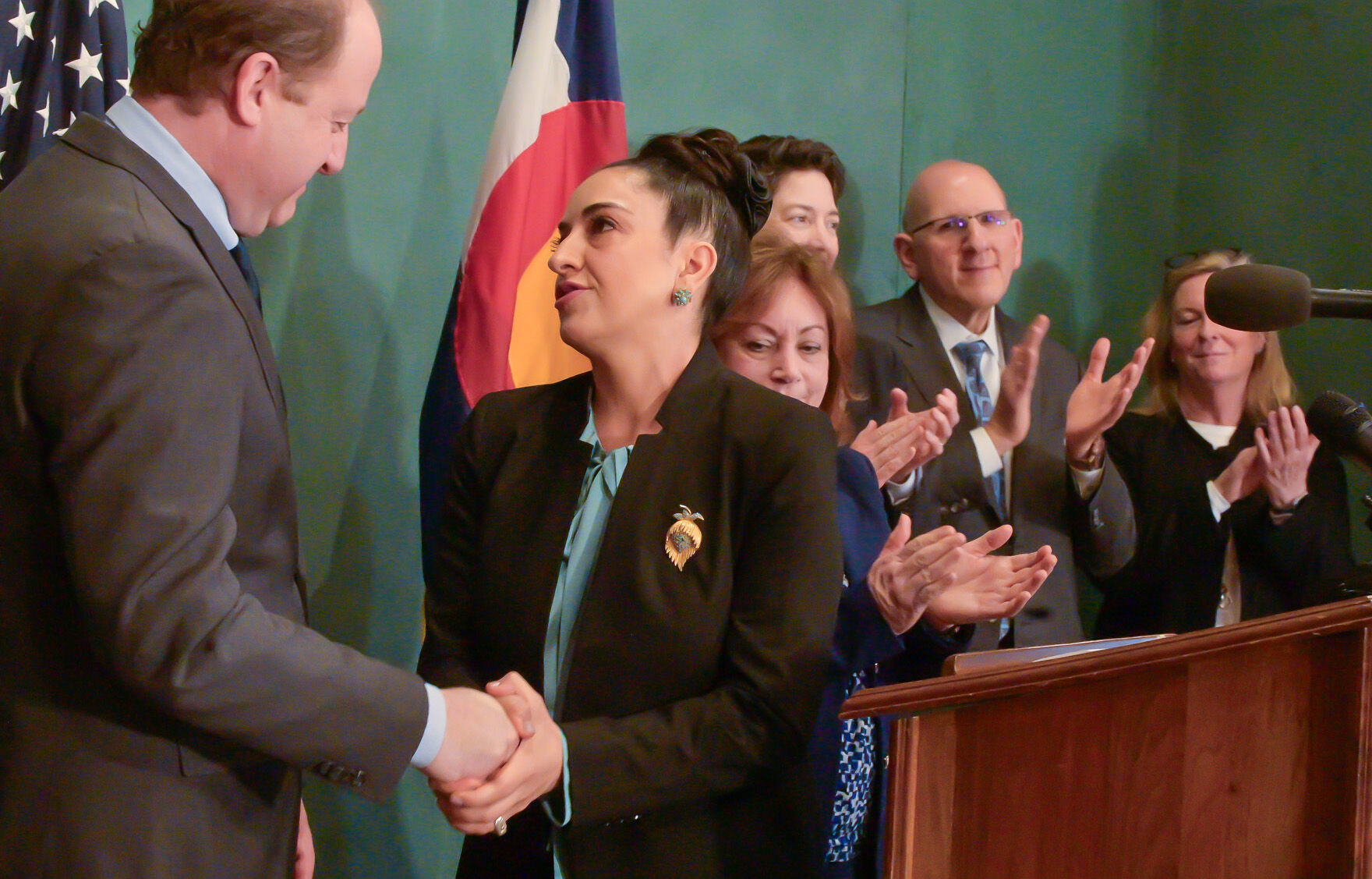
Justice Susan Blanco’s first solo opinion as a new member of the Colorado Supreme Court made clear her view of the guardrails that keep the state’s highest court tethered to the issues it is asked to decide.
On Monday, the court issued a 4-3 decision in a criminal appeal. Blanco, while part of the majority, authored her own opinion, describing where she stands on a key principle guiding appellate courts. The “party presentation principle,” as it is known, establishes that the parties to a case are the ones who frame the issues for the courts to adjudicate.
Blanco offered an enthusiastic defense of the principle, prioritizing it over other obligations an appellate judge may have.
“We rely on these procedures to provide a fair opportunity for preparation and to keep the judiciary in its adjudicatory lane,” she wrote. “There is a dire cost to everyone when courts deviate from these principles, which are only worthwhile if they are actively maintained.”
The underlying case, People v. Lulei, questioned whether a detective improperly re-initiated an interrogation of a suspect who previously invoked his constitutional right to counsel. Although the Denver District Attorney’s Office did not initially argue that the suspect had not validly invoked his rights because he was not in custody, the Supreme Court’s majority ultimately concluded that the lack of custody was the deciding factor.
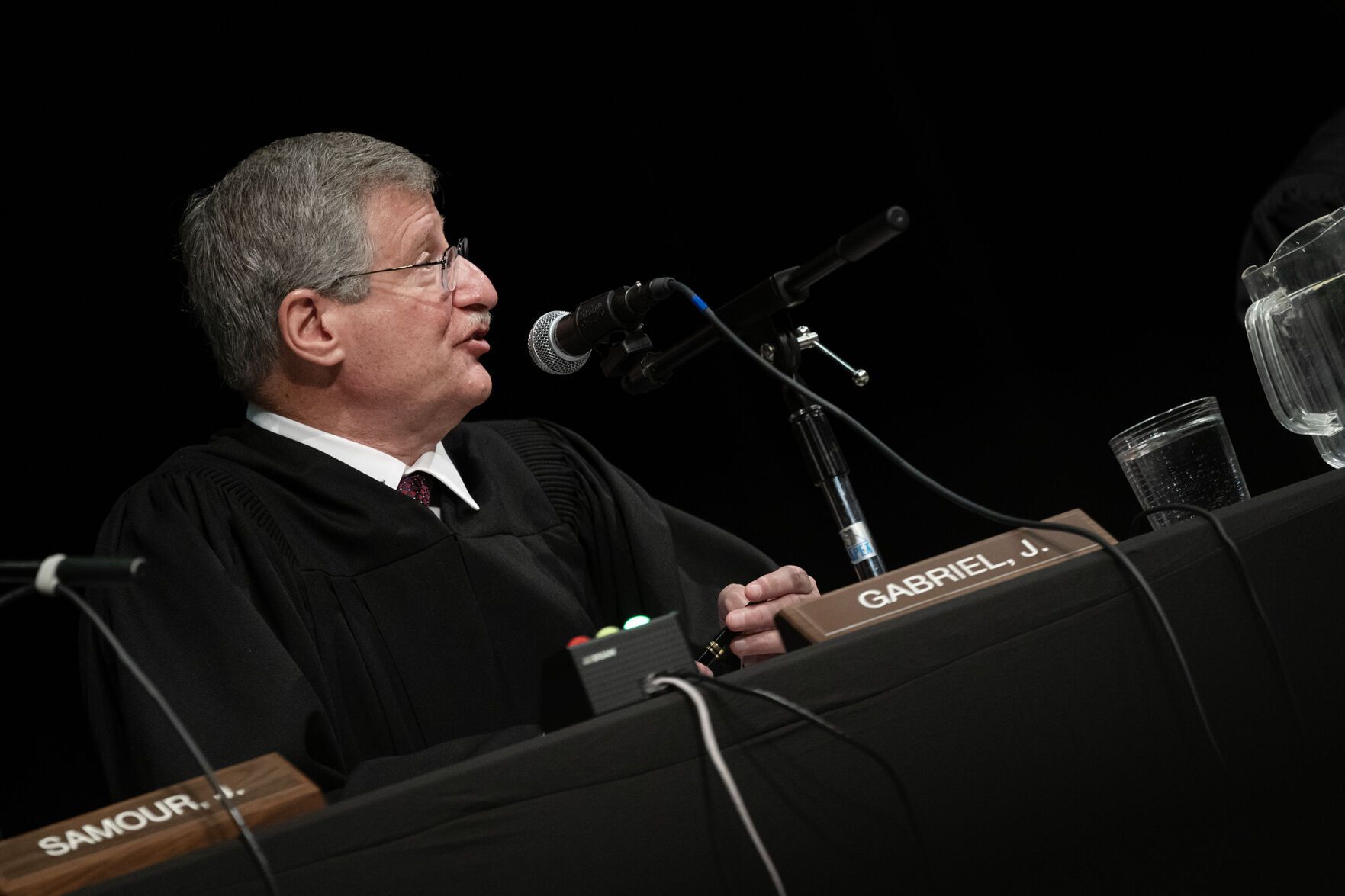
The three dissenting justices would have refused to address the issue because the prosecution neglected to raise it. The lineup — consisting of Justices Richard L. Gabriel, William W. Hood III, and Maria E. Berkenkotter — was the same as a 2024 decision in which the three similarly accused the majority of violating the party presentation principle to resolve an appeal.
“If the parties raise these issues and the court goes off on its own and addresses something, there’s a question of whether the parties got a full and fair opportunity to address the issue,” said Gabriel, the most vocal proponent of the principle, at a legal event last year. “I tend to think it reflects judicial restraint, judicial humility, and the proper role of the court.”
Blanco, in her concurrence in the Lulei case, described the unique circumstances that, in her view, resulted in the custody issue being placed “barely” in front of the court for review. Those included the defense’s request to address the topic in writing after oral arguments.
However, she declined to endorse the majority’s view that courts can deviate from the issues presented by the parties whenever they have a “fundamental obligation to ascertain controlling law.” In doing so, she appeared to cast doubt on that assumption.
“I cannot square this proposed obligation with parties’ responsibility to advance ‘the facts and argument entitling them to relief,'” wrote Blanco. Courts “should not place the cart (deciding legal questions) before the horse (confining decisions to contested issues).”
She added that a court’s desire to ascertain the correct law “runs the risk” of deciding the merits of an issue not before it.
Attorney Geoffrey Klingsporn said it is uncommon for the two principles to conflict, but that there must be flexibility when they do.
“Let’s take an extreme case — if both sides are arguing based on the wrong legal standard because they both missed the implications of an intervening Supreme Court case that changed the standard,” he said. “So, all the way through the district court and the appellate briefing, they were arguing facts under the wrong legal standard. And then it got up to the Supreme Court, and one of the justices and their clerks noticed, ‘Hey, they’re applying the wrong three-factor test. It’s actually a five-factor test now.’ I think it would not be the correct way for the Supreme Court to just say, ‘Well, we know the real test is a five-factor test, so we’re going to use the three-factor test even though we know that it’s wrong.'”
On the other hand, he continued, “there’s also the longstanding principle that the court’s not going to tell the lawyers how to try their case or argue their case.”
Klingsporn, who has also compiled statistics about the Colorado Supreme Court since 2013, said Blanco’s authorship of a concurring opinion less than a month after joining the court was the earliest a new member had published a solo opinion since Hood joined in 2014.
Blanco spoke to Colorado Politics before the governor selected her in February, and she said the citizen-led nominating commission asked her how she felt about being the lone person to write separately.
“I anticipate there are gonna be times I may see things differently, and I think it’s just part of the responsibility to speak up and write, even if you’re the dissenting, lone person who has to do that,” said Blanco. “I don’t know how it will be when I am there. But I imagine there are circumstances where I might be the only person who sees things a certain way. And I’d really want to be thoughtful about listening to the others, but I am prepared to be the only one in those circumstances if need be.”


Federal judge warns of increasingly inadequate immigration bond hearings
Michael Karlik
michael.karlik@coloradopolitics.com
Updated 12 hours ago
A federal judge ordered the immediate release of a man in immigration custody last week and, seemingly for the first time in Colorado, warned that the government is increasingly conducting inadequate bond hearings for detainees. Colorado’s federal trial court is facing...

10th Circuit upholds dismissal of Barry Morphew’s civil lawsuit against prosecutors, investigators
Michael Karlik
michael.karlik@coloradopolitics.com
Updated 12 hours ago
The Denver-based federal appeals court agreed on Monday that Barry Morphew, who now stands accused for a second time of murdering his wife, failed to state viable claims against the government officials involved in his first, unsuccessful prosecution. Morphew was...
Federal judge blocks evidence from Aurora police’s unconstitutional search
Michael Karlik
michael.karlik@coloradopolitics.com
Updated 12 hours ago
A federal judge ruled last month that prosecutors cannot use firearm evidence against a defendant because Aurora police searched him without having any reasonable basis to believe he was armed and dangerous. In evaluating the constitutionality of the search, U.S....

Colorado justices confirm lawyers may ‘borrow’ allegations from elsewhere
Michael Karlik
michael.karlik@coloradopolitics.com
Updated 1 day ago
The Colorado Supreme Court ruled on Monday that plaintiffs’ lawyers can use allegations made elsewhere to bolster their own clients’ claims, so long as the attorney first performs some degree of investigation into the “borrowed” assertions. Under Colorado’s rules for...
Appeals Court rules Douglas County violated open meeting laws
Nicholas Fogleman
nicholas.fogleman@denvergazette.com
Updated 21 hours ago
The Colorado Court of Appeals ruled that Douglas County Commissioners violated Colorado open meeting laws in a series of closed meetings leading up to the county’s failed home rule special election. The Thursday ruling reversed a trial court’s denial of...

Colorado justices restore RTD subcontractor’s award, reject ‘drastic’ view of public works law
Michael Karlik
michael.karlik@coloradopolitics.com
Updated 2 days ago
The Colorado Supreme Court on Monday restored a $5.7 million award to a company that helped build a commuter rail line and, in doing so, rejected a view of state law that would nullify a subcontractor’s entitlement to any compensation...
El Paso County defendant’s speedy trial rights violated, Colorado justices find in overturning convictions
Michael Karlik
michael.karlik@coloradopolitics.com
Updated 1 day ago
The Colorado Supreme Court concluded on Monday that an El Paso County prosecutor made an unjustified decision to file a mid-case appeal, pushing the trial beyond the legal deadline and requiring that the defendant’s convictions be overturned. In Colorado, the...

SCOTUS decides Colorado case, state’s newest justice authors first opinion | COURT CRAWL
Michael Karlik
michael.karlik@coloradopolitics.com
Updated 2 days ago
Welcome to Court Crawl, Colorado Politics’ roundup of news from the third branch of government. The nation’s highest court decided a First Amendment case out of Colorado, plus the state’s newest justice issued her first opinion since joining the Colorado...
Federal judge sides with Mesa County school district in ex-student’s First Amendment claims
Michael Karlik
michael.karlik@coloradopolitics.com
Updated 5 days ago
A federal judge concluded last week that Mesa County Valley School District 51 and three of its administrators did not violate the First Amendment rights of a former student when they imposed minor discipline in response to disruptive behavior. In...

Colorado Supreme Court intervenes in 4 ongoing cases
Michael Karlik
michael.karlik@coloradopolitics.com
Updated 5 days ago
The Colorado Supreme Court recently moved to intervene in four ongoing cases, including two criminal prosecutions, a civil lawsuit, and a child welfare proceeding. At least four of the court’s seven members must agree to hear a case outside of...
PREV
PREVIOUS

Hegseth features Fort Carson soldiers after returning from Middle East, gives warning on Iran war
Defense Secretary Pete Hegseth said on Tuesday the next few days in the war against Iran would be decisive and warned Tehran that the conflict would intensify if it did not make a deal. Hegseth also highlighted his trip to the Middle East on Saturday, noting he was heartened to meet with troops he called the “best […]

Colorado Springs, other front Range cities oppose proposal to permit lot‑splitting
Colorado lawmakers are pressing ahead with a plan to let homeowners split their lots to make room for smaller, less expensive houses — a proposal that has drawn sharp opposition from Colorado Springs, Aurora, Denver and other Front Range cities that argue it undermines local control over land use. The legislation would change local land‑use […]