

Colorado justices’ latest decision prompts questions about rules of the road for appellate judges
Some appellate lawyers in Colorado are scratching their heads after a state Supreme Court ruling this week that avoided wading into the debate between LGBTQ protections and free speech rights, but nevertheless produced an equally heated dispute over process, fairness and the court’s adherence to its rules.
On Tuesday, in a 4-3 opinion, the Supreme Court declined to say whether a Christian baker’s refusal to make a gender transition cake for a trans customer was protected by the First Amendment. Instead, the majority in Masterpiece Cakeshop v. Scardina concluded the lawsuit — which made its way through the trial court and Court of Appeals — was filed incorrectly to begin with.
Writing in dissent, Justice Richard L. Gabriel complained the precise justification the majority employed was never raised by either side. He warned the decision violated the “party presentation principle” — the notion that litigants frame the issues and courts resolve the competing interpretations.
“I believe that it is particularly important for a court not to raise and rely on arguments of its own derivation, so as not to open itself to questions about its proper role or neutrality,” Gabriel wrote.
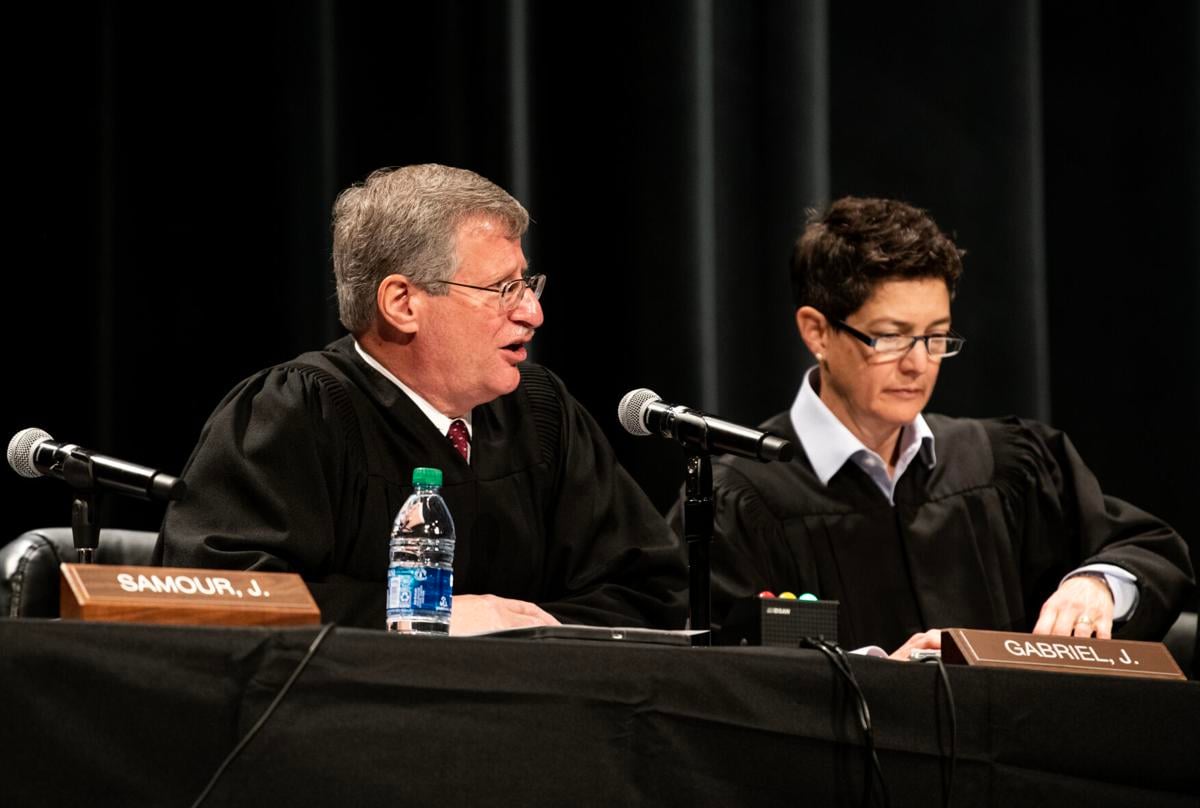
Colorado Supreme Court Justice Richard L. Gabriel, left, asks a question during a court session held at Pine Creek High School in Colorado Springs on Thursday, Nov. 17, 2022.
Parker Seibold, The Gazette

Colorado Supreme Court Justice Richard L. Gabriel, left, asks a question during a court session held at Pine Creek High School in Colorado Springs on Thursday, Nov. 17, 2022.
The dissent’s invocation of the party presentation principle was particularly curious in light of who authored the Masterpiece Cakeshop majority opinion, Justice Melissa Hart. Nine months earlier, Hart, writing for a unanimous court, fired a warning shot to the Court of Appeals to not address issues the litigants do not raise.
In the absence of a “clear justification,” she wrote in Johnson Family Law v. Bursek, “the court may not consider the issue.”
“I’m not sure that the Supreme Court’s opinion meets the Bursek standard,” said attorney Damon Davis, referring to the Masterpiece Cakeshop opinion. Because Hart did not address Gabriel’s accusation or the rule she previously laid down, “we are left with the dissent’s explanation which makes it look like the majority misapplied the party presentation rule, and perhaps it did.”
Colorado’s appellate courts are not the only ones wrestling with the principle of party presentation. This January, the U.S. Court of Appeals for the 10th Circuit, based in Denver, opted to hold a rare all-judges hearing of a criminal case despite no request by either party. Two judges criticized the move for violating the party presentation principle and skirting the “norms of our appellate process.”
Gabriel has repeatedly raised the party presentation principle in his past dissents, calling out perceived violations and reiterating that courts should not address issues the parties choose not to raise.
Still, the precise contours of the rule have been fuzzy.
“If they don’t make the arguments, what are we supposed to do when we see it’s an error of law but the defendant didn’t argue it or the (prosecution) didn’t argue it?” asked Court of Appeals Judge David J. Richman during a 2022 appellate conference.
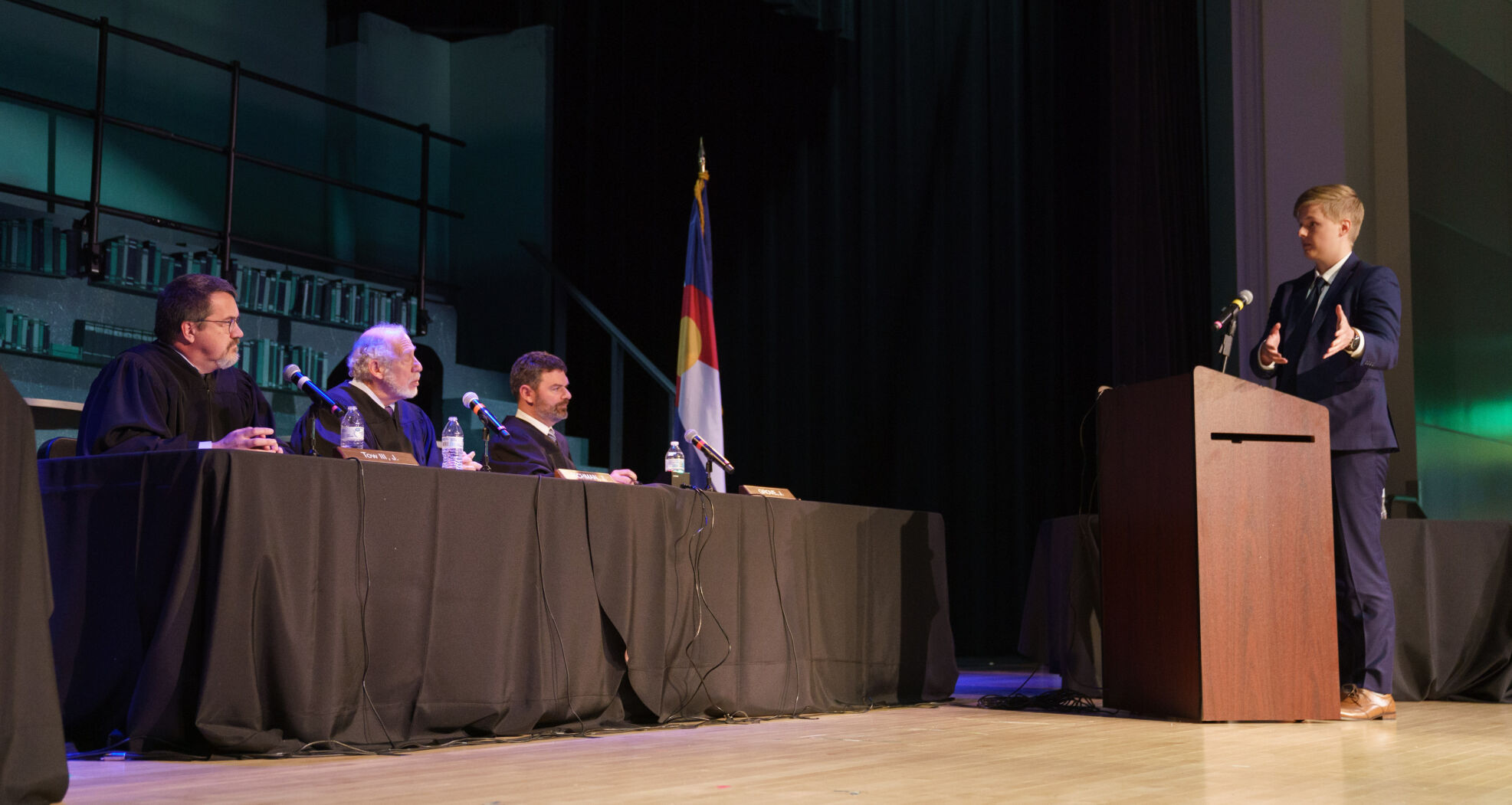
Judges Ted Tow III, David Richman, and Matthew Grove hear oral arguments by Assistant Attorney General Carson Schneider, right. STRIVE Prep-RISE high school hosts a Courts in the Community event, featuring oral arguments before a three-judge panel with the Colorado Court of Appeals, at STRIVE Prep – Green Valley Ranch in Denver, Colorado, on Tuesday, April 19, 2022. Photo Steve Peterson
Steve Peterson

Judges Ted Tow III, David Richman, and Matthew Grove hear oral arguments by Assistant Attorney General Carson Schneider, right. STRIVE Prep-RISE high school hosts a Courts in the Community event, featuring oral arguments before a three-judge panel with the Colorado Court of Appeals, at STRIVE Prep – Green Valley Ranch in Denver, Colorado, on Tuesday, April 19, 2022. Photo Steve Peterson
Gabriel responded that a court could ask the parties to submit additional briefs specifically addressing the relevant topic.
“But the issue is one of fairness. For the court to address it on its own without giving anyone a chance to respond — just speaking for myself — I’m concerned about the due process ramifications and the fairness ramifications,” Gabriel said at the time.
In the Masterpiece Cakeshop decision, the defendants broadly maintained the trial court did not have the ability to hear the case. However, the majority rejected their specific argument about why there was no jurisdiction, while endorsing a different interpretation of the law.
Explaining that the court has “an obligation to interpret and apply the law,” Hart wrote that the court’s majority, in relying on its own reading, was “steered in this direction by Masterpiece’s arguments.” Gabriel ridiculed that logic as creating “a substantial loophole in the party presentation principle.”
“This disagreement between the justices in the majority and those in the dissent is nothing new. Judges and justices have long disputed among themselves this and similar questions that come down to a matter of degree,” said appellate attorney Spencer Bailey.
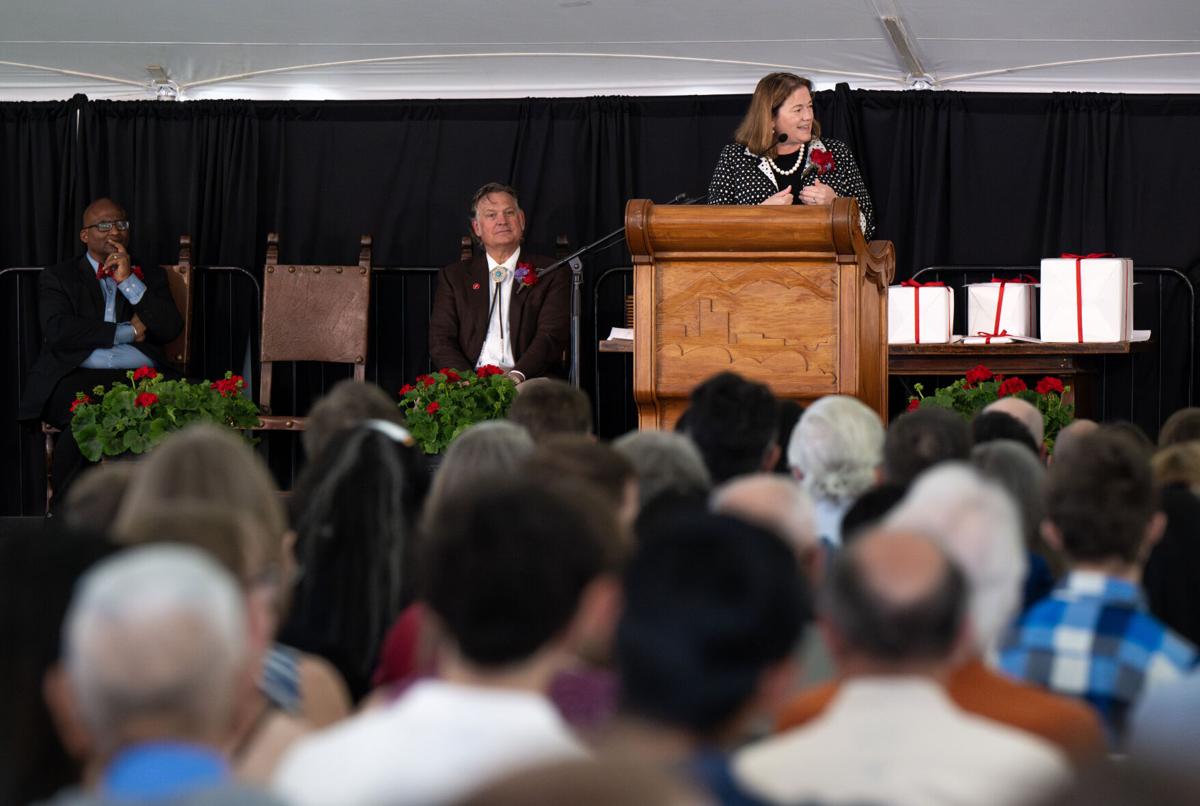
Justice Melissa Hart speaks at the Fountain Valley School graduation ceremony on Saturday, May 25, 2024, in Colorado Springs, Colo. (Parker Seibold, The Gazette)

Justice Melissa Hart speaks at the Fountain Valley School graduation ceremony on Saturday, May 25, 2024, in Colorado Springs, Colo. (Parker Seibold, The Gazette)
Some lawyers who read the Masterpiece and Bursek decisions suggested the Supreme Court’s majority likely did not see itself as raising a new issue without justification in violation of its own rule. Others suggested the majority acted reasonably by resting on its own reasoning.
“There’s some general force to the notion that courts must independently decide an issue of statutory interpretation, so if Party 1 says the statute means ‘A’ and Party 2 says it means ‘B’ — but both are wrong — the court can say it really means ‘C.’ And I suppose Justice Hart would offer that as her ‘justification’ under her January opinion,” said a Colorado appellate practitioner, speaking on background to avoid commenting on the justices publicly.
“All that said, the majority’s convoluted reasoning here seems a result-oriented effort to avoid getting cross-wise with SCOTUS,” they added, referring to the U.S. Supreme Court’s rejection of the Colorado justices’ decision in a high-profile elections case earlier this year.
Attorney Bradley A. Levin believed there was a plausible argument that the majority in Masterpiece Cakeshop strayed from its own rule, notwithstanding Hart’s insistance that the court had to correctly interpret the law even if the litigants never suggested the specific reading.
“That is always the case; that fact alone would not justify a court sua sponte (on its own) raising and deciding an issue in a manner that was not argued by any of the parties,” he said.
Davis said the Supreme Court’s position on the party presentation principle seems unclear, but broadly requires judges to justify why they are addressing an issue spontaneously or for the parties to be wrong about the “general issue” they bring before the court.
“I imagine the Supreme Court is going to give itself more room to deviate from the party presentation principle than it gives the Court of Appeals. The concern with strict application of the party presentation principle is when both parties are wrong, so the court’s interpretation of the law ends up wrong,” he explained.
On the other hand, Davis cautioned, there is a possibility the Supreme Court may make a mistake, too, if it opts to decide a case without getting the parties’ input on specific reasoning.
“If the Supreme Court gets it wrong, there’s no one to fix it,” he said.

Federal judge green-lights civil trial against ex-Fort Collins DUI officer
Michael Karlik
michael.karlik@coloradopolitics.com
Updated 2 days ago
A federal judge ruled on Thursday that Fort Collins’ former “DUI officer” will face a civil trial for allegedly investigating a motorist for impaired driving without any reasonable suspicion to do so. In recent years, several people arrested by Officer...

Colorado Supreme Court suspends Mesa County judge pending misconduct investigation
Michael Karlik
michael.karlik@coloradopolitics.com
Updated 1 day ago
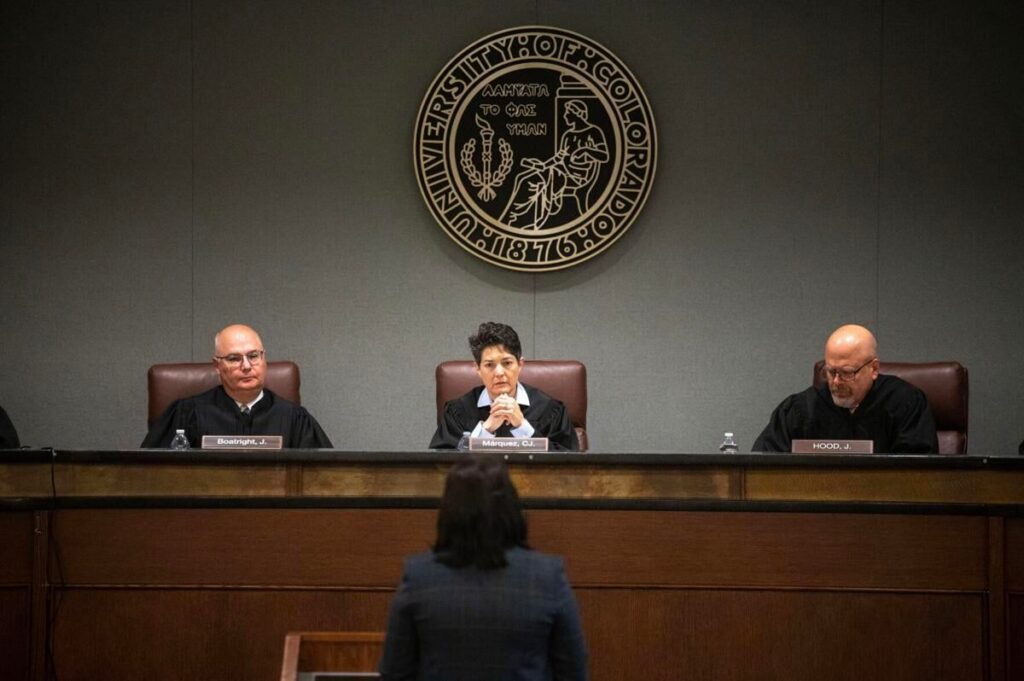
The Colorado Supreme Court suspended Mesa County Court Judge Michael J. Grattan on Thursday amid a misconduct investigation. The court’s Sept. 10 order gave Grattan 21 days to explain why his paid suspension should not continue through the end of...
Colorado Supreme Court changes course, dismisses case about special district bonds
Michael Karlik
michael.karlik@coloradopolitics.com
Updated 1 day ago
The Colorado Supreme Court declined on Friday to decide a dispute between a large-scale Commerce City development and the various districts financing it, after initially showing interest in the ongoing case. Colorado has roughly 2,800 special districts, which are local...

10th Circuit tosses GEO Group’s pretrial appeal in human trafficking lawsuit
Michael Karlik
michael.karlik@coloradopolitics.com
Updated 3 days ago
The Denver-based federal appeals court dismissed an attempt by The GEO Group on Wednesday to appeal a trial judge’s non-existent decision two months before the company is scheduled to face a civil trial over alleged trafficking violations at the Aurora...
Denver sues Trump to block armed ICE agents from polling sites
Deborah Grigsby
deborah.smith@denvergazette.com
Updated 3 days ago
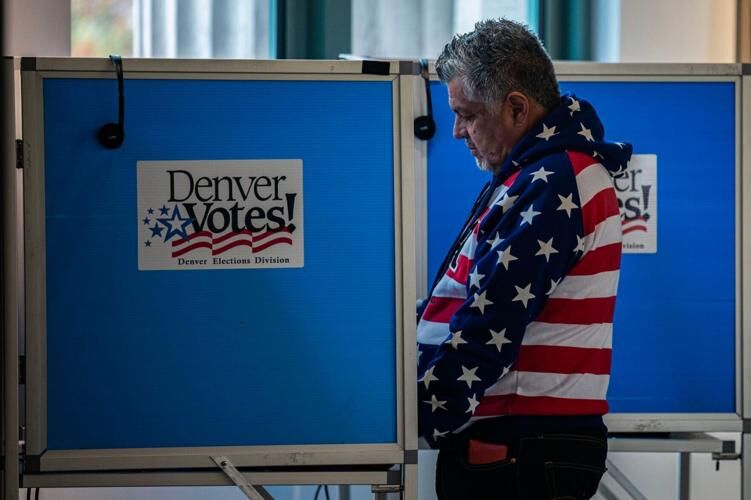
The city of Denver, along with several groups, sued the Trump administration Thursday, seeking to block U.S. Immigration and Customs Enforcement officers who are armed from polling sites during the upcoming midterm elections. In fact, there are no official orders...
Federal judge takes no action against ICE in Colorado after hearing about mistakes, not ‘blatant violations’
Michael Karlik
michael.karlik@coloradopolitics.com
Updated 24 hours ago
A federal judge declined to take action against U.S. Immigration and Customs Enforcement on Thursday after hearing that a pattern of alleged lawbreaking amounted to mistakes and a misunderstanding of the government’s position in court. For nearly a year, Colorado’s...
Colorado doctors, dentists challenge state law on gender‑transition services in new federal lawsuit
Marissa Ventrelli
marissa.ventrelli@coloradopolitics.com
Updated 21 hours ago
A group of Christian doctors and dentists has filed a federal lawsuit challenging a Colorado law they say requires them to provide gender‑transition services that conflict with their religious and ethical beliefs. The lawsuit, filed by the Christian Medical and...
Federal judge directs plaintiff to revise complaint alleging Denver officers’ constitutional violations
Michael Karlik
michael.karlik@coloradopolitics.com
Updated 23 hours ago
A federal judge directed a plaintiff to revise his allegations on Wednesday to more precisely state what two Denver officers and the city itself allegedly did to violate his constitutional rights by facilitating his prosecution for murder until prosecutors dropped...
Lawsuit challenges Douglas County commissioners’ ballot actions
Nicholas Fogleman
nicholas.fogleman@denvergazette.com
Updated 3 days ago
A new lawsuit against Douglas County commissioners seeks to invalidate the board’s intervention in efforts to expand the commission from three members to five and restore the original ballot language approved by more than 20,000 petition signers. The suit marks...
Federal judge explores new sanctions against ex-Colorado judicial discipline director
Michael Karlik
michael.karlik@coloradopolitics.com
Updated 1 day ago
A federal judge on Wednesday directed Colorado’s former judicial discipline director, for the third time this year, to explain why she should not sanction him for his latest conduct in his litigation against the state’s judiciary. Christopher S.P. Gregory, who served...