

Appeals court upholds 2 murder convictions, rejecting complaints about jurors’ use of devices
Colorado’s second-highest court recently upheld the murder convictions of two defendants who claimed it was inappropriate that jurors were allowed to simulate the pressure of a trigger-pull with a mechanical device and to use a calculator during deliberations.
In the first case out of Denver, a jury convicted Samuel J. Robinson of second-degree murder for fatally shooting Arthur Robinson. The two men had been arguing in a parking lot and Samuel Robinson shot Arthur Robinson in the back while he ran away. The defense argued Samuel Robinson accidentally shot the gun after he slipped on wet ground.
During trial, the prosecution announced its intent for jurors to handle a dynamometer — a device measuring pressure — to roughly mimic the pull of a trigger. The defense objected, but then-District Court Judge Edward D. Bronfin allowed the demonstration.
It was “fair to ask a jury when considering your — the defense — position, that this occurred accidentally with the slippage, to get a sense of what the X pounds per square inch feels like as evidence as to whether that is likely or unlikely,” he said.
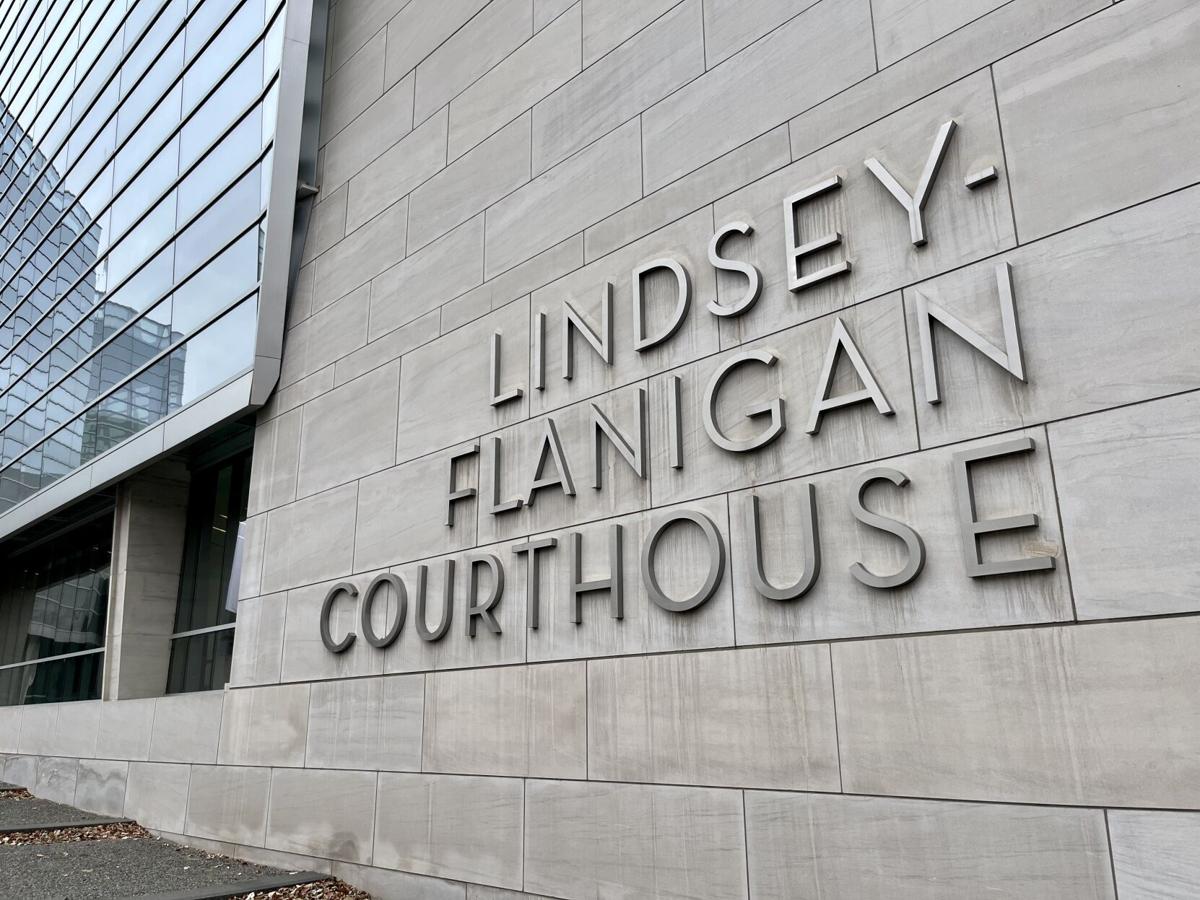
The Lindsey-Flanigan Courthouse in Denver.
Michael Karlik michael.karlik@coloradopolitics.com

The Lindsey-Flanigan Courthouse in Denver.
An expert witness testified about the amount of pressure required to pull a trigger, at which point the prosecution passed the dynamometer to the jury. The defense once again objected, but Bronfin maintained it was “simply illustrative and not intended to represent a firearm.”
Following Samuel Robinson’s conviction, he argued that jurors’ use of the device was irrelevant because it did not replicate the pulling of the actual weapon’s trigger.
Moreover, “jurors should simply not be conducting demonstrative experiments during trial and in conjunction with the prosecution’s case and its expert witnesses,” wrote public defender Joseph P. Hough.
A three-judge panel for the Court of Appeals could not find any identical cases in the country involving the type of demonstration at Robinson’s trial. In a Sept. 26 opinion, the panel echoed Robinson’s concerns about the jury’s handling of the device.
“We agree with Robinson that it is improper for the jury to create evidence, rather than hear, observe, and evaluate the evidence presented from the witness stand,” wrote Judge Michael H. Berger, adding that the demonstration “raises substantial questions.”
However, the panel declined to order a new trial because the defense had not specifically objected to the dynamometer as a means for the jury to “create evidence.” Therefore, Robinson needed to establish the error was so obvious that Bronfin should have stopped the demonstration even without an objection.
“With no Colorado case law or statute addressing the issue, any error was not obvious,” Berger concluded.
The panel added that the demonstration was relevant to the trial and that jurors heard Bronfin say the dynamometer was not intended to replicate the murder weapon.
The opinion was designated as “not published,” meaning the panel did not intend for it to bind trial judges going forward. On Oct. 9, Hough asked the panel to reconsider its ruling or, alternatively, reissue the decision as precedent-setting, given that no prior Colorado cases addressed the subject.
The case is People v. Robinson.
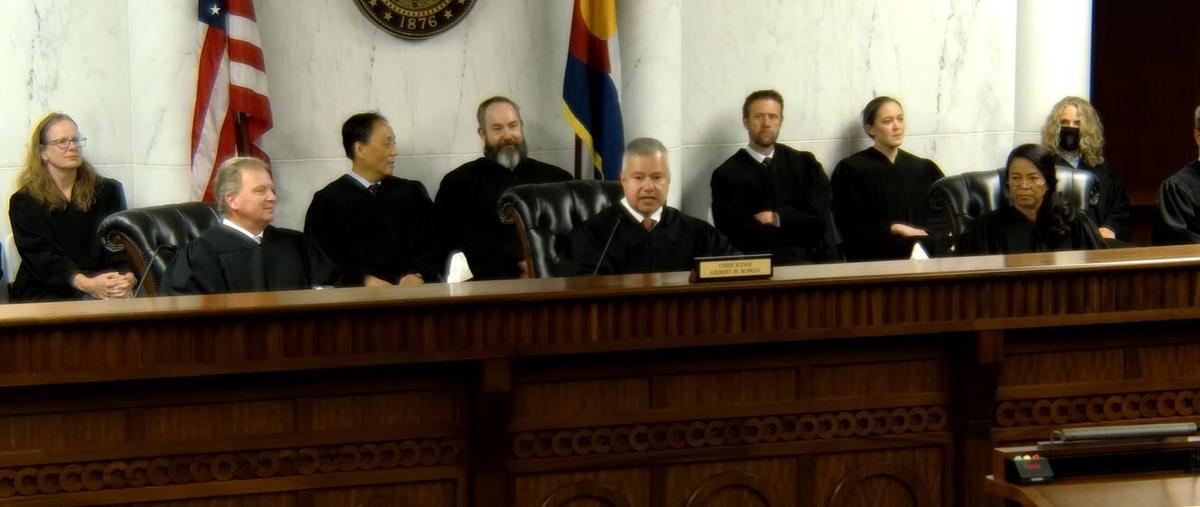
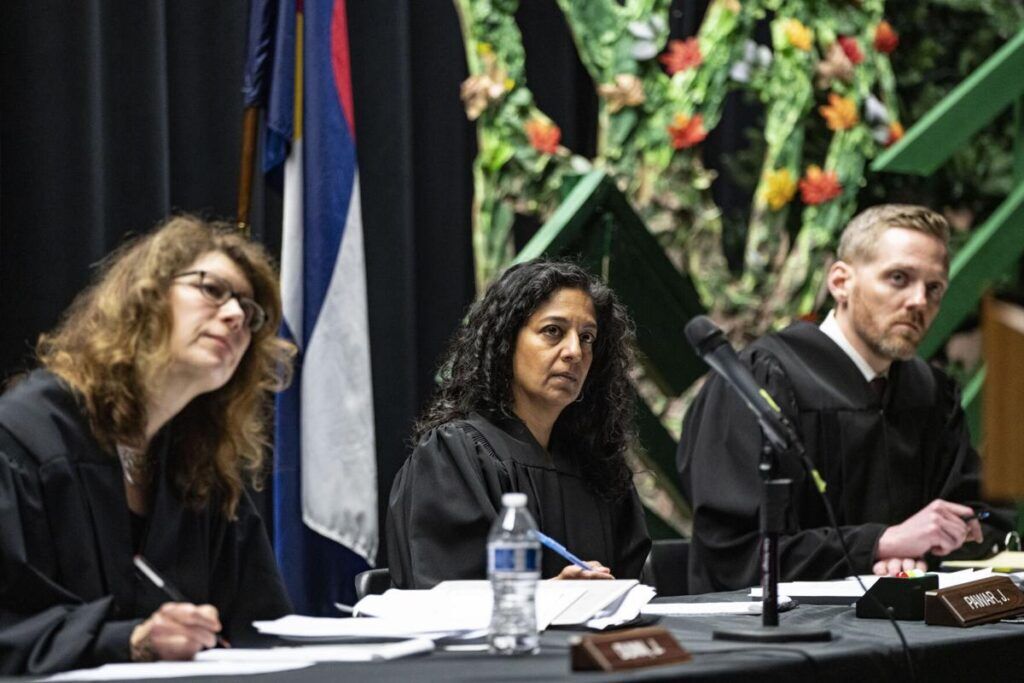
FILE PHOTO: Members of Colorado's Court of Appeals gather at the ceremonial swearing-in of Judge Grant T. Sullivan.
image from video

FILE PHOTO: Members of Colorado’s Court of Appeals gather at the ceremonial swearing-in of Judge Grant T. Sullivan.
In the second case out of Boulder County, jurors convicted Richard Lawrence Martinez of murder after he shot Mathew Bond. Bond was the passenger in a pickup truck and Martinez claimed he did not know Bond was in the vehicle. Instead, Martinez fired at the driver in alleged self-defense.
On appeal, the defense described eight jurors as having scientific or mathematical backgrounds. At one point during trial, a juror sent a note to then-District Court Judge Norma A. Sierra, pointing out the jury had seen pictures with bullet trajectory indicators. The juror wanted to know if there would be evidence of the trajectory analysis.
“I’m asking because the distance of the shooter from car could be a deciding factor,” the juror wrote. “With the bullet hole information, it is a simple calculation to estimate the distance between the car and the shooter.”
Sierra responded that the jury needed to wait to see all of the evidence.
After deliberations began, Sierra told the parties she would contact them if the jurors had a question. However, when she received a note asking for a calculator, Sierra provided jurors a battery-operated calculator without consulting the prosecution or defense.
Sierra subsequently told the parties what happened and the defense filed an objection asserting 15 reasons for why the provision of a calculator was improper. Among other things, the defense alleged the calculator would enable jurors to “conduct research using equations and create new facts not presented at trial.”
“Jurors are permitted supplies during deliberations, such as paper, writing instruments, and a whiteboard,” Sierra responded in a written order. “When jurors inquired about being provided a calculator, the Court regarded such request much akin as a request for a marker or another office supply to aid their organization of the evidence and in their decision-making.”

FILE PHOTO
kali9/iStock

FILE PHOTO
On appeal, Martinez argued he had the constitutional right to be present during all critical stages of his criminal case. Therefore, Sierra violated that right by unilaterally supplying a calculator.
The Colorado Attorney General’s Office responded that Martinez may have a point if jurors had researched bullet speed or trajectory on their own.
“Here, whatever the jury chose to do with the calculator, there was no allegation that the jury was exposed to information outside the record. The jury can use mathematical concepts during deliberations without creating ‘extraneous’ evidence,” wrote Senior Assistant Attorney General Trina K. Kissel.
A three-judge appellate panel agreed that providing the calculator did not affect the trial, noting cases outside of Colorado supported the idea that a jury’s use of a calculator is acceptable to analyze the evidence.
In Matinez’s case, the calculator “merely facilitated the jury’s examination of the evidence rather than permitted the creation of any evidence outside the record,” wrote Judge Matthew D. Grove in the panel’s Aug. 15 opinion.
Martinez has since appealed the decision to the Supreme Court.
The case is People v. Martinez.


Local party leaders, incoming judge among members of judicial performance commission that violated law
Michael Karlik
michael.karlik@coloradopolitics.com
Updated 7 hours ago
A local Democratic leader and 2024 presidential elector. A legislative aide and leader in the Young Republicans. An incoming county court judge freshly appointed by the governor. They are among the eight members of the northeastern Colorado judicial performance commission...
Judge dismisses lawsuit seeking records from Colorado Democratic group
Marianne Goodland
marianne.goodland@coloradopolitics.com
Updated 7 hours ago
A lawsuit seeking to obtain records from Democratic lawmakers affiliated with a caucus has been thrown out by a Denver District Court judge. On July 17, Judge Ericka Englert dismissed the April lawsuit filed by progressive activist Derrick Blanton, who...
Colorado Springs mother Deborah Nicholls’ murder conviction overturned
Nick Smith
nick-smith@coloradopolitics.com
Updated 1 day ago
A Colorado Springs mother convicted in 2008 of murdering her three children in a house fire might get a new trial after a judge ruled that prosecutors withheld key evidence that could have impacted the jury’s verdict. Deborah Nicholls, whose...
Colorado court overturns illegal $7,000 restitution order
Michael Karlik
michael.karlik@coloradopolitics.com
Updated 3 hours ago
Colorado’s second-highest court overturned a Weld County defendant’s obligation to pay more than $7,000 in crime victim restitution on Thursday because a trial judge failed to issue a legally compliant restitution order at the time of sentencing. In Colorado, as...

Appeals court rejects former DougCo commissioner’s legal fee claim
Nicholas Fogleman
nicholas.fogleman@denvergazette.com
Updated 14 hours ago
The Colorado Court of Appeals rejected a former Douglas County commissioner’s bid for reimbursement of attorney fees she incurred while responding to multiple investigations into her conduct. The dispute stemmed from a 2019 anonymous letter sent to county officials alleging...
Appeals court orders second look at Denver Water’s immunity for cyclist’s injury
Michael Karlik
michael.karlik@coloradopolitics.com
Updated 1 day ago
Colorado’s second-highest court ordered another look at a bicyclist’s negligence lawsuit against Denver Water on Thursday, concluding that a trial judge needed to evaluate the utility’s potential immunity using the state Supreme Court’s new guidance. Joseph A. “Joey” Scott alleged...
Labels, duration not definitive proof of ‘intimate relationship,’ Colorado court rules in domestic violence case
Michael Karlik
michael.karlik@coloradopolitics.com
Updated 8 hours ago
Colorado’s second-highest court clarified on Thursday that the length of a couple’s relationship and the labels they attach to it are not conclusive evidence of whether it is an “intimate relationship” that can give rise to a domestic violence prosecution....

Colorado AG urges Supreme Court to let Boulder climate lawsuit proceed
Marissa Ventrelli
marissa.ventrelli@coloradopolitics.com
Updated 1 day ago
Colorado Attorney General Phil Weiser has filed a court brief with the U.S. Supreme Court in a lawsuit brought by Boulder city officials seeking to hold oil companies liable for their environmental impact. The case began in 2018, when the...
10th Circuit says landowner cannot sue ex-Routt County judge for statements in decision
Michael Karlik
michael.karlik@coloradopolitics.com
Updated 2 days ago
A Routt County landowner cannot sue a former judge for his allegedly inaccurate statements in a case where the landowner was not a party, the Denver-based federal appeals court decided on Wednesday. Anne Fitzsimmons, who lives in Germany, owns a...
Defendant’s competency in question in El Paso County case involving slain Army police officer
Nick Smith
nick-smith@coloradopolitics.com
Updated 2 days ago
It will be another 60 days before a 4th Judicial District court determines if a man charged in the shooting death of an Army police officer is competent to proceed in his case. Judge Erin Sokol granted a request Wednesday...