

Colorado justices restore RTD subcontractor’s award, reject ‘drastic’ view of public works law

The Colorado Supreme Court on Monday restored a $5.7 million award to a company that helped build a commuter rail line and, in doing so, rejected a view of state law that would nullify a subcontractor’s entitlement to any compensation if they knowingly try to recover more than they are owed.
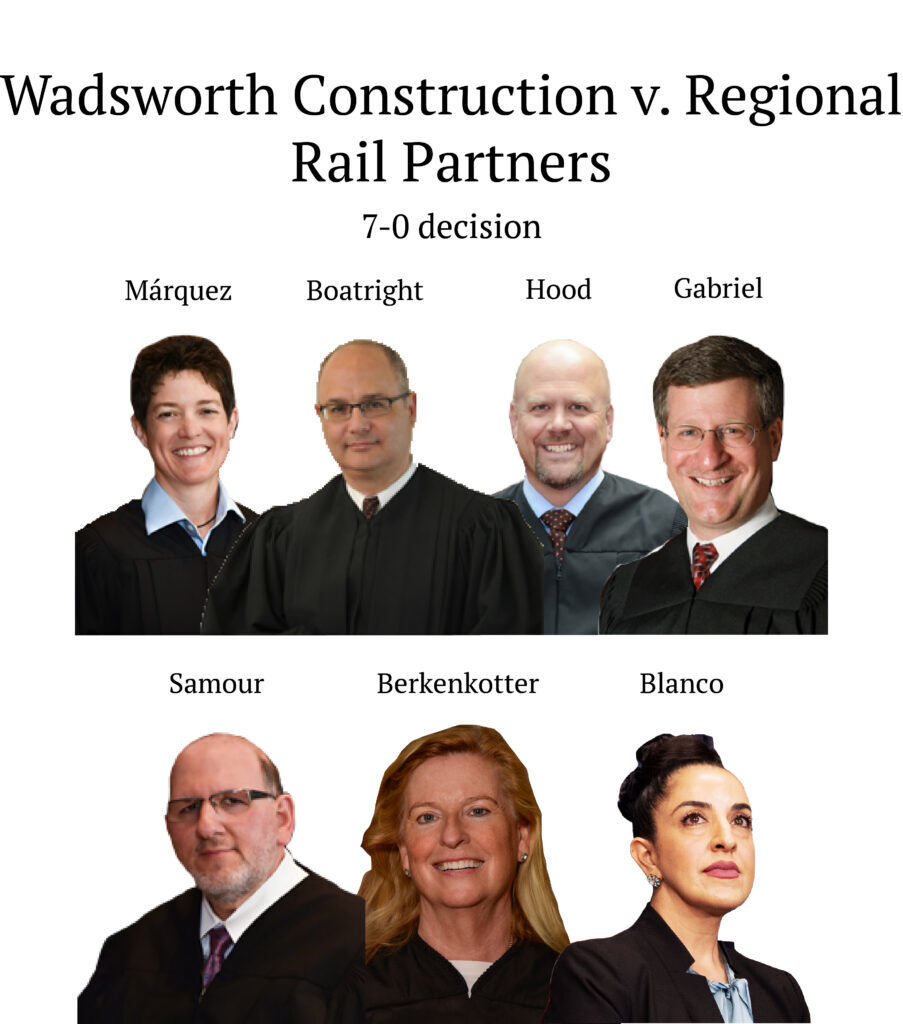
Justice Richard L. Gabriel wrote in the April 6 opinion that the Court of Appeals’ restrictive interpretation of the law did not mesh with the legislature’s goal of deterring only bad-faith claims of non-payment.
Colorado’s Public Works Act “was enacted to protect suppliers of labor and materials for public works projects by providing them with statutory remedies for amounts due and unpaid,” he wrote. Under the Court of Appeals view, “claimants would likely be deterred from exercising their statutory remedies at all, lest they risk losing all avenues for being made whole.”
In the underlying case, Ralph L. Wadsworth Construction Company became a subcontractor on the construction of the Regional Transportation District’s N Line to Thornton. Regional Rail Partners was the overarching contractor. The project encountered delays and defects, with both entities pointing the finger at each other.
RLW filed a verified claim under the Public Works Act, alleging that Regional Rail Partners owed it more than $12.7 million. In broad terms, the law ensures subcontractors’ financial security on public projects. If a subcontractor provides “labor, materials, sustenance, or other supplies” and the contractor has not paid, the subcontractor files a verified statement of the amount due to initiate the reimbursement process.
In 2003, the legislature added a condition to the act. If a subcontractor’s claim is not reasonably related to the amount owed and the subcontractor knows it, the subcontractor “shall forfeit all rights to the amount claimed.” For 20 years, the Court of Appeals had never addressed what that condition meant.
After a trial judge awarded RLW $3.8 million in damages and $1.9 million in unpaid funds — totaling $5.7 million — a three-judge Court of Appeals panel wiped away the entire amount.
The panel determined RLW had relied on “impacts, delays, disruptions, interference and other problems associated with the Project” as grounds for its complaint. But Judge Ted C. Tow III reiterated the purpose of the Public Works Act is for subcontractors to file claims over services “actually provided” — not for financial damages stemming from disputed delays.
Because RLW asserted it was owed an amount that was not reasonable under the Public Works Act, the panel decided the 2003 condition, as written, meant RLW had forfeited its right to seek compensation.
“In our view, the language,” wrote Tow, “is unambiguous: the claimant forfeits the right to pursue any remedy for that amount. While this sanction may seem drastic, it is the only reasonable reading the statutory language can bear.”
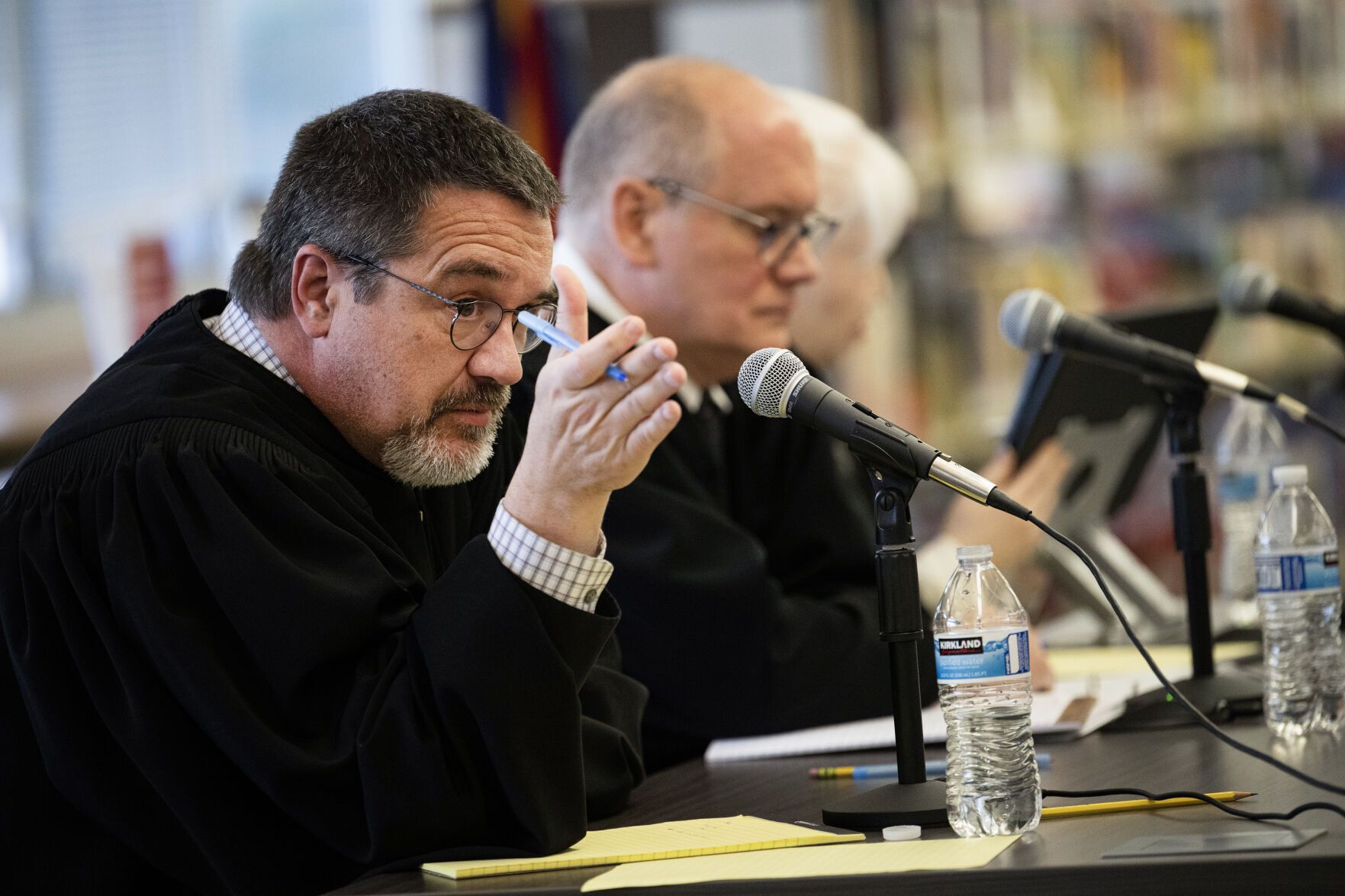
But during oral arguments to the Supreme Court, some justices suggested that lawmakers never intended for subcontractors to permanently lose out on money owed to them if they overreach or misperceive the relevant damages.
That is “a Draconian remedy. They lose all rights to everything? Including the rights to the $5 million the court actually awarded?” Gabriel asked. “That’s a fairly extreme forfeiture to me.”
Trade associations representing general contractors and subcontractors weighed in to the Supreme Court to warn about the effects of the Court of Appeals’ decision. If companies risk forfeiting all their rights to money owed when they request the wrong amount, the groups argued that contractors will stop working on public construction projects until they can iron out payment disputes.
“If everybody agrees as to what we’re doing, there wouldn’t be any need to file a claim, right?” pointed out Justice Maria E. Berkenkotter.
In its decision, the Supreme Court clarified that RLW properly included disputed amounts in its original claim, as they related to labor, materials, sustenance, rental machinery, tools, or other permissible costs.
“That a claimed amount is greater than the amount due is not alone sufficient to establish that the claim is excessive,” Gabriel wrote. “For example, a subcontractor could file a claim for an amount ultimately determined not to be due, but if the subcontractor did not know that the amount claimed was greater than what was due at the time it filed its verified statement of claim, then the claim would not be excessive.”
He added that costs incurred due to delay or disruption may be included in the subcontractor’s claim, so long as they fall within the permissible categories in the law. Because the trial judge found RLW’s claimed amount was reasonable, and the damages awarded ultimately fell in the proper categories, the Supreme Court concluded the Court of Appeals was wrong to deem RLW’s claim excessive.
As for the penalty for subcontractors who claim they are owed an unreasonably excessive amount, the Supreme Court held that the legislature intended only for companies to forfeit their rights under the Public Works Act. They may still seek monetary damages through other legal avenues and not, as the Court of Appeals believed, lose out on payments owed forever.
“Under such a construction, claimants will properly be deterred from filing excessive claims,” wrote Gabriel, “but without the fear of losing all opportunity for recovery based on what might turn out to be the erroneous exercise of their statutory rights and remedies.”
The case is Ralph L. Wadsworth Construction Company, LLC. v. Regional Rail Partners et al.

10th Circuit overturns framework for sentencing probation violators by 11-1
Michael Karlik
michael.karlik@coloradopolitics.com
Updated 2 days ago
In a rare decision by all 12 of its full-time judges, the Denver-based federal appeals court ruled in a lopsided vote on Friday that one of its members created a sentencing process for probation violators that was out of step...

Federal judge dismisses excessive force lawsuit against Colorado Springs, officer
Michael Karlik
michael.karlik@coloradopolitics.com
Updated 2 days ago
A federal judge concluded last week that a Colorado Springs police officer could not be held liable for shooting a suspect three times after the man menaced two victims with a gun and fled the scene. Al’morion Germany was involved...
Weld County man sentenced to 236 years for sexually assaulting 9-year-old girl
Kyla Pearce
kyla.pearce@gazette.com
Updated 3 days ago
A Weld County man was sentenced to 236 years in prison for repeatedly sexually assaulting a 9-year-old girl. Joshua Andrews, 41, was charged in June with 12 counts of sexual assault on a child by a person in a position...
Wrongfully deported man to be returned to U.S., Colorado federal judge orders
Michael Karlik
michael.karlik@coloradopolitics.com
Updated 4 days ago
Colorado’s chief federal judge took the extraordinary step of directing the government on Tuesday to do everything it can to return a man it deported in violation of his order. At the same time, Colorado’s chief magistrate judge has set...
Denver murder, assault convictions reversed due to faulty jury instructions
Michael Karlik
michael.karlik@coloradopolitics.com
Updated 3 days ago
Colorado’s second-highest court reversed a defendant’s convictions for murder and assault last week after concluding a Denver judge incorrectly omitted key jury instructions that could have affected the verdict and sentencing. Stephen C. Swainson fatally stabbed Israel Casillas in downtown...
‘Understand people for who they are’: 2 federal judges talk about compassion in courtroom
Michael Karlik
michael.karlik@coloradopolitics.com
Updated 2 days ago
Before taking the bench in 2022, U.S. District Court Judge Charlotte N. Sweeney was an employment discrimination attorney. While the cases could be emotionally charged, they were different from the criminal proceedings she is now handling. “It wasn’t necessarily affecting...
Denver murder conviction reversed for incomplete self-defense instruction
Michael Karlik
michael.karlik@coloradopolitics.com
Updated 7 hours ago
Colorado’s second-highest court reversed a defendant’s murder conviction last week because a Denver judge gave an incomplete instruction to the jury about the man’s right to self-defense. Donald R. Gonzales and Gary McLaughlin met up in a Capitol Hill parking...
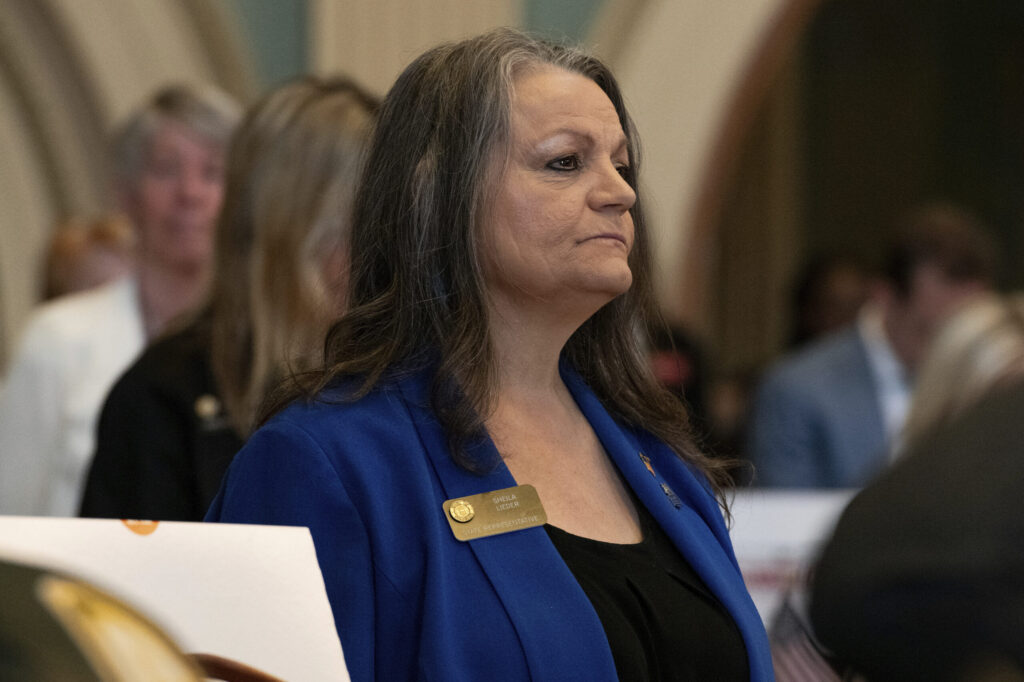
Colorado lawmaker, House leaders named in workplace-retaliation lawsuit
Marianne Goodland
marianne.goodland@coloradopolitics.com
Updated 6 days ago
A former legislative aide has filed a lawsuit alleging she was mistreated, illegally directed to perform campaign work and harmed by a House leadership structure she charged was fragmented, politicized and ineffective at protecting employees. The lawsuit, filed by Jennifer...
Federal judge hears arguments about Colorado’s 3-day gun purchase waiting period
Michael Karlik
michael.karlik@coloradopolitics.com
Updated 6 days ago
A federal judge heard arguments on Monday about the constitutionality of a 2023 Colorado law that generally imposes a three-day waiting period on firearm purchases after the initiation of a background check. The test that the U.S. Supreme Court created...
Colorado Supreme Court intervenes in Weld County prosecution dismissed due to Missy Woods misconduct
Michael Karlik
michael.karlik@coloradopolitics.com
Updated 5 days ago
The Colorado Supreme Court ordered a Weld County trial judge last week to respond to the district attorney’s claim that he improperly dismissed a criminal case because of “outrageous” conduct by the Colorado Bureau of Investigation. Daniel Lee Eatinger stood...
PREV
PREVIOUS

As Colorado passes 6 million residents, housing initiatives take center stage
New Census data confirming Colorado’s population has topped six million is fueling renewed debate over Gov. Jared Polis’ housing agenda, as he tied the population increases to home construction. The governor said the counties experiencing the largest increases in new housing construction — Weld, Larimer, and Douglas — are also seeing the fastest population growth. […]

Governor signs bill expanding who can petition for weapons restrictions
Gov. Jared Polis on Monday signed a bill into law expanding who can ask a judge to temporarily restrict a person’s access to firearms. Established in 2019, 0Colorado’s extreme risk protection law (ERPO) initially allowed a family member or law enforcement officers to petition a court to prohibit an individual they believe poses an “imminent […]