

Federal judge warns of increasingly inadequate immigration bond hearings

A federal judge ordered the immediate release of a man in immigration custody last week and, seemingly for the first time in Colorado, warned that the government is increasingly conducting inadequate bond hearings for detainees.
Colorado’s federal trial court is facing a flood of “habeas corpus” petitions from those in immigration detention. The most common allegation is that the government is improperly denying bond hearings to people who are eligible by law. Colorado’s judges, like the vast majority of their peers nationwide, have agreed with that argument.
While the most common outcome is for judges to direct immigration judges, who are executive branch employees, to hold hearings to determine a person’s suitability for release, judges have occasionally ordered the immediate release of detainees instead.
In an April 1 order, U.S. District Court Senior Judge William J. Martínez ordered the release of Gurjant Singh, whose circumstances mirrored those of numerous other habeas petitioners to date. However, Martínez took the unusual step of agreeing with Singh that any bond hearing was “unlikely to be a fair one.”
“He asserts a long list of reasons why a bond hearing is unlikely to be a fair proceeding,” wrote Martínez, a Barack Obama appointee. “The Court shares many of these same concerns, not the least of which is his averment that IJs ‘often cite little or no reasoning in determining that noncitizens are a flight-risk.'”
Martínez cited to another recent case assigned to him, in which an immigration judge’s decision to deny bond encompassed three sentences and did not refer to evidence or specific details.
“Based on the observations of fellow judges across the country, the Court is far from convinced this was an isolated incident. To the contrary, the mounting evidence that bond determination hearings conducted in Immigration Court,” he continued, “have preordained outcomes has become impossible to ignore.”
Martínez’s decision to proactively order Singh’s release came one day before a different federal judge in Colorado released another detainee whose bond hearing violated court orders.
On April 2, U.S. Magistrate Judge N. Reid Neureiter found that an unnamed immigration judge disobeyed his orders to conduct a bond hearing at which the government would need to prove a detainee was a likely flight risk or a danger to the community. Neureiter wrote that the immigration judge had apparently not even read his orders.
The immigration judge “and the counsel for the United States appeared to be operating under the misapprehension that orders from this Court,” he wrote, “were advisory or mere recommendations as opposed to enforceable and binding.”
The Executive Office for Immigration Review, which is part of the U.S. Department of Justice and is responsible for immigration courts, did not respond to questions from Colorado Politics regarding Martínez’s order and the instructions given to immigration judges for conducting bond hearings.
Singh’s attorney also did not respond to a request for comment. A spokesperson for the U.S. Attorney’s Office for Colorado, which litigates habeas petitions on behalf of the government, declined to comment.
Multiple immigration attorneys told Colorado Politics that the government is increasingly failing to hold meaningful bond hearings in immigration proceedings, even after a judge has laid out specific requirements for doing so.
“Even with these stringent guidelines, noncitizens are being denied bond. As a result, there has been an uptick in people filing motions to enforce to ensure that the immigration courts are providing constitutionally adequate bond hearings,” said attorney Laura Lunn. “Instead of engaging with the resulting litigation carousel that keeps going around and around, Judge Martínez found that there was sufficient justification for ordering the petitioner’s immediate release.”
Martínez previously put the government on notice that he would change his approach if he encountered resistance.
In a Feb. 24 order, Martínez declined to order a petitioner’s release outright, even as he acknowledged the government has “failed to comply with numerous federal court orders across the country.” Martínez indicated that he had not personally observed disobedience from the government yet.
“Should it fail to fully and timely comply with this Court’s orders,” he continued, “the Government is on clear notice that the Court will not hesitate to order the immediate release of noncitizens in future, appropriate cases.”
Martínez’s decision in Singh’s case cited a recent order from U.S. District Court Judge Christine P. O’Hearn of New Jersey, who cataloged other instances across the country in which immigration judges provided little to no reasoning when denying bond.
“These developments, among others, raise a serious question as to whether the constitutional guarantee of an impartial decisionmaker is being honored in any case brought before an IJ,” she wrote.
The case is Singh v. Valdez et al.

10th Circuit overturns framework for sentencing probation violators by 11-1
Michael Karlik
michael.karlik@coloradopolitics.com
Updated 6 hours ago
In a rare decision by all 12 of its full-time judges, the Denver-based federal appeals court ruled in a lopsided vote on Friday that one of its members created a sentencing process for probation violators that was out of step...

Federal judge dismisses excessive force lawsuit against Colorado Springs, officer
Michael Karlik
michael.karlik@coloradopolitics.com
Updated 10 hours ago
A federal judge concluded last week that a Colorado Springs police officer could not be held liable for shooting a suspect three times after the man menaced two victims with a gun and fled the scene. Al’morion Germany was involved...

Weld County man sentenced to 236 years for sexually assaulting 9-year-old girl
Kyla Pearce
kyla.pearce@gazette.com
Updated 1 day ago
A Weld County man was sentenced to 236 years in prison for repeatedly sexually assaulting a 9-year-old girl. Joshua Andrews, 41, was charged in June with 12 counts of sexual assault on a child by a person in a position...
Wrongfully deported man to be returned to U.S., Colorado federal judge orders
Michael Karlik
michael.karlik@coloradopolitics.com
Updated 2 days ago
Colorado’s chief federal judge took the extraordinary step of directing the government on Tuesday to do everything it can to return a man it deported in violation of his order. At the same time, Colorado’s chief magistrate judge has set...
Denver murder, assault convictions reversed due to faulty jury instructions
Michael Karlik
michael.karlik@coloradopolitics.com
Updated 1 day ago
Colorado’s second-highest court reversed a defendant’s convictions for murder and assault last week after concluding a Denver judge incorrectly omitted key jury instructions that could have affected the verdict and sentencing. Stephen C. Swainson fatally stabbed Israel Casillas in downtown...
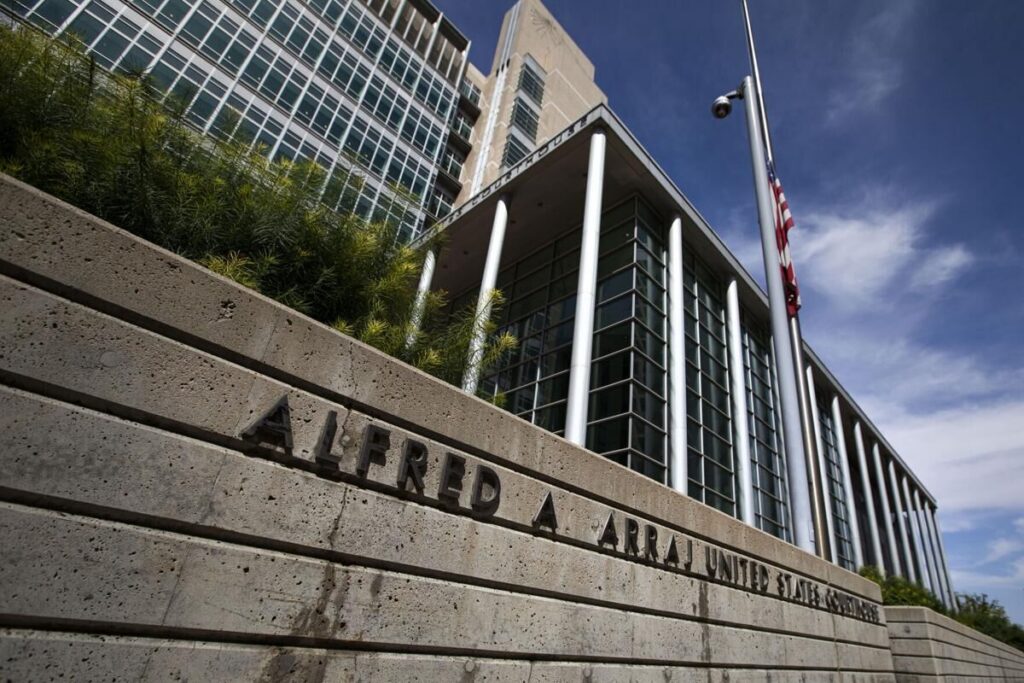
‘Understand people for who they are’: 2 federal judges talk about compassion in courtroom
Michael Karlik
michael.karlik@coloradopolitics.com
Updated 24 hours ago
Before taking the bench in 2022, U.S. District Court Judge Charlotte N. Sweeney was an employment discrimination attorney. While the cases could be emotionally charged, they were different from the criminal proceedings she is now handling. “It wasn’t necessarily affecting...

Denver murder conviction reversed for incomplete self-defense instruction
Michael Karlik
michael.karlik@coloradopolitics.com
Updated 4 days ago
Colorado’s second-highest court reversed a defendant’s murder conviction last week because a Denver judge gave an incomplete instruction to the jury about the man’s right to self-defense. Donald R. Gonzales and Gary McLaughlin met up in a Capitol Hill parking...
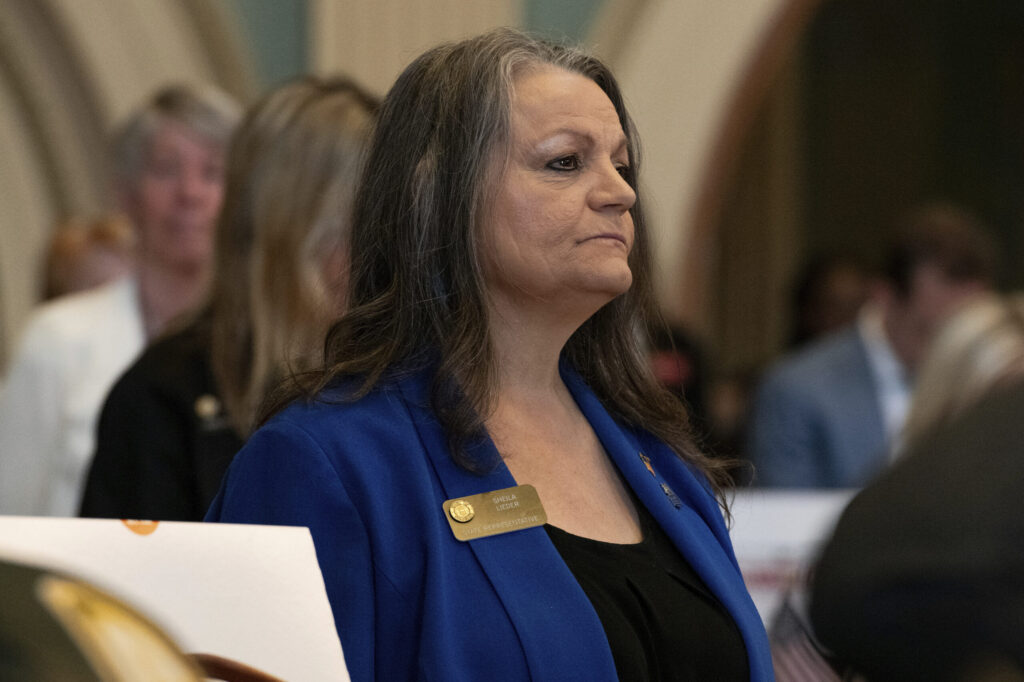
Colorado lawmaker, House leaders named in workplace-retaliation lawsuit
Marianne Goodland
marianne.goodland@coloradopolitics.com
Updated 4 days ago
A former legislative aide has filed a lawsuit alleging she was mistreated, illegally directed to perform campaign work and harmed by a House leadership structure she charged was fragmented, politicized and ineffective at protecting employees. The lawsuit, filed by Jennifer...
Federal judge hears arguments about Colorado’s 3-day gun purchase waiting period
Michael Karlik
michael.karlik@coloradopolitics.com
Updated 4 days ago
A federal judge heard arguments on Monday about the constitutionality of a 2023 Colorado law that generally imposes a three-day waiting period on firearm purchases after the initiation of a background check. The test that the U.S. Supreme Court created...
Colorado Supreme Court intervenes in Weld County prosecution dismissed due to Missy Woods misconduct
Michael Karlik
michael.karlik@coloradopolitics.com
Updated 4 days ago
The Colorado Supreme Court ordered a Weld County trial judge last week to respond to the district attorney’s claim that he improperly dismissed a criminal case because of “outrageous” conduct by the Colorado Bureau of Investigation. Daniel Lee Eatinger stood...
PREV
PREVIOUS

Inside the GOP caucus: Colorado legislator explains why a bigger budget still means cuts
Tasked with explaining a budget driven by rising caseloads, shifting federal dollars and a $1.5 billion shortfall, Joint Budget Committee member Rep. Rick Taggart spent Tuesday’s Republican caucus meeting detailing why the 2026–27 spending plan appears larger on paper, even as many state programs face cuts. “If I look a little tired, I am,” Taggart […]

CDOT begins installing 66 new highway cameras
The Colorado Department of Transportation started construction on a project to install 66 new traffic cameras across the state, many of them in remote mountain areas where real-time highway views help drivers navigate changing conditions. Work began March 30 at locations in south-central Colorado, including the intersection of U.S. Highway 24 and U.S. 285 at […]