

What Gallup polls teach us about presidents | Cronin & Loevy

The Gallup organization, founded by George Gallup, announced Feb. 11 they will no longer conduct their well-known polls that rate whether the Americans approve or disapprove the way presidents handle the job.
Gallup began these polls in the late 1930s but did not conduct them during World War II.
The Gallup staff has said no one pressured them to stop doing these presidential approval/disapproval polls. They pointed out they have other priorities. They noted how, at least since the 1990s, several other firms have been doing the same presidential approval/disapproval evaluations.
President Donald Trump is probably happy with the Gallup organization’s decision. He has said he is treated unfairly by the public opinion polls and the media. It appears he would prefer polls to stop evaluating his presidency. In a similar vein, he has suggested we really don’t poll ahead of this November’s midterm elections.
For many decades, Gallup was the only company conducting presidential favorability ratings. Now, several respected organizations provide similar data. Scholars and journalists have come to prefer aggregated data that averages out the results of a variety of respected polls.
Polling is harder to do nowadays. Many people refuse to respond or participate in polls. More people use cell phones and often have spam calls blocked out. Americans are also more partisan, cynical and distrusting of both government and media organizations.
Still, the Gallup organization is significant for pioneering the use of polling data to record U.S. citizens’ approval/disapproval evaluations of their presidents.
During the past seven decades or so, polling has revealed the following facts:
- Presidents are usually more popular in their first year in office than they are later in their term of office.
- Presidents typically lose popular approval during midterm elections, when the “guns” of the opposition party are aimed squarely at the White House.
- Increased polarization of the major political parties has led to greater disapproval of a president from the opposition political party.
- International or terrorist events, such as the 9-11 terrorist attacks, typically cause the public to rally around the president, at least in the short run.
- Economic recessions or high inflation typically cause presidential approval to drop. Healthy stock market gains often increase a president’s favorable approval ratings, as they did for President Bill Clinton in the late 1990s.
- The public is tough on presidents who fail to successfully manage U.S. military interventions. Presidents Harry Truman (Korea), Lyndon Johnson (Vietnam), and George W. Bush (Iraq) are examples.
The American people have high expectations for their presidents. They want lower taxes and more services. They want honesty, compassion and empathy, but they also want decisiveness and America-first toughness.
Americans want Mother Teresa-type kindness and human decency, yet they also understand, in real world politics, presidents sometimes need to rely on Machiavellian-type guile and manipulation. These are just a few of the paradoxes of the American presidency.
Americans want presidents to unite the nation, but the public is divided over several important issues. And the decline of trust in government has made it tough on recent presidents. The controversial Vietnam War, Watergate, Afghanistan and sad, depressing “Epstein-gate” scandals have increased public skepticism and cynicism.
Presidents Dwight D. Eisenhower and John F. Kennedy were popular when the country’s pride and self-confidence were high. Ronald Reagan, Bill Clinton, and Barack Obama also won public approval. But Richard Nixon, Gerald Ford, Jimmy Carter, George W. Bush, Joe Biden and Donald Trump have had a hard time earning the public’s trust.
One reality all presidents face is the American people find it convenient, probably too convenient, to blame whoever is president for a whole range of societal problems. They tend to hold the president responsible, regardless of whether the societal problems are subject to presidential influence.
Here are a few findings from Gallup polls during the past 80 years.
Presidents with the highest average approval ratings:
John F. Kennedy, 70%
Dwight D. Eisenhower, 65%
George H. W. Bush, 61%
Ronald Reagan, 53%.
Presidents with the lowest average approval ratings:
Donald Trump (first term), 41%,
Joe Biden, 42%,
Harry Truman, 45%.
Although he was forced to resign the presidency because of Watergate, Richard Nixon had a 49% average presidential approval rating during his six years.
President Trump’s average presidential approval rating in his second term in office so far has been a bit lower than in his first term. Recent polls show him with 36% to 40% approval.
George W. Bush earned an all-time-high presidential approval rating of 90% in a poll taken soon after the Sept. 11, 2001 terrorist attacks on New York City and Washington, D.C.
Harry Truman earned an all-time low approval rating of 22% in 1951 and 1952 as the Korean War dragged on and an economic downturn existed.
Richard Nixon earned an embarrassing 24% public approval rating in the summer of 1974 just before he was forced to resign.
Donald Trump’s lowest presidential approval ratings so far were late in his first term at 34%. The most recent Gallup poll indicates he has only a 27% approval rating from “independent” voters.
Yet despite these low approval ratings, Trump’s fan base remains intense and loyal. He has won public approval for his border control policies. Whether he wins approval for his foreign policy activities is less clear, although he deserves credit for trying to end the war in Gaza.
President Trump has benefitted from a recent decrease in inflation. He should be benefiting from recent highs in the stock market, although this does not yet seem to be the case.
The president admits he has a big ego. But he replies: “I was saved by God to Make America Great Again.” Polls show the public disapproves of his adding his name to the Kennedy Performing Arts Center. Also unpopular is a mega ballroom he is constructing for the White House
Two-thirds of the public disagree with Trump’s claim the 2020 election was stolen from him. And most Americans are troubled by his gratuitous insults of the Obamas, the Federal Reserve Chair, female reporters and Canada. ICE overreach has also hurt. We understandably yearn for unifying not divisive national leadership.
One factor that helps President Trump is Congress, individual congressional leaders and the Democratic Party have even lower public approval ratings. Trump may be “underwater,” but many of his political rivals are barely surviving in terms of political popularity.
Here are a few things to keep in mind:
National polling is increasingly expensive. Participation rates are low..
No one should place too much credibility on a single poll. It is important to look at a series of polls to understand the trends.
People will blame presidents whether a problem or policy is their fault or not. Presidents of both parties regularly exaggerate their leadership ability when good things happen, and try, usually in vain, to blame previous administrations when things go wrong.
Polls will be closely watched in the run-up to the midterm elections this November. What are the most reliable polls now that Gallup will no longer evaluate presidential approval/disapproval?
Experts say the Pew Research Center is the gold standard for statistical accuracy and methodological balance.
Other companies held in high regard are Reuters/Ipsos, New York Times/Sienna College, YouGov, ABC News/Washington Post, and the Marquette University Law School Poll.
An organization called RealClearPolitics offers an aggregate of several national polls.
A Substack newsletter called Silver Bulletin, led by political analyst Nate Silver, also aggregates this type of data.
Thank you, Gallup, for your long time recording of the approval/disapproval ratings of U.S. presidents. Your polls encouraged failing presidents it was time to go and encouraged presidents who were earning the public’s approval to keep on leading. Donald Trump boasts he is one of “the best presidents in America history.” Polls, so far, don’t support his self-designation. Maybe this will change.
Tom Cronin and Bob Loevy regularly write about politics and public policy.


Colorado can’t forget the lessons of COVID | Jon Caldara
Jon Caldara
jon-caldara@coloradopolitics.com
Updated 3 days ago
We are finally getting a clearer picture of what happened during COVID. Not because the people who locked us up, masked our faces and forced unproven chemicals into our bodies have suddenly become transparent, but because Anthony Fauci’s COVID-era diary...
Historic preservation supporters organize to oppose Trump changes | Bob Loevy
Tom Cronin
tom-cronin@coloradopolitics.com
Updated 2 days ago
Historic preservation organizations in Colorado Springs, the remainder of Colorado and across the nation are organizing to resist a recent effort to relax and weaken historic preservation laws in the United States. In Washington, D.C., the Advisory Council on Historic...
At conservative summit, Colorado Republican leaders concede Democrats’ election edge
Marissa Ventrelli
marissa.ventrelli@coloradopolitics.com
Updated 1 day ago
Four Republican state lawmakers told attendees at a gathering of conservative leaders on Friday they doubt their party can win statewide races, noting that Colorado’s electorate has been shifting toward Democrats but adding they see an opening in several pockets....
Q&A with Mike Pence | Former vice president says GOP’s populist turn from conservatism isn’t permanent
Ernest Luning
ernest.luning@coloradopolitics.com
Updated 1 day ago
Former Vice President Mike Pence says he’s concerned that the Republican Party has taken a populist turn away from bedrock conservative principles during President Donald Trump’s second term, but he believes the party will return to its roots when Trump...
Republican Victor Marx taps George Markert as his lieutenant governor pick in Colorado’s gubernatorial race
Ernest Luning
ernest.luning@coloradopolitics.com
Updated 2 days ago
Colorado Republican gubernatorial nominee Victor Marx named George Markert, a retired Marine colonel, as his running mate for lieutenant governor Friday morning, saying the former U.S. Senate candidate will bring “exceptional character, proven leadership and a lifetime of serving others”...
Pueblo mayor, council concoct Trumpian Texas Two-Step | Dennis Maes
Dennis Maes
dennis-maes@coloradopolitics.com
Updated 3 days ago
Several weeks ago, an article was published positing Pueblo Mayor Heather Graham is a disciple of the calamitous Donald Trump school of governance — specifically as it related to questionable ethical practices and the misuse of public funds. Recently, Graham...

Colorado can’t afford to turn its back on proven public safety technology | GUEST COLUMN
Colorado Politics
colorado-politics@coloradopolitics.com
Updated 3 days ago
By Samuel G. Michael I recently saw a report that said Colorado is leading the way in artificial intelligence adoption for businesses. Across our state, more business owners and employees than ever before use AI for their everyday functions —...

Colorado lawmakers start crafting strategy to manage $200 million in federal rural health funds
Marissa Ventrelli
marissa.ventrelli@coloradopolitics.com
Updated 7 hours ago
Colorado officials have begun to strategize as the state is set to receive hundreds of millions of dollars from a federal program meant to boost rural health. Cristen Bates, deputy Medicaid director at the Department of Health Care Policy and...
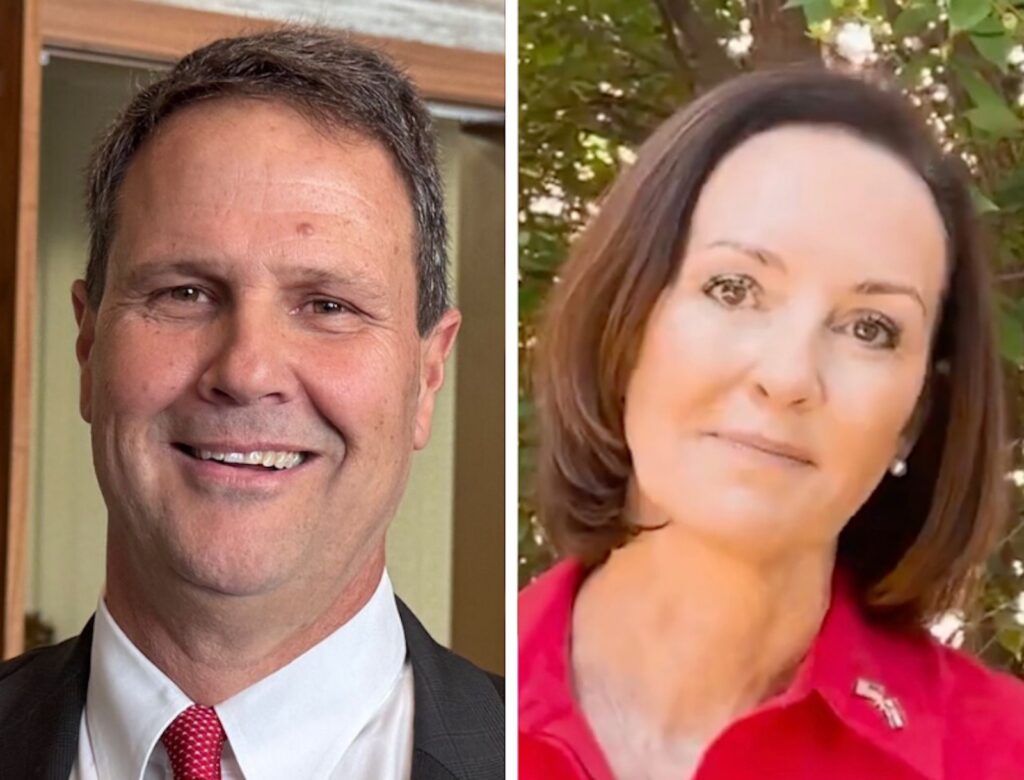
Democrat Jessica Killin’s internal poll shows dead heat with U.S. Rep. Jeff Crank in Colorado’s 5th CD
Ernest Luning
ernest.luning@coloradopolitics.com
Updated 3 days ago
Jessica Killin, the Democratic nominee in Colorado’s 5th Congressional District, is in a statistical tie with Republican U.S. Rep. Jeff Crank, according to an internal poll released this week by Killin’s campaign. The poll of likely general election voters, conducted...

Colorado’s 72-hour social media warrant law takes effect Aug. 12
Marissa Ventrelli
marissa.ventrelli@coloradopolitics.com
Updated 4 days ago
A law requiring social media platforms to respond to search warrants within 72 hours goes into effect on Aug. 12. Senate Bill 011 also requires platforms to create a staffed hotline for Colorado law enforcement agencies to contact regarding pending...
PREV
PREVIOUS

In a meeting Colorado GOP chair Brita Horn calls ‘illegal,’ Republicans vote to demand her resignation
Roughly half the membership of the Colorado Republican Party’s state central committee on Saturday voted overwhelmingly to approve a resolution expressing “no confidence” in state GOP Chairman Brita Horn’s leadership and calling for her immediate resignation in an online meeting Horn says wasn’t authorized and will have “zero impact.” The 250 Republican party officials who […]

The First Amendment protects the Second | Jon Caldara
It’s not an attack on the Second Amendment, but the First Amendment. I know this is going to sound crazy but, there was a time when liberals, not conservatives, were the champions of free speech. Today? Now in Colorado it is punishable to “mis-gender” someone. By speaking truthfully, say calling a man, “a man,” when […]