

Colorado cannot afford to get the Colorado River wrong | OPINION
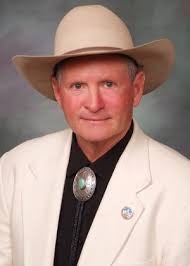
By Larry Don Suckla
Colorado and our neighboring states are standing on the edge of a crisis that is no longer theoretical. The Colorado River, the lifeline of the American west, is facing conditions that demand immediate, responsible action. If we fail to act wisely, the consequences will not just be environmental.
Right now, the situation at Lake Powell is approaching a critical threshold. Federal projections show we must conserve approximately 1.7 million acre-feet of water this year alone to prevent the reservoir from dropping below the level needed to generate hydropower. That is not a distant possibility. It could happen before the end of summer.
If Lake Powell falls below that level, dam operators will be forced to rely on bypass tubes never designed for sustained, high-volume use. The risk is not just inefficiency. It is structural failure. If those systems are compromised, downstream water deliveries could be disrupted in ways that would affect millions of people and large portions of the western economy.
The question before us is how to prevent that outcome. There are really only two options: pull more water from upstream reservoirs in states like Colorado or reduce the amount of water released downstream to lower-basin states.
As a representative of western Colorado, I can tell you draining our upstream reservoirs is not a sustainable solution. Reservoirs like Blue Mesa are already sitting at roughly half capacity. They are not a backup plan we can afford to exhaust. These reservoirs support our local economies, agriculture, recreation and long-term drought resilience. Once they are depleted, there is no quick recovery if another dry year follows.
The reality is simple: the math does not work if we rely solely on upstream contributions. Lake Powell is vastly larger than any of the reservoirs that feed it. Even if we drained those systems, it would not be enough to solve the problem, and we would leave Colorado exposed to even greater risk.
That is why Colorado and other upper-basin states are right to push for a balanced approach that includes reducing downstream releases. The federal government already has the authority to make these adjustments to protect critical infrastructure. That authority should be used responsibly and in a way that recognizes the limits facing upstream states.
This is not about shifting blame or avoiding difficult decisions. Lower-basin states have already taken significant cuts in recent years, and those efforts should be acknowledged. But the current moment requires shared responsibility and realistic solutions. We cannot solve a structural imbalance in the river system by placing additional strain on regions already stretched thin.
At the same time, we cannot ignore the larger failure to reach a long-term agreement on managing the Colorado River after 2026. For more than two years, states have struggled to find consensus, and we are now approaching a point where short-term decisions will carry long-term consequences.
If the states cannot come together, the federal government will step in with its own management plan. That outcome should concern everyone. A one-size-fits-all federal approach is unlikely to reflect the unique needs of Colorado or the realities on the ground in our communities.
Colorado must continue to lead with a clear message: we support collaboration, we support conservation, and we support practical solutions that protect both our water future and our local economies. But we will not support policies that jeopardize our reservoirs, our agriculture, or our communities in the name of short-term fixes.
The Colorado River has always required careful stewardship. Today, that responsibility is more urgent than ever. The decisions made in the coming weeks will shape the future of the West for years to come.
We cannot afford to get this wrong.
Larry Don Suckla farms and ranches with his wife and two daughters across four southwestern Colorado counties. Suckla served two terms as a Montezuma County Commissioner and was named Colorado Commissioner of the Year in 2017. He now represents House District 58.

House adopts Republican U.S. Rep. Jeff Crank’s resolution condemning socialism, mostly along party lines
Ernest Luning
ernest.luning@coloradopolitics.com
Updated 2 hours ago
The U.S. House on Tuesday approved a resolution sponsored by U.S. Rep. Jeff Crank to condemn socialism in a largely party-line vote that the Colorado Republican characterized as a chance for lawmakers to “stand firm” against an ideology making inroads...
Capped or graduated income tax rate? Colorado voters to decide
Marianne Goodland
marianne.goodland@coloradopolitics.com
Updated 5 hours ago
The proposal to create income tax tiers — which would replace Colorado’s flat rate — has been certified for the November general election ballot, setting the stage for a major showdown between two competing forces seeking to define the parameters of...
The 21 seats Mike Johnson says will decide the House majority
The Washington Examiner
the-washington-examiner@coloradopolitics.com
Updated 5 hours ago
Speaker Mike Johnson, R-La., is eyeing 21 seats that will determine the House majority in the November midterm elections, including Colorado’s Congressional District 8. Johnson pointed to the nonpartisan Cook Political Report’s 21 toss-up seats, before rattling off a list...
Trump’s ‘BBB’ casts aside rural Colorado healthcare | Hal Bidlack
Hal Bidlack
hal-bidlack@coloradopolitics.com
Updated 24 hours ago
Well, as I often do, let me start by yet again telling you what I am not going to be writing about (Editor: sigh…). I’m not going to talk about President Donald Trump’s most recent (of many, many) attacks on...
DA calls out election opponent over confidential voter breach
Savannah Eller
savannah-eller@coloradopolitics.com
Updated 11 hours ago
Fourth Judicial District Attorney Michael Allen said his office was investigating after a software glitch temporarily exposed his own personal information along with the information of more than 130,000 confidential voters in Colorado. “This represents a glaring safety issue,” he...
Colorado redistricting limits measure heads to November ballot
Marissa Ventrelli
marissa.ventrelli@coloradopolitics.com
Updated 1 day ago
A proposed constitutional amendment that would prohibit Colorado’s congressional maps from being redrawn outside of election cycles has qualified for the November ballot, according to the Secretary of State’s Office. Under Initiative No. 256, redistricting changes for the 2028 election...
‘Governor for a Day’ contest launched for Colorado students
Marissa Ventrelli
marissa.ventrelli@coloradopolitics.com
Updated 13 hours ago
Colorado seventh and eighth graders have the chance to experience a day in the life of the governor. The “Governor for a Day” competition will give one student the chance to see firsthand how state government works, shadowing Gov. Jared...
Colorado state House Democratic candidate arrested in Texas for public intoxication
Marianne Goodland
marianne.goodland@coloradopolitics.com
Updated 1 day ago
A Democrat from Lone Tree who is running for a House seat was arrested in Texas in May on charges of public intoxication and resisting arrest. Christian Schilder, the Democrat, is challenging Rep. Brandi Bradley, the Republican incumbent, in the...
Initiative asks Colorado voters to approve 8th-grade reading standard for ballot measures
Marissa Ventrelli
marissa.ventrelli@coloradopolitics.com
Updated 1 day ago
A ballot initiative that would require all ballot measures to be written at no higher than an eighth-grade reading level has qualified for the November ballot, according to the Colorado Secretary of State’s Office. The measure, backed by the group...
A course correction Canada would concur with | Miller Hudson
Miller Hudson
miller-hudson@coloradopolitics.com
Updated 4 days ago
I’ve always harbored a soft spot for Canada. My father was stationed there twice, once in the 1960s as the Atomic Energy Commission’s American liaison with the Canadian nuclear reactor program in Chalk River, Ontario and again in the 1970s...
PREV
PREVIOUS

Colorado state legislators must recognize EMS is essential | OPINION
By Dusty A. Johnson Currently, emergency medical services (EMS) clinicians such as EMTs and paramedics are not listed as essential in Colorado, and that is not OK. A few weeks ago, the Colorado House of Representatives unambiguously passed a bill to designate emergency medical services as an essential service. My bill is long overdue in […]

‘Second look’ bill would cause lasting harm to crime’s victims | OPINION
By Robert Fallbeck Senate Bill 26-115, being considered by lawmakers in the current legislative session, seeks to allow re-sentencing (aka a “second look”) of inmates who have served 20 calendar years in the Colorado Department of Correction (DOC) for two populations — those who committed the crime when they were under 21 years old (but […]