

Here’s what to know about the Homeland Security shutdown starting this weekend
Another shutdown for parts of the federal government is expected this weekend, following an impasse over funding for the U.S. Department of Homeland Security amid a push by Democrats for changes in immigration enforcement.
Funding for the federal agency is set to expire Saturday.

As the partial shutdown looms, local airport authorities said they won’t speculate about the impact, though a spokesperson said Denver International Airport is in close communication with the federal government and suggested it has a contingency plan to manage lines at security checkpoints.
Unlike the record 43-day shutdown last fall, the closures will be narrowly confined, as only agencies under the DHS umbrella — such as the U.S. Immigration and Customs Enforcement and Customs and Border Protection — would be affected. Still, depending on how long the shutdown lasts, some federal workers could begin to miss paychecks.
Services like airport screening could also suffer if the shutdown drags on for weeks.
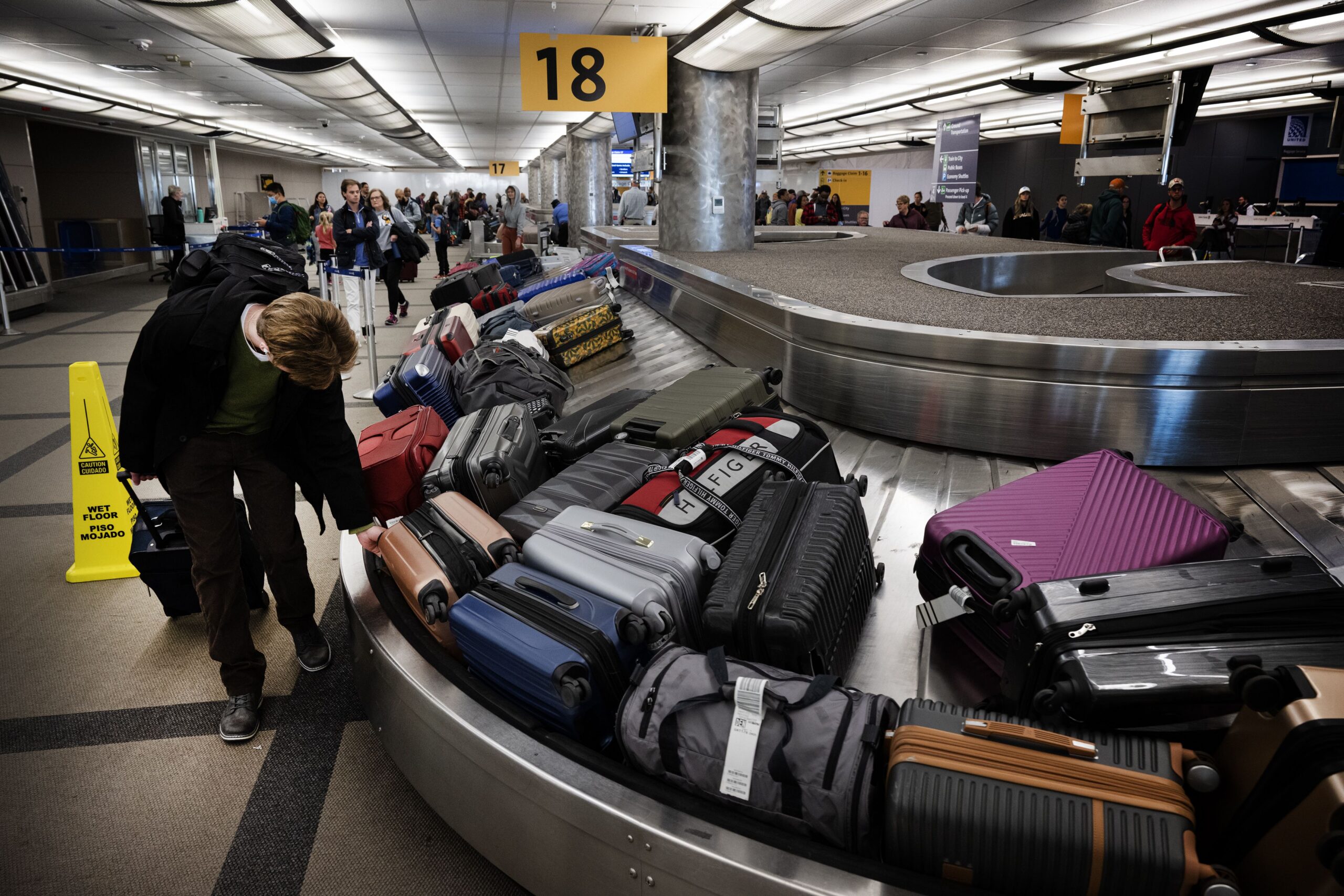
At the Transportation Security Administration, about 95% of employees are deemed essential. They will continue to scan passengers and their bags at the nation’s commercial airports. But they will work without pay until the funding lapse is resolved, raising the possibility that workers will begin calling out or taking unscheduled leave.
Many TSA workers already faced financial stress last year.
“Some are just now recovering from the financial impact of the 43-day shutdown” said Ha Nguyen McNeill, a senior official performing the duties of TSA administrator. “Many are still reeling from it.”
Why is a Homeland Security shutdown happening?
Trump earlier agreed to Democrats’ request that Homeland Security funding be stripped from a broader spending package to allow more time for negotiation over demands for changes to immigration enforcement, such as a code of conduct for federal agents and a requirement that officers show identification. Homeland Security was temporarily funded only through Feb. 13.
Democrats said they won’t help approve more funding until new restrictions are placed on federal immigration operations after the fatal shooting of Alex Pretti and Renee Good in Minneapolis last month. The White House has been negotiating with the Democrats, but the two sides failed to reach a deal by the end of the week, guaranteeing that funding for the department would lapse.
Just like last year, both sides blamed the other for the looming shutdown.
In a statement posted on X, House Republicans in Congress said Democrats are “choosing to protect dangerous illegal aliens over the safety of American families.”
“House Republicans did our job. We passed bipartisan legislation to fund the government. Why are Democrats still playing games with our national security?” the Republicans said.
Democrats in Colorado characterized the changes their party-mates are seeking as reasonable.
“As mayors, we know our most solemn responsibility is to keep our residents safe,” said Denver Mayor Mike Johnston in a statement. “It shouldn’t be too much to ask ICE to abide by the same standards we expect of our own police officers. Congress should withhold funding until ICE agrees to remove masks, wear body cameras, revise its policies, and behave like an actual law enforcement agency with real accountability in place.”
Broadly speaking, some Democrats in Colorado have begun to position the state and jurisdictions they dominate in a more confrontational stance. The attorney general, for example, wants residents to report alleged misconduct by federal agents via an online tool.
At the state Capitol, legislators are considering a proposal to allow a “cause of action” by individuals injured in an immigration enforcement activity.
In Denver, a City Council committee advanced a proposed ordinance banning law enforcement officers, including federal immigration agents, from covering their faces during an arrest or detainment or inside a city facility. City officials in favor of the proposal argued it would address public safety fears and increase transparency. Meanwhile, others raised the complications arising from local police confronting federal agents while conducting operations here.
What agencies are affected?
The rest of the federal government is funded through Sept. 30. That means most federal programs are unaffected by the latest shutdown, including food assistance, and pay for most federal workers and for service members will continue uninterrupted.
The funding lapse affects the Department of Homeland Security and its constellation of agencies, including ICE, U.S. Customs and Border Protection, the Secret Service and the Federal Emergency Management Agency.
The vast majority of employees at the Secret Service and U.S. Coast Guard will continue their work, though they, too, could miss paychecks, depending upon the shutdown’s length.
At the Federal Emergency Management Agency, the shutdown will disrupt the agency’s ability to reimburse states for disaster relief costs. Some workers will be furloughed, limiting the agency’s ability to coordinate with state and local partners, and training for first responders at the National Disaster and Emergency Management University in Maryland will be disrupted.
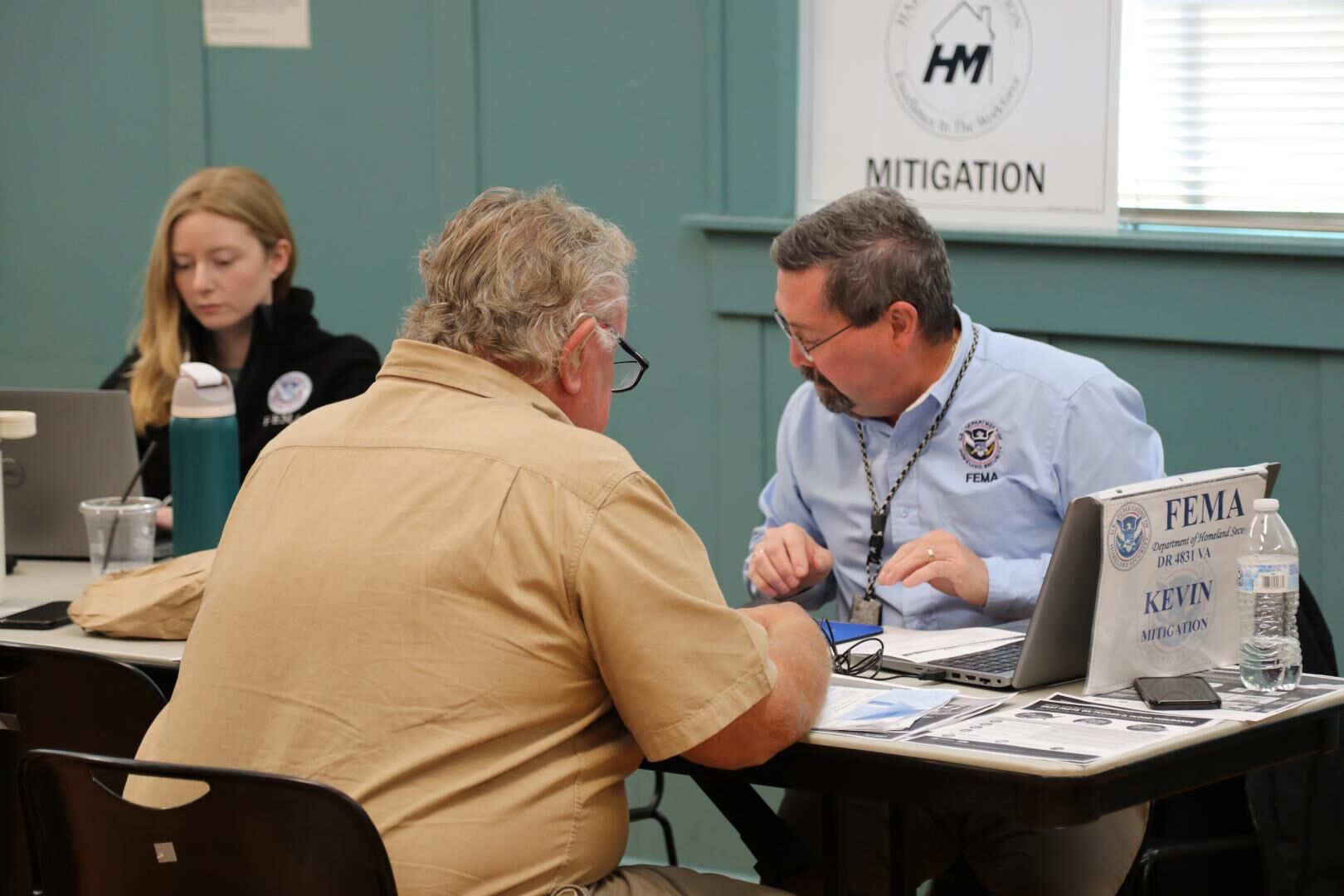
“FEMA’s Disaster Relief Fund has sufficient balances to continue emergency response activities for the foreseeable future, and lifesaving and life sustaining activities are an excepted activity under DHS’s lapse plan,” Gregg Phillips, an associate administrator at FEMA, said in testimony before a House Appropriations Committee. “That said, if a catastrophic disaster occurred, the Disaster Relief Fund would be seriously strained.”
Republicans have pointed out that the work of ICE and CBP will mostly continue unabated during a shutdown, despite Democratic demands for changes at those agencies.
That’s because Trump’s budget bill, passed by Republicans and a small group of Democrats last year, provided ICE with about $75 billion and CBP with about $65 billion, money those agencies can continue to tap for Trump’s deportation operations.
What is the impact on workers and air travel?
It’s up to each federal agency to designate which of its employees are “essential” or “excepted,” both of which mean the same thing in this case. They keep working during a shutdown, typically without getting paid until government funding is back in place.
Some examples of “essential” employees are military personnel, security screeners at airports and law enforcement officers. There can be a wide range, from positions deemed critical for public safety to those authorized by law to continue even without new funding.

Most of the more than 270,000 people employed by Homeland Security are deemed essential, meaning that they stay on the job even during a shutdown. For the fall 2025 shutdown, more than 258,000 DHS employees were in that category, and about 22,000 — or 5% of the agency’s total employee base — were furloughed.
Lawmakers have been particularly concerned about the potential impact on the TSA and airports.
Senate Republican Leader John Thune has warned that “there’s a very good chance we could see more travel problems” similar to last year’s shutdown. As staffing shortages grow, airports may reduce the number of open security lanes or close checkpoints altogether to relieve pressure on an already strained workforce.
Travel organizations are also worries, calling for the government to settle the matter quickly to prevent travel delays.
“As yet another government shutdown looms, so does one of the busiest travel times of the year — spring break,” U.S. Travel, Airlines for America, and the American Hotel & Lodging Association said in a joint statement on Friday. “Travelers and the U.S. economy cannot afford to have essential TSA personnel working without pay, which increases the risk of unscheduled absences and call outs, and ultimately can lead to higher wait times and missed or delayed flights.”
“With the United States hosting the 2026 FIFA World Cup in June of this year, TSA does not have the luxury of time to prepare for the influx of passengers and international travelers,” McNeill, the TSA official, stated Wednesday at the House Appropriations Committee hearing. “A lack of funding and predictability will pose significant challenges to our ability to deliver transportation security for the American public with the level of excellence we expect, and the American taxpayer deserves.
A spokesperson for Denver International Airport told The Denver Gazette that the airport is “unable to speculate how a potential lapse in funding might impact operations.”
During previous lapses, TSA workers still reported to work.
“We remain in close contact with our federal partners to fully understand any potential impact and stand ready, as always, to assist passengers navigating the airport,” the spokesperson said. “We will also be ready to manage lines outside both of our security checkpoints as needed.”
During last year’s lapse in funding, unpaid TSA workers increasingly called in sick or stayed home as missed paychecks made it harder for workers to cover basic expenses.
“The longer the shutdown goes on, the more severe the impact on our TSA workforce,” the agency said at the time.
At one point, DIA sought permission from the federal government to pay for the salaries of air traffic controllers amid news that the Federal Aviation Administration planned to reduce air traffic by 10% across 40 “high-volume” markets to maintain safety during the ongoing government shutdown.


A new day? Colorado’s troubled guardianship office pursues ‘cultural reset’
Marianne Goodland
marianne.goodland@coloradopolitics.com
Updated 4 days ago
Colorado’s guardianship program, long criticized for mismanagement and high staff attrition, is undergoing a “cultural reset,” as its new director works to repair partnerships and prepare for a major expansion under recent legislation. Created by lawmakers in 2017, the Office...
Judge dismisses lawsuit seeking records from Colorado Democratic group
Marianne Goodland
marianne.goodland@coloradopolitics.com
Updated 3 days ago
A lawsuit seeking to obtain records from Democratic lawmakers affiliated with a caucus has been thrown out by a Denver District Court judge. On July 17, Judge Ericka Englert dismissed the April lawsuit filed by progressive activist Derrick Blanton, who...

DOJ official decries ‘nonsense’ in Jeffco schools at fundraising gala
Matt Kyle
matt.kyle@denvergazette.com
Updated 2 days ago
Amid a legal battle between Jeffco Public Schools and the federal government, a Department of Justice official spoke at a fundraising gala and decried “crazy stuff” and “nonsense” in the school district. The gala was for Jeffco Kids First, an...

Polis administration relaunches Colorado e-bike rebates with $3 million
Scott Weiser
scott.weiser@gazette.com
Updated 3 days ago
Gov. Jared Polis and the Colorado Energy Office announced Thursday the return of the state’s popular e-bike rebate program, with registration set to open later this month. The office plans to provide point-of-sale rebates totaling $3 million from the Community...

Appeals court rejects former DougCo commissioner’s legal fee claim
Nicholas Fogleman
nicholas.fogleman@denvergazette.com
Updated 3 days ago
The Colorado Court of Appeals rejected a former Douglas County commissioner’s bid for reimbursement of attorney fees she incurred while responding to multiple investigations into her conduct. The dispute stemmed from a 2019 anonymous letter sent to county officials alleging...

Emerald ash borer confirmed in Colorado Springs, ‘pest is here to stay’
Brennen Kauffman
brennen-kauffman@coloradopolitics.com
Updated 4 days ago
Colorado Springs is asking residents to be on the lookout for an invasive beetle species that has jumped down the Front Range and into local ash trees. City officials said Wednesday that a confirmed emerald ash borer infestation had been...
US Senate panel votes to hold Fauci in contempt of Congress
Reuters
reuters@gazette.com
Updated 4 days ago
By Ahmed Aboulenein WASHINGTON, Aug 6 (Reuters) – A U.S. Senate committee voted on Thursday to hold Dr. Anthony Fauci in contempt of Congress after the former top U.S. infectious disease official refused to answer questions about his handling of...
What happens if voters pass Colorado’s two competing income tax measures?
Marianne Goodland
marianne.goodland@coloradopolitics.com
Updated 4 days ago
The battle between two competing ballot measures — one seeking to cap Colorado’s income tax rate, the other pushing for a tiered system depending on income levels — might come down to whichever ballot proposal gets one more vote. The...

Northglenn city manager resigns immediately after 8 years
Kyla Pearce
kyla.pearce@gazette.com
Updated 4 days ago
Northglenn will have a new city manager after the current one resigned effective immediately after eight years with the city. City Manager Heather Geyer was appointed in July 2018 and was the first woman to hold the role in the...

Bennet settles campaign finance complaints, admits violating state law
Marianne Goodland
marianne.goodland@coloradopolitics.com
Updated 5 days ago
U.S. Sen. Michael Bennet’s gubernatorial campaign has agreed to pay a $7,433 fine for using his Senate campaign account to pay for gubernatorial campaign travel expenses. The July 31 settlement includes an admission by Bennet and his campaign that they...
PREV
PREVIOUS
Colorado legislators, friends and family pay tribute to late Sen. Faith Winter
Colorado legislators on Friday, joined by current and former lawmakers, memorialized the late Sen. Faith Winter, noting her contributions to public policy in transportation, family and medical leave, and climate legislation. Winter died in an auto accident on Nov. 26 at the age of 45. Winter’s legacy in the General Assembly, where she served from […]

State Rep. Peña outlines significant inequalities in Colorado’s school finance law | A LOOK BACK
Forty-Five Years Ago This Week: In a guest column published in The Colorado Statesman, House Minority Leader Rep. Federico Peña, D-Denver, wrote that his greatest disappointment with the legislative process was “the inability, or unwillingness, of the General Assembly to address major issues in a forthright manner.” One of the most serious issues was Colorado’s […]