

Colorado Supreme Court holds municipal sentences may not be greater for identical state crimes
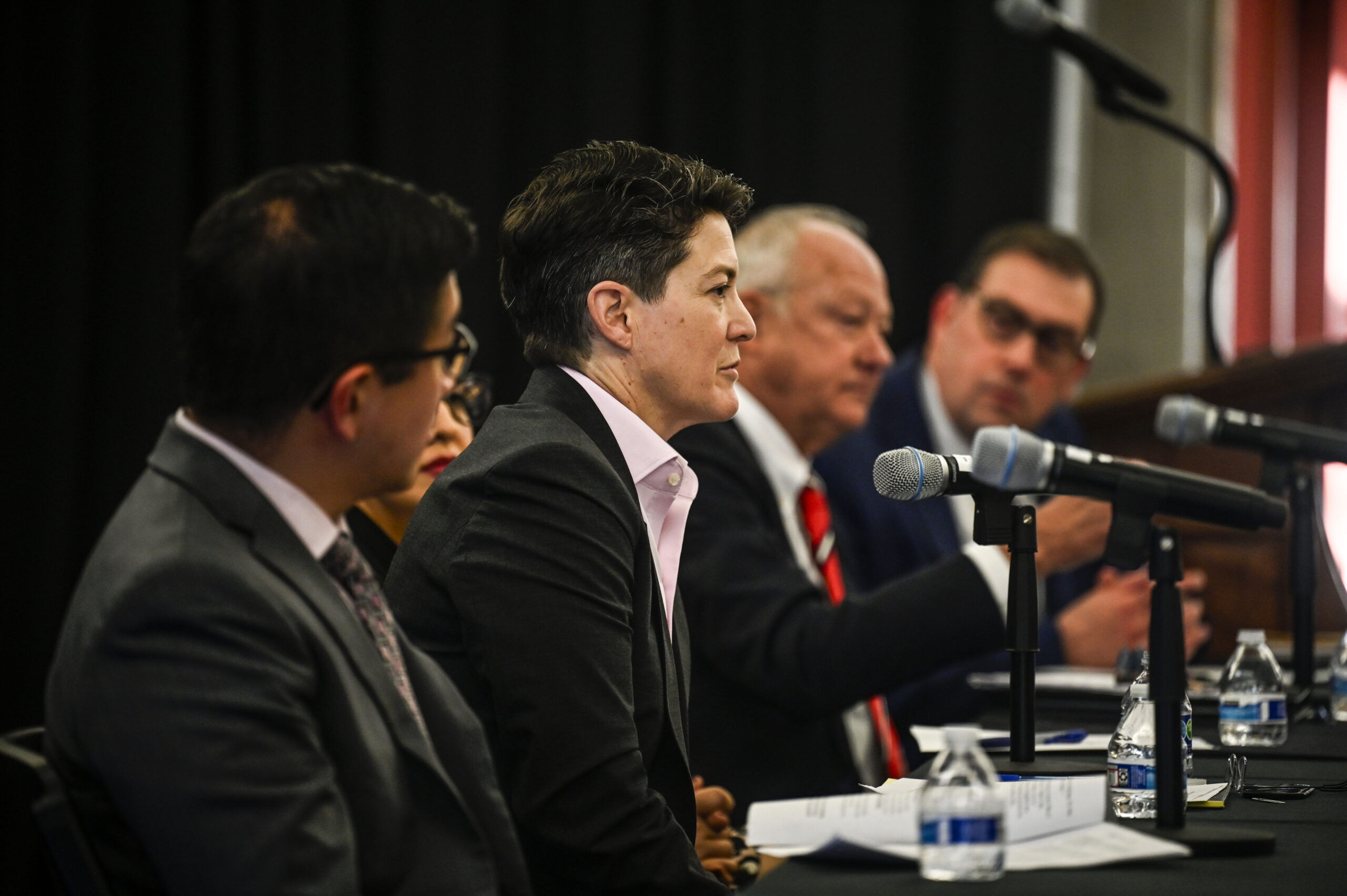
The Colorado Supreme Court ruled on Monday that municipalities may not subject defendants to sentences that are harsher under their own ordinances than for identical offenses under state law.
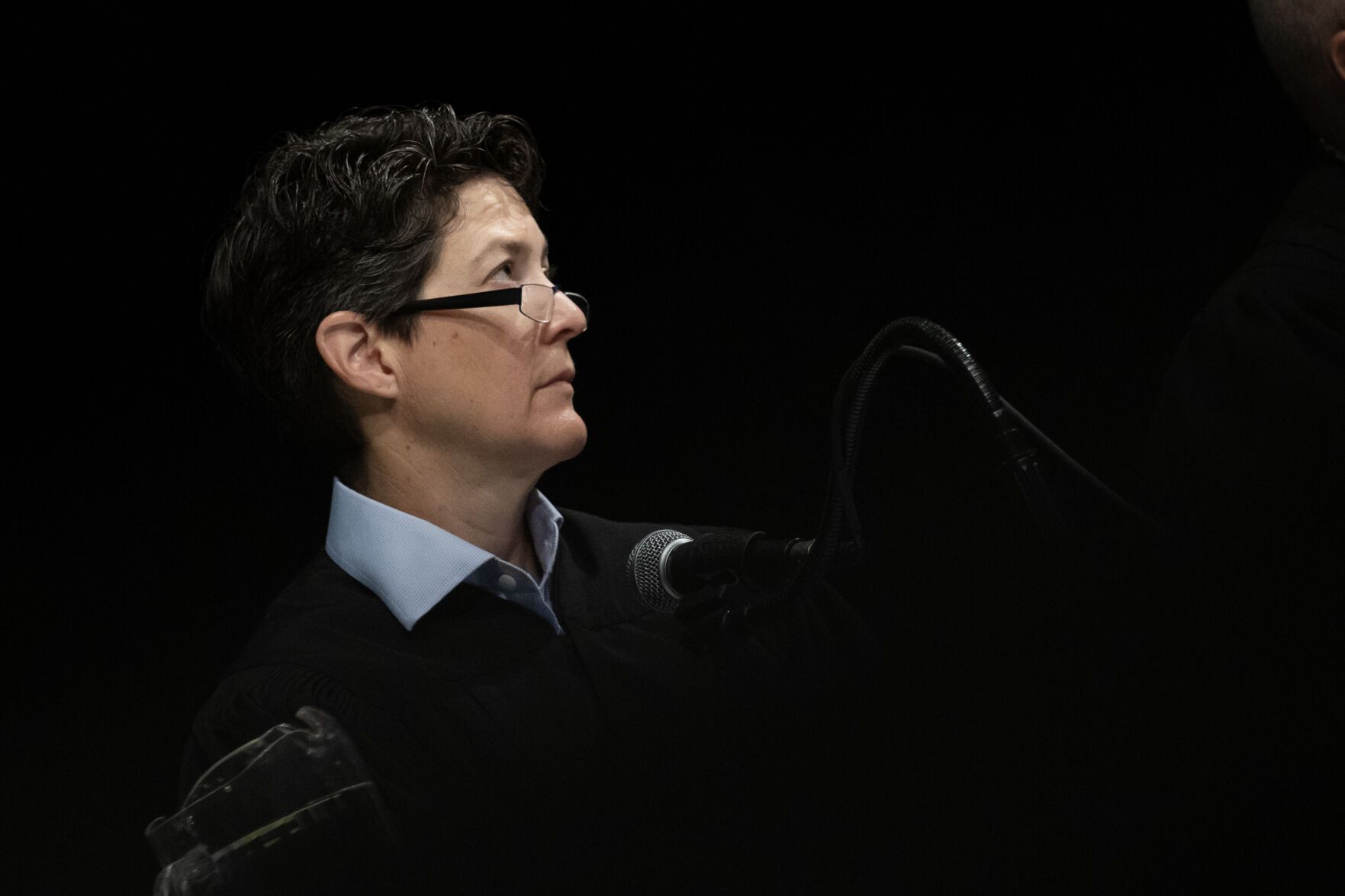
In the Dec. 22 opinion, Chief Justice Monica M. Márquez noted localities are free to prosecute defendants in municipal court for crimes that could also be prosecuted in state court, but they cannot create penalties that conflict with Colorado law.
“In so doing, the municipal penalty materially impedes the state’s interest in ensuring that maximum penalties for such conduct are consistent and uniform across Colorado,” she wrote. “Thus, the municipal provisions create an operational conflict with state law.”
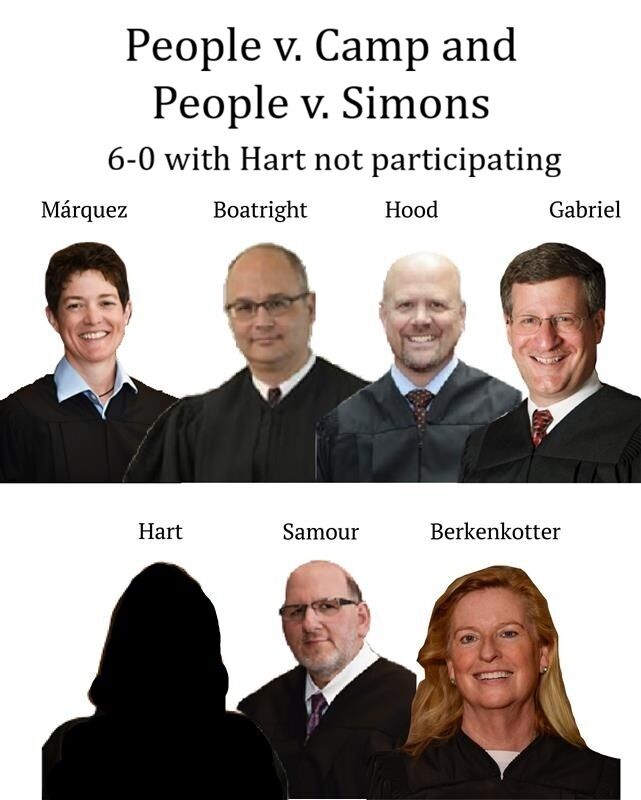
In a rare pair of appeals taken directly from municipal court, the justices heard about an unusual twist in the relationship between state and municipal courts. Thanks to 2021 legislation that revised and standardized the penalties for misdemeanors and petty offenses under state law, many localities suddenly found themselves with higher sentences on the books for analogous crimes prosecuted in municipal court.
“For the longest time, what I remembered is if you got charged in municipal court, you were glad because that meant it was a lower-level offense with lesser penalties,” said Justice Carlos A. Samour Jr. during oral arguments in May. “Now, it feels like the other way around, where if you get charged in municipal court, you’re really in trouble.”
Earlier this year, the legislature attempted to clarify that local governments could not impose more severe sentences for “comparable” offenses under state law. However, on May 16, Gov. Jared Polis vetoed the legislation and suggested the Supreme Court should weigh in first.
In the cases before the Supreme Court, Aleah Michelle Camp was charged in Westminster Municipal Court with theft. Compared with the identical state offense, she would face a maximum municipal fine nine times greater and jail time 36 times longer than Colorado law imposed.
Camp challenged the legality of Westminster’s ordinance, but the prosecution argued that the city had the inherent authority to penalize theft more harshly.
“Theft in Westminster happens in Westminster. Theft in Westminster affects Westminster retailers. When Westminster retailers are affected, they have trouble doing business in Westminster,” the city attorney’s office argued. “So, it is a local concern to address that criminal behavior.”
While Camp’s case was pending, Aurora law enforcement charged Danielle Ashley Simons with trespass and motor-vehicle trespass under the city code. Had she been prosecuted in state court and found guilty, the maximum period of incarceration would have been 120 days and a $750 fine for the more serious motor vehicle offense, and a lesser penalty for ordinary trespass.
Instead, she faced up to 364 days in jail and $2,650 for both municipal crimes.
After municipal court judges rejected the defendants’ challenges, Camp and Simons turned to the Supreme Court. Both cases, which presented identical legal issues, attracted numerous outside organizations.
The Colorado Municipal League defended municipal courts’ ability to relieve state courts of certain criminal matters and argued that uniformity in sentencing “is not a virtue.” Moreover, defendants should not be “surprised” when they commit an offense in a jurisdiction that has chosen to punish the conduct more harshly, the league argued.
The Denver District Attorney’s Office and Denver City Attorney’s Office also weighed in, noting there were almost 13,500 cases prosecuted in Denver’s municipal court in 2024. The offices argued the state’s lower penalties would “significantly limit” the city’s ability to enforce its own ordinances.
The municipal public defender offices for Denver and Aurora, meanwhile, challenged that argument. They said municipal defendants have a greater incentive to plead guilty because of the longer jail time, and officers can arbitrarily choose to initiate a case in state or municipal court when the alleged offense is identical at each level.
“The only division between the two court systems is that the courtrooms, which hear state cases, are on the third floor of the (Denver) Lindsey-Flanigan Courthouse, while the courtrooms, which hear municipal cases, are on the fourth floor of the same courthouse,” the defender offices wrote. “A person’s sentence can be as much as 30 times higher for the same alleged misconduct if they get off the elevator on the fourth floor instead of the third.”
The defendants asked the Supreme Court to consider two reasons why they could not be punished more harshly than they would be in state court.
First, they argued Colorado courts have long recognized that the right to equal protection of the laws is violated when there are different punishments for the same criminal violation. Second, Colorado’s interest in eliminating sentencing disparities, as expressed through the 2021 sentencing reform bill, preempts localities’ ability to impose higher penalties.
Márquez, at oral arguments, signaled that the second contention made the stronger case against disparate punishments.
“Where municipal provisions authorize punishments in excess of those specific statute caps, that’s what creates the operational conflict,” she said. “It is both authorizing what state law forbids and impedes the state’s interest in uniformity for sentencing for those types of offenses.”
The court ultimately adopted that reasoning, siding with Camp and Simons.
“Municipalities have an interest in holding offenders accountable for such conduct by penalizing ordinance violations within their jurisdictions. At the same time, the state has an interest in ensuring that maximum penalties are consistent across Colorado,” Márquez wrote. “The conflict here is that the municipal penalties Camp and Simons face exceed the penalty caps that the state allows for identical state offenses and thus materially impede the state’s interest in uniform and consistent sentences.”
“We are grateful that the court recognized the importance of sentencing consistency and the need to protect individuals from vastly disparate treatment based solely on the jurisdiction where charges are filed,” said Amy Trenary and Ashley Cordero, who represented Simons. “Our hope is that this clarification will inspire municipalities to pivot toward creative solutions that elevate compassion over punishment and prioritize initiatives that support and uplift our neighbors who are struggling.”
Kevin Bommer, executive director of the Colorado Municipal League, countered that he was concerned about the ability of localities to deter certain crimes through harsher punishments.
“Cities and towns are the ones paying for law enforcement to respond to increasing so-called low-level crimes, and whose residents and businesses have to deal with it,” he said. “The courts have no business putting their thumbs on the scale, especially in clear contradiction to the Colorado Constitution and absent any legislative intent.”
Justice Melissa Hart did not participate in the case. She has been on a health-related leave of absence since Oct. 28 and announced last week that she is stepping down in January.
The cases are People v. Camp and People v. Simons.


Parenting from prison: Inmates hope to be present in their children’s lives, while physically absent
Marianne Goodland
marianne.goodland@coloradopolitics.com
Updated 2 days ago
The room was decorated with balloons, the tables sparking bright with colors as the smell of pizza and cake wafted through the air. As did music. This was, after all, a father-daughter dance. Except this was not a typical father-daughter...
Appeals court confirms Colorado judges can compel electronic records from out of state
Michael Karlik
michael.karlik@coloradopolitics.com
Updated 1 day ago
Colorado’s second-highest court clarified on Thursday that judges are empowered to compel out-of-state companies to produce electronic records under state law. El Paso County jurors convicted Mischa Jargowsky on three counts of money laundering and one violation of Colorado’s organized...

10th Circuit upholds finding of no racial discrimination against family at Denver Chili’s
Michael Karlik
michael.karlik@coloradopolitics.com
Updated 22 hours ago
The Denver-based federal appeals court agreed on Wednesday that a Black plaintiff failed to show that a Chili’s manager’s request for her family to provide valid payment at the outset of their meal amounted to racial discrimination. Markesha Futrell-Smith filed...
Appeals court reinstates Mesa County defendant’s request for DNA testing under new Colorado law
Michael Karlik
michael.karlik@coloradopolitics.com
Updated 2 days ago
Colorado’s second-highest court revived a Mesa County defendant’s petition for DNA testing in his three-decade-old attempted murder case on Thursday, concluding that a trial judge wrongly interpreted a recent Colorado law in dismissing the request outright. Jurors convicted Billy Joe...
Appeals court reverses Denver juvenile’s conviction due to improper expert testimony
Michael Karlik
michael.karlik@coloradopolitics.com
Updated 2 days ago
Colorado’s second-highest court reversed a juvenile defendant’s conviction for unlawful sexual contact on Thursday after an expert witness’s testimony improperly suggested the child victim was telling the truth. The defendant, identified as S.H-S., was around 16 years old when he...

Judge orders home confinement for Barry Morphew
Dennis Huspeni
dennis.huspeni@gazette.com
Updated 2 days ago
An Alamosa County district judge has ordered home confinement for Barry Morphew, who is accused of murdering his wife. Barry Morphew, 59, faces a first-degree murder charge in the death of his wife, Suzanne Morphew, who disappeared Mother’s Day weekend...
Appeals court says jury does not need to view porn to determine if it’s ‘obscene’
Michael Karlik
michael.karlik@coloradopolitics.com
Updated 3 hours ago
Colorado’s second-highest court ruled for the first time on Thursday that a jury does not always need to view pornographic material to determine if it meets the criteria for obscenity. Mesa County jurors found Shayla Ann Simpson guilty of child...
10th Circuit disagrees Sterling officer had no basis to arrest motorist who lacked insurance details
Michael Karlik
michael.karlik@coloradopolitics.com
Updated 3 days ago
The Denver-based federal appeals court disagreed on Tuesday with a trial judge’s decision to bar evidence from a pat-down search from being used against a defendant. Federal prosecutors obtained an indictment of Jorge Sigala-Baray for being a felon in possession of a...

Colorado Springs officers’ tasing, threats prompt federal judge to block use of suspect’s statements
Michael Karlik
michael.karlik@coloradopolitics.com
Updated 3 days ago
A federal judge blocked the government last month from using some of a defendant’s statements as evidence, reasoning that the defendant made them involuntarily as Colorado Springs officers tased him five times and one officer threatened to kill him. Officers...

Appeals court rejects CDOT employee’s discrimination, retaliation claims
Michael Karlik
michael.karlik@coloradopolitics.com
Updated 22 hours ago
Colorado’s second-highest court agreed last week that a Colorado Department of Transportation employee had not shown that his employer discriminated and retaliated against him due to his religion and national origin. Ayman Salloum, who described himself as a 70-year-old Muslim...
PREV
PREVIOUS

Fort Lewis College student proud of new Turning Point USA chapter despite backlash
Before Fort Lewis College senior Jonah Flynn became president of the newly formed FLC Turning Point USA chapter, he described himself as a liberal-leaning atheist. Flynn, a senior studying philosophy and Spanish, gained local and national attention after the Associated Students of Fort Lewis College initially denied his request to start a Turning Point chapter […]

Gov. Jared Polis urges Trump to reverse FEMA disaster aid denials
Gov. Jared Polis and Democratic U.S. Sens. Michael Bennet and John Hickenlooper are calling on President Donald Trump to reverse federal denial of Colorado’s requests for federal disaster declarations tied to recent wildfires and flooding. Polis’ office said he received two denial letters from the Federal Emergency Management Agency late Saturday. The letters followed requests […]