

Federal judge hears testimony, arguments over whether to order ICE to follow warrantless arrest law

A federal judge heard testimony on Thursday from multiple noncitizens who were arrested by immigration officers in Colorado this year, and arguments from their attorneys that U.S. Immigration and Customs Enforcement is violating the legal standard for conducting warrantless arrests.
The ACLU of Colorado and other law firms have asked U.S. District Court Senior Judge R. Brooke Jackson to issue a preliminary injunction holding ICE to the requirement in federal law that warrantless arrests only occur when officers have probable cause to believe someone is in the country illegally and they are a flight risk.
“Masked, militarized ICE agents with flak jackets and long rifles are terrorizing neighborhoods across Colorado, ignoring their duty to obtain warrants so they can meet arbitrary government quotas,” argued plaintiffs’ attorney Kenzo Kawanabe.
Jackson, a Barack Obama appointee, had several pointed questions for each side at the outset of the hearing. He wondered whether the named plaintiffs had standing to pursue the case as a proposed class action, as they had already been arrested, released and, in the government’s view, were unlikely to be arrested again.
“Every non-documented, non-immigrant-status individual — and you say there are over 100,000 of them in Colorado — every one of those people is subject to arrest. But does ‘subject to arrest’ give you legal standing?” Jackson asked.
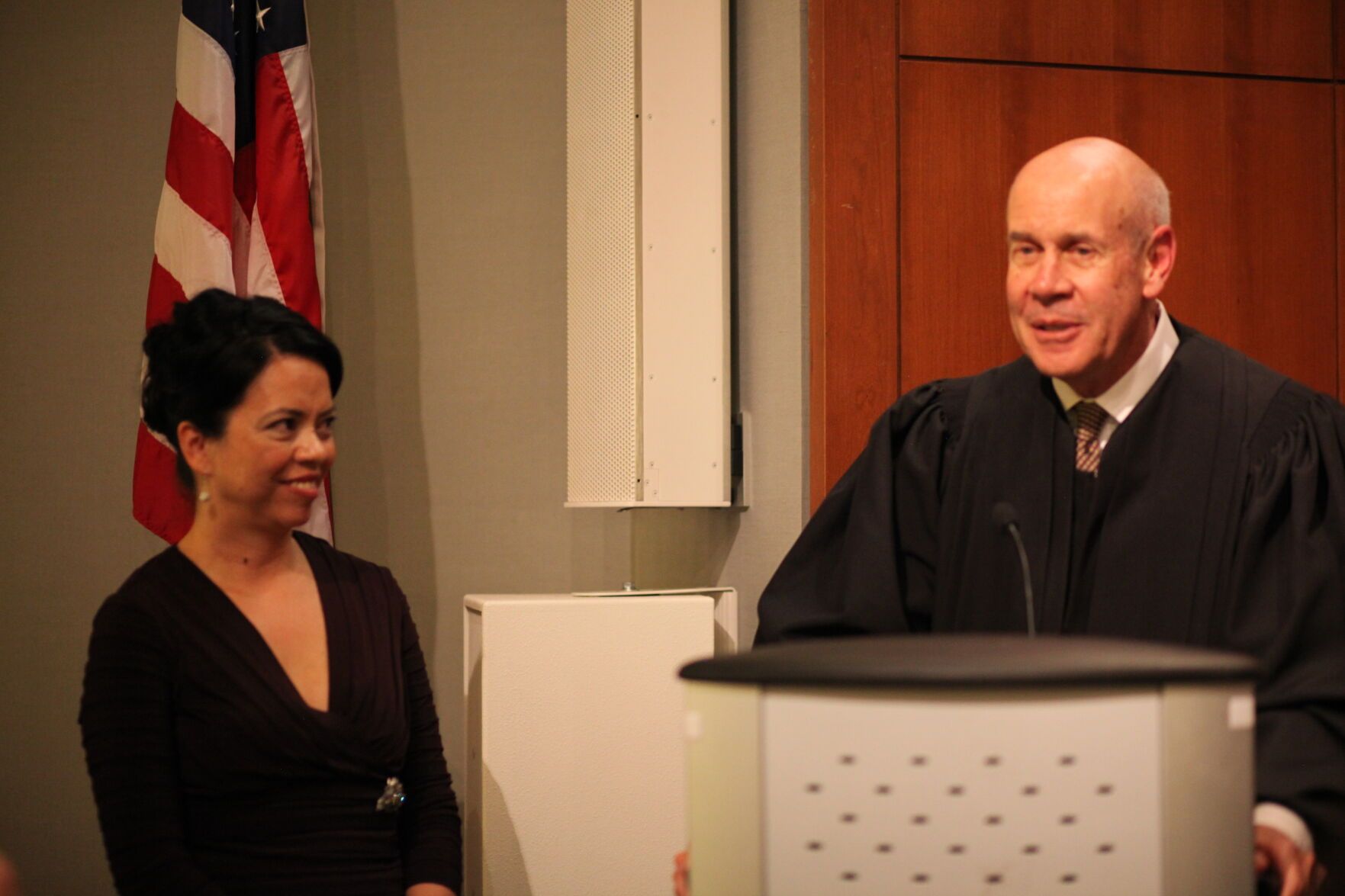
At the same time, Jackson repeatedly pressed the government about an issue raised during a virtual conference on Oct. 24. At the time, the government informed Jackson that ICE’s top legal officer had advised all ICE employees of the need to adhere to the requirements for warrantless arrest. The message was prompted by an Illinois judge’s order from earlier in the month in a separate Chicago-area case.
Jackson questioned last week why the government would not agree to a preliminary injunction that reflects ICE’s own understanding and is judicially enforceable. He reiterated his concern at the hearing.
“You say, ‘This is our policy. This is what we will do. We stand by this.’ The plaintiffs said, ‘That’s all we’re asking for.’ All you have to do is say, ‘We’ll stipulate to a court order that says we’ll do (that),” Jackson said. “And the case is done. Why won’t you do that?”
“The defendants do not think they have done anything wrong that they could be subject to an injunction,” responded Assistant U.S. Attorney Nick Deuschle.
The government does not have to admit that in order to reach a settlement, interjected Jackson. Moreover, if ICE arrested a person unlawfully and released them under supervision, as they did with the plaintiffs, a litigant could theoretically never bring a lawsuit to block future such arrests.
“How can these people ever bring a case?” he wondered. “What kind of a country is it if people can’t bring before a court their grievance if ICE people are just ignoring these policies? There’s gotta be something that a court can do about it.”
Although the hearing was not focused on whether Jackson should green-light the litigation as a class action, he observed the government may be forcing him to do so with its argument that he lacks authority to issue a statewide injunction against ICE.
“I’m starting to think it is necessary,” he said.

For the remainder of the hearing, Jackson heard from the four named plaintiffs who were each arrested without a warrant this year, seemingly without any determination that they were a likely flight risk.
The arrest of Caroline Dias Goncalves drew significant attention earlier this year, after the Utah college student was pulled over in Mesa County for a traffic violation. A sheriff’s deputy alerted immigration authorities and let her go, only for agents to arrest her down the road. Attorney General Phil Weiser subsequently sued the deputy for allegedly violating state law.
Dias Goncalves, who had a pending asylum application at the time of her arrest, said her 15 days in detention were “suffocating,” and she lost one of her jobs and her housing after her arrest. Immigration officers never asked about the factors that would make her a flight risk prior to taking her into custody.
Refugio Ramirez Ovando, who lives in Grand Junction, testified that immigration officers told him they were actually looking for someone else when they arrested and detained him for 100 days. They similarly never inquired into the possibility he was a flight risk before the arrest.
Asked about the effect his arrest had on his family, Ramirez Ovando leaned back, looked at the ceiling, wiped his face with a tissue and could not speak for 30 seconds. Jackson called for a brief recess.
“This did affect my family, particularly my daughter. And this is why I broke down,” said Ramirez Ovando afterward through an interpreter.
An immigration judge subsequently granted him permanent residency, but the government has not provided him documentation.
“After you leave this courtroom today,” asked attorney Hans Meyer, “do you have a fear you could be stopped and arrested without a warrant by ICE?”
“Yes, because I have the same evidence that they asked me for when they arrested me the first time, and that’s all I have,” responded Ramirez Ovando.
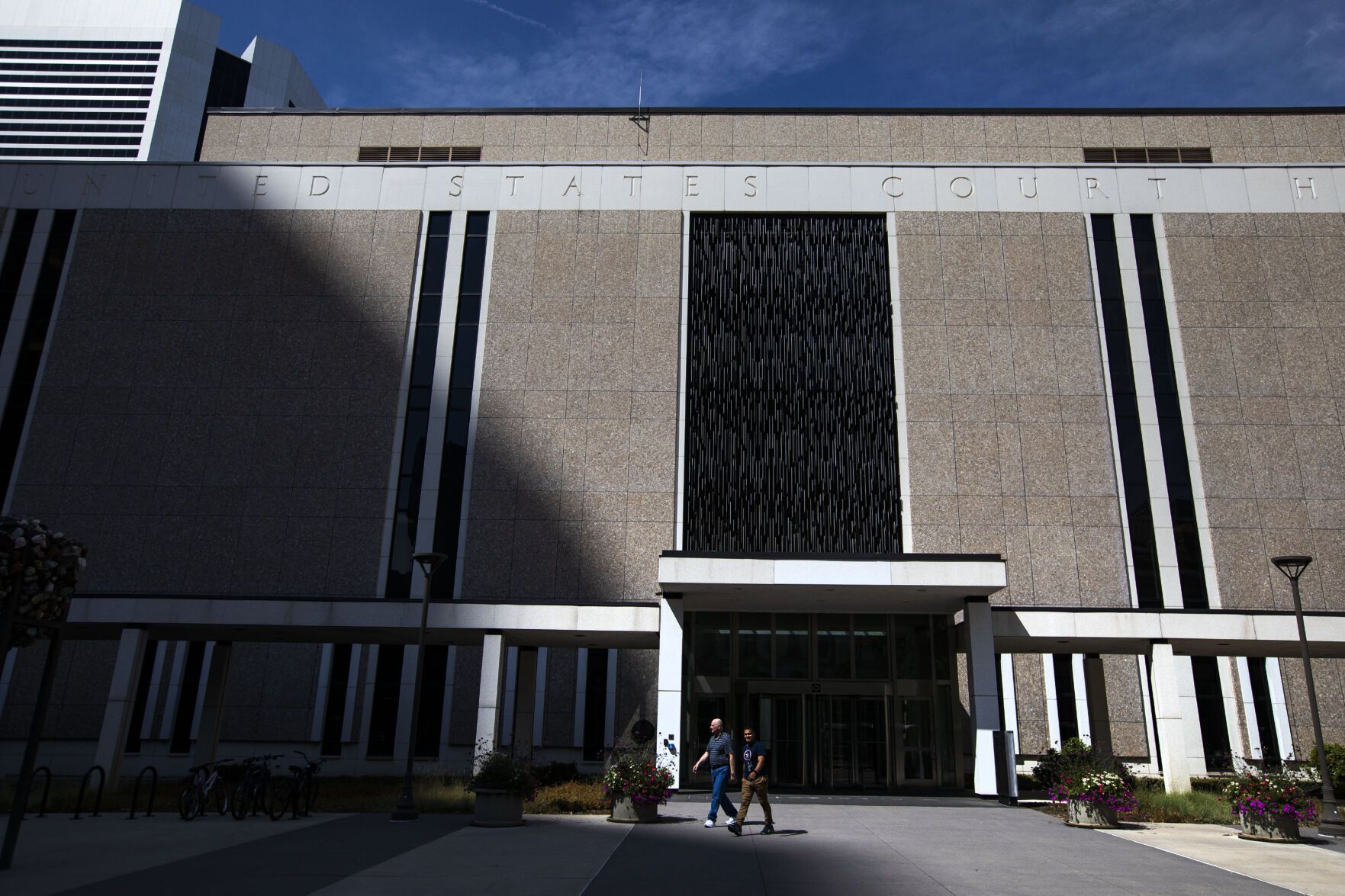
The plaintiffs also called as a witness Robert Guadian, who led the Denver ICE field office from January until a few days ago, when he was one of several regional leaders removed from their roles and reassigned.
Guadian described immigration arrests as either “targeted” or “collateral.” The targeted actions go after “the worst of the worst people” and agents have knowledge of where they are, he said, whereas collateral arrests can happen without warrants when agents encounter someone in the field who meets the criteria.
The plaintiffs’ lawyers played multiple clips of Guadian giving TV interviews about ICE’s targeted operations. Guadian told reporters that if targets “have people who are with them also illegally present, they will be arrested as well.”
“It wouldn’t have been hard, though, to say, ‘We arrest people who are likely to flee,'” said attorney Sean Grimsley.
“The assumption is that people trust law enforcement,” Guadian responded. “And when federal officers, local, county, state officers make arrests, they don’t need qualifying statements that we’re making lawful arrests.”
“But that’s what this whole case is about, right? Whether that’s true and that trust is warranted,” said Grimsley.
Finally, Jackson heard testimony from immigration attorney Arturo Vazquez. He described that since the summer, when White House Deputy Chief of Staff Stephen Miller asserted there would be a quota of 3,000 immigration arrests per day, he has seen an unprecedented number of people in detention who fit the profile of the plaintiffs. Specifically, people who are arrested without a warrant and without an individualized determination of their status and flight risk.
The arrests also commonly accompany traffic stops, where people show officers Colorado-issued driver licenses that are intended for noncitizens.
The hearing will continue on Friday.
The case is Ramirez Ovando et al. v. Noem et al.


Misconduct complaints from ex-Colorado judicial discipline director dismissed against federal judges
Michael Karlik
michael.karlik@coloradopolitics.com
Updated 14 hours ago
The administrative body for the Denver-based federal appeals court upheld a finding last week that misconduct complaints against Colorado’s chief federal trial judge and the chief appeals judge warranted dismissal and appeared to be a “litigation tactic” by the complaining...

First-ever Red Rocks naturalization ceremony draws most diverse group of new citizens
Michael Karlik
michael.karlik@coloradopolitics.com
Updated 17 hours ago
Colorado’s federal trial court held its first-ever naturalization ceremony for nearly 300 new citizens on Thursday at Red Rocks Park and Amphitheater. “We’re doing it to commemorate the 250th anniversary of the Declaration of Independence and the United States. Red...
10th Circuit finds no fair housing violation by Littleton landlord for worker’s alleged rape of tenant
Michael Karlik
michael.karlik@coloradopolitics.com
Updated 2 days ago
The Denver-based federal appeals court concluded on Monday that Littleton’s housing authority could not be held liable for a maintenance worker’s alleged rape of a tenant, as the worker’s employment did not provide any special access to the victim. A...

Jeffco Public Schools sues Trump administration to protect funding after alleged transgender policies violation
Matt Kyle
matt.kyle@denvergazette.com
Updated 1 day ago
In the wake of several threats by the Trump administration to revoke federal funding, Jeffco Public Schools filed a lawsuit against the Department of Education seeking to protect that badly needed money. Jeffco has been under investigation by the DOE’s...

Denver detox center did not violate man’s rights with 10-hour hold, 10th Circuit says
Michael Karlik
michael.karlik@coloradopolitics.com
Updated 3 days ago
The Colorado-based federal appeals court concluded on Tuesday that Denver’s detoxification facility did not violate a man’s rights by holding him against his will for 10 hours until his blood alcohol content was projected to reach zero. Unusually, Brian Garrett’s...

Federal judge clarifies ex-GOP treasurer candidate’s burden to prove defamation claims
Michael Karlik
michael.karlik@coloradopolitics.com
Updated 3 days ago
A federal judge clarified last week that businessman and former Republican statewide candidate Brian Watson will need to surmount a higher hurdle in proving his claim that a party guest’s alleged description of him as a “criminal” amounted to defamation....
Colorado board permits state to appeal injunction against arthritis drug price cap
Marissa Ventrelli
marissa.ventrelli@coloradopolitics.com
Updated 3 days ago
A Colorado board voted Friday to allow the Attorney General’s Office to fight an injunction against a price cap on a drug that treats arthritis. A U.S. district court judge had granted the company Amgen a preliminary injunction, temporarily blocking...

Federal judge rejects constitutional claims, ‘expressions of hatred’ by Club Q defendant
Michael Karlik
michael.karlik@coloradopolitics.com
Updated 4 days ago
A federal judge rejected a defendant’s claims that he received constitutionally ineffective assistance of counsel while facing federal hate crime and firearms charges for murdering five people at a Colorado Springs LGBTQ nightclub in 2022. Anderson Lee Aldrich is serving...

Divided 10th Circuit upholds Colorado congestion fee on car rentals
Michael Karlik
michael.karlik@coloradopolitics.com
Updated 4 days ago
The Denver-based federal appeals court concluded on Monday that a 2024 “congestion impact fee” that lawmakers imposed on short-term vehicle rentals did not conflict with a federal prohibition on certain airport-related charges. Beginning in the 1970s, Congress began limiting the...
10th Circuit dismisses woman’s lawsuit following 10-year attempt to undo restraining order
Michael Karlik
michael.karlik@coloradopolitics.com
Updated 7 days ago
The Denver-based federal appeals court rejected a woman’s challenge on Friday to a restraining order imposed on her more than a decade ago, finding that she cannot credibly claim she will be prosecuted for violating the restraining order through her...
PREV
PREVIOUS

Energy assistance programs here to help Colorado Springs-area families through government shutdown
As winter weather and the impacts of the federal government shutdown roll across Colorado, programs are available to help people around Colorado Springs pay their utility bills. Colorado Springs Utilities reminded customers that the federally funded Low-Income Energy Assistance Program, or LEAP, will open for applications on Nov. 1 despite the government shutdown. Smaller programs […]

Colorado lawmakers sign off on $10 million for food assistance as SNAP benefits are poised to run out
A panel of Colorado legislators on Thursday approved a $10 million cash infusion into food assistance for residents who are expected to lose food stamp benefits starting on Saturday amid the federal government shutdown. But state policymakers and budget staffers said they fear that the plan is riddled with “holes,” describing it as akin to […]