

Colorado Senate committee advances bill to create 29 judgeships, with lawmaker support delicate
The Senate Judiciary Committee advanced a bill to establish 29 new Colorado judgeships by a vote of 6-1 on Wednesday, with supporters and opponents both cautioning that their positions could change based on the availability of money.
The committee heard testimony from numerous witnesses in support of the bill, including from sitting judges. Chief Justice Monica M. Márquez indicated she was willing to discuss the possibility of prioritizing some new judgeships over others or rolling out the positions over a longer period in order to address lawmakers’ heartburn over the price tag.
“It certainly strikes me as a priority item in the overall budget,” said Sen. John Carson, R-Highlands Ranch, who voted against the bill. “But right now, until I get a better handle on the overall budget situation for the state, I’m not gonna be able to support it.”
“I’m gonna set my budget questions aside,” said Sen. Julie Gonzales, D-Denver, who chairs the judiciary committee and is also a member of the Senate Appropriations Committee. “I really do want to reiterate that my vote today is a vote in support of the policy goals that I think we all share.”

Sen. Julie Gonzales is reflected in the glass over a poster on her office wall on Friday, Feb. 3, 2023, at the state Capitol building in Denver, Colo.(Timothy Hurst/The Denver Gazette)
TIMOTHY HURST/DENVER GAZETTE

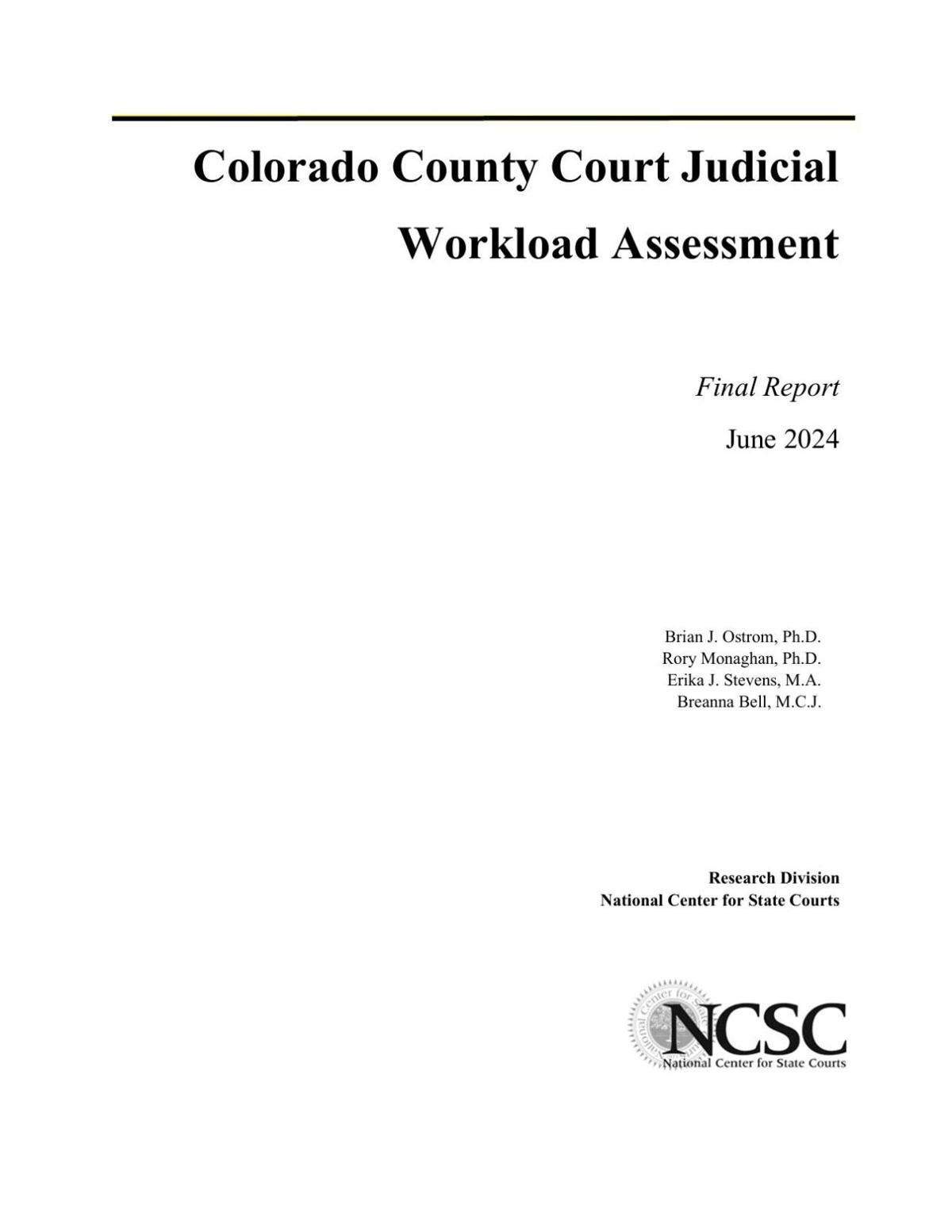
Senate Bill 24 would create 26 new trial court judgeships and three new slots on the Court of Appeals over a two-year period. The request from the Judicial Department comes in the wake of multiple workload studies, finalized in 2023 and 2024, confirming the state’s court system is understaffed. Based on the time required to process cases, the studies estimated Colorado needs approximately 43 more district judges, 20 more county judges and six appellate judges.
Márquez acknowledged SB 24, which is the judiciary’s legislative priority this year, suffers from “bad circumstances” because of an estimated $672 million state budget deficit.
“Our need for judges has been palpable for some time. But our sense of it was largely anecdotal,” she testified, noting the proposal was still a half-measure given the studies’ findings. “The timing for bringing this bill this year is somewhat unfortunate, but it coincides with the data that we finally had available to us to pinpoint where, precisely, we need the judges.”
‘I have to wing everything’
During the “State of the Judiciary” address earlier this month, Márquez warned that judges are leaving because of unsustainable workloads and the stresses of the job, stemming in part from pandemic-era developments and legislative changes that imposed new obligations.
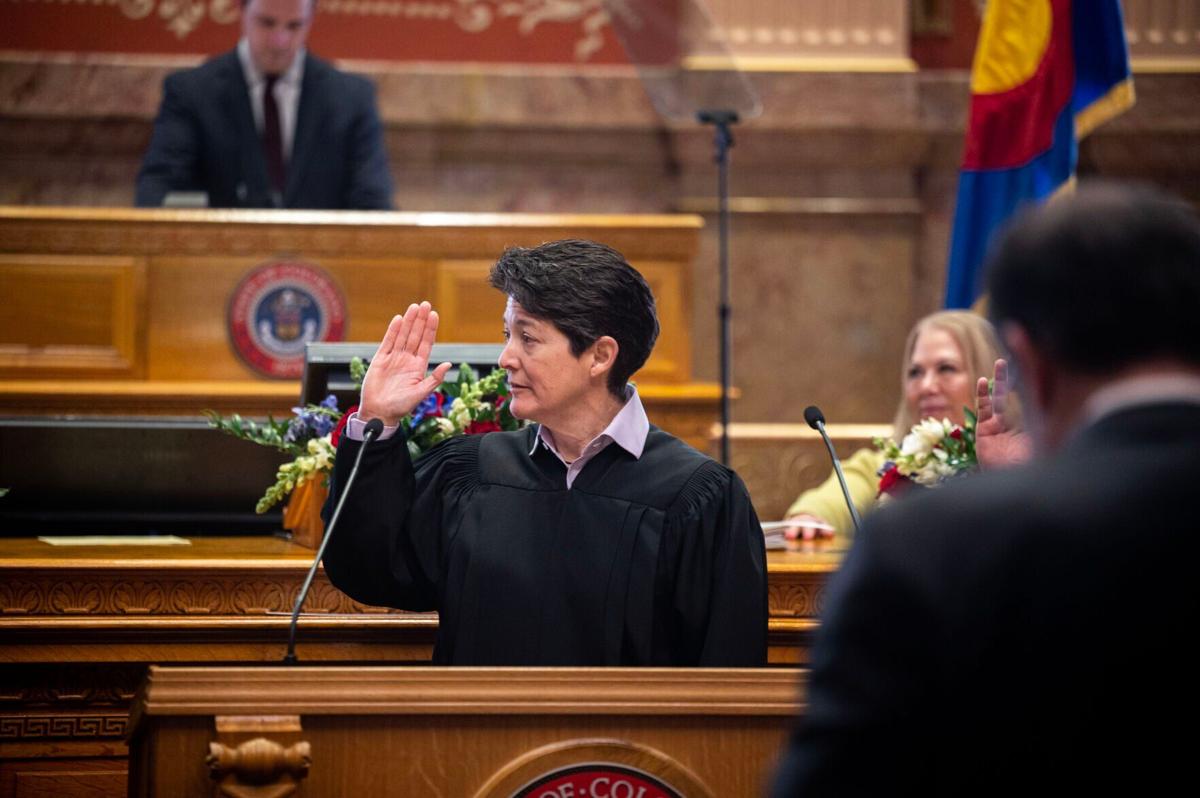
Monica M. Márquez, Chief Justice of the Colorado Supreme Court, administers the oath of office to newly elected representatives on the floor of the Colorado House of Representatives on the first day of the 2025 legislative session at the State Capitol on Wednesday, Jan. 8, 2025. (Stephen Swofford, Denver Gazette)
Stephen Swofford/ Denver Gazette

Her comments echoed findings by the National Center for State Courts, a Virginia-based organization that tracked the time spent at work by county, district and appeals judges over multiple weeks. Researchers developed weighted caseload models based on that information, and also solicited free responses from judicial officers — a category that includes judges, magistrates and water referees.
For the district courts — which have 272 judicial officers and see an average of 205,000 cases filed annually — researchers found some matters took substantially more time than others. Those included homicide, child neglect and family cases in problem-solving court. More than two-thirds of judges reported having insufficient time to get their work done, with the percentage being highest among juvenile judges at 81%.
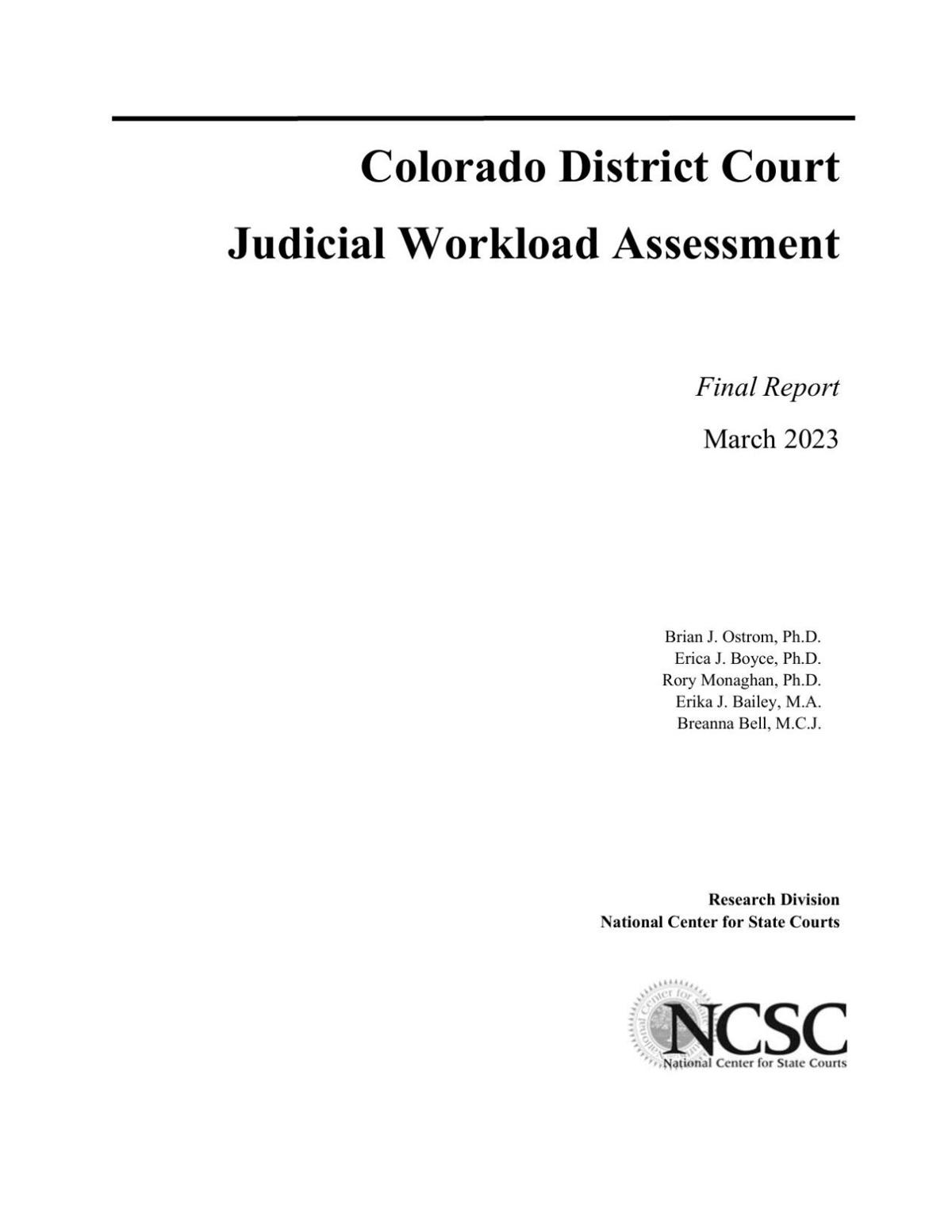
County courts — with approximately 144 full-time and part-time judicial officers handling almost 391,000 filings annually — generally spent the most time on drunk driving, domestic violence and small claims cases. Researchers shared several pages of anonymous free responses in which county court judicial officers warned that the administration of justice is hanging by a thread in some courtrooms:
• “There is no time for reviewing the case before trial. I have to wing everything. I look at a case only as I begin the trial”
• “Right now it is more of a cattle call (for eviction cases) … people are losing their homes and a judge is not even explaining why”
• “These cases are rushed. The volume I am expected to handle is inhuman”
• “I frequently went without water, food and bathroom breaks to run the docket to ensure clerks get a lunch. I have taken fewer than 30 lunch breaks in the last three years”
• “(I)t doesn’t matter what case type I am preparing for hearing. They are all under-prepared because I don’t have the time to actually sit down and do more than skim the motions and responses and briefly prepare for the hearing”
Costs are daunting
When fully implemented, the cost of SB 24 would be $26.1 million annually. The General Assembly’s staff analysis noted only $18.1 million would go directly to the Judicial Department for judges and staff. An additional $7 million would be needed for a corresponding increase in public defenders, plus $10 million for district attorneys’ offices, which are funded by counties.
At the time of the committee hearing, lawmakers and the judiciary had already heard criticism from some members of the Joint Budget Committee that funding increases would be virtually impossible this year.
Nonetheless, judiciary committee members were not ready to deem SB 24 dead on arrival.
“I always reflect on the role of government, the proper role of government, when I’m deciding how to vote,” said Sen. Lisa Frizell, R-Castle Rock, who is sponsoring SB 24. “It was very clear to me when I was having these conversations that providing a judicial system that works, functions well for our citizens, is the role of government.”
“I want to do as much of this as possible,” added Sen. Mike Weissman, D-Aurora. He suggested narrowing the scope of the bill “in the most data-informed way possible” if it would preserve at least some of the new judgeships.
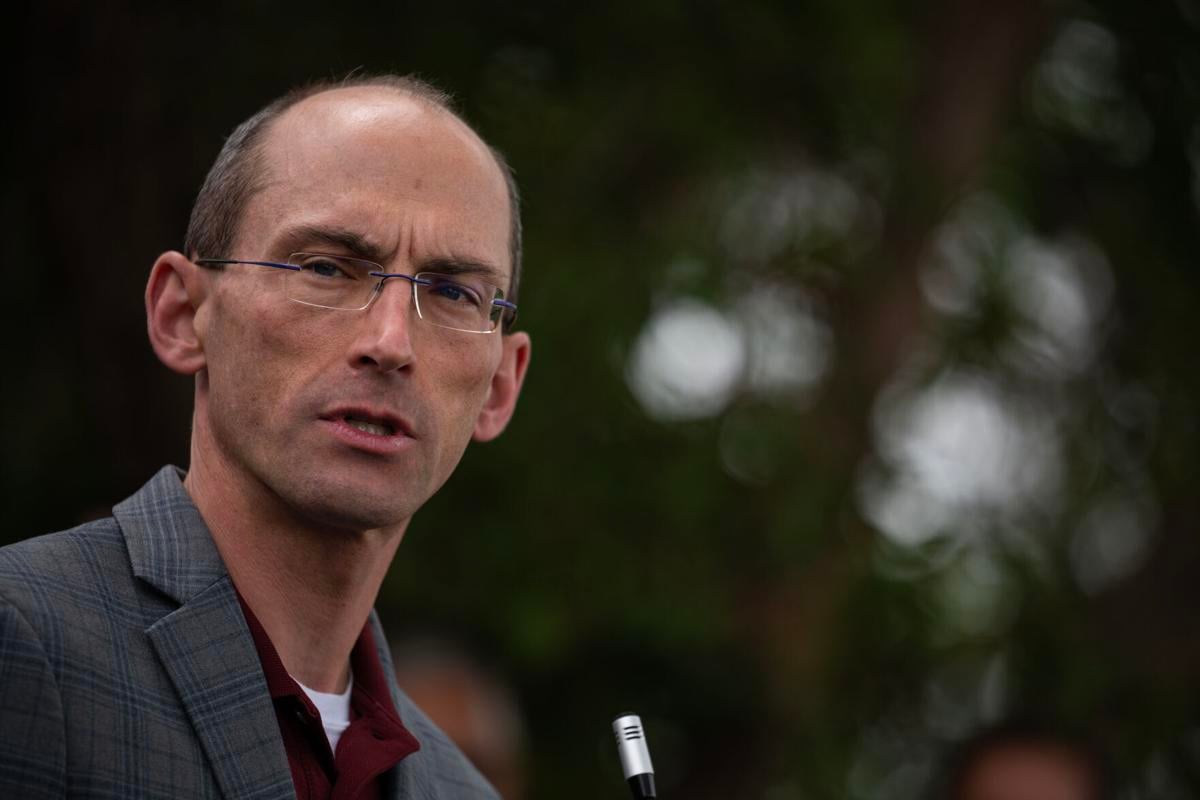
Rep. Mike Weissman speaks to media before Gov. Jared Polis signs Senate Bills 23-303 and 23-304 on Wednesday, May 24, 2023, at the home of Joe Lloyd Medina in Commerce City, Colo. (Timothy Hurst/Denver Gazette)
Timothy Hurst/Denver Gazette

Judges pressed for time
Among the witnesses, Chief Judge Erin Sokol of El Paso and Teller counties warned criminal cases are at risk of dismissal if they cannot reach trial by the legal deadline. For civil matters, she said both sides may be financially motivated to reach a resolution, even an unsatisfactory one, if judges are unable to hear the case within a reasonable time.
Denver District Court Judge Marie Avery Moses shared her calendar with the committee from one week in the summer, in which she heard 16 domestic relations cases. Only four litigants had attorneys, meaning nearly 88% of litigants were representing themselves.
“My litigants can’t resolve their disputes without my time and attention,” she said. Moses described one dispute in which she had an hour to hear from a pair of spouses before finalizing the order for their divorce case. After she heard the spouses’ positions on issues ranging from parenting time to child support, the mother told Moses she was scared because a child allegedly died in the father’s care.
“I have 10 minutes left in my hearing,” Moses said, “and I have to figure out why a child died in his care. And there are no attorneys and there are no orders in place. So, I have 10 minutes to try to save a child’s life.”
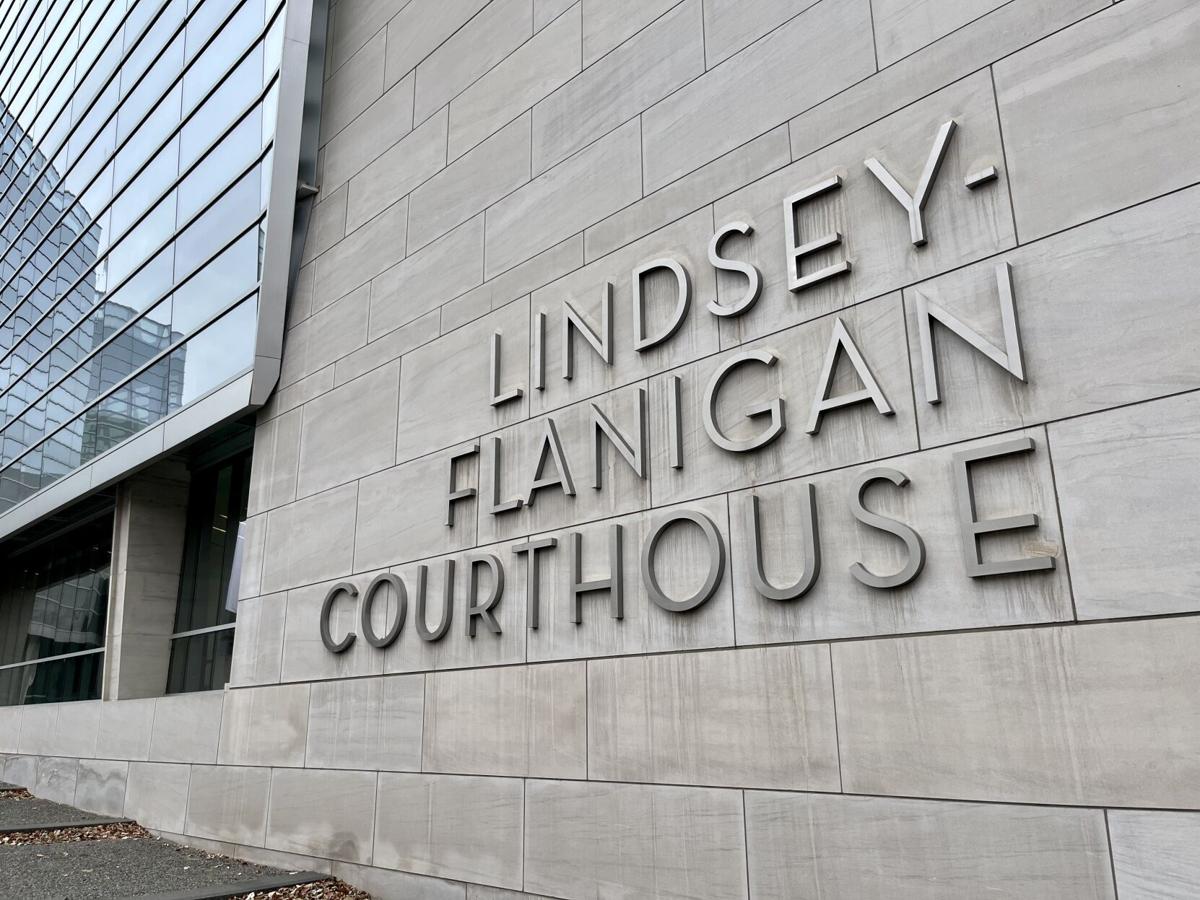
The Lindsey-Flanigan Courthouse in Denver.
Michael Karlik michael.karlik@coloradopolitics.com

Lawmakers also heard testimony in support of SB 24 from the director of the Colorado Office of Judicial Performance Evaluation and the director of the Colorado Commission on Judicial Discipline, who described a trend of complaints about judges’ delays in making decisions and the dangers of burnout.
Cynthia D. Mares, a retired judge from the 18th Judicial District in suburban Denver, testified that she cut ties with most of her community organizations and curtailed the time she spent with her ailing father because she needed to keep up with her workload during her tenure on the bench.
Finally, George Brauchler, a Colorado Politics opinion contributor and the district attorney for the newly established 23rd Judicial District in Douglas, Elbert and Lincoln counties, said that the state’s elected district attorneys support the bill.
“Sometimes you need judges to rule on motions that will make a case end right then and there because the DA was just wrong on the charges. Or they were just wrong about how the police acquired the evidence,” he said. “Less judges means those things do not happen at the same pace. Sometimes it means that dark cloud that hangs over victims and defendants in a case hangs there longer.”
The bill will now move to the Senate Appropriations Committee.


10th Circuit partially revives lawsuit over 2020 Denver protest injuries
Michael Karlik
michael.karlik@coloradopolitics.com
Updated 2 days ago
The Colorado-based federal appeals court revived a man’s claims against Denver on Friday after concluding a trial judge resolved the case in the city’s favor without analyzing two of the three instances of alleged excessive force and other constitutional violations....

Federal judges find Colorado immigration judge violated several orders
Michael Karlik
michael.karlik@coloradopolitics.com
Updated 20 hours ago
Multiple federal judges in Colorado have freed people from immigration custody after determining that one immigration judge violated their directives for properly conducting bond hearings. For nearly a year, Colorado’s U.S. District Court has faced a flood of habeas corpus petitions...

Misconduct complaints from ex-Colorado judicial discipline director dismissed against federal judges
Michael Karlik
michael.karlik@coloradopolitics.com
Updated 3 days ago
The administrative body for the Denver-based federal appeals court upheld a finding last week that misconduct complaints against Colorado’s chief federal trial judge and the chief appeals judge warranted dismissal and appeared to be a “litigation tactic” by the complaining...

First-ever Red Rocks naturalization ceremony draws most diverse group of new citizens
Michael Karlik
michael.karlik@coloradopolitics.com
Updated 18 hours ago
Colorado’s federal trial court held its first-ever naturalization ceremony for nearly 300 new citizens on Thursday at Red Rocks Park and Amphitheatre. “We’re doing it to commemorate the 250th anniversary of the Declaration of Independence and the United States. Red...
Jeffco taxpayers could be on the hook for a possible child sex assault settlement
Matt Kyle
matt.kyle@denvergazette.com
Updated 2 days ago
Taxpayers may end up on the hook for a child sexual assault settlement, possibly worth up to $15 million, after Jeffco Public Schools failed to notify its insurance company in a timely manner about the case. The incident stems from...
10th Circuit finds no fair housing violation by Littleton landlord for worker’s alleged rape of tenant
Michael Karlik
michael.karlik@coloradopolitics.com
Updated 20 hours ago
The Denver-based federal appeals court concluded on Monday that Littleton’s housing authority could not be held liable for a maintenance worker’s alleged rape of a tenant, as the worker’s employment did not provide any special access to the victim. A...

Jeffco Public Schools sues Trump administration to protect funding after alleged transgender policies violation
Matt Kyle
matt.kyle@denvergazette.com
Updated 3 days ago
In the wake of several threats by the Trump administration to revoke federal funding, Jeffco Public Schools filed a lawsuit against the Department of Education seeking to protect that badly needed money. Jeffco has been under investigation by the DOE’s...
Denver detox center did not violate man’s rights with 10-hour hold, 10th Circuit says
Michael Karlik
michael.karlik@coloradopolitics.com
Updated 5 days ago
The Colorado-based federal appeals court concluded on Tuesday that Denver’s detoxification facility did not violate a man’s rights by holding him against his will for 10 hours until his blood alcohol content was projected to reach zero. Unusually, Brian Garrett’s...

Federal judge clarifies ex-GOP treasurer candidate’s burden to prove defamation claims
Michael Karlik
michael.karlik@coloradopolitics.com
Updated 5 days ago
A federal judge clarified last week that businessman and former Republican statewide candidate Brian Watson will need to surmount a higher hurdle in proving his claim that a party guest’s alleged description of him as a “criminal” amounted to defamation....
Colorado board permits state to appeal injunction against arthritis drug price cap
Marissa Ventrelli
marissa.ventrelli@coloradopolitics.com
Updated 5 days ago
A Colorado board voted Friday to allow the Attorney General’s Office to fight an injunction against a price cap on a drug that treats arthritis. A U.S. district court judge had granted the company Amgen a preliminary injunction, temporarily blocking...