

Colorado Supreme Court intervenes in second Weld County case after botched cell phone search
The Colorado Supreme Court stepped in to do damage control this month in a second Weld County criminal case, following a trial judge’s failure to contain the fallout from a botched cell phone search.
Marquise Shadell Daniels and Laura Tellers separately have sought the Supreme Court’s intervention after more than 120 confidential attorney-client communications fell into the hands of the district attorney’s office this year. Daniels originally stood accused of murder and Tellers was an investigator for his defense team. However, in an unusual twist, Tellers was herself arrested before trial for allegedly smuggling drugs into the Weld County jail through Daniels.
District Court Judge Vincente G. Vigil was assigned to the cases of both defendants. He authorized the use of a special master to review a download of Tellers’ entire cell phone, recognizing the data could include attorney-client information about Daniels’ defense. The special master, retired District Court Judge Russell H. Granger, would receive training about how to review the downloaded files, withhold data as needed and send his questions to Vigil directly.
Instead, the arrangement kicked off a series of problems for everyone involved.

FILE PHOTO
ANDREY POPOV/iSTOCK

FILE PHOTO
Granger wrote to Vigil in June to say he had finished his review of more than 200,000 files. He noted he was only given “broad direction” and had done his best to withhold documents that appeared confidential. But due to the “extremely large number of files, an error is possible,” Granger cautioned.
Shortly afterward, the district attorney’s chief investigator, Michael D. Prill, reviewed Granger’s work and found a red flag. Prill realized Granger had not withheld all confidential files, and Prill encountered documents about attorney-client interactions.
At a hearing, Vigil acknowledged Granger’s work as special master “appears not to have been completed in the way it needs to be completed.” He added he needed to balance Daniels’ right to confidentiality with the government’s ability to prosecute the murder case.
After temporarily halting Prill’s review of Tellers’ phone, Vigil decided to authorize Prill to continue — but to avoid sharing any materials with the district attorney’s office. Days later, Daniels’ attorney moved to terminate the district attorney’s office from the case, as the prosecution was in possession of more than 100 confidential documents. Vigil quickly responded that he would wait to rule on the request after Prill completed his review.
Daniels appealed directly to the Supreme Court, which stepped in mid-September and halted proceedings while it reviewed the case.
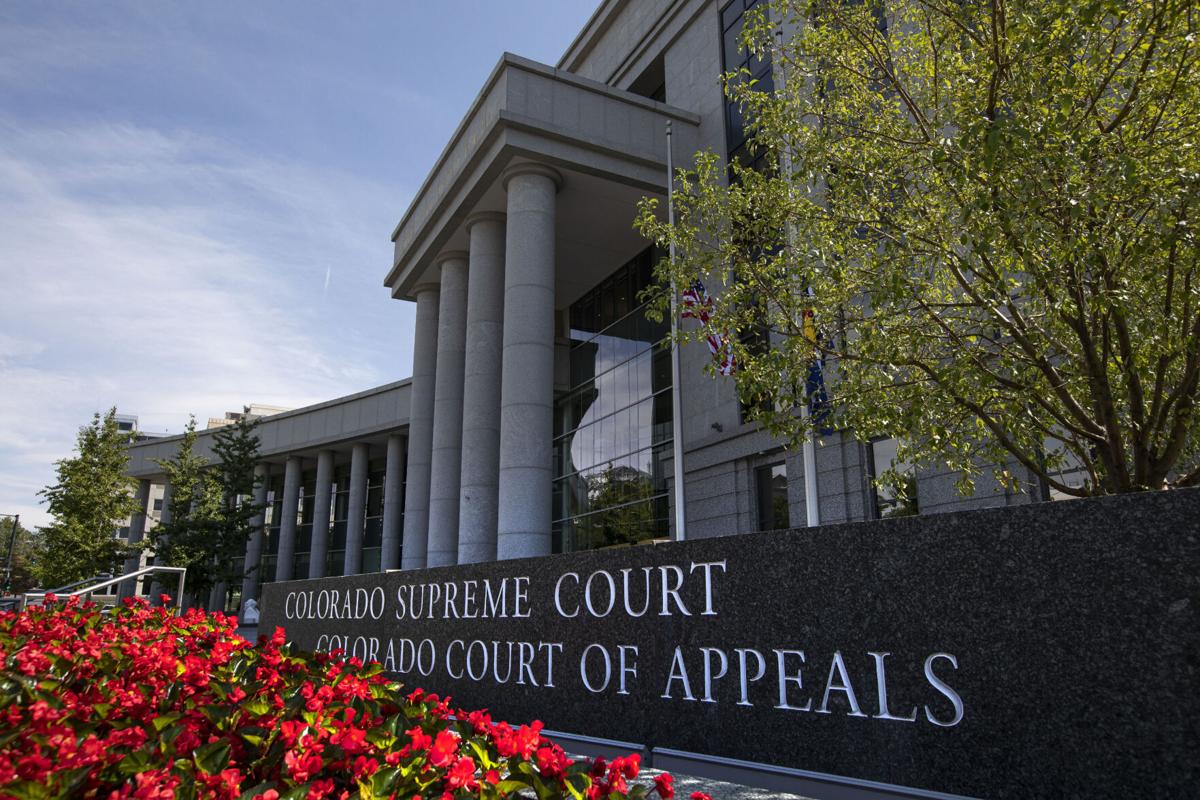
FILE PHOTO: The Ralph L. Carr Colorado Judicial Center, on Tuesday, Sept. 13, 2022, in Denver, Colo. (Timothy Hurst/The Denver Gazette)
Timothy Hurst/Denver Gazette

FILE PHOTO: The Ralph L. Carr Colorado Judicial Center, on Tuesday, Sept. 13, 2022, in Denver, Colo. (Timothy Hurst/The Denver Gazette)
Meanwhile, Tellers’ own prosecution continued. Her attorney, Lee E. Christian, noted the proceedings in Daniels’ case meant Christian was prohibited from reviewing the contents of his own client’s phone. Although Christian pointed out Tellers’ phone contained “information of her entire life,” Vigil maintained his intent was to “protect Mr. Daniels’ privileged information” by barring Tellers’ access to the data.
Then, a new puzzle piece surfaced.
Weeks after the Supreme Court took up Daniels’ case for consideration, Prill opened an envelope he had received in September, apparently from Granger. Unsure whether he could open it because the proceedings were paused, Prill received instructions from the prosecution to continue his work with Tellers’ cell phone data.
Prill discovered two thumb drives in the envelope: one from Tellers’ cellular provider with anticipated records, and a second that appeared to contain the redacted version of Tellers’ cell phone from Granger.
Prill and the prosecutor speculated that “court staff later accidently (sic) provided us the original download contained on the external drive, instead of the version created by Granger and transferred onto this thumb drive,” he wrote in a memo documenting his actions.
The Weld County District Attorney’s Office quickly wrote to the Supreme Court, asking it to dismiss Daniels’ appeal so Vigil could address the new development.
“There exists a strong possibility that this entire issue boils down to a simple clerical error,” wrote Gabriel P. Olivares, who was detailed to the case from the Colorado Attorney General’s Office. “If the second file has been properly screened then there should be little worry that the (prosecution) will further be inadvertently exposed to privileged materials.”
For Vigil’s part, the attorney general’s office wrote that he took “extremely seriously” the possibility that court staff inadvertently released the unredacted files to the prosecution.
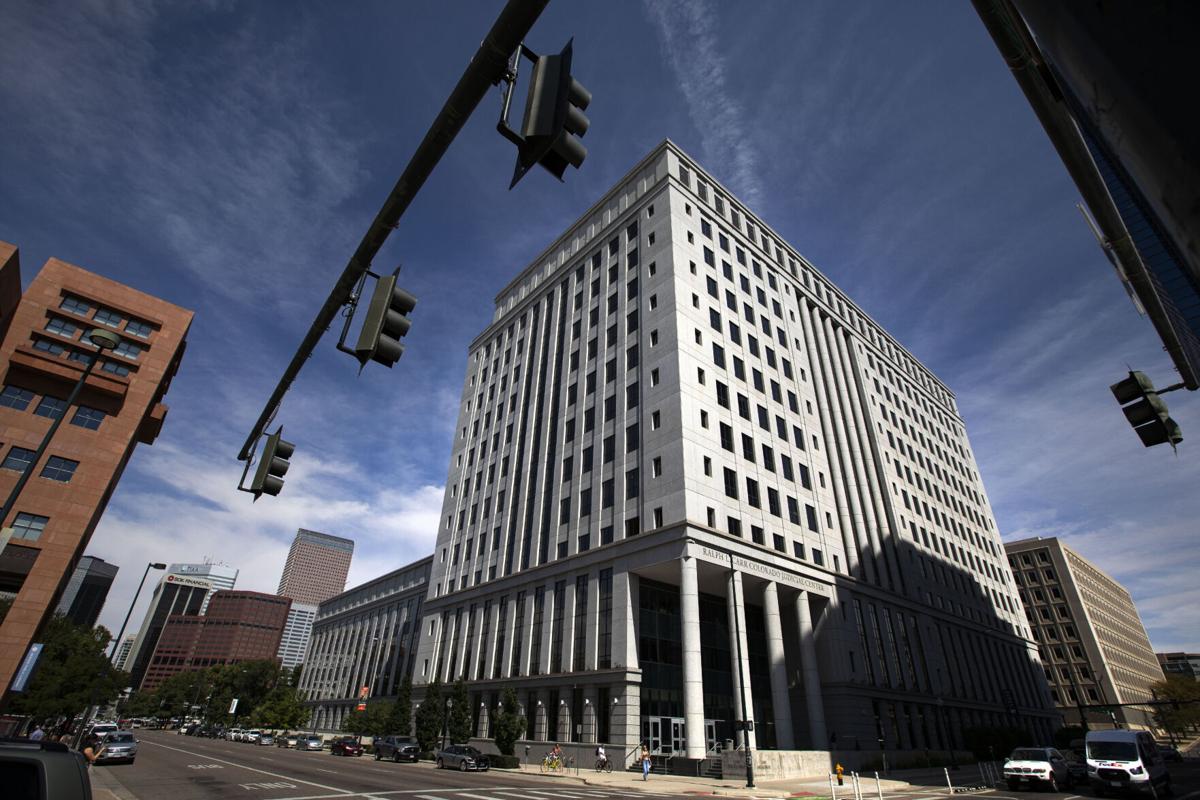
The Ralph L. Carr Colorado Judicial Center, on Tuesday, Sept. 13, 2022, in Denver, Colo. (Timothy Hurst/The Denver Gazette)
Timothy Hurst
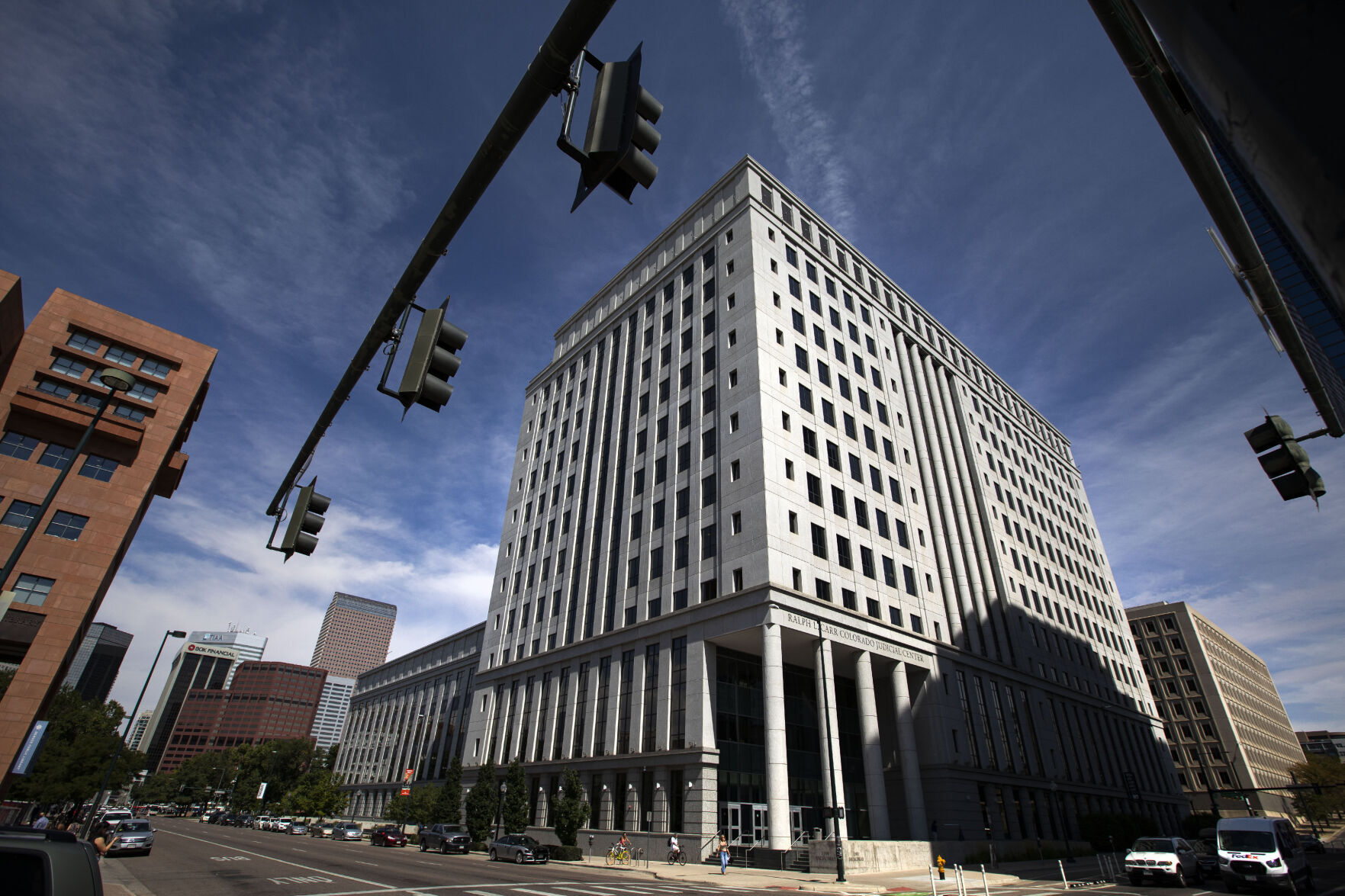
The Ralph L. Carr Colorado Judicial Center, on Tuesday, Sept. 13, 2022, in Denver, Colo. (Timothy Hurst/The Denver Gazette)
Daniels’ attorneys responded that the problem was actually about the confidential information the prosecution’s team had already reviewed. Further, the newly discovered flash drive was “highly likely” to contain additional confidential files.
The Supreme Court rejected the request to let Vigil continue handling Daniels’ case. Because the court’s pause on proceedings also affected Tellers’ ability to mount a defense using her cell phone data, her attorney then petitioned the Supreme Court to get involved prior to Tellers’ January 2025 trial.
“The Special Master was a retired judge without any prior experience in examining a cell phone, a project typically requiring years of training and expertise. The trial court made no effort to supervise the process or monitor its progress,” wrote Christian. “The entire flawed process enacted by the trial court has led to the denial of Ms. Tellers’ ability to effectively and intelligently defend herself.”
On Dec. 19, the Supreme Court issued an order halting Tellers’ proceedings and directing Vigil and the prosecution to explain why the district attorney’s office should remain on her case due to its possession of confidential information.
The case is People v. Tellers.

Colorado justices say insurers may access policyholders’ medical info in denied-benefits litigation
Michael Karlik
michael.karlik@coloradopolitics.com
Updated 1 day ago
The Colorado Supreme Court declined on Monday to expand its narrow prohibition on insurance companies accessing policyholders’ medical information, clarifying that a dispute over an insurer’s bad-faith decision to deny benefits is the only situation where a company is limited...
Colorado Supreme Court declines to loosen requirements for insurance company defendants
Michael Karlik
michael.karlik@coloradopolitics.com
Updated 3 hours ago
The Colorado Supreme Court declined last week to reconsider its longstanding expectations for insurance company defendants, and agreed that an insurer failed to properly raise its defenses against a policyholder’s breach-of-contract lawsuit. When an insured driver has an accident with...

Teen defendant properly transferred from youth detention to jail, Colorado justices conclude
Michael Karlik
michael.karlik@coloradopolitics.com
Updated 1 day ago
Colorado law required the transfer of a teenage murder suspect from youth detention to the county jail when he turned 18, the state Supreme Court ruled last week. Prosecutors have accused Issac James Lawrence of killing a younger boy and attempting to...
Divided Colorado Supreme Court finds parental anonymity in ‘safe haven’ law
Michael Karlik
michael.karlik@coloradopolitics.com
Updated 3 hours ago
Parents who surrender their newborns under Colorado’s “safe haven” law are entitled to anonymity and confidentiality in any subsequent adoptive proceedings involving the child, the state Supreme Court ruled on June 8. Colorado’s law, like its counterparts across the country,...
Safe2Tell tip, corroborated details provided grounds to search backpack, Colorado justices rule
Michael Karlik
michael.karlik@coloradopolitics.com
Updated 1 hour ago
The Colorado Supreme Court decided this month that a tip submitted through the state’s confidential school safety system, plus a Douglas County administrator’s corroboration of some details, provided reasonable suspicion to search a student’s backpack for drugs. Someone submitted a...
Appeals court finds opening in Colorado Supreme Court’s framework for child neglect cases
Michael Karlik
michael.karlik@coloradopolitics.com
Updated 2 days ago
Colorado’s second-highest court squeezed through an opening last week in a controversial state Supreme Court decision from 2025, concluding that the justices had not prohibited a child’s legal representative from being the one to request termination of parental rights in...
Colorado Supreme Court upholds police search of car based on arm movements
Michael Karlik
michael.karlik@coloradopolitics.com
Updated 3 hours ago
The Colorado Supreme Court decided last week that Denver officers’ search of a vehicle was constitutional, based on their perception of the occupants’ arm movements that a trial judge found to not be credible. Officers Keegan Grubb and Richard Eberharter...
10th Circuit tosses Pueblo County sheriff defendants’ appeal in fatal shooting lawsuit
Michael Karlik
michael.karlik@coloradopolitics.com
Updated 2 hours ago
The Denver-based federal appeals court rejected an attempt from Pueblo County sheriff’s employees on Wednesday to rely on their own version of the facts to escape liability for fatally shooting an unarmed man outside a middle school. A trial judge...
Colorado justices uphold strict interpretation of consumer protection law against debt collector
Michael Karlik
michael.karlik@coloradopolitics.com
Updated 3 hours ago
The Colorado Supreme Court concluded last month that a debt collector failed to comply with state law by suing a woman for an unpaid credit card debt without documentation that it owned her account. Portfolio Recovery Associates LLC filed a...
Colorado justices say judges can nearly eliminate parenting time without it being a ‘restriction’
Michael Karlik
michael.karlik@coloradopolitics.com
Updated 3 hours ago
The Colorado Supreme Court concluded last month that judges can reduce the number of days a parent spends with their child post-divorce to just above zero without it rising to the level of a “restriction” that requires more rigorous justification...