

Federal judge upholds man’s convictions for video recording inside Social Security office
A federal judge last month upheld a man’s convictions for video recording inside a Littleton office of the U.S. Social Security Administration without permission, notwithstanding his claim that he was trying to “stress test the First Amendment.”
Christopher J. Cordova was convicted of two misdemeanors for failing to comply with official signs and unlawfully photographing federal property. He received a sentence of 15 days in jail, two years’ probation and a fine of $3,000.
Cordova argued on appeal that his recording was “part of his journalistic expression,” and the regulation against video recording was an improper restraint on freedom of speech.
But in an Oct. 15 order, U.S. District Court Judge Nina Y. Wang noted any restrictions inside the Social Security Administration office only needed to be reasonable. Moreover, she believed the prohibition on recording served a legitimate purpose.
“While Defendant argues that ‘the act of recording is silent and non-disruptive,’ this blanket assertion is belied by his conduct in this case, which did cause disruption in the SSA office,” Wang wrote, “diverting the attention of security guards and requiring the arrival of additional security guards and police officers, not to mention causing a commotion that was likely distracting and may have been distressing to SSA employees and patrons.”
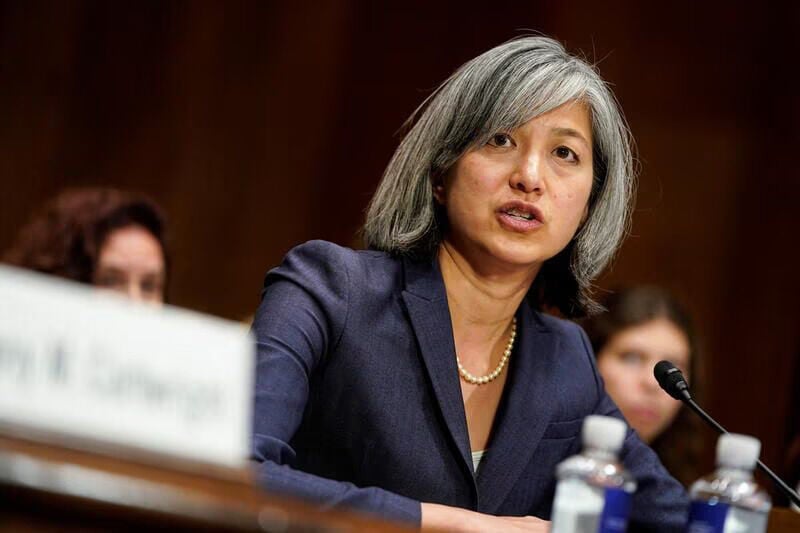
Nominee to be United States District Judge for the District of Colorado Nina Nin-Yuen Wang, testifies before the U.S. Senate Judiciary Committee during her confirmation hearing on Capitol Hill in Washington U.S., May 25, 2022.
REUTERS/Joshua Roberts

Nominee to be United States District Judge for the District of Colorado Nina Nin-Yuen Wang, testifies before the U.S. Senate Judiciary Committee during her confirmation hearing on Capitol Hill in Washington U.S., May 25, 2022.
Cordova and a handful of others arrived at the Social Security office on Southpark Lane on Aug. 2, 2022. Cordova used a camera to record in the entryway for approximately three hours. Security personnel later alleged the group was “stating that it was their constitutional right to film inside government buildings.”
Believing they were “First Amendment auditors” — those who record in public spaces to test their free speech rights — security personnel told the group they could remain in the entryway but could not record inside the office itself, where customers interacted with Social Security staff and disclosed their personal identifying information. Posted signage also warned against video recording.
The auditors allegedly called law enforcement officers “tyrants” and threatened to sue. Elderly customers allegedly “stated they felt intimidated and threatened by the auditors,” one officer wrote. Eventually, Cordova stepped into the Social Security office and an officer arrested him. The other auditors allegedly “cheered and appeared to have obtained what they wanted,” another officer wrote.
Federal prosecutors charged Cordova, alleging he “thought YouTube fame and money trumped the privacy rights of Social Security Administration customers.” They also claimed Cordova earned $11,000 from his YouTube channel in the months after posting the video of his encounter.
For his part, Cordova explained to Chief U.S. Magistrate Judge Michael E. Hegarty that he was “trying to create case law in the state of Colorado” and “stress test the First Amendment.” He also compared himself to Rosa Parks.
Hegarty found Cordova guilty on both counts.
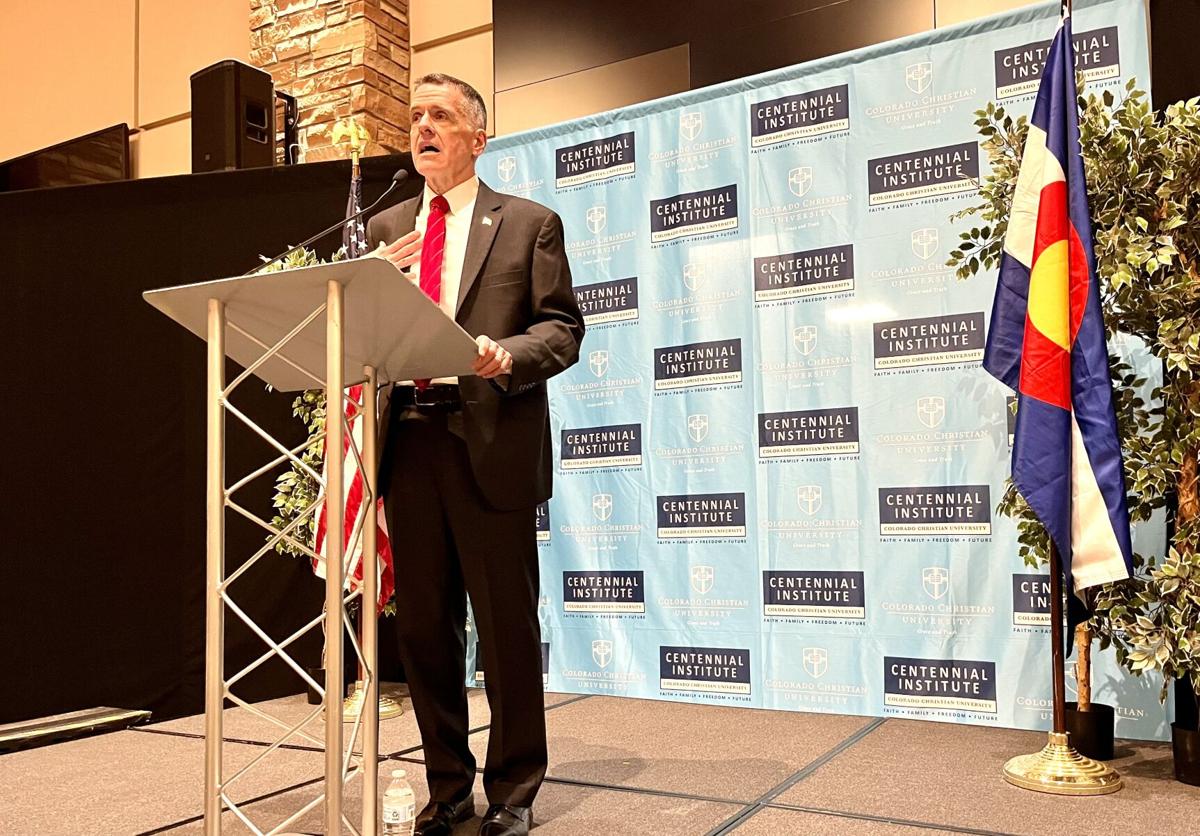
Chief U.S. Magistrate Judge Michael E. Hegarty speaks at Colorado Christian University in Lakewood on Sept. 17, 2024.
Michael Karlik michael.karlik@coloradopolitics.com

Chief U.S. Magistrate Judge Michael E. Hegarty speaks at Colorado Christian University in Lakewood on Sept. 17, 2024.
In part, Hegarty rejected Cordova’s argument that the Social Security office, where customers waited to speak to employees, was a “lobby” in which recording was permissible for news purposes. He noted the office was where the Social Security Administration “conducted its primary business.”
“It is clear based on the regulation, the signage in the SSA entryway, the instructions given by law enforcement, and Mr. Cordova’s own understanding of the law that he had fair notice of the law and that his conduct in filming beyond the interior glass doors was punishable,” Hegarty wrote in March 2023. “Although I respect his right to challenge the law and test his constitutional rights to their outer limit, he is wrong in this instance.”
Wang, the district judge, rejected all of Cordova’s arguments on appeal. She disagreed the prohibition on recording was overly broad, as it applied only to spaces occupied by federal agencies.
“And despite Defendant’s suggestion that the properties covered by the regulation can share no common purpose, their shared purpose is simple: to conduct the business of the federal government,” Wang wrote.
She also disputed the claim that Hegarty improperly sentenced Cordova based on Cordova’s post-trial arrest in Colorado Springs for similar conduct at a government building. Although prosecutors asked for a harsher sentence in light of Cordova’s repeat conduct, Wang found no evidence that Hegarty considered Cordova’s arrest when handing down his sentence.
The case is United States v. Cordova.


Denver detox center did not violate man’s rights with 10-hour hold, 10th Circuit says
Michael Karlik
michael.karlik@coloradopolitics.com
Updated 6 hours ago
The Colorado-based federal appeals court concluded on Tuesday that Denver’s detoxification facility did not violate a man’s rights by holding him against his will for 10 hours until his blood alcohol content was projected to reach zero. Unusually, Brian Garrett’s...

Federal judge clarifies ex-GOP treasurer candidate’s burden to prove defamation claims
Michael Karlik
michael.karlik@coloradopolitics.com
Updated 6 hours ago
A federal judge clarified last week that businessman and former Republican statewide candidate Brian Watson will need to surmount a higher hurdle in proving his claim that a party guest’s alleged description of him as a “criminal” amounted to defamation....
Colorado board permits state to appeal injunction against arthritis drug price cap
Marissa Ventrelli
marissa.ventrelli@coloradopolitics.com
Updated 14 hours ago
A Colorado board voted Friday to allow the Attorney General’s Office to fight an injunction against a price cap on a drug that treats arthritis. A U.S. district court judge had granted the company Amgen a preliminary injunction, temporarily blocking...

Federal judge rejects constitutional claims, ‘expressions of hatred’ by Club Q defendant
Michael Karlik
michael.karlik@coloradopolitics.com
Updated 1 day ago
A federal judge rejected a defendant’s claims that he received constitutionally ineffective assistance of counsel while facing federal hate crime and firearms charges for murdering five people at a Colorado Springs LGBTQ nightclub in 2022. Anderson Lee Aldrich is serving...

Divided 10th Circuit upholds Colorado congestion fee on car rentals
Michael Karlik
michael.karlik@coloradopolitics.com
Updated 1 day ago
The Denver-based federal appeals court concluded on Monday that a 2024 “congestion impact fee” that lawmakers imposed on short-term vehicle rentals did not conflict with a federal prohibition on certain airport-related charges. Beginning in the 1970s, Congress began limiting the...
10th Circuit dismisses woman’s lawsuit following 10-year attempt to undo restraining order
Michael Karlik
michael.karlik@coloradopolitics.com
Updated 4 days ago
The Denver-based federal appeals court rejected a woman’s challenge on Friday to a restraining order imposed on her more than a decade ago, finding that she cannot credibly claim she will be prosecuted for violating the restraining order through her...
10th Circuit dismisses woman’s lawsuit following 10-year attempt to undo restraining order
Michael Karlik
michael.karlik@coloradopolitics.com
Updated 4 days ago
The Denver-based federal appeals court rejected a woman’s challenge on Friday to a restraining order imposed on her more than a decade ago, finding that she cannot credibly claim she will be prosecuted for violating the restraining order through her...
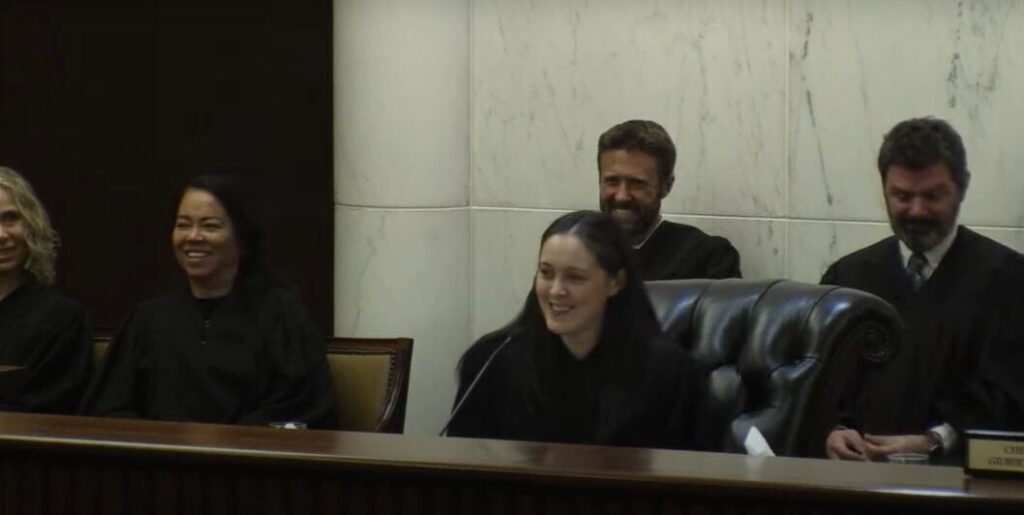
Colorado equal pay law does not require plaintiffs to allege gender-based retaliation, appeals court finds
Michael Karlik
michael.karlik@coloradopolitics.com
Updated 3 days ago
The 2019 Colorado law aimed at rooting out pay discrimination on the basis of sex does not require a plaintiff to allege their employer retaliated against them for sex- or gender-related reasons, the state’s second-highest court decided on Thursday. Lawmakers...
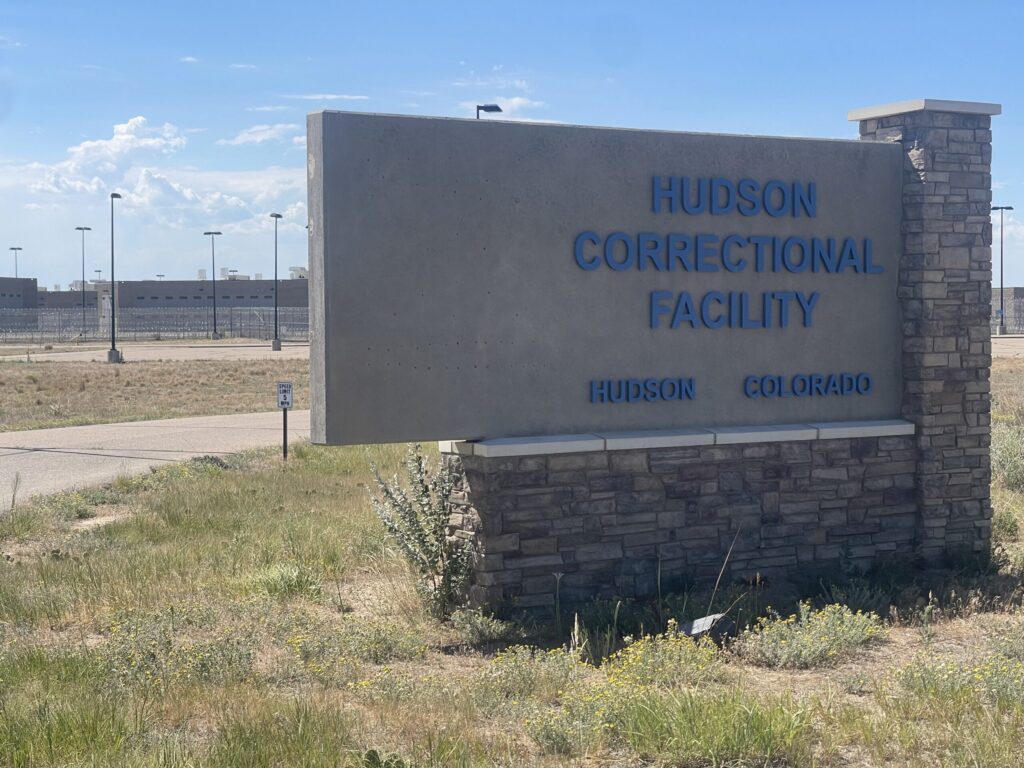
Hudson faces lawsuit over ICE detention facility
Nicole C. Brambila
nicole-c-brambila@coloradopolitics.com
Updated 5 days ago
A nonprofit organization filed a lawsuit against the Town of Hudson Wednesday, challenging plans to reopen a former federal prison in the town as a U.S. Immigration and Customs Enforcement detention facility. Together Colorado, along with Janet E. Carlson, filed...
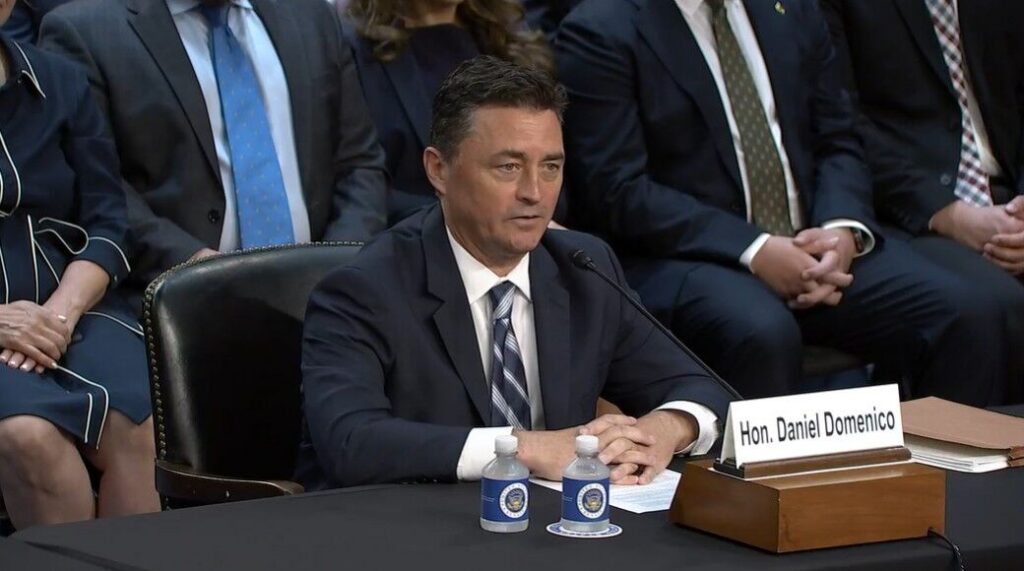
Senate committee advances Trump’s 10th Circuit nominee, as Domenico responds to questions about delays
Michael Karlik
michael.karlik@coloradopolitics.com
Updated 5 days ago
The U.S. Senate Judiciary Committee advanced President Donald Trump’s nominee to the Denver-based federal appeals court on Thursday by a party-line vote of 12-10. U.S. District Court Judge Daniel D. Domenico, who was Trump’s first-term appointee to Colorado’s federal trial...