

Appeals court agrees Boulder County judge needed to look into attorney’s alleged unauthorized practice
Colorado’s second-highest court agreed earlier this month that a Boulder County judge mistakenly rejected a man’s petition for postconviction relief when she should have looked into his allegation that his defense lawyer represented him despite being unauthorized to practice law.
David Keith McCoy pleaded guilty in 2012 to organized crime and drug possession charges and he received 35 years in prison. McCoy’s sister subsequently hired attorney Thomas E. Henry to seek postconviction relief for McCoy. Henry filed a petition in January 2017, alleging McCoy’s prior counsel provided constitutionally ineffective assistance in the plea process.
Chief Judge Ingrid S. Bakke subsequently rejected the petition. She noted defendants need to allege an attorney’s performance was both deficient and affected the outcome of the case. But Henry’s petition “does not even attempt” to allege a prejudicial effect, so it “would be a waste of time” to evaluate McCoy’s claims, Bakke wrote.
In 2021, McCoy, now representing himself, filed another petition alleging Henry himself provided ineffective assistance during the first postconviction proceeding. McCoy now claimed Henry was not actually authorized to practice law at the time he represented McCoy, given that his attorney registration status was listed as “inactive.”
“By engaging in the unauthorized practice of law, Henry has deprived McCoy of his Sixth Amendment right to counsel,” McCoy argued, alleging Henry never told him about his inactive status.
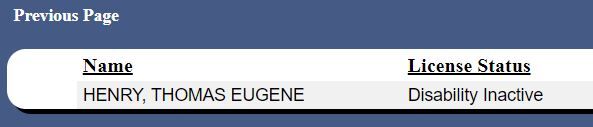
A July 14, 2024 screenshot from Thomas E. Henry's attorney registration page.

A July 14, 2024 screenshot from Thomas E. Henry’s attorney registration page.
Then-District Court Judge Norma A. Sierra similarly rejected McCoy’s second postconviction motion. She noted she had looked up Henry’s attorney registration in Colorado. Although there were multiple instances of discipline on Henry’s record, his latest sanction of probation in lieu of suspension appeared to expire in March 2016, before he submitted the petition on behalf of McCoy.
“As Mr. Henry’s license was active during the time he represented Mr. McCoy, no further review of this issue will be undertaken,” Sierra wrote in denying McCoy’s motion.
Not so fast, responded a three-judge panel for the Court of Appeals.
Henry’s listing on Colorado’s attorney registration database advertises his license as “disability inactive.” Nebraska, which is the location of Henry’s business address, also lists his registration as disability inactive. Neither website mentions when Henry’s status changed to inactive.
“McCoy asserts that the district court misunderstood his argument by focusing on Henry’s disciplinary cases,” wrote Judge Matthew D. Grove in the appellate panel’s July 3 opinion. The publicly available data did not refute — and potentially corroborated — Henry’s claim that his defense lawyer was practicing without a license.
That was “exactly why McCoy’s claim should not have been summarily dismissed,” Grove added. “Because McCoy advanced a claim that he received ineffective assistance of counsel based on his attorney’s lack of licensure, the district court should have referred it to the public defender for further investigation.”
The Court of Appeals reinstated McCoy’s petition.
The case is People v. McCoy.

Federal judge green-lights excessive force, retaliation claims for trial against Fort Collins officers
Michael Karlik
michael.karlik@coloradopolitics.com
Updated 1 day ago
A federal judge green-lit a jury trial last week against multiple Fort Collins police officers on claims that they used excessive force on one man who was standing unarmed in his underwear, and retaliated against another man for exercising his...
10th Circuit revives wage violation lawsuit against Papa John’s operator
Michael Karlik
michael.karlik@coloradopolitics.com
Updated 2 days ago
The Denver-based federal appeals court on Tuesday reinstated a former Papa John’s delivery driver’s lawsuit alleging violations of federal and state wage law. Steve Mighell worked for one month at a Denver Papa John’s location in summer 2023. He alleged...
Colorado appeals judge’s delays in releasing opinions noted by performance commission
Michael Karlik
michael.karlik@coloradopolitics.com
Updated 1 day ago
The citizen-led performance commission that provides guidance to voters about whether to retain members of Colorado’s second-highest court raised concerns by judges and attorneys that Judge Elizabeth L. Harris sometimes struggles with releasing opinions promptly. Harris, who joined the Court...
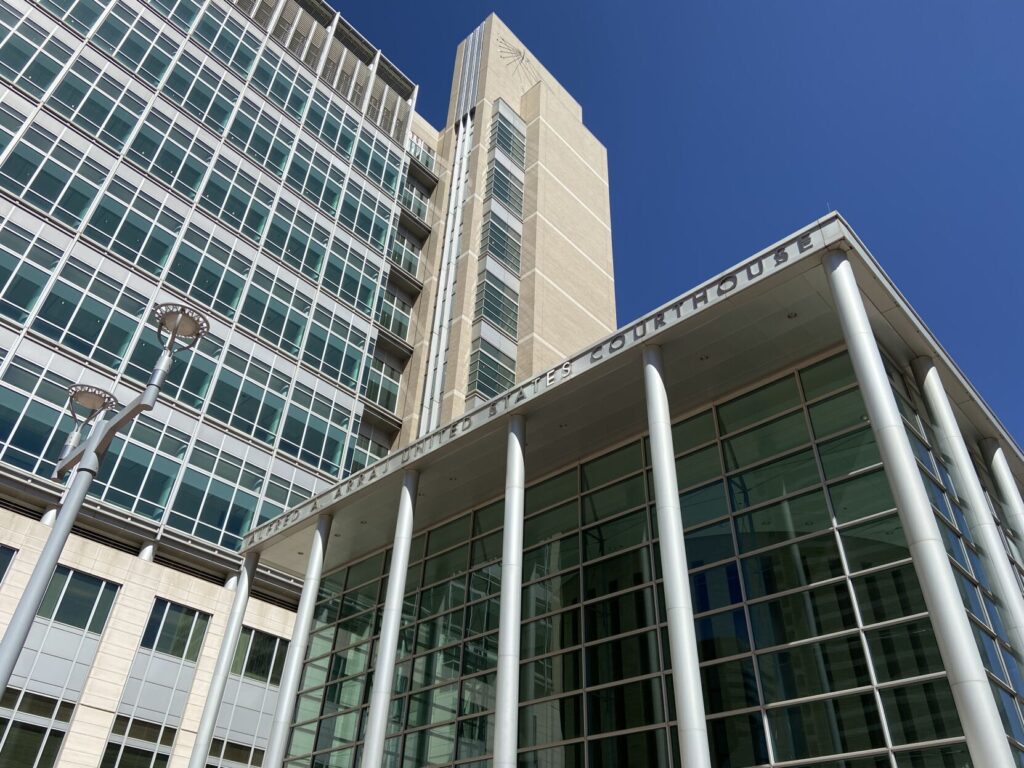
Colorado judge explores sanctions against DOJ, ICE for rearresting man 4 days after release on bond
Michael Karlik
michael.karlik@coloradopolitics.com
Updated 2 days ago
A federal judge in Colorado is considering sanctions against the government after immigration agents rearrested a man four days after an immigration judge found him suitable for release on bond. On July 28, U.S. Magistrate Judge N. Reid Neureiter ordered...
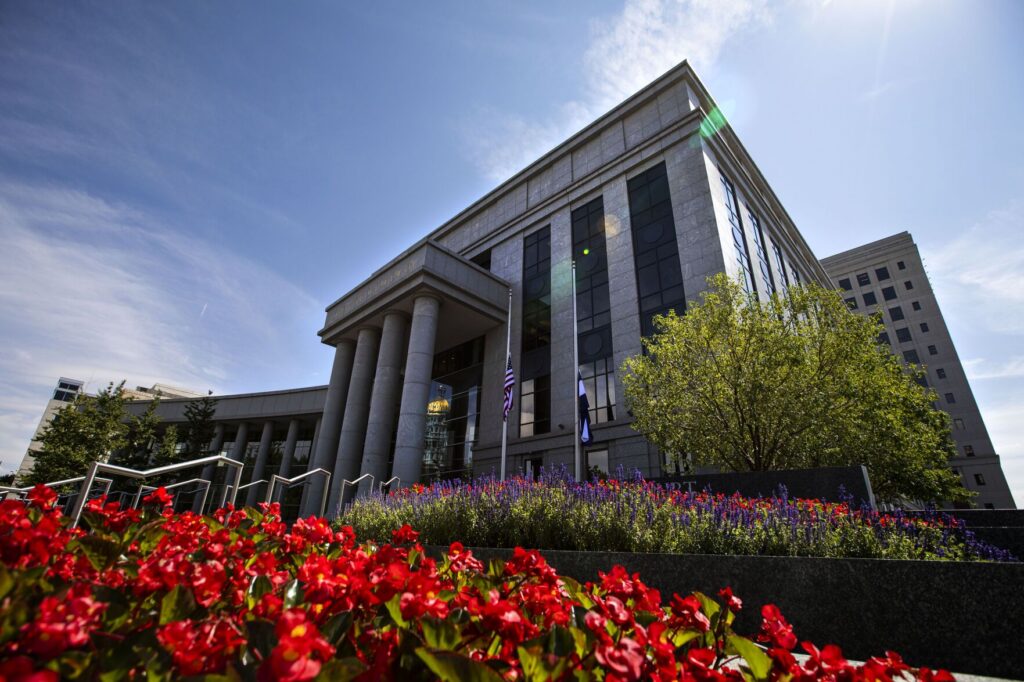
Divided disciplinary panel censures Montezuma County judge after agreement reached
Michael Karlik
michael.karlik@coloradopolitics.com
Updated 2 days ago
A disciplinary panel formally imposed a public censure, suspension, and further training on Montezuma County Court Judge Ian J. MacLaren on Tuesday by a 2-1 vote. Under constitutional Amendment H, which voters adopted in November 2024, MacLaren was set to...
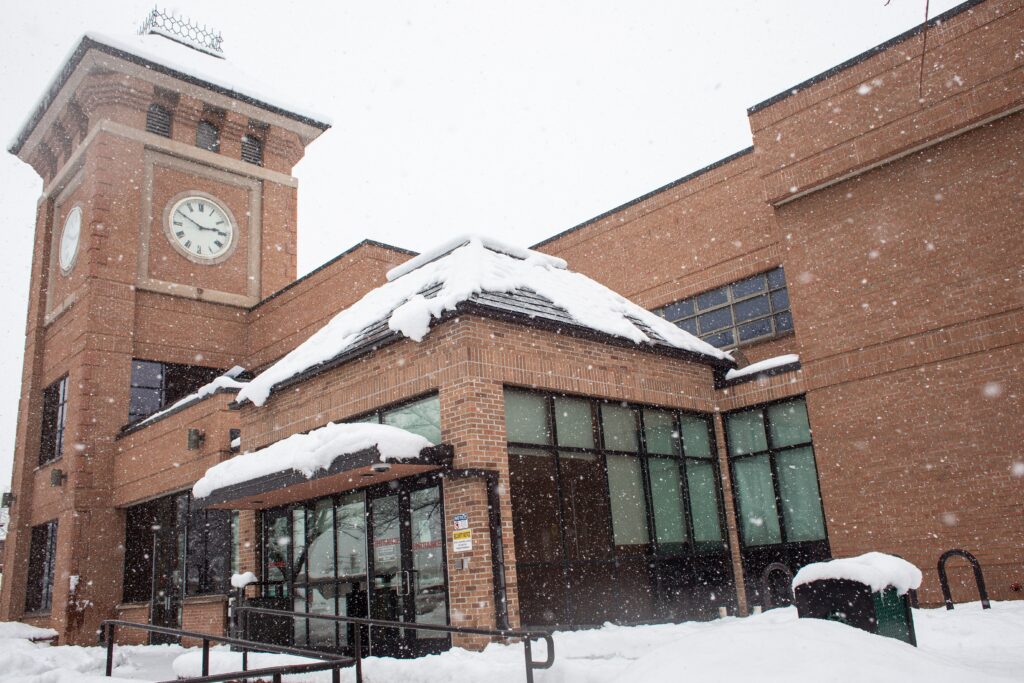
Colorado’s Western Slope magistrate judges describe unique role in federal judiciary
Michael Karlik
michael.karlik@coloradopolitics.com
Updated 4 days ago
Two of Colorado’s federal judges stationed on the Western Slope spoke to lawyers on Wednesday about their unique roles, the ways their workloads differ, and the need for more criminal defense lawyers to take cases outside the Front Range. “Here...

Denver sues Philip Morris, other tobacco companies over cigarette butt litter
Deborah Grigsby
deborah.smith@denvergazette.com
Updated 3 days ago
Denver is demanding that some of the biggest tobacco companies in the world pay for the cleanup of discarded cigarette butts on its streets, following a similar campaign that cities in other states have pursued. Denver’s lawsuit, filed this week...
Federal judge rules that request for bond hearing not necessary to challenge immigration detention
Michael Karlik
michael.karlik@coloradopolitics.com
Updated 2 days ago
A federal judge in Colorado ruled last week that it is not mandatory for a person to seek a bond hearing with an immigration judge before they challenge the lawfulness of their detention in federal court. For the past year,...

Boulder Valley School District introduces new policies following antisemitism lawsuit
Marissa Ventrelli
marissa.ventrelli@coloradopolitics.com
Updated 2 days ago
The chief of Boulder Valley School unveiled new policies for the 2026-2027 school year following a lawsuit filed on behalf of a student alleging antisemitic harassment. In June, the Anti-Defamation League filed a federal civil rights complaint against the school...

Colorado NRA chapter seeks injunction against new gun‑training requirement
Marissa Ventrelli
marissa.ventrelli@coloradopolitics.com
Updated 3 days ago
The Colorado chapter of the National Rifle Association is seeking an injunction to stop the state from enforcing a new law that took effect earlier this month. The new law requires anyone buying or selling certain firearms to first complete...