

A jury’s job in justice | HUDSON
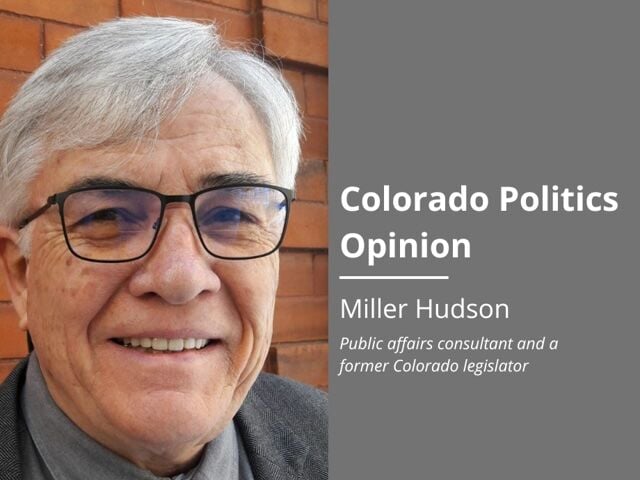
Miller Hudson

Miller Hudson
While juries have rarely been popular with monarchs or despots, evidence exists for reliance on juries as far back as ancient Egyptian Kenbets composed of eight jurors, four chosen from each side of the Nile. Apparently, 4,000 years ago there was some reason to believe this “both sides of the river” selection would assist in assuring justice. Modern jury roots are usually traced to Germanic tribes, traceable from a Frankish Inquest launched in 829 A. D. William the Conqueror transferred this judicial model to Britain in 1066 and its guarantee of trial by jury was incorporated into the Magna Carta nearly two centuries later, in 1215.
Henry VIII replaced juries with Star Chambers, which were conducted in secret, with no indictments, no juries, no witnesses and no appeals after declaring himself the supreme ruler of England and Defender of the Faith for the Church of England. When Oliver Cromwell upended the monarchy in 1649, he chose to retain its Star Chambers. It was only with the accession of William and Mary, following the Glorious Revolution, that 200 years of legal abuses ended and guarantees of the rights in the Magna Carta were restored.
Stay up to speed: Sign up for daily opinion in your inbox Monday-Friday
Many of the colonists departing for America during the 17th century were fleeing the cruelties of royal jurisprudence. Shakespeare’s jest that, “The first thing we do is we kill all the lawyers,” resonated with his audiences. A year before settlers arrived at Jamestown, the first charter of the Virginia Colony guaranteed a right to trial by jury, which then was included in all succeeding colonial charters. “Trial by jury has been and ever will be, looked upon as the glory of English law,” according to British legal historian Sir William Blackstone.
Suddenly, we witness a 2024 presidential candidate, together with a chorus of his disciples lamenting American juries are rigged. Certainly, juries have made mistakes. The Innocence Project has freed more than 240 convicted men and women during the past three decades. With access to modern DNA testing, exoneration can now be proven beyond a reasonable doubt. This was the case for the so-called Central Park Five whom former President Donald Trump still insists should have been summarily executed. Today, one of them now serves as a New York City Councilman. So, should we toss the right to a trial by jury into the dustbin of history? Probably not, I suspect.
Let me recount my sole experience serving on a jury in a Denver County court. While I served in the legislature, there was a rumor elected officials would rarely be called for a jury pool due to concerns they might unduly influence other jurors on the basis of their presumed authority. This was true for a dozen years before I received a summons to jury duty. I disclosed my time in elected office on the court’s questionnaire. This did not seem to trouble either the district attorney’s office or the public defender, approving me to join a six-member jury panel. I would be selected jury foreman, which provides some credence to the “influence” concerns, although I pointed out I was not an attorney, but simply a fellow resident of Denver.
It was the week before Christmas and the case we heard concerned a violent fight in the parking lot of a Denver Housing Authority public housing project. The prosecution alleged the defendant had brutally and viciously attacked the victim in a dispute about a parking space — an assault committed, we were told, with malice and deliberate aforethought. We sat through nearly three days of testimony which included charges of adulterous rivalries, repeated violation of parking assignments, prior disputes and insults among the various protagonists. Much of this seemed irrelevant to the facts a young man ran out of his unit, barefooted, early one morning to confront a neighbor who repeatedly parked in a space reserved for his mother who had returned home from her night shift. The aggrieved son apparently beat the bejeezus out of the offending neighbor, sending him to the emergency room. The victim never appeared in court, which struck each of us as strange.
When the case was finally turned over to the jury, a young woman, who worked as a nurse, in answer to the question, “Which of the witnesses did you believe?”, replied, “I think every one of them lied to us.” We all laughed in agreement, recalling the adulterous spouse who claimed she had never noticed her illicit lover was wearing an ankle bracelet. Really? We were also troubled the alleged victim, who was reportedly so badly injured had never been produced in court. We quickly agreed the prosecution had fallen far short of proving its case “beyond a reasonable doubt.” Our Christmas gift to the defense was an unqualified acquittal.
After receiving our decision, the public defender approached me eagerly and inquired what had persuaded us to find in favor of his client? I suspected he was hoping we had been bowled over by his closing argument. I explained, “The fact that your client was barefoot in nine inches of snow at 7 in the morning did the trick.” He seemed puzzled, so I added, “The prosecution wanted us to believe this was a malicious and well thought-out criminal attack. If this were true, wouldn’t the defendant have pulled on his Doc Martens and perhaps snatched a baseball bat — not start a fight in sweatpants and a T-shirt?”
We probably didn’t arrive at our decision as prosecutors anticipated, but I think we did the right thing. When I queried the court staff about why the victim never appeared, they informed me, “Well, he jumped bail on other charges, and we can’t seem to find him.” Then he explained, “This was just a training exercise for a new public defender. I hope we didn’t waste your time.” I retorted, “Mine and everyone else’s!” A New York jury determined Donald Trump did exactly what it looked like he’d done. Don’t be surprised if the Hunter Biden jury decides a gun purchaser with a history of drug abuse honestly felt he was no longer an addict. Denial isn’t a river in Egypt. In 400 or 4,000 years, free societies are likely to still be relying on juries.
Miller Hudson is a public affairs consultant and a former Colorado legislator.


Colorado Democrats, your time is coming | Jon Caldara
Jon Caldara
jon-caldara@coloradopolitics.com
Updated 14 hours ago
Hey, Colorado Democrats! All the fun you’ve had watching Republican dysfunction in Colorado for the last 20 years was just a preview of what is about to happen to you. The Colorado Republican Party no longer exists as a competitive...
The relevance of Watergate more than a half-century later | SONDERMANN
By Eric Sondermann
by-eric-sondermann@coloradopolitics.com
Updated 4 days ago
It was the scandal for which all other scandals are now named. In June 1972, a small group of Cuban burglars with high-level connections broke into the headquarters of the Democratic National Committee. Those headquarters were located in the Watergate...
Colorado must continue finding common ground on wildfire policy | GUEST COLUMN
Colorado Politics
colorado-politics@coloradopolitics.com
Updated 3 days ago
By John Herrick Colorado has never lacked for opinions about wildfire policy. We debate forest management, climate change, prescribed burns, land use, air quality and budgets. Those debates are familiar territory, but a new discussion is beginning to happen around...

Proposition NN is the best investment for Colorado’s students and schools | GUEST COLUMN
Colorado Politics
colorado-politics@coloradopolitics.com
Updated 3 days ago
By Justin Ogden Colorado families know what it means to make difficult budget decisions. Inflation has driven up the cost of groceries, housing, utilities and just about everything else. Families like mine work hard to stretch every dollar while still...
Were the primaries a preview for consequential general election? | Paula Noonan
Paula Noonan
paula-noonan@coloradopolitics.com
Updated 3 days ago
Colorado’s political future will go the way of this election. Historically, the state has not had both chambers controlled by a supermajority. This election may change that. The primaries suggest how the general election may play out. Democrats had solid...
Disagreement doesn’t have to mean disrespect | GUEST COLUMN
Colorado Politics
colorado-politics@coloradopolitics.com
Updated 3 days ago
By Vincent Atchity These days, it doesn’t take long to feel overwhelmed by politics. Turn on the news, scroll through social media or read the comments on almost any political post and you’ll find anger, outrage and personal attacks. For...
Keeping Colorado’s kids’ trust online | PODIUM
Colorado Politics
colorado-politics@coloradopolitics.com
Updated 4 days ago
By Stuart Jenkins Almost every day, the kids and teens we serve across Colorado are introduced to new generative artificial intelligence and other emerging technology, including conversational AI systems designed to simulate human conversation. These tools are no longer a...
Marx’s ‘through line’ predates Trump, connects to Maes | FEEDBACK
Colorado Politics
colorado-politics@coloradopolitics.com
Updated 4 days ago
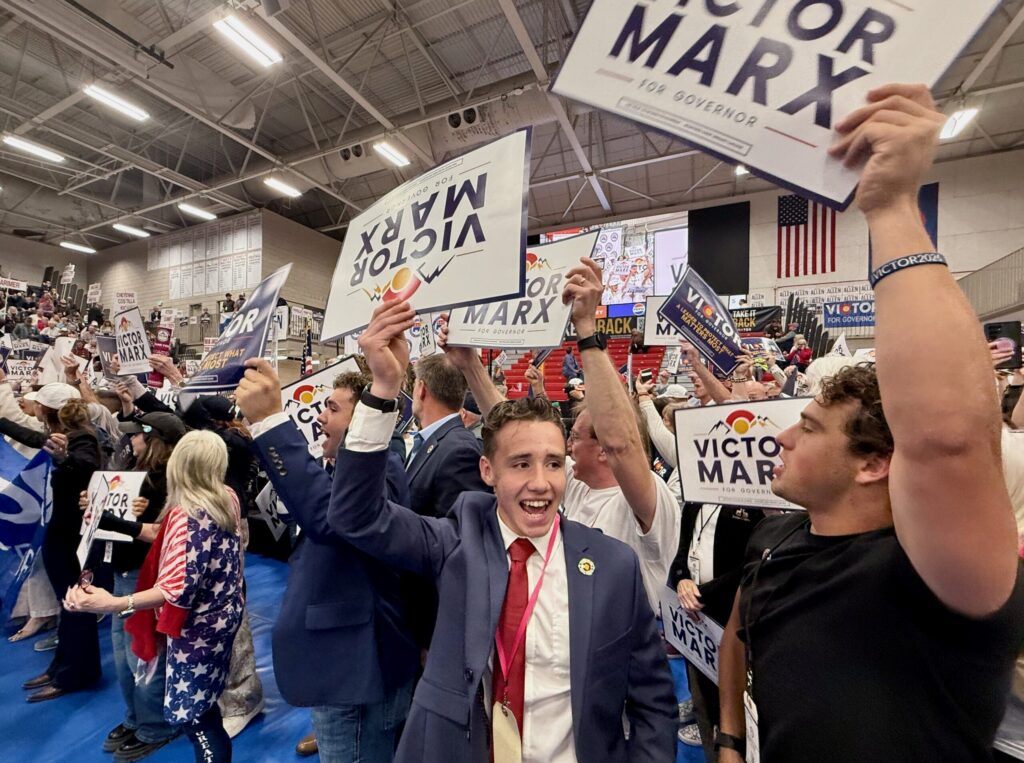
Eric Sondermann is of course correct Victor Marx is an unserious, unelectable, embarrassing Republican nominee for governor of Colorado. But I respectfully submit that the “through line,” as Mr. Sondermann describes it, is not from Trump to Marx, despite their...

Cedric Pride’s blueprint for opportunity through the trades | The OpEdge Podcast
Tony Olivero
tony.olivero@gazette.com
Updated 5 days ago
Cedric Pride, CEO of the nonprofit Pride Initiative in Denver, joins The OpEdge with a blueprint for workforce development, skilled trades, and economic opportunity. Pride tells host and investigative columnist Jimmy Sengenberger why he believes the trades offer a path...
Colorado’s No. 1 education ranking should raise our ambition | GUEST COLUMN
Colorado Politics
colorado-politics@coloradopolitics.com
Updated 5 days ago
By Scott Laband Colorado has earned the right to celebrate its new No. 1 ranking in education from U.S. News & World Report. Gov. Jared Polis called it “one of the proudest moments” of his time in office and shared the...