

Federal judge weighs immunity for Westminster officer who shot, killed man in mental crisis
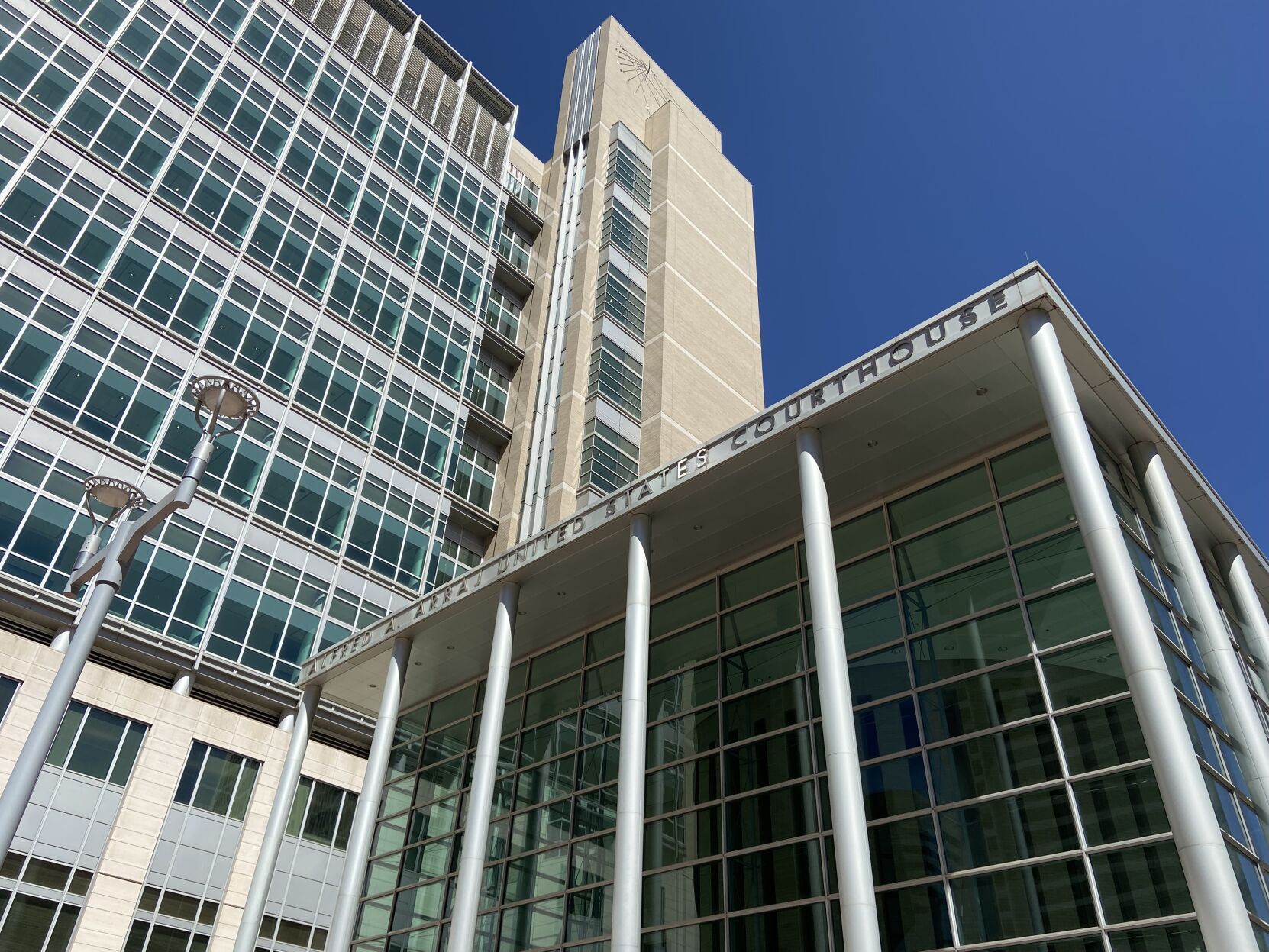
A federal judge on Friday heard arguments over whether a Westminster police officer may be held liable for shooting and killing a 27-year-old man experiencing a mental health crisis after lesser forms of restraint did not defuse the encounter.
Although Birendra Thakuri’s mother filed suit against Officer Steven Bare and the city one year after her son’s death in August 2018, U.S. District Court Judge Daniel D. Domenico took no action for more than four years on Bare’s motion to dismiss the case.
Even after state lawmakers passed legislation in the summer of 2020 that potentially would have enabled Thakuri’s mother to assert a new claim under the Colorado Constitution, Domenico ignored the parties’ joint request to ask the Colorado Supreme Court whether the law applied to Thakuri’s case. He further responded curtly when the parties sought an opportunity to address him in person.
However, two weeks after Colorado Politics reported that Domenico had a disproportionate number of motions languishing on his docket relative to other federal judges — including motions pending for multiple years — Domenico changed course and scheduled a hearing to address the long-overdue requests in Thakuri’s lawsuit.
“I apologize and appreciate your patience in how long it’s taken to schedule this hearing. I did want to make sure we gave this case sufficient attention and time,” he told the attorneys at the outset of the hearing.
A mental crisis and a lethal response
According to the complaint, Thakuri was allegedly walking along Federal Boulevard with his brother one evening when he grew erratic and upset. The two brothers had a “scuffle,” prompting a witness to call 911 and report a fight.
Bare arrived first. Although Westminster policies allegedly advised him otherwise, Bare got out of his car and observed the Thakuri brothers kneeling on the ground. Thakuri started “screaming unintelligibly” and “flailing his arms,” which Bare interpreted as an “emotionally disturbed” response.
When Thakuri approached Bare, the officer told him to stop and Thakuri complied. The second time Thakuri approached, Bare hit him in the head with a flashlight and pushed him backwards. The third time Thakuri moved toward Bare, again screaming and flailing, Bare shot him in the chest. Thakuri died from the gunshot wound. He was unarmed.
Thakuri’s mother filed suit against Bare for excessive force. She alleged her son did not pose a risk of serious injury or death to anyone and Bare possessed other, nonlethal means of subduing Thakuri.
“By unnecessarily rushing into a volatile situation alone, without backup, thereby creating the prospect of a two-on-one encounter, and by failing to take any reasonable steps to de-escalate the situation or remove himself from it, Defendant Bare was solely responsible for any danger the situation presented,” the complaint also argued.
Bare responded that he was entitled to qualified immunity, which generally shields government officials from civil lawsuits unless they violate a person’s clearly established legal rights.
“At the time he was shot, we all agree he was charging, with his arms flailing and screaming at the officer. You can imagine having someone within 10 feet of you doing that. Is it the obligation of the officer just to take him on?” asked Bare’s attorney, Gordon L. Vaughan. “It is not. Officers can’t lose these fights because they don’t go home if they allow someone in that condition to attack them.”
Domenico observed the “subtler” point made by the plaintiff’s attorneys was that Bare’s choices prior to the shooting potentially created the perceived need for deadly force.
“It’s more that if you’re gonna do something that, by department policy, it says you generally shouldn’t do for the very reason that it will put you in a dangerous spot, then you can’t rely on the fact that you’re in this dangerous situation as part of your qualified immunity defense,” Domenico summarized. “You don’t get to rely on the fact that you showed up to a situation where you’re outnumbered when it was your choice to show up to a situation where you’d be outnumbered.”
On the other hand, Domenico was unsure Bare was on notice he would be violating Thakuri’s rights by using force against someone who appeared unstable and unpredictable.
“While, certainly, it seems like cities are doing a better job of trying to find something in between doing nothing and calling the police to get involved, in this case it was the police who had to deal with it,” he said. “How can I say an officer in these circumstances would be unreasonable in thinking there was a threat?”
“Our position would be: Without a weapon, flailing arms isn’t enough,” responded plaintiff’s attorney Gail K. Johnson.

FILE PHOTO
DENVER GAZETTE FILE PHOTO

Four-year delay
Bare originally filed his motion to dismiss in late 2019. Nearly one year later, Thakuri’s mother moved to amend her complaint based on Senate Bill 217, a law enacted in the wake of protests over the killing of Black Americans by police officers. SB 217 provided a means for plaintiffs to sue over violations of their rights under the state constitution, with officers unable to invoke qualified immunity.
Shortly afterward, the parties asked Domenico to send to the Colorado Supreme Court the legal question of whether SB 217 applied to Thakuri’s death, which occurred almost two years earlier.
Instead, Domenico took no action on any of the parties’ motions.
In February 2023, Johnson submitted a written request for a status conference to address the pending motions, noting more than three years had gone by with no answer from Domenico. Domenico responded six months later denying the request, stating only that he “will address the pending motions in due course and will contact the parties if (he) believes a status conference is necessary.”
The following month, Colorado Politics reported that several judges on Colorado’s federal trial court experienced significant delays in ruling on motions. Domenico was the most backlogged judge, and an outlier among all federal judges nationally. As of March 31, 2023, he had 151 undecided motions that had been pending longer than six months.
In January, using data through Sept. 30, 2023, Colorado Politics again reported Domenico had an outsized backlog, with 103 motions awaiting a decision for more than six months. Some — like the motions in Thakuri’s case — were overdue by several years.
Two weeks later, Domenico scheduled the hearing to address all three pending requests.
He told the parties he would soon issue a written decision.
The case is Estate of Thakuri v. City of Westminster et al.


Judicial performance evaluations released, Montezuma County judge disciplined | COURT CRAWL
Michael Karlik
michael.karlik@coloradopolitics.com
Updated 13 hours ago
Welcome to Court Crawl, Colorado Politics’ roundup of news from the third branch of government. Colorado’s citizen-led judicial performance commissions released their voter narratives for the judges standing for retention in November, plus a disciplinary panel imposed consequences on a...
Federal judge holds off on dismissing formerly bankrupt medical contractor from Jeffco jail death lawsuit
Michael Karlik
michael.karlik@coloradopolitics.com
Updated 16 hours ago
A federal judge declined on Monday to dismiss the formerly bankrupt medical contractor from a lawsuit over a detainee’s death in Jefferson County jail, but indicated she would do so if the plaintiffs’ attorneys go through the process to ensure...
Federal judge green-lights excessive force, retaliation claims for trial against Fort Collins officers
Michael Karlik
michael.karlik@coloradopolitics.com
Updated 2 days ago
A federal judge green-lit a jury trial last week against multiple Fort Collins police officers on claims that they used excessive force on one man who was standing unarmed in his underwear, and retaliated against another man for exercising his...
10th Circuit revives wage violation lawsuit against Papa John’s operator
Michael Karlik
michael.karlik@coloradopolitics.com
Updated 3 days ago
The Denver-based federal appeals court on Tuesday reinstated a former Papa John’s delivery driver’s lawsuit alleging violations of federal and state wage law. Steve Mighell worked for one month at a Denver Papa John’s location in summer 2023. He alleged...
Colorado appeals judge’s delays in releasing opinions noted by performance commission
Michael Karlik
michael.karlik@coloradopolitics.com
Updated 3 days ago
The citizen-led performance commission that provides guidance to voters about whether to retain members of Colorado’s second-highest court raised concerns by judges and attorneys that Judge Elizabeth L. Harris sometimes struggles with releasing opinions promptly. Harris, who joined the Court...
Colorado judge explores sanctions against DOJ, ICE for rearresting man 4 days after release on bond
Michael Karlik
michael.karlik@coloradopolitics.com
Updated 4 days ago
A federal judge in Colorado is considering sanctions against the government after immigration agents rearrested a man four days after an immigration judge found him suitable for release on bond. On July 28, U.S. Magistrate Judge N. Reid Neureiter ordered...
Divided disciplinary panel censures Montezuma County judge after agreement reached
Michael Karlik
michael.karlik@coloradopolitics.com
Updated 4 days ago
A disciplinary panel formally imposed a public censure, suspension, and further training on Montezuma County Court Judge Ian J. MacLaren on Tuesday by a 2-1 vote. Under constitutional Amendment H, which voters adopted in November 2024, MacLaren was set to...
Colorado’s Western Slope magistrate judges describe unique role in federal judiciary
Michael Karlik
michael.karlik@coloradopolitics.com
Updated 5 days ago
Two of Colorado’s federal judges stationed on the Western Slope spoke to lawyers on Wednesday about their unique roles, the ways their workloads differ, and the need for more criminal defense lawyers to take cases outside the Front Range. “Here...
Denver sues Philip Morris, other tobacco companies over cigarette butt litter
Deborah Grigsby
deborah.smith@denvergazette.com
Updated 4 days ago
Denver is demanding that some of the biggest tobacco companies in the world pay for the cleanup of discarded cigarette butts on its streets, following a similar campaign that cities in other states have pursued. Denver’s lawsuit, filed this week...
Federal judge rules that request for bond hearing not necessary to challenge immigration detention
Michael Karlik
michael.karlik@coloradopolitics.com
Updated 4 days ago
A federal judge in Colorado ruled last week that it is not mandatory for a person to seek a bond hearing with an immigration judge before they challenge the lawfulness of their detention in federal court. For the past year,...
PREV
PREVIOUS
Colorado Supreme Court committee votes to explore role of AI in practice of law
An advisory committee to the Colorado Supreme Court recently created a subcommittee that will evaluate existing rules barring the unauthorized practice of law to determine if changes are necessary to accommodate emerging artificial intelligence-powered legal tools. The March 1 vote of the Advisory Committee on the Practice of Law came at the request of the […]
Federal judge green-lights jury trial for Denver police response to 2020 protests
A federal judge decided earlier this month that a jury will evaluate whether the City and County of Denver and one Aurora police officer violated the constitutional rights of 13 plaintiffs who were injured during the police response to protests in downtown Denver in May 2020. In a pair of March 1 orders, U.S. District […]