

Colorado’s competitive edge slips in key areas, new report says
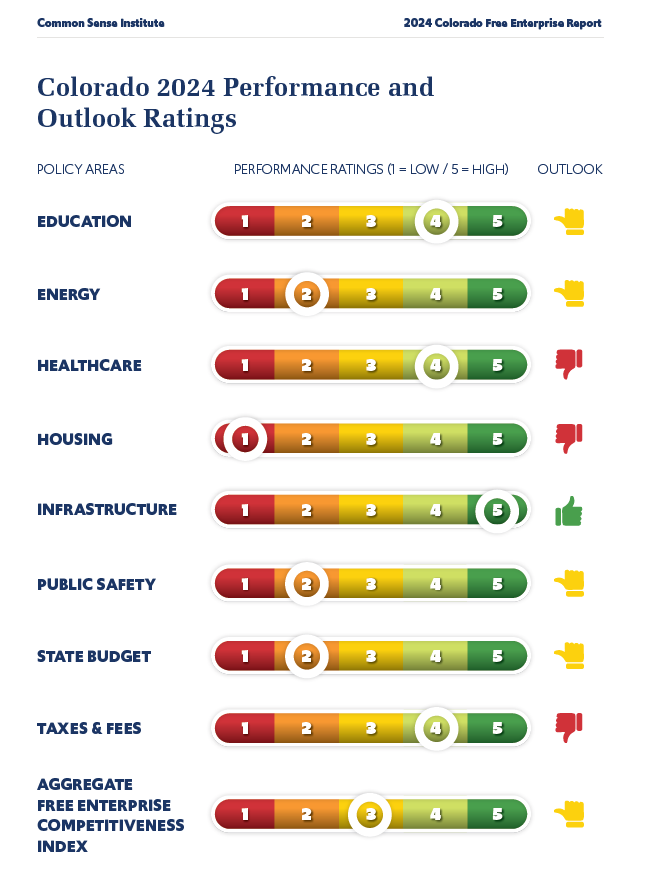
A historically highly attractive place to live, Colorado faces an “inflection point,” in which warning signs have emerged, notably in the area of housing, according to a new report from a Denver-based think tank.
Those warning signs show that Colorado has lost some of its competitive edge to other states, and lawmakers’ actions over the next few years are critical, the Common Sense Institute said in its latest “Free Enterprise Report.”
As it has in the past, the group argued that Colorado can maintain a strong economy and provide its residents with opportunity if the state embraces free enterprise principles, arguing that approach has, over time, proven to be “most effective for creating economic prosperity.”
“We are still great place to live and work,” Lang Sias, a former legislator and one of the report’s authors, told The Denver Gazette in an interview. “But there are some cracks beginning to appear.”
Here are some of the group’s findings:
-
Colorado’s housing competitiveness fell to No. 51 among all states and Washington, D.C. “It now takes 96 hours of work at the median wage to afford the mortgage on the median priced home,” the report said, noting that represents a 118% increase from the 44 hours required in 2011.
-
Colorado ranks No. 20 in education competitiveness after slipping seven places since 2011.
-
Colorado’s higher residential and commercial natural gas prices stood out, while the competitiveness in the reliability of its electricity grid also declined. The report noted that reducing carbon emissions has largely directed the state’s energy policy.
-
Colorado’s crime ranking fell to No. 37 from No. 22. The slip in the rankings means that Colorado’s crime situation, as measured by factors cited by the group, has worsened as compared to other states
Sias said that policymakers should fully explore the “direct and indirect costs” of proposed rules and legislation and consider their aggregate effect on Colorado’s competitive index.
“When we legislate, we don’t exist in a vacuum,” he said.
Steven Byers, a senior economist with the group, said policies directly affect Coloradans in ways lawmakers don’t always anticipate.
After the Marshall fire, he noted, some residents who lost their homes struggled to afford rebuilding.
“They had to ask for waivers to not meet new onerous energy efficiency requirements,” Byers said. “You really need to pay attention at the intended consequences of policies.”

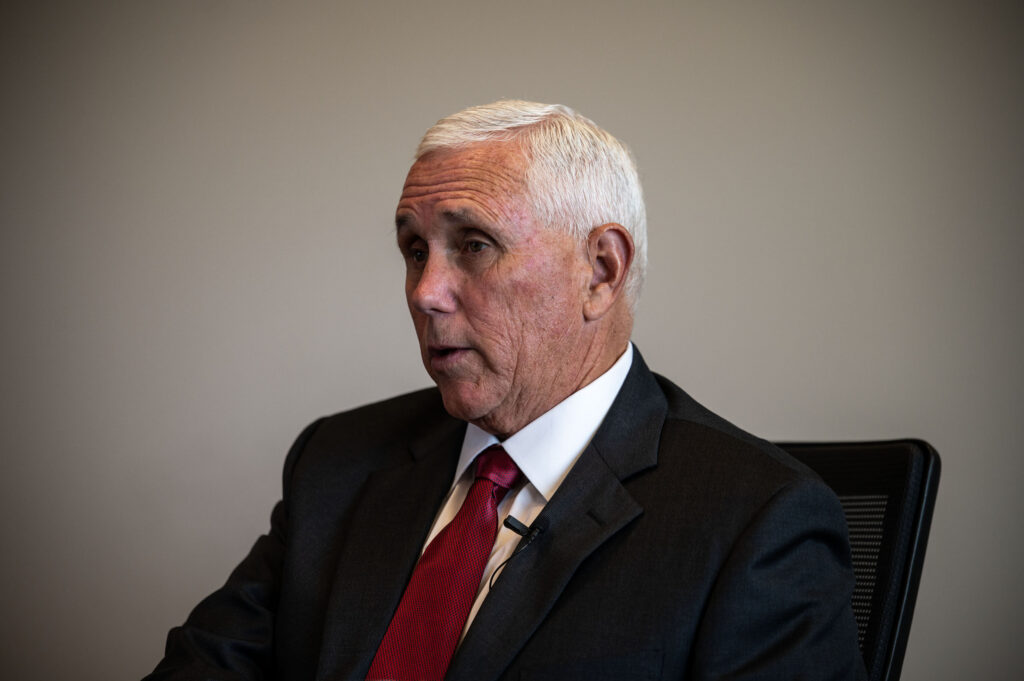
Q&A with Mike Pence | Former vice president says GOP’s populist turn from conservatism isn’t permanent
Ernest Luning
ernest.luning@coloradopolitics.com
Updated 8 hours ago
Former Vice President Mike Pence says he’s concerned that the Republican Party has taken a populist turn away from bedrock conservative principles during President Donald Trump’s second term, but he believes the party will return to its roots when Trump...

Republican Victor Marx taps George Markert as his lieutenant governor pick in Colorado’s gubernatorial race
Ernest Luning
ernest.luning@coloradopolitics.com
Updated 5 hours ago
Colorado Republican gubernatorial nominee Victor Marx named George Markert, a retired Marine colonel, as his running mate for lieutenant governor Friday morning, saying the former U.S. Senate candidate will bring “exceptional character, proven leadership and a lifetime of serving others”...
Pueblo mayor, council concoct Trumpian Texas Two-Step | Dennis Maes
Dennis Maes
dennis-maes@coloradopolitics.com
Updated 1 day ago
Several weeks ago, an article was published positing Pueblo Mayor Heather Graham is a disciple of the calamitous Donald Trump school of governance — specifically as it related to questionable ethical practices and the misuse of public funds. Recently, Graham...

Colorado can’t afford to turn its back on proven public safety technology | GUEST COLUMN
Colorado Politics
colorado-politics@coloradopolitics.com
Updated 1 day ago
By Samuel G. Michael I recently saw a report that said Colorado is leading the way in artificial intelligence adoption for businesses. Across our state, more business owners and employees than ever before use AI for their everyday functions —...

Colorado lawmakers start crafting strategy to manage $200 million in federal rural health funds
Marissa Ventrelli
marissa.ventrelli@coloradopolitics.com
Updated 1 day ago
Members of the Colorado legislature’s new Commission on Medicaid raised concerns Wednesday about the federal Rural Health Transformation Program created under H.R. 1. The bipartisan, bicameral commission, created in the last legislative session to guide implementation of Medicaid changes under...

Democrat Jessica Killin’s internal poll shows dead heat with U.S. Rep. Jeff Crank in Colorado’s 5th CD
Ernest Luning
ernest.luning@coloradopolitics.com
Updated 1 day ago
Jessica Killin, the Democratic nominee in Colorado’s 5th Congressional District, is in a statistical tie with Republican U.S. Rep. Jeff Crank, according to an internal poll released this week by Killin’s campaign. The poll of likely general election voters, conducted...

Colorado’s 72-hour social media warrant law takes effect Aug. 12
Marissa Ventrelli
marissa.ventrelli@coloradopolitics.com
Updated 2 days ago
A law requiring social media platforms to respond to search warrants within 72 hours goes into effect on Aug. 12. Senate Bill 011 also requires platforms to create a staffed hotline for Colorado law enforcement agencies to contact regarding pending...
As education conflicts abound across Colorado, who puts the kids first? | Paula Noonan
Paula Noonan
paula-noonan@coloradopolitics.com
Updated 2 days ago
Elected school boards and the Colorado Department of Education (CDE) have hit the headlines with fired superintendents, superintendent resignations, failures of oversight, and misdirected dollars. Cherry Creek School District’s superintendent was fired. Jefferson County Schools’ superintendent found a less stressful...

Victor Marx says he’ll only debate Phil Weiser once in Colorado governor’s race — without a moderator
Ernest Luning
ernest.luning@coloradopolitics.com
Updated 1 day ago
Colorado Republican gubernatorial nominee Victor Marx said on Tuesday that he will participate in only one debate with Attorney General Phil Weiser before the November election — and he challenged the Democratic nominee to hold the event without a moderator....

Clock is ticking on Colorado’s new AI rules | PODIUM
Colorado Politics
colorado-politics@coloradopolitics.com
Updated 2 days ago
By Aashis Luitel On Jan. 1, organizations using covered automated systems must begin complying with Senate Bill 26-189, Colorado’s new Automated Decision-Making Technology Act. They can identify those systems and start building the processes the statute clearly requires. What they...
PREV
PREVIOUS

Universities reckon with free speech; cattlemen, livestock groups sue to stop wolf reintroduction | WHAT YOU NEED TO KNOW
Today is Dec. 12, 2023, and here’s what you need to know: On the same day the leaders of three of America’s most prominent educational institutions gave legalistic responses over whether calling for the genocide of Jews constitutes bullying or harassment, a Colorado university raised funds for a group providing emergency services in Israel. Colorado […]

Environmentalist groups criticize lawsuit seeking to prevent wolf reintroduction in Colorado
A trio of environmental groups blasted a lawsuit filed Monday by the cattle and livestock growers to stop the reintroduction of wolves in Colorado. The Colorado Cattlemen’s Association and the Gunnison County Stockgrowers’ Association sought the injunction to prevent the state from releasing wolves in the Western Slope later this month. The lawsuit, filed in […]