

Environmentalist groups criticize lawsuit seeking to prevent wolf reintroduction in Colorado

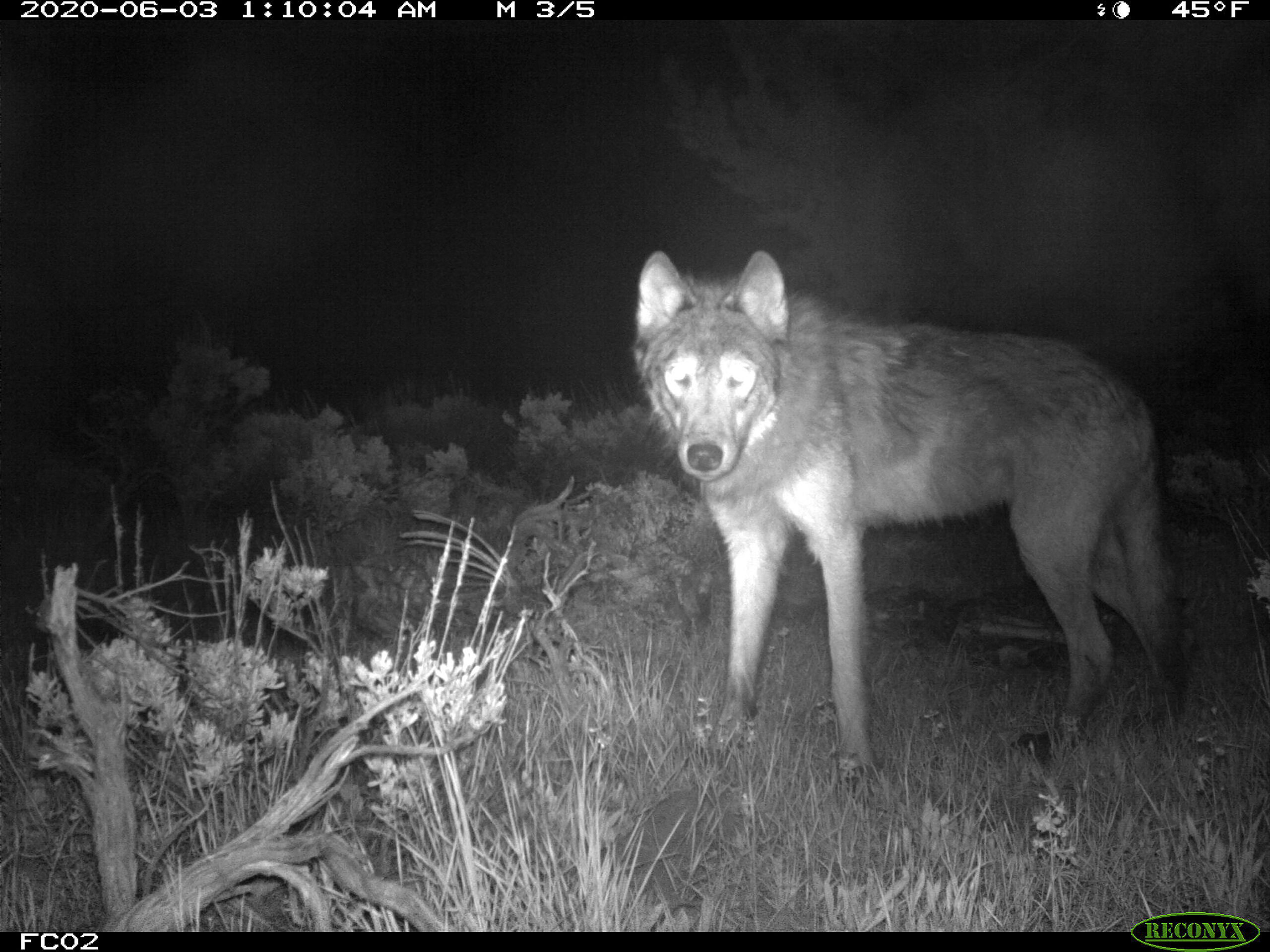
A trio of environmental groups blasted a lawsuit filed Monday by the cattle and livestock growers to stop the reintroduction of wolves in Colorado.
The Colorado Cattlemen’s Association and the Gunnison County Stockgrowers’ Association sought the injunction to prevent the state from releasing wolves in the Western Slope later this month.
The lawsuit, filed in U.S. District Court for the District of Colorado, claims the process failed to obtain an environmental impact statement. That step is needed because the wolves’ reintroduction could “significantly affect the quality of the human environment,” the lawsuit says.
The impact statement is a requirement under the National Environmental Policy Act.
An environmental impact statement was completed pertaining to the gray wolf introduction. That statement incorporated what’s called the “10(j)” rule by the U.S. Fish & Wildlife Service, which became final on Dec. 8.
Under the 10(j) rule, wolves would no longer be considered an endangered species in Colorado and would now be treated as an “experimental” population. Without the rule, wolves could be reintroduced in Colorado but only as an endangered species and under the management of U.S. Fish & Wildlife.
Critics have said the federal agency doesn’t have the capacity to manage the wolf population.
Crucially, under the Colorado Parks and Wildlife reintroduction plan, wolves can be killed if they attack livestock, and ranchers can be compensated for livestock losses.
The lawsuit claims the final environmental impact statement did not address the environmental consequences of reintroducing gray wolves. The final 10(j) rule also did not grant on its own sufficient protection to Colorado Parks and Wildlife from Endangered Species Act liability once it begins releasing gray wolves, the lawsuit says.
At the heart of the legal challenge is an agreement between U.S. Fish & Wildlife and Colorado Parks and Wildlife dating back to 1976. The agreement is tied to the Endangered Species Act and has been renewed annually ever since.
The original agreement stated that the then-Division of Wildlife – now the Colorado Parks and Wildlife – would carry out activities for the benefit of endangered or threatened fish or wildlife that can be found in Colorado. The U.S. Fish & Wildlife Service would agree to provide financial assistance for the implementation of acceptable projects for the conservation of endangered or threatened fish and wildlife.
How does applies to the 10(j) rule, the lawsuit says, is that one section requires Colorado Parks and Wildlife to annually request the agreement be renewed for the upcoming year and to include “a list of any substantial changes in the endangered and threatened wildlife conservation program” since the date of the previous agreement.
Colorado officials did that in September, and on Nov. 20 they renewed the agreement for the period Oct. 1 2023 to Sept. 30 2024.
However, the US Fish & Wildlife did not conduct a National Environmental Policy Act analysis prior to renewing the agreement, the lawsuit says.
The lawsuit notes that National Environmental Policy Act analyses have been done for past wolf reintroductions in Yellowstone National Park and in central Idaho, as well as for the Mexican wolf reintroductions in Arizona and New Mexico.
The lawsuit lays out the potential dangers for livestock, particularly in the Gunnison Basin, which is in the southern region for wolf reintroduction and one that the state says has a “high ecological suitability for wolf reintroduction.”
Starting in September, both the cattlemen and stockgrowers’ groups sent letters to U.S. Fish & Wildlife to request the agency conduct the National Environmental Policy Act review of the agreement, including the environmental impacts.
Renewing the agreement violated National Environmental Policy Act, the lawsuit says, adding it was the first time the federal agency approved an exercise of its authority under the agreement.
In any case, the wolf management plan created by Colorado Parks and Wildlife is not an adequate substitute for the National Environmental Policy Act, the lawsuit insists.
The environmental groups criticized the lawsuit on Tuesday. The critics – which are, by definition, “special interest groups” – called the cattle and livestock growers “special interest groups.” Broadly speaking, a “special interest” group is any entity that advocates for a particular policy or represents an interest.
“Livestock industry members have filed this obstructionist lawsuit just as state employees are finalizing logistics to reintroduce wolves after the iconic keystone species has been functionally absent from the state for 80 years,” the WildEarth Guardians said.
WildEarth Guardians insisted that authorization for reintroduction activities comes from the recently finalized federal ’10(j) rule,’ which the group said involved “extensive public involvement and robust environmental analysis.”
Lindsay Larris, wildlife program director for WildEarth, added, “This flimsy lawsuit is a last ditch effort to stop a democratic process because some business owners didn’t like the outcome.”
“For the past three years, the concerns of ranchers and livestock owners have been elevated in painstaking and deliberate state and federal processes. Government officials have bent over backwards to accommodate this special interest, but apparently, nothing but the complete absence of wolves on the landscape will be enough,” Larris complained.
EarthJustice said the plaintiffs’ “complaint about lack of input and review ignores reality and all the work done by agency personnel to make reintroduction a success.”
Michael Saul, the Rockies and Plains Program Director at Defenders of Wildlife, said his group is “sorely disappointed by this transparent, eleventh-hour attempt to delay efforts to bring wolves and their ecological benefits back to Colorado.”
More releases planned for Colorado over the next several years will start to fill in one of the last remaining major gaps in the western U.S. for a species that historically ranged from northern Canada to the desert southwest.
The reintroduction, starting with the release of up to 10 wolves, has emerged as a political wedge issue when GOP-dominated Wyoming, Idaho and Montana refused to share their wolves for the effort. Colorado officials ultimately turned to another Democratic state – Oregon – to secure wolves.
As anticipation grows among wildlife advocates, who’ve already started a wolf-naming contest, ranchers in the Rocky Mountains where the releases will occur are anxious. They’ve already seen glimpses of what the future could hold as a handful of wolves that wandered down from Wyoming over the past two years killed livestock.
The fear is such attacks will worsen, adding to a spate of perceived assaults on western Colorado’s rural communities as the state’s Democratic leaders embrace clean energy and tourism, eclipsing economic mainstays such as fossil fuel extraction and agriculture.
The lawsuit is Gunnison County Stockgrowers’ Association and Colorado Cattlemen’s et al vs. U.S. Fish & Wildlife and Colorado Parks and Wildlife.
The Associated Press contributed to this article.

luige.delpuerto@coloradopolitics.com


Federal biotech commission examines Colorado’s role in critical minerals production
Scott Weiser
scott.weiser@gazette.com
Updated 11 hours ago
China’s dominance over critical mineral supplies has left U.S. manufacturers vulnerable. Colorado’s biotech and research community is working to ease that dependence. Leaders from the National Security Commission on Emerging Biotechnology met last week at the Colorado School of Mines...

Denver mayor promises universal childcare, housing expansion in city address
Deborah Grigsby
deborah.smith@denvergazette.com
Updated 1 week ago
Nearly a year after Denver cut city jobs to close a $250 million budget gap, Mayor Mike Johnston used his third State of the City address to promise universal childcare and 20,000 homes as part of a new redevelopment vision...

Colorado allows big polluters to buy credits as it mandates local engagement
Scott Weiser
scott.weiser@gazette.com
Updated 5 days ago
Colorado air quality regulators on Friday decided to require major industrial plants to hold in-person meetings with nearby communities and to cut certain pollutants on site. The same rules allow those plants to meet most of their greenhouse gas targets...

Record utility rate requests hit $9.2 billion nationwide in second quarter
Scott Weiser
scott.weiser@gazette.com
Updated 2 weeks ago
Colorado had no requests last quarter Electric and gas utilities sought a record $9.2 billion in rate increases nationwide during the second quarter, according to a new analysis by the consumer advocacy organization PowerLines, as utilities continue seeking billions for...

Colorado GDP trails direct competitor states, though slightly ahead of U.S. average
Mark Samuelson Special to The Denver Gazette
mark.samuelson@denvergazette.com
Updated 2 weeks ago
Colorado’s economy is marginally outperforming the national average but lags behind those of direct competitor states, such as Arizona, Texas and Utah, according to a report by a nonpartisan policy group. And while some indicators for the Centennial State appear...

Job leads in Denver show comparative strength, but salary offers run low
Mark Samuelson Special to The Denver Gazette
mark.samuelson@denvergazette.com
Updated 3 weeks ago
‘One of the most active hiring markets in the Mountain West,’ study shows At a moment when job growth will likely be a political issue in fall elections, a European-based job referral service has released a study showing employers have...
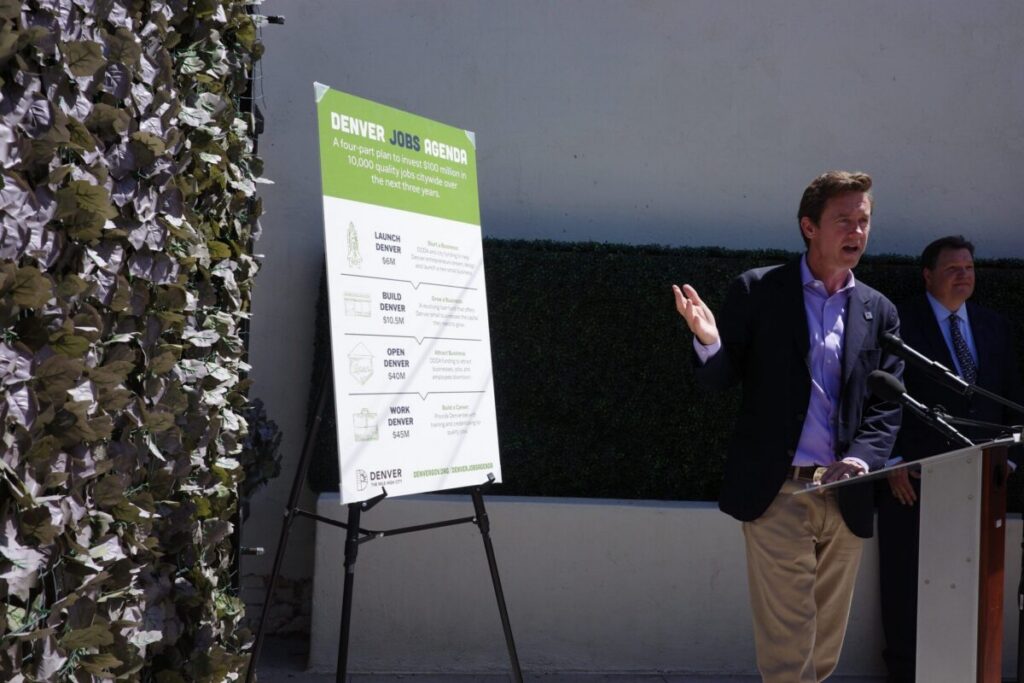
Denver launches $100 million effort to support 10,000 new jobs
Deborah Grigsby
deborah.smith@denvergazette.com
Updated 3 weeks ago
The City of Denver is aiming to support 10,000 quality jobs citywide over the next three years, Mayor Mike Johnston announced on Thursday. The Denver Jobs Agenda is a new city-backed strategy that will invest $100 million to support in-demand job training...

Colorado business confidence improves but still pessimistic
Bernadette Berdychowski
bernadette.berdychowski@denvergazette.com
Updated 4 weeks ago
Halfway into the year, business confidence across Colorado has improved but is still negative, a new report found. The Leeds Business Confidence Index, a measurement of how business leaders across Colorado feel about the future of the national and state...

Xcel franchise renewal clears first Denver City Council committee hurdle
Scott Weiser
scott.weiser@gazette.com
Updated 1 month ago
More than $180 million a year in franchise fees, infrastructure relocation savings and undergrounding funds would continue flowing to Denver under a proposed 20-year franchise agreement with Xcel Energy. It cleared a major City Council hurdle Tuesday, while adding new...
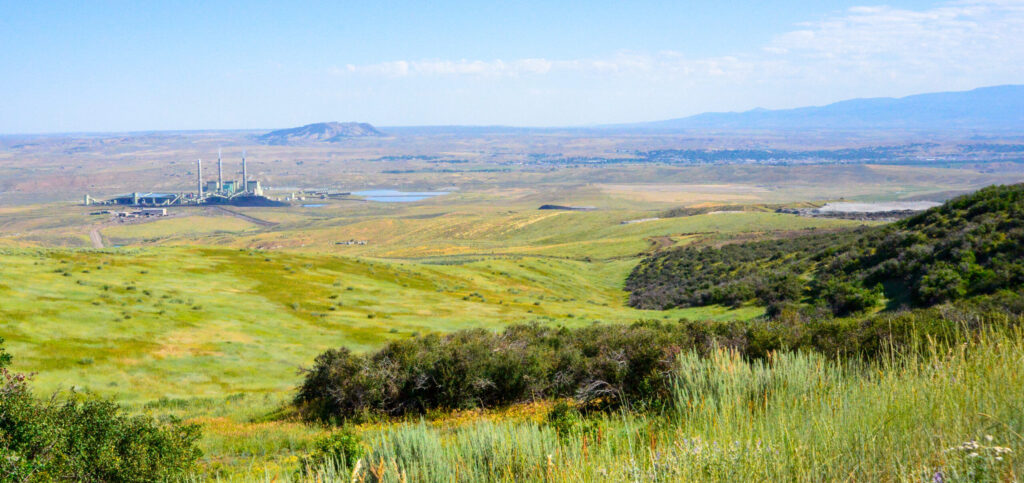
Colorado’s haze lawsuit tests coal plant closure | ANALYSIS
Scott Weiser
scott.weiser@gazette.com
Updated 4 weeks ago
Colorado is asking a federal appeals court to overturn the U.S. Environmental Protection Agency’s decision to reject the state’s plan to reduce haze at national parks and wilderness areas. At the center of the fight is a straightforward but difficult...
PREV
PREVIOUS

Colorado's competitive edge slips in key areas, new report says
A historically highly attractive place to live, Colorado faces an “inflection point,” in which warning signs have emerged, notably in the area of housing, according to a new report from a Denver-based think tank. Those warning signs show that Colorado has lost some of its competitive edge to other states, and lawmakers’ actions over the […]

10th Circuit gives Eagle County sheriff's officials immunity for jail suicide
The federal appeals court based in Denver decided on Monday that five Eagle County sheriff’s officials cannot be held liable for the death of a jail detainee who allegedly was a known suicide risk prior to his arrest. The ruling from the U.S. Court of Appeals for the 10th Circuit marked the second time in […]