

Trump disqualification hearing closes with Jan. 6 committee staffer, 14th Amendment rebuttal
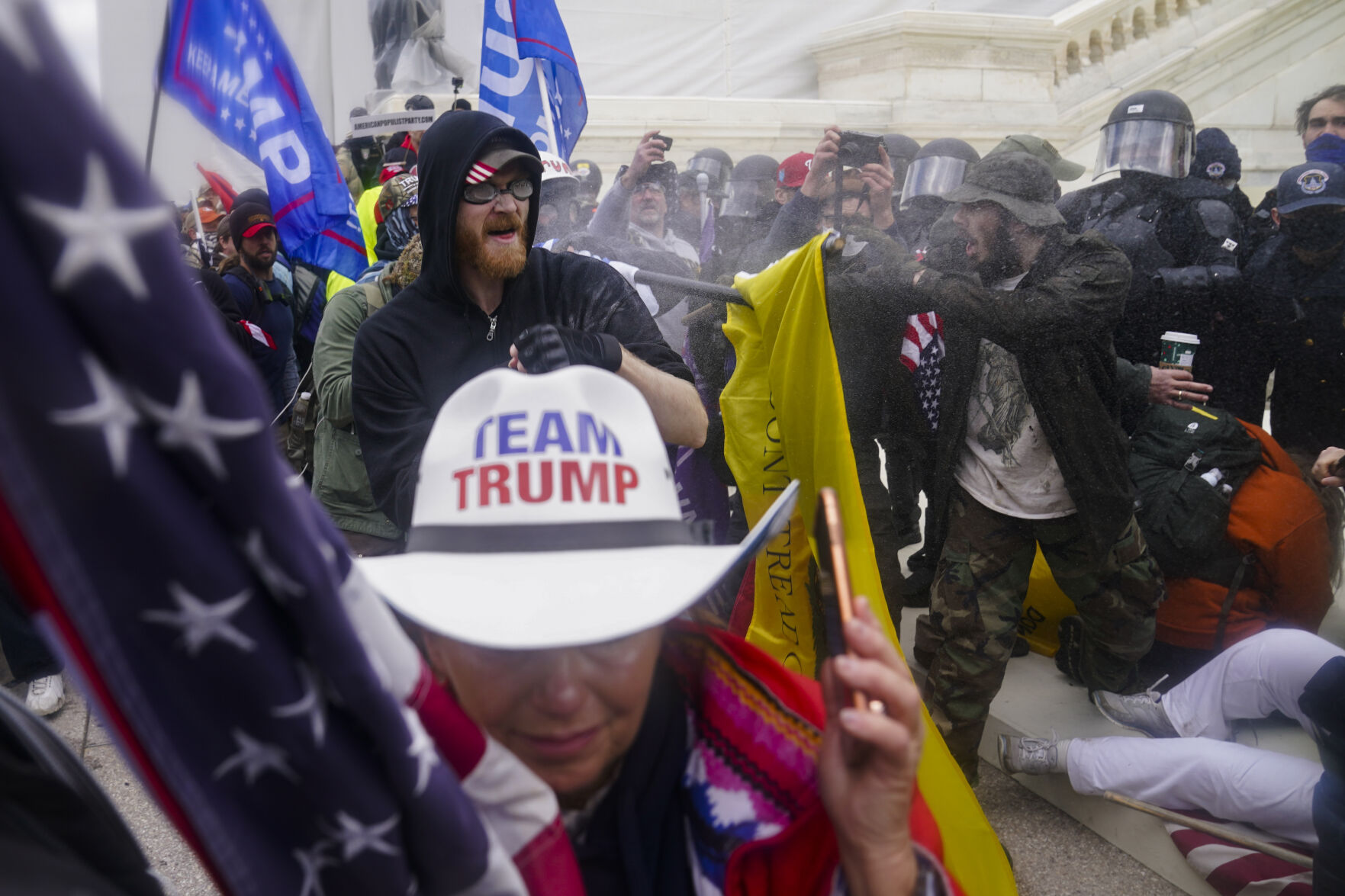
The hearing about Donald Trump’s eligibility to appear on Colorado’s 2024 primary ballot concluded on Friday with testimony from a high-ranking staff member of the committee to investigate the Jan. 6 attack on the U.S. Capitol and a legal scholar who believed the disqualification question is too difficult for a judge to decide.
Trump called as a witness Robert J. Delahunty, a retired law professor whose testimony cast doubt on Trump’s disqualification for office under Section 3 of the 14th Amendment. The post-Civil War provision bars members of Congress or “an officer of the United States” from occupying state or federal office if they took an oath to the U.S. Constitution but subsequently “engaged in insurrection.”
Denver District Court Judge Sarah B. Wallace, who is responsible for determining if Colorado election law and the 14th Amendment require Colorado’s secretary of state to exclude Trump from the ballot, questioned Delahunty about his view that Congress has neither authorized nor given guidance to the courts about Section 3 disqualifications.
“Do you have examples of situations in which a court has basically said, ‘The Constitution’s too hard for me to interpret. Therefore, I’m gonna let Congress tell me what it means?'” she asked. “In general, I think that’s exactly the job of the court – to interpret the Constitution. I’d love to hear from you about why you think in this instance, I should say, ‘It’s too hard. Congress, tell me what it means.'”
“No, I don’t have case law,” responded Delahunty, who did not hold himself out as an expert on Section 3.
Since Monday, lawyers for four Republican and two unaffiliated voters seeking to exclude Trump from next year’s ballot have presented evidence suggesting Trump’s actions to overturn the 2020 election results, culminating in the Jan. 6, 2021 attack, constituted his engagement in an insurrection.
Trump called Delahunty as a witness largely to rebut testimony from Gerard Magliocca, a 14th Amendment expert who believed the president was not only an “officer of the United States” in the historical understanding of the phrase, but that an insurrection need only involve resisting the execution of the law.
Delahunty was concerned that definition was too imprecise.
“If you have a crowd disrupting the Senate’s vote on a presidential nomination, that would seem to be an interference with the execution of the Constitution,” he said.
Delahunty did not take the stand as an expert on Section 3 of the 14th Amendment, and the petitioners’ attorneys pointed out Delahunty’s recent work included articles for conservative outlets referencing Hunter Biden’s laptop and the “deep state,” and “cancel culture.” Delahunty previously authored an article arguing the vice president can, in certain circumstances, reject the presidential electors that states send to Congress – an issue undergirding the mob attack on the Capitol.
More importantly for the petitioners’ case, Delahunty suggested – before Trump hired him as an expert – that the president is an “officer of the United States” under Section 3. Delahunty attempted to distance himself from that comment on the witness stand.
“I don’t take a position on whether the presidency is covered or not,” he said.
“You know the Constitution repeatedly refers to the office of the presidency?” asked attorney Jason Murray for the petitioners. “Presidents Jefferson, Jackson, Van Buren, Harrison, Polk, Taylor, Fillmore, Lincoln, Grant and Garfield were all also referred to as the chief executive officer of the United States.”
Further, Murray continued, Trump himself argued he was an “officer of the United States” in a court filing this year in New York, as part of his criminal prosecution for an allegedly illegal hush money payment to an adult film star. Delahunty acknowledged he was not aware of Trump’s admission.
Wallace also probed Delahunty’s related argument that Congress needed to pass legislation if it wanted to give courts the authority to disqualify federal candidates in the way the petitioners were asking her to do for Trump.
“If the only way to enforce a constitutional provision such as this is through legislation, then essentially isn’t it leaving it to Congress to decide whether or not the prohibition exists at all?” she wondered.
Trump’s attorneys also rigorously cross-examined a witness called by the petitioners: Timothy Heaphy, former U.S. attorney for the Western District of Virginia under the Obama administration and, more recently, the chief investigative counsel for the congressional committee investigating the Jan. 6 attack. The investigation ultimately found Trump bore responsibility for the violence.
Scott Gessler, a Republican former secretary of state who now represents Trump, asked whether the seven Democratic and two Republican committee members went into the Jan. 6 hearings with “an open mind.”
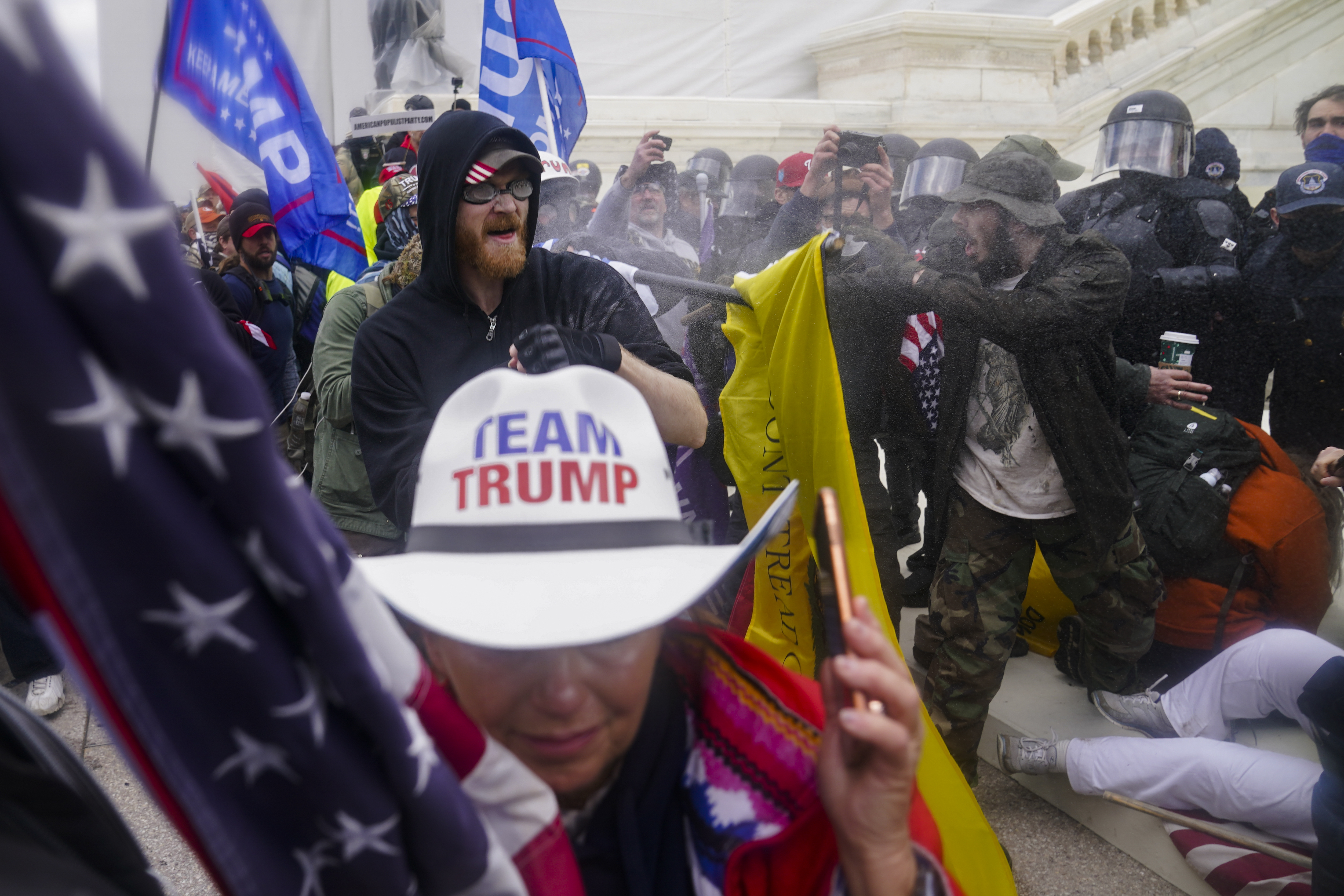
“The fact that President Trump instigated the attack on Jan. 6 was obvious just from his words,” Heaphy responded. “Just because certain facts are obvious at the beginning of the investigation doesn’t mean an investigation has reached a conclusion or is closed-minded.”
Gessler displayed several tweets and press releases from committee members blaming Trump for an insurrection either immediately after the attack or during the subsequent impeachment proceedings. For example, chairman Rep. Bennie G. Thompson, D-Miss., tweeted that Trump “threatened our entire democracy by instigating this attack.” Vice chair Rep. Liz Cheney, R-Wyo., said Trump “summoned this mob, assembled this mob, and lit the flame” of the “insurrection.”
“They certainly had opinions at the beginning that I would call hypotheses. … We were comparing everything we learned against those hypotheses,” testified Heaphy in response to questions about the fairness of the congressional investigation. “The hypothesis was never rebutted.”
The parties will return to Wallace’s courtroom on Nov. 15 to deliver closing arguments. She will then issue an order shortly afterward laying out the facts and her legal conclusions about Trump’s inclusion on Colorado’s ballot.
Her order is appealable to the Colorado Supreme Court, which has discretion to decline the case.
The case is Anderson et al. v. Griswold.

10th Circuit partially revives lawsuit over 2020 Denver protest injuries
Michael Karlik
michael.karlik@coloradopolitics.com
Updated 15 hours ago
The Colorado-based federal appeals court revived a man’s claims against Denver on Friday after concluding a trial judge resolved the case in the city’s favor without analyzing two of the three instances of alleged excessive force and other constitutional violations....
Federal judges find Colorado immigration judge violated several orders
Michael Karlik
michael.karlik@coloradopolitics.com
Updated 16 hours ago
Multiple federal judges in Colorado have freed people from immigration custody after determining that one immigration judge violated their directives for properly conducting bond hearings. For nearly a year, Colorado’s U.S. District Court has faced a flood of “habeas corpus” petitions...
Misconduct complaints from ex-Colorado judicial discipline director dismissed against federal judges
Michael Karlik
michael.karlik@coloradopolitics.com
Updated 1 day ago
The administrative body for the Denver-based federal appeals court upheld a finding last week that misconduct complaints against Colorado’s chief federal trial judge and the chief appeals judge warranted dismissal and appeared to be a “litigation tactic” by the complaining...
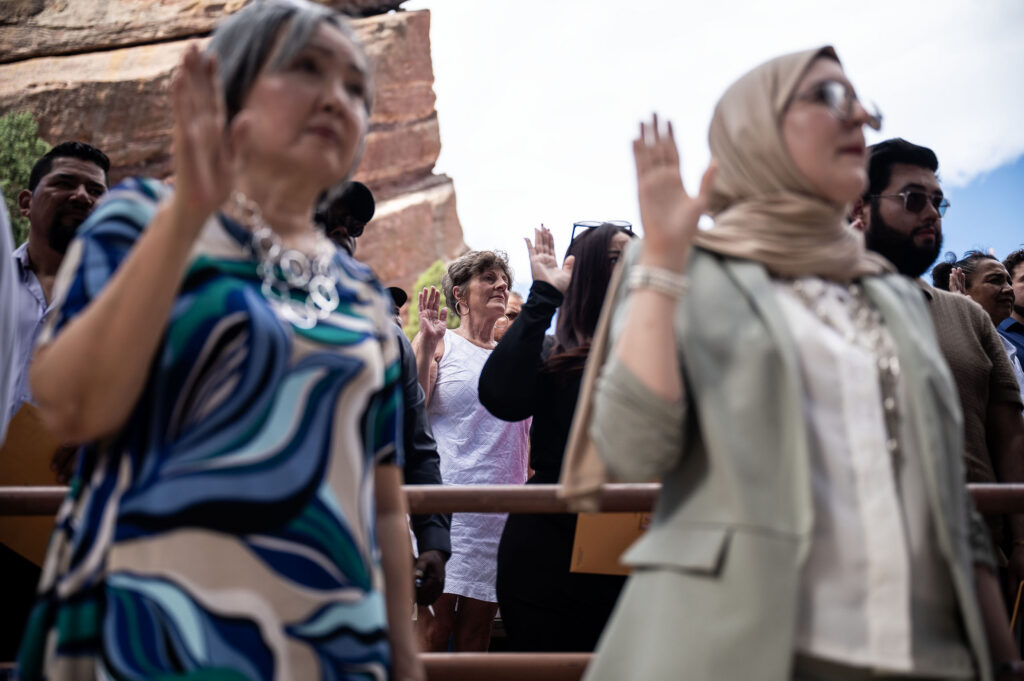
First-ever Red Rocks naturalization ceremony draws most diverse group of new citizens
Michael Karlik
michael.karlik@coloradopolitics.com
Updated 17 hours ago
Colorado’s federal trial court held its first-ever naturalization ceremony for nearly 300 new citizens on Thursday at Red Rocks Park and Amphitheatre. “We’re doing it to commemorate the 250th anniversary of the Declaration of Independence and the United States. Red...
Jeffco taxpayers could be on the hook for a possible child sex assault settlement
Matt Kyle
matt.kyle@denvergazette.com
Updated 21 hours ago
Taxpayers may end up on the hook for a child sexual assault settlement, possibly worth up to $15 million, after Jeffco Public Schools failed to notify its insurance company in a timely manner about the case. The incident stems from...
10th Circuit finds no fair housing violation by Littleton landlord for worker’s alleged rape of tenant
Michael Karlik
michael.karlik@coloradopolitics.com
Updated 15 hours ago
The Denver-based federal appeals court concluded on Monday that Littleton’s housing authority could not be held liable for a maintenance worker’s alleged rape of a tenant, as the worker’s employment did not provide any special access to the victim. A...

Jeffco Public Schools sues Trump administration to protect funding after alleged transgender policies violation
Matt Kyle
matt.kyle@denvergazette.com
Updated 2 days ago
In the wake of several threats by the Trump administration to revoke federal funding, Jeffco Public Schools filed a lawsuit against the Department of Education seeking to protect that badly needed money. Jeffco has been under investigation by the DOE’s...
Denver detox center did not violate man’s rights with 10-hour hold, 10th Circuit says
Michael Karlik
michael.karlik@coloradopolitics.com
Updated 4 days ago
The Colorado-based federal appeals court concluded on Tuesday that Denver’s detoxification facility did not violate a man’s rights by holding him against his will for 10 hours until his blood alcohol content was projected to reach zero. Unusually, Brian Garrett’s...
Federal judge clarifies ex-GOP treasurer candidate’s burden to prove defamation claims
Michael Karlik
michael.karlik@coloradopolitics.com
Updated 4 days ago
A federal judge clarified last week that businessman and former Republican statewide candidate Brian Watson will need to surmount a higher hurdle in proving his claim that a party guest’s alleged description of him as a “criminal” amounted to defamation....
Colorado board permits state to appeal injunction against arthritis drug price cap
Marissa Ventrelli
marissa.ventrelli@coloradopolitics.com
Updated 4 days ago
A Colorado board voted Friday to allow the Attorney General’s Office to fight an injunction against a price cap on a drug that treats arthritis. A U.S. district court judge had granted the company Amgen a preliminary injunction, temporarily blocking...
PREV
PREVIOUS
10th Circuit wipes away $1.5 million in sanctions judge imposed without good reason
The federal appeals court based in Denver has overturned a judge’s seven-figure sanction on a pair of law firms for proceeding with what she termed a “fatally flawed” case, even though the judge communicated there were legitimate issues worth deciding before she suddenly changed her position. U.S. District Court Senior Judge Christine M. Arguello sided […]

Candidates start lining up to challenge Armstrong for Senate | A LOOK BACK
Forty Years Ago This Week: Stockbroker Steve Leatherman, who was briefly a 6th congressional district candidate in 1982, announced that he would seek the Democratic Party nomination for U.S. Senate. Leatherman joined Lt. Gov. Nancy Dick who had already announced her candidacy. “I don’t have as high a name identification as the lieutenant governor,” Leatherman […]