

Making priorities of Colorado’s comedic public-transit plight | HUDSON
Recently, a friend asked me why I thought public transit has become yet another partisan policy divide. I didn’t have a ready answer, despite a quarter-century of involvement in Colorado’s transit wars. Somehow, bus and rail options have gradually been regarded as a socialist plot designed to deny personal liberties, herding the public into cattle cars while stripping us of the pleasures of the open road. Of course, this freedom has been radically constricted by growing congestion as more and more vehicles clog available lanes. At some level, both Republicans and Democrats know additional asphalt solves little or nothing. Despite this understanding, widening roadways has been the “go-to” default strategy for expanding travel capacity.
We only need examine the history of the T-REX widening of Interstate 25 through Denver to understand the failure of this approach. Despite being supplemented with a parallel light-rail line, drivers only enjoyed a “high-speed high” for a decade before traffic began to choke the corridor once again. This congestion emerged before the bonds which financed its widening had been retired. Today, travelers are likely to encounter creeping traffic between downtown and the Tech Center at any time of day or night. Discussions are underway proposing a further widening of the choke zone between 6th Avenue and the Mousetrap. That won’t be cheap, if it is even feasible. Still, transit proposals are viewed by many as part and parcel of Green New Deal plans to eliminate the thrills of internal combustion engines. Similar skepticism extends to enthusiasm for expensive electric vehicles and their required network of charging stations.
Therefore, it’s surprising a pair of major transit projects are gradually seeping their way into public awareness. The older of these initiatives, but the frailer of the proposals, is an Advanced Guideway System (AGS) serving the Interstate 70 central Mountain corridor resorts, ideally connecting DIA with the Eagle County Airport west of Avon. The more recent, yet more likely in the near term, at least in part because it will be far cheaper, is Front Range Passenger Rail (FRPR). This Front Range rail service will connect Cheyenne to Pueblo and has support from Amtrak.
It would enable cross-country passengers to transfer between Amtrak’s two major east-west routes with a brief, two-hour trip along Colorado’s Front Range. Furthermore, the Biden administration has funded a large pot of federal dollars for rail expansion. The challenge is there will be competing projects sticking their hands into the honeypot in 2024.
Gov. Jared Polis likely would have done more to accelerate the Front Range Rail program during his first term if he had not found himself contending with the COVID epidemic and the social ripples it delivered to the state budget. Now he finds himself having to proceed at a dead-run to qualify Colorado’s funding application next year. At least three problems confront FRPR. It must submit a detailed service plan to the Federal Rail Administration for approval. This demanding exercise is underway at CDOT. Meanwhile, because of TABOR, the Commission must formulate a funding plan and submit that to voters in the special transportation district. The governor would like to see this plan ready for the 2024 ballot. Although polling discovered a readiness to support a modest sales tax, past experience indicates this is the option that always earns the most support but rarely translates into voter approval.
Stay up to speed: Sign-up for daily opinion in your inbox Monday-Friday
The outcome of Question HH, and its impact on property taxes this November, could also limit fiscal options for financing the project. Politically, there is a possibility of significant opposition in both Boulder and El Paso counties due to parochial resentments. Boulder residents remain angry they have paid taxes into RTD for a quarter-century dependent on the promise they would receive a light-rail line in exchange. They make the case, with considerable merit, the FRPR should provide this connection. It drives up the total costs by several hundred million dollars, however. El Paso County has a burr under its saddle because they had to create a special district and then tax themselves to 6-lane the I-25 “gap” from Castle Rock to Monument. They harbor a sense they “contributed at the office.” Both these objections are probably resolvable, but something will have to be offered in exchange.
Term-limited former Colorado Springs Mayor John Suthers is a Republican supporter who both could and should play a prominent role in reaching agreement. Both the I-70 AGS and the FRPR are felt to be dubious economic propositions as “stand-alone” transit systems, but there is evidence they would perform symbiotically with one another. The Biden White House is expected to continue funding federal infrastructure projects for another five years. The mountain counties need to move swiftly to create their own transportation district and elbow their way into line for these future grant programs. A larger vision just might generate a larger majority next year.
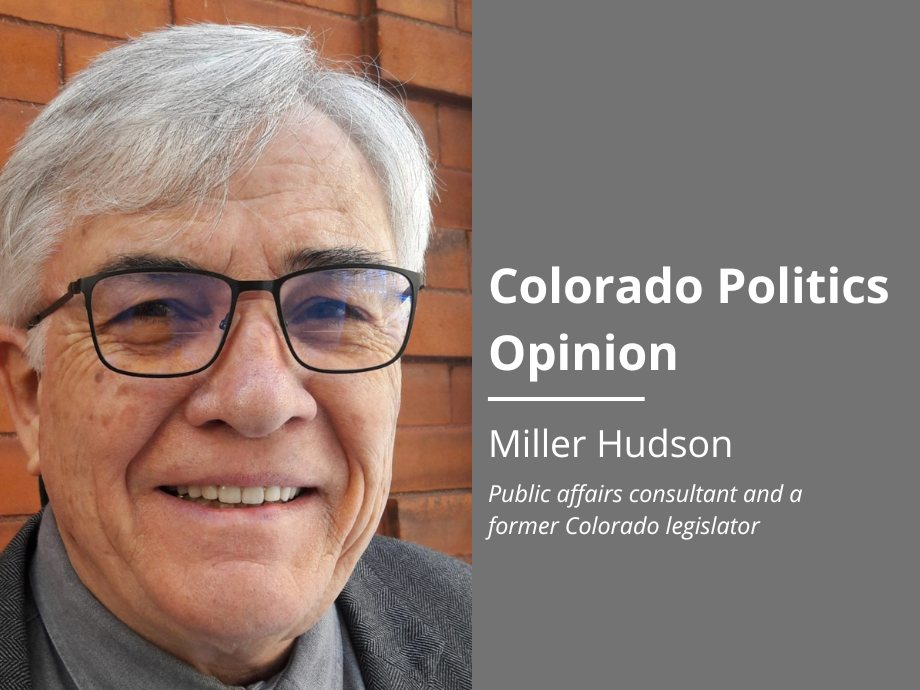
Miller Hudson is a public affairs consultant and a former Colorado legislator.


Colorado Democrats, your time is coming | Jon Caldara
Jon Caldara
jon-caldara@coloradopolitics.com
Updated 15 hours ago
Hey, Colorado Democrats! All the fun you’ve had watching Republican dysfunction in Colorado for the last 20 years was just a preview of what is about to happen to you. The Colorado Republican Party no longer exists as a competitive...
The relevance of Watergate more than a half-century later | SONDERMANN
By Eric Sondermann
by-eric-sondermann@coloradopolitics.com
Updated 4 days ago
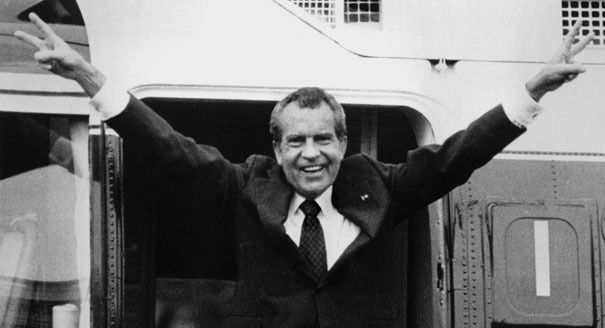
It was the scandal for which all other scandals are now named. In June 1972, a small group of Cuban burglars with high-level connections broke into the headquarters of the Democratic National Committee. Those headquarters were located in the Watergate...
Colorado must continue finding common ground on wildfire policy | GUEST COLUMN
Colorado Politics
colorado-politics@coloradopolitics.com
Updated 3 days ago
By John Herrick Colorado has never lacked for opinions about wildfire policy. We debate forest management, climate change, prescribed burns, land use, air quality and budgets. Those debates are familiar territory, but a new discussion is beginning to happen around...

Proposition NN is the best investment for Colorado’s students and schools | GUEST COLUMN
Colorado Politics
colorado-politics@coloradopolitics.com
Updated 3 days ago
By Justin Ogden Colorado families know what it means to make difficult budget decisions. Inflation has driven up the cost of groceries, housing, utilities and just about everything else. Families like mine work hard to stretch every dollar while still...
Were the primaries a preview for consequential general election? | Paula Noonan
Paula Noonan
paula-noonan@coloradopolitics.com
Updated 4 days ago
Colorado’s political future will go the way of this election. Historically, the state has not had both chambers controlled by a supermajority. This election may change that. The primaries suggest how the general election may play out. Democrats had solid...
Disagreement doesn’t have to mean disrespect | GUEST COLUMN
Colorado Politics
colorado-politics@coloradopolitics.com
Updated 3 days ago
By Vincent Atchity These days, it doesn’t take long to feel overwhelmed by politics. Turn on the news, scroll through social media or read the comments on almost any political post and you’ll find anger, outrage and personal attacks. For...

Keeping Colorado’s kids’ trust online | PODIUM
Colorado Politics
colorado-politics@coloradopolitics.com
Updated 4 days ago
By Stuart Jenkins Almost every day, the kids and teens we serve across Colorado are introduced to new generative artificial intelligence and other emerging technology, including conversational AI systems designed to simulate human conversation. These tools are no longer a...

Marx’s ‘through line’ predates Trump, connects to Maes | FEEDBACK
Colorado Politics
colorado-politics@coloradopolitics.com
Updated 4 days ago
Eric Sondermann is of course correct Victor Marx is an unserious, unelectable, embarrassing Republican nominee for governor of Colorado. But I respectfully submit that the “through line,” as Mr. Sondermann describes it, is not from Trump to Marx, despite their...

Cedric Pride’s blueprint for opportunity through the trades | The OpEdge Podcast
Tony Olivero
tony.olivero@gazette.com
Updated 5 days ago
Cedric Pride, CEO of the nonprofit Pride Initiative in Denver, joins The OpEdge with a blueprint for workforce development, skilled trades, and economic opportunity. Pride tells host and investigative columnist Jimmy Sengenberger why he believes the trades offer a path...
Colorado’s No. 1 education ranking should raise our ambition | GUEST COLUMN
Colorado Politics
colorado-politics@coloradopolitics.com
Updated 5 days ago
By Scott Laband Colorado has earned the right to celebrate its new No. 1 ranking in education from U.S. News & World Report. Gov. Jared Polis called it “one of the proudest moments” of his time in office and shared the...
PREV
PREVIOUS

Potential Wyoming public-lands precedent concerns Colorado | GABEL
Rachel Gabel The Bureau of Land Management’s Rock Springs Resource Management Plan (RMP), though in Wyoming, has the potential to set a dangerous precedent for all states with large amounts of BLM-managed acres. Colorado, of course, is one of those states. Wyoming Gov. Mark Gordon has not minced words about the RMP and the many […]

Reelect Mike Coffman as Aurora mayor | Denver Gazette
Aurora has never before had a mayor quite like Mike Coffman. And it’s not just because of the lifelong Auroran’s extraordinary resume: U.S. Marine Corps Reserve officer; longtime state legislator; Colorado state treasurer; Colorado secretary of state; five-term U.S. congressman. It’s also because he speaks his mind, does what he thinks is right and blazes […]