

State Supreme Court has busy week, attorney general fellow talks about appellate program | COURT CRAWL

Welcome to Court Crawl, Colorado Politics’ roundup of news from the third branch of government.
The Colorado Supreme Court issued five decisions and held five oral arguments last week as the justices prepare to take a summer break from the argument calendar, and Colorado Politics spoke to a new lawyer who is participating in a program designed to give recent law school grads experience in the appellate courts.
Major decisions in civil, criminal law
? The state Supreme Court struck down as unconstitutional a 2021 law designed to give child sex abuse victims from decades in the past an opportunity to sue for their injuries now. The justices acknowledged the legislature had a legitimate policy reason for the law (compensating survivors), but it still violated the state constitution’s prohibition on backward-looking changes.
? “I don’t think this is over by any stretch of the imagination, but we’ll have to discuss what are the new avenues that we might be able to take,” said Rep. Dafna Michaelson Jenet, D-Commerce City, one of the sponsors of the now-void law.
? Crimes that used to be subject to capital punishment are now eligible for bail, given that the death penalty no longer exists in Colorado, the justices agreed.
? Prosecutors in Boulder and Arapahoe counties presented a skewed narrative to jurors, making it seem as if the defendants had nothing to say for themselves in response to criminal accusations. In reality, trial judges blocked the defendants’ responses, and the Supreme Court decided that was wrong.
? Being acquitted of an offense in another country does not bar a prosecution in Colorado for that same offense, the justices concluded.
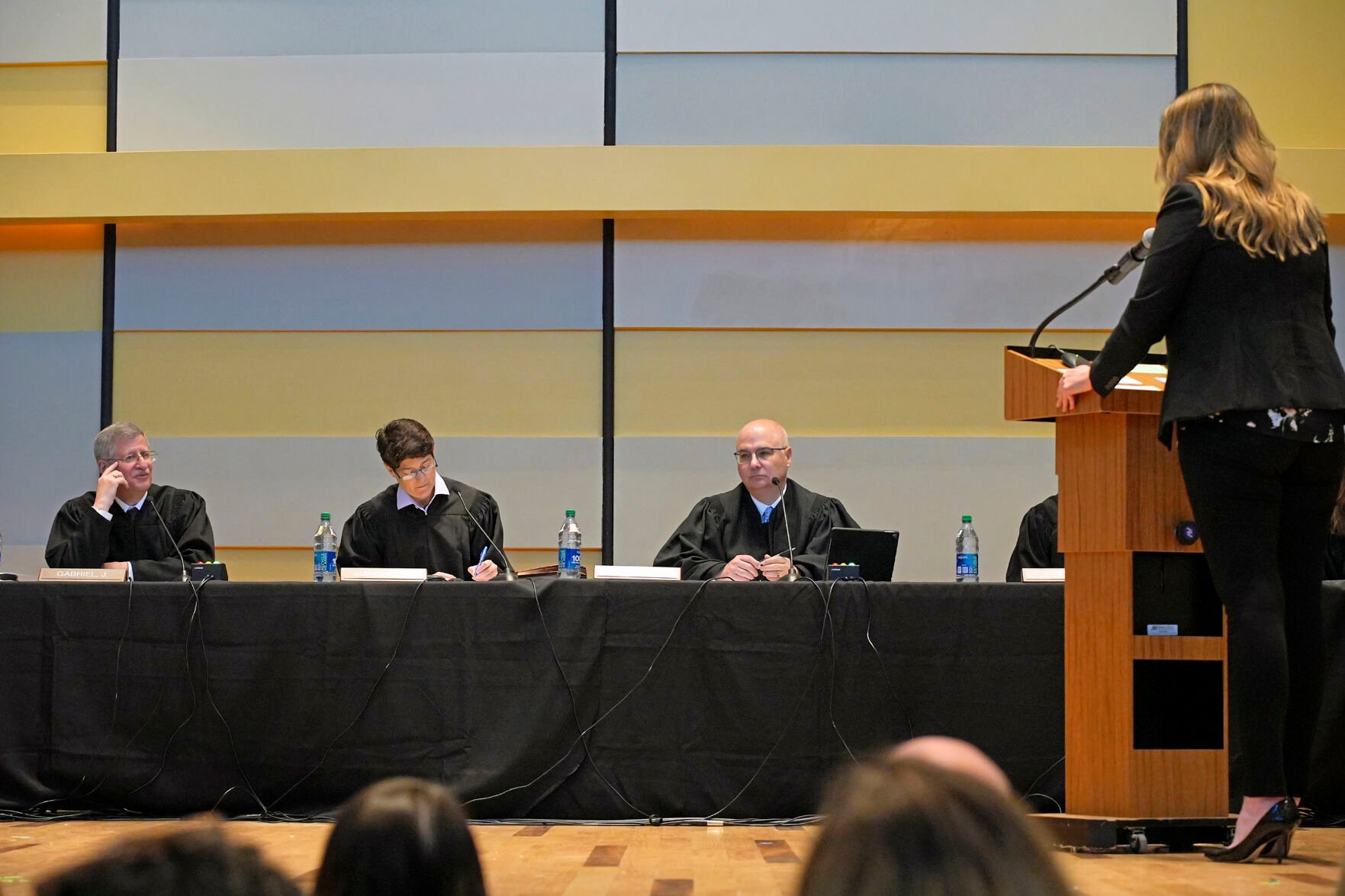
? During oral arguments, the justices wondered whether lawyers should be held liable in certain instances for making defamatory statements when publicizing their class action lawsuits.
? Although the Supreme Court previously decided a Denver man was a “rescuer” when he came to the aid of a cab driver under assault, the justices are giving the case a second look to determine if the taxicab company can be held liable for the entirety of the man’s injuries.
? For several decades, the Supreme Court has applied a rule preventing local governments from suing state agencies except in limited circumstances. Now, there’s a question of whether the rule needs clarifying – which some of the justices suggested was warranted.
? Federal protections for tribal children and nations kick in when a state judge knows or has “reason to know” they are dealing with an American Indian child in welfare proceedings. But what if the evidence doesn’t quite support a “reason to know?” The justices considered whether contacting tribal nations for an answer should be the protocol.
? A Gazette investigation found minor concerns with the financial disclosures of the seven Supreme Court members.
Virtual guidance
? The Supreme Court also issued a policy, known as a chief justice directive, outlining when trial judges should let people appear remotely for court proceedings and what factors they should consider. Among the key takeaways: the directive gives judges a lot of discretion to allow or disallow virtual participation. Some legal advocates suggested they will keep pushing for accountability.
? “Broad and consistent access to virtual hearings is vital to ensure and expand access to justice for Coloradans in poverty, particularly in rural Colorado and for parties with no access to transportation, no child care, or limited time off from work. We look forward to continuing to engage on this issue to ensure more expansive use of virtual hearings and fair application of this new rule.” -Matthew R. Baca, executive director of Colorado Legal Services
Q&A with attorney general fellow
? Olivia Probetts graduated from law school in 2021 and went to work as an appellate fellow with the Colorado Attorney General’s Office. The program allows recent law school graduates to handle cases in the state Supreme Court and Court of Appeals. She talked with Colorado Politics about her experience:
Colorado Politics: You also worked on Counterman v. Colorado, which is before the U.S. Supreme Court and is still pending. How was that different from either the state Supreme Court or Court of Appeals?
Olivia Probetts: On our Supreme Court litigation, we work on a bigger team. Whereas in the Court of Appeals or the (state) Supreme Court I’m generally writing my own brief, for the (U.S.) Supreme Court it’s more of a team effort, so I’m working with a lot of different people to craft the best argument. …
CP: Did you go to D.C. for the oral arguments?
OP: Yes, it was very cool. I got to work with Phil (Weiser) as he was preparing for his argument. We were there while he had a couple of moots. It was very exciting to go to the courthouse and see all the justices asking their questions. It was pretty full, which was also exciting to see there were enough people interested in the case or who were brought there on field trips. It was very exciting to know that that many people got an up-close, personal look at the work we’ve been doing for however many months.
CP: Criminal defense attorneys and public defenders are sometimes asked, “How can you represent someone who is obviously guilty and who is trying to get acquitted or get their conviction overturned based on a technicality?” I’d ask you a variation on that question: When you pick up a case from the trial court and the judge or the prosecutor did something that is credibly not fair to the defendant, how can you go to the state’s highest courts and say this person should remain behind bars, or no new trial?
OP: Even if I disagree with something, ultimately it is my job to do it. I think that the way our legal system is set up, it’s an antagonistic system. You need to have people who are strongly advocating on both sides to ensure that everything is fair and that the court receives both sides of an argument so it can make the right decision.
In federal news
? By 2-1, the U.S. Court of Appeals for the 10th Circuit found an ex-Postal Service employee in Denver could sue the agency for allegedly failing to accommodate her while she was pregnant.
? A judge agreed state courts violated the constitutional rights of a man tried in 1999 for the murders of five people, although the error did not likely affect his convictions.
? A group that litigates for expanded rights for Christians is challenging Colorado’s exclusion of a Buena Vista Christian organization from the state’s universal preschool program.
? The U.S. Supreme Court will likely release two decisions this week in cases that arose from Colorado and address the questions of whether business owners can discriminate against LGBTQ customers and how prosecutors must prove that someone is guilty of stalking.
Vacancies and appointments
? The governor has appointed Elise V. Myer, the head of the public defender’s office in Glenwood Springs, to succeed retiring Chief Judge James Berkley Boyd in the Ninth Judicial District (Garfield, Pitkin and Rio Blanco counties).
Miscellaneous proceedings
? A Woodland Park man has received four years in prison for assaulting police officers during the Jan. 6 riot at the U.S. Capitol by supporters of former President Donald Trump.
? A judge agreed with media organizations (including Colorado Politics) who argued the Denver school board likely violated the state’s open meetings law with a closed-door session to discuss bringing police officers back into schools.
Holiday break
? Court Crawl will return after the Fourth of July holiday.


Wrongfully deported man to be returned to U.S., Colorado federal judge orders
Michael Karlik
michael.karlik@coloradopolitics.com
Updated 20 hours ago
Colorado’s chief federal judge took the extraordinary step of directing the government on Tuesday to do everything it can to return a man it deported in violation of his order. At the same time, Colorado’s chief magistrate judge has set...
Denver murder, assault convictions reversed due to faulty jury instructions
Michael Karlik
michael.karlik@coloradopolitics.com
Updated 1 day ago
Colorado’s second-highest court reversed a defendant’s convictions for murder and assault last week after concluding a Denver judge incorrectly omitted key jury instructions that could have affected the verdict and sentencing. Stephen C. Swainson fatally stabbed Israel Casillas in downtown...
‘Understand people for who they are’: 2 federal judges talk about compassion in courtroom
Michael Karlik
michael.karlik@coloradopolitics.com
Updated 10 hours ago
Before taking the bench in 2022, U.S. District Court Judge Charlotte N. Sweeney was an employment discrimination attorney. While the cases could be emotionally charged, they were different from the criminal proceedings she is now handling. “It wasn’t necessarily affecting...
Denver murder conviction reversed for incomplete self-defense instruction
Michael Karlik
michael.karlik@coloradopolitics.com
Updated 2 days ago
Colorado’s second-highest court reversed a defendant’s murder conviction last week because a Denver judge gave an incomplete instruction to the jury about the man’s right to self-defense. Donald R. Gonzales and Gary McLaughlin met up in a Capitol Hill parking...
Colorado lawmaker, House leaders named in workplace-retaliation lawsuit
Marianne Goodland
marianne.goodland@coloradopolitics.com
Updated 3 days ago
A former legislative aide has filed a lawsuit alleging she was mistreated, illegally directed to perform campaign work and harmed by a House leadership structure she charged was fragmented, politicized and ineffective at protecting employees. The lawsuit, filed by Jennifer...
Federal judge hears arguments about Colorado’s 3-day gun purchase waiting period
Michael Karlik
michael.karlik@coloradopolitics.com
Updated 3 days ago
A federal judge heard arguments on Monday about the constitutionality of a 2023 Colorado law that generally imposes a three-day waiting period on firearm purchases after the initiation of a background check. The test that the U.S. Supreme Court created...
Colorado Supreme Court intervenes in Weld County prosecution dismissed due to Missy Woods misconduct
Michael Karlik
michael.karlik@coloradopolitics.com
Updated 2 days ago
The Colorado Supreme Court ordered a Weld County trial judge last week to respond to the district attorney’s claim that he improperly dismissed a criminal case because of “outrageous” conduct by the Colorado Bureau of Investigation. Daniel Lee Eatinger stood...
Schoolchildren’s presence at child sex-related trial did not harm Arapahoe County defendant, appeals court says
Michael Karlik
michael.karlik@coloradopolitics.com
Updated 5 days ago
Colorado’s second-highest court decided on Thursday that the presence of a group of schoolchildren on the first day of a child sexual exploitation trial did not violate an Arapahoe County defendant’s constitutional right to a fair trial. Prosecutors charged Jerry...
Appeals court cites week-old Colorado law to reinstate child neglect case at child, father’s request
Michael Karlik
michael.karlik@coloradopolitics.com
Updated 5 days ago
Colorado’s second-highest court invoked a new state law for the first time on Thursday and reinstated a child neglect case that both the child and her father wished to reopen. House Bill 1227 took effect on Aug. 12, reversing a...
Colorado Supreme Court names William Hood as next chief justice
Michael Karlik
michael.karlik@coloradopolitics.com
Updated 14 hours ago
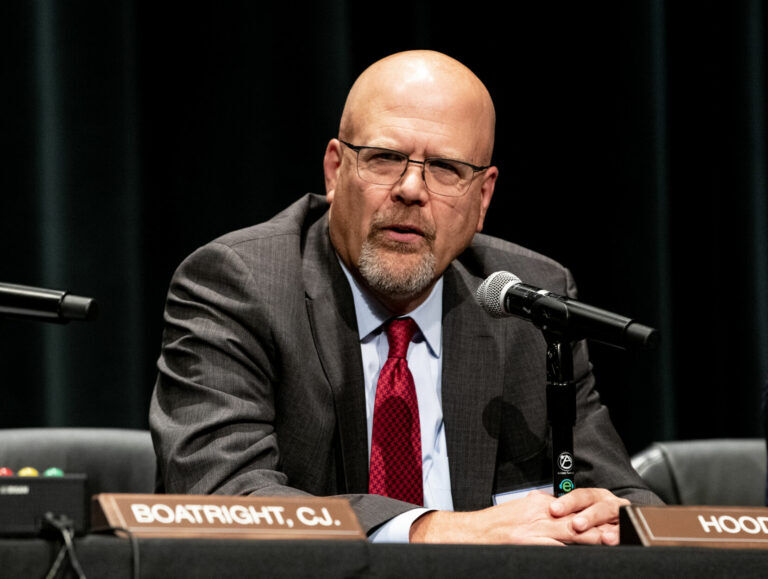
The Colorado Supreme Court has selected Justice William W. Hood III to be the next chief justice, the judicial branch announced on Friday. Hood will succeed Chief Justice Monica M. Márquez, who took over the role in July 2024. “I...
PREV
PREVIOUS

Denver improves transparency efforts, but risk of inconsistencies remains, auditors say
Denver officials have improved efforts to notify the public about projects and proposals, but the risk of inconsistencies in engagement with residents in some areas remains, according to city auditors. Back in 2021, auditors looked into the city’s mechanisms to ensure transparency and concluded Denver’s compliance with public notice requirements was inconsistent and that expectations […]

Q&A with Prof. Robert Preuhs | Wider geographic support key to Mike Johnston's victory
Prof. Robert Preuhs, who chairs the political science department at Metropolitan State University of Denver, closely watched the mayoral race between Mike Johnston and Kelly Brough. In this interview, Preuhs noted the fundraising disparity between the two candidates, but maintained that Johnston and Brough collected enough dollars to get their messages out. Key to Johnston’s victory, […]