

Why does Colorado limit who can safeguard taxpayer dollars? | GUEST COLUMN

By Devin Camacho
Recently, PNC Bank announced its purchase of FirstBank Colorado. Not only did Colorado lose a local banking option, but nearly 1,000 people lost jobs, with more job losses coming as the big bank now closes branches too.
Lakewood city council members expressed their frustration at the loss of local jobs and local banking that resulted from the merger. They announced they were considering moving city accounts out of the formerly local bank. But where would they bring their accounts to next?
Colorado law largely limits public deposits to banks, preventing local governments from considering credit unions as a potential option in most circumstances.
The obvious question is: Why?
Imagine if a city could evaluate its financial institution the same way it evaluates other public partners: What does this institution provide to our community? How does it treat its customers and employees? How locally invested is it? What does it do with the money it earns? And what options are available if the relationship no longer serves the community? Banks and credit unions provide many of the same financial services. Both are federally insured. Both are heavily regulated. Both serve communities across Colorado, but they operate under fundamentally different ownership and governance structures.
Banks are owned by shareholders. Their responsibility is to generate returns for investors, and their success is measured, in part, by the profits they deliver to those shareholders. In this case, making profit off tax dollars for shareholders well outside of Colorado.
Credit unions are member-owned financial cooperatives that are fundamentally not-for-profit. The people who use the institution are also its owners. Unlike banks, credit unions do not answer to outside shareholders seeking a return on investment. Instead, they are governed by a one-member, one-vote structure that prioritizes the interests of the people and communities they serve.
Unfortunately, Colorado law gives banks a monopoly on working with public entities and doesn’t allow municipalities, counties, school districts and fire districts the ability to choose what type of financial institution is best positioned to protect and grow their public funds and to serve the needs of their community.
Local governments should have the flexibility to evaluate all qualified options and determine which institution is best equipped to safeguard taxpayer dollars, provide strong financial management and meet the unique needs of their communities.
Recent discussions about how financial institutions such as FirstBank affect local communities serve as a reminder where public dollars are held can matter for reasons far beyond a balance sheet. Communities may choose their financial institutions because they value local relationships and community investment, because they care about the proximity of a branch or need a specific service or because they want a financial institution that is locally owned and managed and values people over profit. Local officials should have the freedom to consider those factors when making decisions on behalf of taxpayers.
More choices also mean more competition. Taxpayers are best served when local officials have access to the widest range of qualified options and the flexibility to choose the institution they believe offers the strongest stewardship of public funds.
Colorado’s current framework does more than limit choice. It favors for-profit ownership while restricting a local, not-for-profit ownership model from being considered. The issue is not whether banks or credit unions are better. The issue is whether state law should predetermine the options available to local governments, or whether local officials should have the freedom to decide which qualified institution is best suited to protect taxpayer dollars and serve their communities.
Colorado law should not pick winners and losers and create monopolies for banks, many of which are selling to large out-of-state entities. We should entrust our local elected officials to decide what financial institution best serves their community’s needs and benefits taxpaying Coloradans.
Instead of asking why Colorado law limits public deposits to banks, we should be asking: why shouldn’t Colorado’s cities, counties, schools and other public entities be allowed to choose the local option that is best for them?
Devin Camacho is director of advocacy and policy at Canvas Credit Union.


Colorado’s hunting and fishing traditions rest on science, conservation and a proven heritage | IN RESPONSE
Colorado Politics
colorado-politics@coloradopolitics.com
Updated 60 minutes ago
By John Howard Eric Washburn’s recent column warns Coloradans the right to hunt and fish amendment is a Trojan horse designed to resurrect “cruel” practices voters have already banned and to elevate killing above every other form of wildlife management....
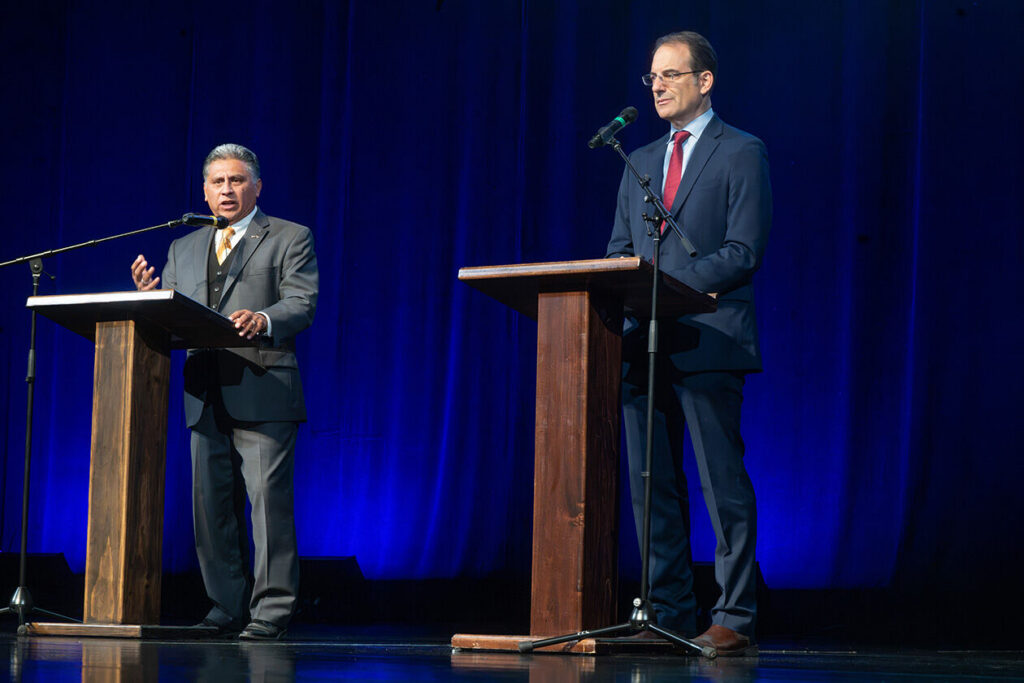
Gubernatorial candidates Phil Weiser, Greg Lopez spar, as Marx skips debate
Deborah Grigsby
deborah.smith@denvergazette.com
Updated 4 hours ago
Two of the candidates for Colorado governor squared off in a televised debate on Thursday night, when Attorney General Phil Weiser, the Democratic nominee, and former U.S. Rep. Greg Lopez, an unaffiliated candidate, delved into issues of affordability, data center...
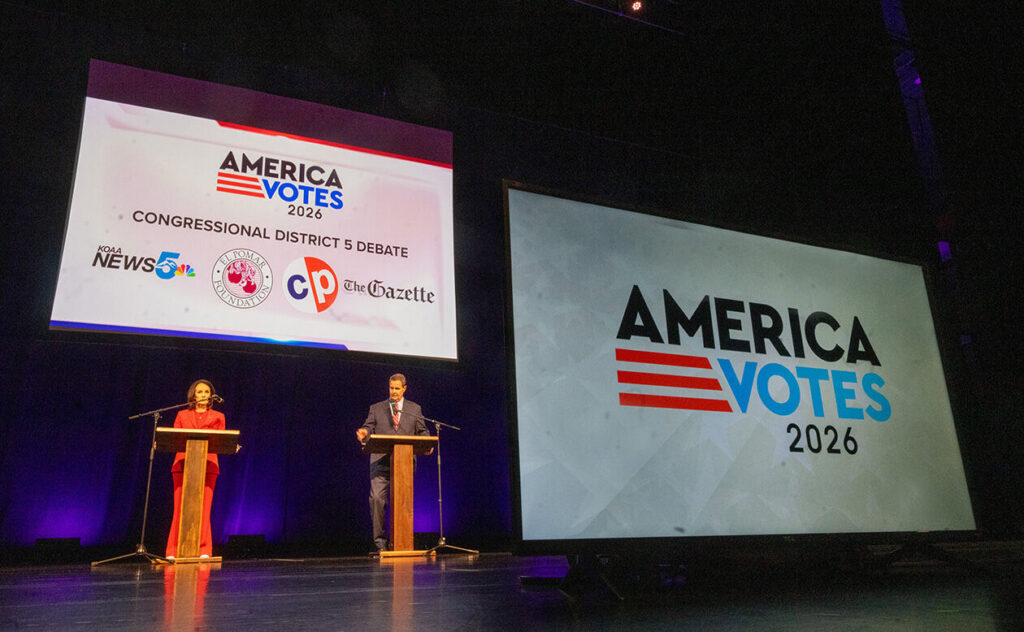
Troops, taxes, war dominate Colorado’s 5th CD debate between Jeff Crank, Jessica Killin
Deborah Grigsby
deborah.smith@denvergazette.com
Updated 5 hours ago
Republican U.S. Rep. Jeff Crank and Democratic challenger Jessica Killin on Thursday night clashed over the war in Iran, the federal budget and healthcare when they took the stage in Colorado Springs for a sold-out debate in the race to...

WATCH: Colorado gubernatorial candidates Phil Weiser, Greg Lopez face off Thursday in televised debate
Ernest Luning
ernest.luning@coloradopolitics.com
Updated 6 hours ago
Two of the candidates for governor of Colorado are set to square off in a televised debate for the first time Thursday night, when Attorney General Phil Weiser, the Democratic nominee, and former U.S. Rep. Greg Lopez, an unaffiliated candidate,...

WATCH: Republican US Rep. Jeff Crank, Democratic challenger Jessica Killin debate in Colorado’s 5th CD
Ernest Luning
ernest.luning@coloradopolitics.com
Updated 7 hours ago
Republican U.S. Rep. Jeff Crank and Jessica Killin, his Democratic challenger, are scheduled to meet for a televised debate in the race to represent Colorado’s 5th Congressional District on Thursday night. The candidates are set to take the stage at...

Colorado State Fair youth golf tournament celebrates 11 years
Marianne Goodland
marianne.goodland@coloradopolitics.com
Updated 9 hours ago
Twenty-eight teams tee off Friday at Walking Stick Golf Course in Pueblo for a tournament supporting 4-H, Future Farmers of America and capital improvements at the Colorado State Fair. Now in its 11th year, the Partners of Youth in Ag...

Controversial two-bag furbearer limit heads to CPW meeting under legal threat
Marianne Goodland
marianne.goodland@coloradopolitics.com
Updated 10 hours ago
Next week’s Colorado Parks and Wildlife Commission meeting in La Junta is likely to open under the cloud of threatened legal action. Safari Club International and the Sportsmen’s Alliance Foundation warned the commission this month that its July vote imposing...
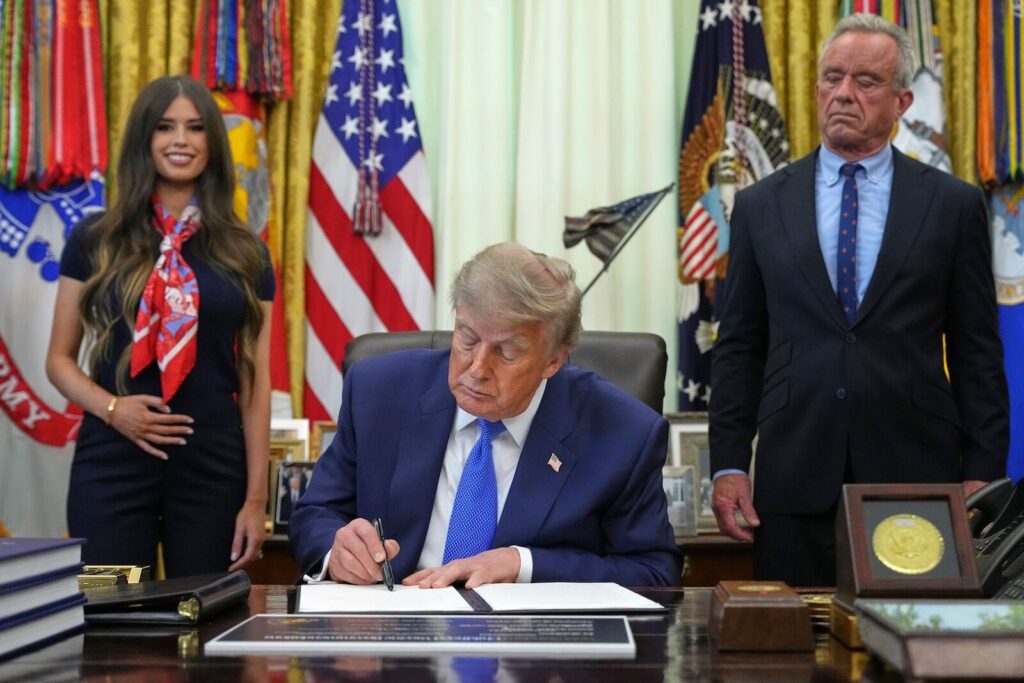
Democratic-aligned poll shows big majority of swing-seat voters support routine childhood vaccines
Ernest Luning
ernest.luning@coloradopolitics.com
Updated 12 hours ago
A new poll conducted by Democratic-aligned groups found that voters in competitive U.S. House districts — including a battleground seat in Colorado — support routine childhood vaccinations by a wide margin and oppose a recent order by President Donald Trump...
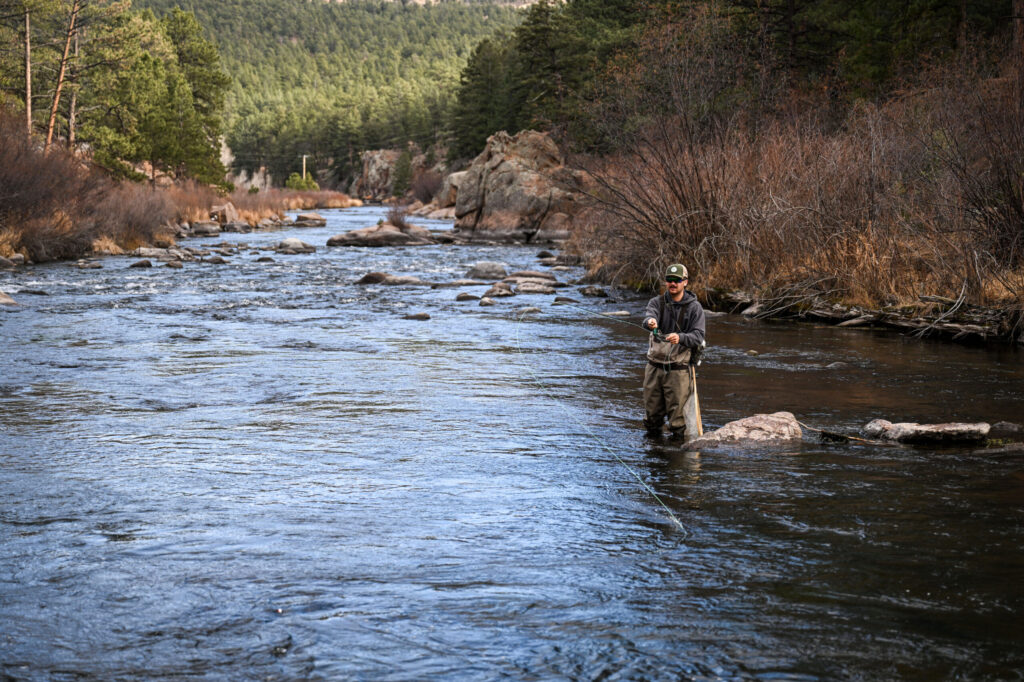
Some Colorado hunters oppose measure establishing constitutional right to hunt, fish proposal, group says
Marissa Ventrelli
marissa.ventrelli@coloradopolitics.com
Updated 7 hours ago
A group that says it represents hunters and anglers from across Colorado announced its opposition to a ballot measure that would establish the right to hunt and fish in Colorado’s constitution, saying it could result in the overturning of bans...

Coalition drops Colorado transportation ballot measure after securing deal
Marissa Ventrelli
marissa.ventrelli@coloradopolitics.com
Updated 8 hours ago
The proposed constitutional amendment seeking to dedicate all transportation-related revenue to Colorado’s roads and bridges will no longer appear in this November’s ballot after its proponents reached an agreement with lawmakers following months of negotiations. Initiative No. 175, backed by...
PREV
PREVIOUS

Gubernatorial candidates Phil Weiser, Greg Lopez spar, as Marx skips debate
Two of the candidates for Colorado governor squared off in a televised debate on Thursday night, when Attorney General Phil Weiser, the Democratic nominee, and former U.S. Rep. Greg Lopez, an unaffiliated candidate, delved into issues of affordability, data center regulation and gun laws. The debate’s tone was civil. The policy differences between the two […]

Colorado’s hunting and fishing traditions rest on science, conservation and a proven heritage | IN RESPONSE
By John Howard Eric Washburn’s recent column warns Coloradans the right to hunt and fish amendment is a Trojan horse designed to resurrect “cruel” practices voters have already banned and to elevate killing above every other form of wildlife management. The argument is passionate. It is also wrong on the text, the history, the experience […]