

Q&A: Political experts size up Denver mayoral runoff between Mike Johnston, Kelly Brough
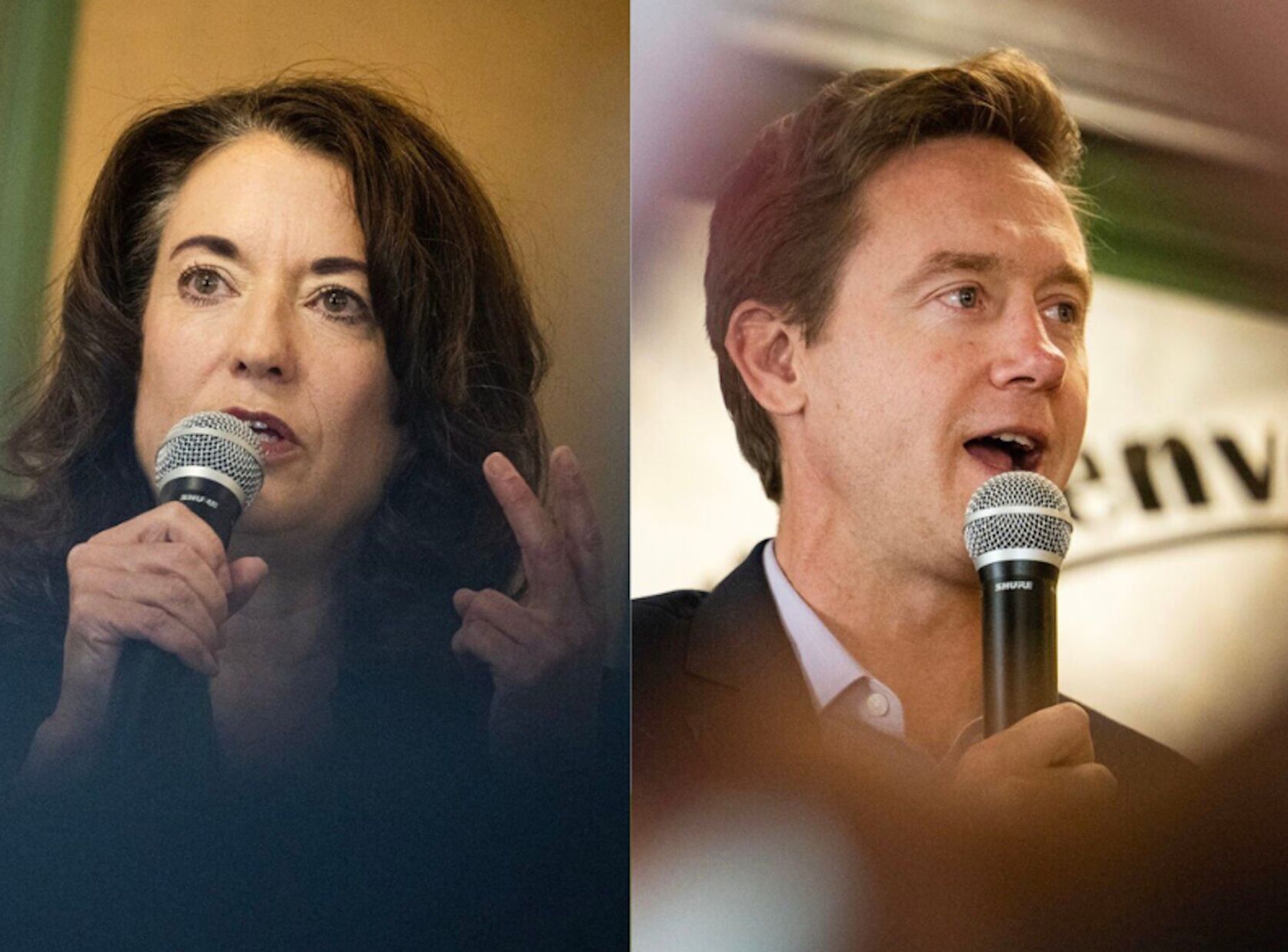
With ballots due in Denver’s municipal runoff in a matter of days, Colorado Politics and the Denver Gazette convened a panel of political experts on May 30 to weigh in on the state of the race between Mike Johnston and Kelly Brough.
Voters will choose the city’s next mayor in the first election for an open seat in 12 years, since outgoing Mayor Michael Hancock won the first of his three terms.
The hour-long, virtual forum featured former state Sen. Mike Kopp, the president and CEO of Colorado Concern, a coalition of business owners; Alan Salazar, Hancock’s chief of staff and a veteran top political aide; Ian Silverii, founder of The Bighorn Company and the past director of ProgressNow Colorado; and longtime political consultant Steve Welchert, director and president of The Welchert Company.
Luige Del Puerto, editor of Colorado Politics and The Denver Gazette, and Ernest Luning, a senior reporter at Colorado Politics, moderated the wide-ranging discussion about the candidates, their campaigns and the winner’s impending pivot to governing Colorado’s largest city.
After finishing in first- and second-place, respectively, in the city’s crowded April 4 general election, Johnston and Brough have been chasing votes while their independent expenditure committees have been flooding the airwaves, digital platforms and mailboxes with ads.
While it’s too late for voters to put their ballots in the mail, they can drop them off or vote in person at numerous city vote centers. Ballots are due by 7 p.m. June 6.
Below are excerpts, which have been lightly edited for length and clarity, from the panel discussion. Watch the entire exchange online at ColoradoPolitics.com.
In this Colorado Conversations episode, the state’s top political consultants and strategists weigh in on the June 6 runoff election for Denver mayor between Kelly Brough and Mike Johnston. The panelists include Alan Salazar, chief of staff of Mayor Michael Hancock; Steve Welchert, president and director of the Welchert Company; Ian Silverii, founder of The Bighorn Company; Mike Kopp, president and CEO of Colorado Concern; Ernest Luning, senior reporter of Colorado Politics.
Luige Del Puerto: Why don’t we go around the table first and get everyone’s thoughts on where things are at. It’s less than a week from the election – what is the state of the race?
Ian Silverii: Here from Lakewood, observing (from) just to the west, so I have no skin in the game – just a political observer this time. We’re six days out, we have 12% voter turnout so far … It looks like there is some enthusiasm, but Denver voters have become habituated to the mail ballot system, and a lot of people are hanging on to their homework until the last day, here.
So, in the next six days, we’ll see how the turnout shapes up, but without voter registration data, without very much public polling, without partisan registration among the candidates, it’s pretty hard to predict how this is going to shake out. But at this point, we’re seeing more Democrats voting than unaffiliateds or Republicans, which makes sense in a city like Denver. But we’ll see if there are surges in some of the geographies that overlaid with some of the candidates’ successes and the general….

Steve Welchert: I think the race is pretty well cooked, actually. You see the camps now with their final ad push – still a little negativity out there. Interestingly enough. I got a piece of mail from the Johnston campaign on Kelly’s oil and gas record, and I’m one of those guys that doesn’t return his ballot (right away). I hold mine to the very last minute, so I can get the last piece of mail, the last digital ads. I want to see what the campaigns are doing. But I think most voters are probably pretty well aware of what’s going on.
I think it’s been a pretty good campaign and not quite as rough and tumble as some would have expected. I suspect that’s because we have two candidates that are more alike than not, but I think the campaign overall is relatively well baked at this point.
Del Puerto: Thank you. I’m like you, Steve. I hold on to my mail ballot so I can see all the the campaign mailers coming my way. Alan, what do you think? Where are we at in this race?
Alan Salazar: Well, truth in advertising: My focus has been on the transition. So, I’m not aware of polling. I watched the race kind of through newspapers – I’m not really focused on the politics of the race, I’m more focused on turning over the keys to I think two very capable people.
I can’t improve on what Steve just said – the race is probably baked, people have an impression. I don’t know what could happen in the last few days to turn people in a different direction. I suppose it’s possible. But my guess is, it’s going to be close, and I think I’m more interested in what the turnout will be.
In 2011, the last time we had a competitive race, in the first round, I think there were about 113,000 people and there were 8,000 added in the second round. If you take that same kind of number for this time, let’s say you add another 9,000, you could be looking at about 181,000 people voting. So, what’s the win number on that? About 91,000 which is what Mayor Hancock got in his reelection in 2019. So, high voter interest, and it will be interesting to see how it shakes out.
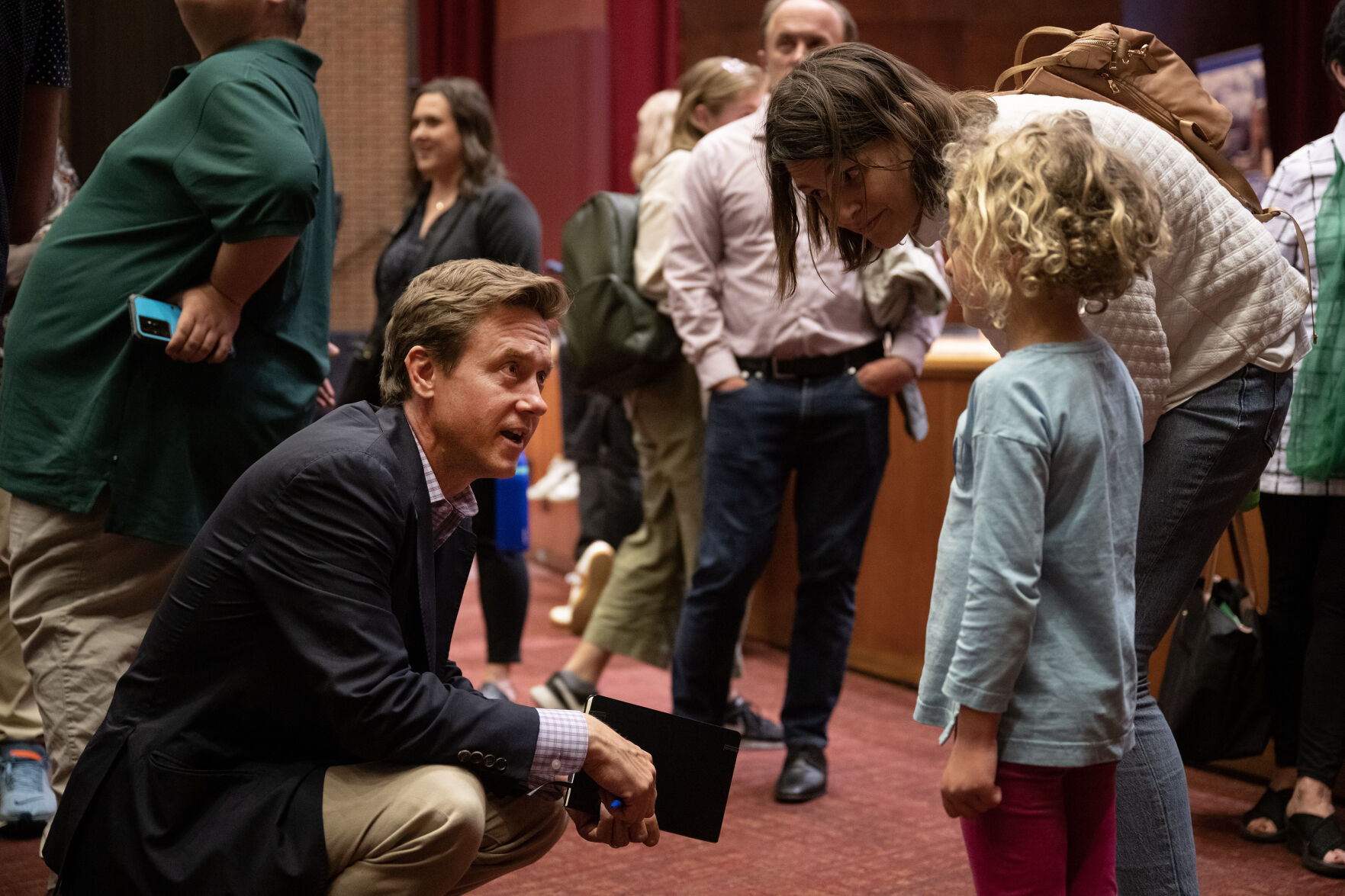
Mike Kopp: Here’s my take on it: I think this is a problem-solving election, and not a vision-casting election. And that’s the lens I look at all of this through. As Steve said, you have two candidates that bring a lot of similarity to the race, both reasonably centrist, reasonably moderate candidates. However, both (are) keenly aware, obviously, that they need to do a lot of outreach and a lot of messaging on many of the progressive issues that are important to Denver voters. And it seems like to me … the electorate seems to be a little bit grumpy. I think they want to see some problems get solved, but based on the way the candidates are positioning themselves, on their messages, (voters) don’t seem to want real reactionary policies…. It looks like it’s probably going to be (an election) within just a few points, would be my take.
Del Puerto: When you say it’s a problem-solving election, not a vision-casting election, what do you mean by that?
Kopp: I just think that the issues that are front and center in a lot of voters’ minds come up every single debate you watch, every time you hear either of the candidates talking about these issues. They’re obviously privy to a lot of polling that I’m not privy to, although I’ve seen polling on different issues, and it’s homelessness, it’s cost of housing, and it’s crime. Those are issues that people obviously want to have solved.
There seems to be a sense, in my opinion, that our great city needs needs sort of a look inward. We need to get some medicine on board and fix some of these issues, and then we can kind of relaunch into more of the visionary kinds of things that we’ve seen other mayors have had the good fortune to do in the past, including our current mayor.
Ernest Luning: One thing that’s interesting is this is the first runoff election that has occurred (nine weeks) after the general election, as opposed to four weeks later in the previous runoff. I’ve heard some people say that could be one reason this mayoral runoff doesn’t seem to be dominating things the way previous ones did is everyone had a chance to relax and kind of forgot there was an election happening for a few weeks…
Welchert: I hadn’t really thought about it much, but for about a month after the first election, it was dormant, right? There was nothing going on. Part of the reason is because both candidates spent themselves down to zero to get into the runoff … They had to replenish and refurbish and kind of reset your campaign, but in past campaigns, it’s just been a flurry, it’s been just a whirlwind … and people really scrambled hard to get that last campaign done.
Here’s been a little different pace. There’s a couple of reasons for it, but money is one of them. The other is you can’t really sustain that level of activity that long.
Silverii: Yeah, that part’s true – in terms of campaign advertising, you want to make sure that you’re blitzing when people are actually making their decisions. And since voter turnout is still at 12% right now, if you’re up on TV in the last week, and you’re just sustaining until election day, that’s probably a good allocation of resources, vs. trying to spread out your points way too thin over the course of six weeks or two months. So, I think it makes a lot of sense.
Both of these candidates have raised a lot of money – the Fair Election Fund has given them extra, and they both have pretty robust independent expenditure committees. But it isn’t wall-to-wall like it is just in the 2022 general election, for instance, where Denver broadcast in the U.S. Senate race and even in two of the congressional races were kind of just dominating the airwaves completely. This is quite a bit sleepier an affair, despite TV being cheaper now than it was in 2022, and despite the (independent expenditure committees) having several million dollars to their in their war chests.
Salazar: I’d like to key off of something that Mike mentioned and that is the what might be motivating voters and concerning voters, and I think he touched on the top three issues: unsheltered homelessness, concern about public safety and affordable housing. I think this is a problem, frankly, for cities across the country – close to COVID recovery, opioid epidemic, rising crime, challenges with unsheltered homelessness.
What I’m mostly struck by – and I don’t mean to be controversial – is that while both candidates I think operate from the center and are pragmatic people, their messaging around these issues is not significantly different, frankly, from what the current incumbent mayor is offering. So, I understand the need to create a vision that things are going to improve overnight. My prediction is things are not going to improve overnight. It will take incremental change and frankly, not very different from what the city’s doing right now.
I’m not really seeing major changes in programs. I think we’re seeing candidates who will pick up the mantle and use programs that are already in place. And my hope is that these changes will take place sooner than than not, but my prediction is that this is going to be a slow crawl, as cities are experiencing around the country, particularly with the drag of the opioid epidemic and a lot of sick people on the street that is contributing to the unsheltered homelessness. You can see it in San Francisco, you see it in Portland, you see it in Austin, you see it in Houston, you see it in every major city in the country.
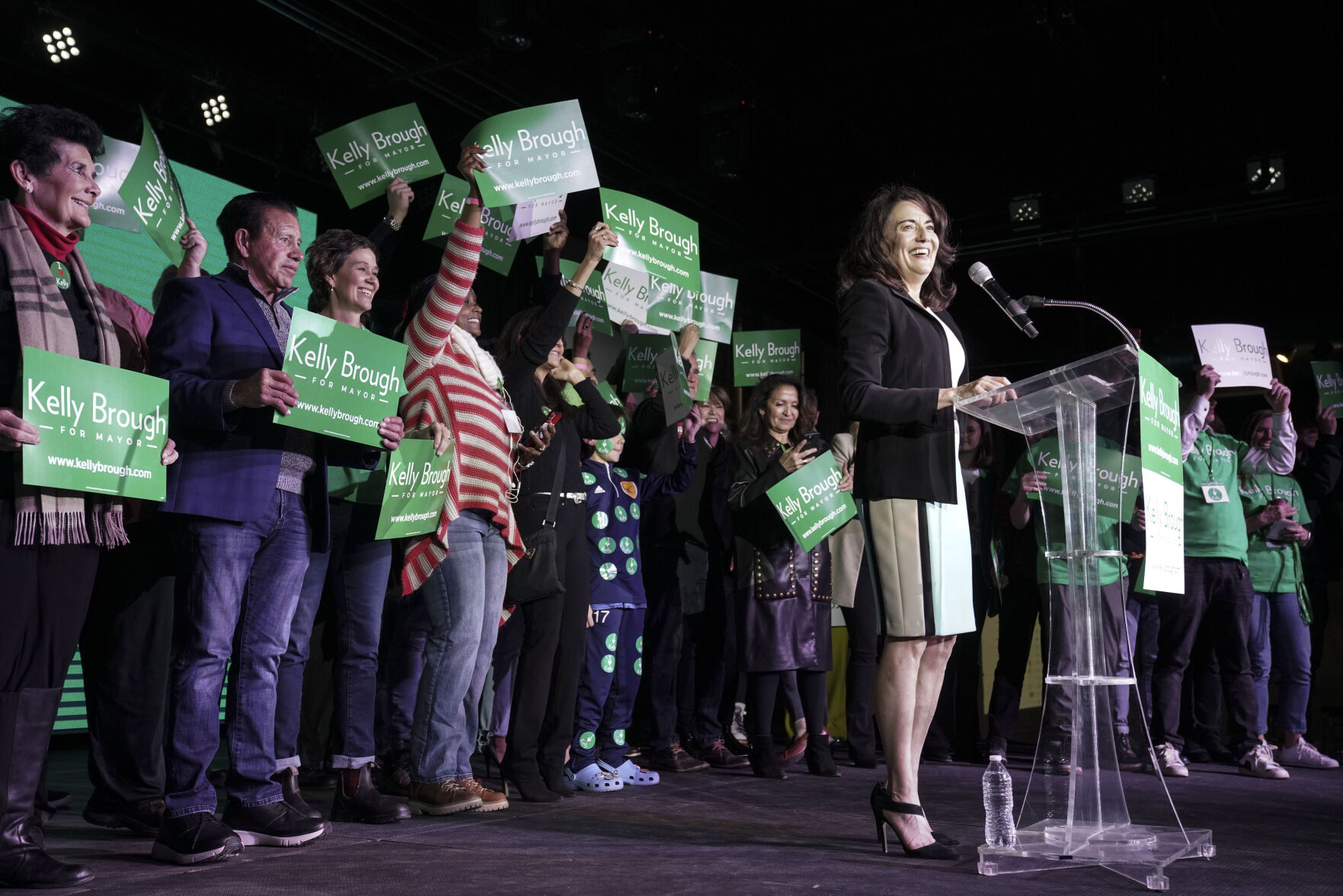
Luning: It’s a nonpartisan election in a heavily Democratic city – both candidates are registered Democrats and both are getting some support from from across the spectrum. But in general, it looks like Mike Johnston is pulling more from the progressive side, with endorsements from Lisa Calderón, who came in third in the first round, and state Rep. Leslie Herod, and state Sen. Julie Gonzales. And Kelly Brough has the police and firefighters’ unions, Pete Coors and the Denver Republican Party. How’s that all shaking out in a nonpartisan election?
Welchert: I had this conversation a few days ago when the Republican Party endorsement came out for Kelly, and I just thought that was a pretty big noose around your neck. Today’s Republican Party is branded as the party of Trump and the party that killed Roe, and that’s not a team you want to be on if you’re running for office in Denver, Colorado. But I think at the end of the day, those kinds of labels don’t really matter as much in a Denver mayoral race.
Mike (Kopp) had it right – it’s a pragmatic race, who can get stuff done. And my friend Alan (Salazar) may not be wrong. There may not be much of a honeymoon here for either one of these people for mayor.
If they’re not moving the meter much faster, in a year, there’ll be pitchforks out, people will be coming after them, they will not last long. And that’s the brutal reality of it. You know, you campaign in poetry govern in prose, right? They’re going to have to govern with their sleeves up and get after it really fast….
Silverii: if you’re running for mayor of Denver, and you get the Denver Republican Party’s endorsement, if you don’t run away screaming from that thing, throw it on the ground and say, “We don’t want that,” I think you’re making mistakes. I didn’t see that happen. I thought that was very strange to try and cobble together a winning coalition with 20% of the city who doesn’t really vote as hard as the Democrats and unaffiliated seems like an odd choice to me.
But you’re right, that’s where the battle lines break down. All I think you could say safely (is) the progressive candidates and the center-left candidates kind of rallied behind Johnston in various phases after the initial round, and then Pete Coors, Republican funders and donors and Republican parties all lined up behind Kelly Brough. I mean, that shouldn’t tell you something, it’s not a coincidence. They agree with her and they think she’d be a better mayor for Denver than Mike Johnston, whereas the progressive candidates probably think Johnston would be a better mayor, or at least it seems that way.
So, you’re in a city that votes overwhelmingly for Democrats, and you’re getting all the progressive and Democratic endorsements, I think that’s pretty telling, vs. your opponent, who’s getting a lot of the conservative and Republican ones. So, at the end of the day, it matters if voters know that or not.
I think a lot of us who pay attention really closely know that, but the question is, has that been communicated broadly? I haven’t seen any ads saying, “You know, Kelly’s endorsed by Republicans,” or, “Johnston’s endorsed by ‘ultra-left liberals,'” or anything like that. So, it doesn’t seem like anybody’s operationalizing that information, but if anybody knows about it and they’re making their decisions based on what Steve (Welchert) said, that this is the party of Trump, is the party of overturning Roe, this is the party of holding the economy hostage for spending cuts, that’s probably not a great look for a Denver mayoral candidate.
Salazar: I think watching the endorsements has been interesting. I think it’s kind of a mixed bag, and you can pick out what you want. I don’t think anybody would accuse Wellington Webb of being a Republican or Bill Ritter of being a Republican – they’re both Kelly supporters. Mayor Hancock got the endorsement of the police union in 2019. We were happy to have it because, if you are a mayor, you have to work with the police union, you have collective bargaining agreements that you have to negotiate. So, I think you can pick and choose what you want.
I thought the endorsement from Lisa Calderón was probably helpful for Mike Johnston, but I thought it was a strange endorsement in the sense that Mike was not there. I think Calderón probably did him a favor by not insisting that he be physically with her during that endorsement.
I actually think the Denver voters are more pragmatic than looking at endorsements, and I also think that they will look past the kind of progressive lens. I think it would be fairer to both candidates if they did so, because if you know Mike Johnston, you know he worked with Republicans, and he was known as a pretty centrist legislator in the Senate, and if you know, Kelly Brough, you know she was a progressive leader of the chamber, probably the most progressive, liberal-leaning leader of the chamber in modern memory.
So, I think it’s in some ways unfair to both candidates to label them this way, but I totally understand why the politics may favor Mike, in the sense that there’s a view that he’s more progressive than Kelly. I think if you look deeply, you’re going to find two human beings that are, very basically, pragmatic politicians, and they will approach the job that way, and these endorsements aren’t going to mean a whole lot afterwards.
I think promises made to who’s going to be part of the transition could be problematic with the candidates, and I think that’s another piece of this that could be a hangover, post election, if you’ve made promises that you are going to be uncomfortable keeping, and that’s true for both candidates.

Del Puerto: Obviously, it’s a nonpartisan election. I do wonder, from your (perspective), if you think this election will be decided along traditional ideological, essentially partisan lines, or if you think that voters are asking different questions than they are in explicitly partisan races?
Kopp: I’ll take a run at that … First of all, most of the voters in the general election were older, not younger. I would think that that would incline more toward Kelly’s benefit, if the view is that Mike is doing better with progressives.
I’m just throwing out a couple of general observations about that. You know, if you add Kelly’s vote with Mike’s vote with Andy Rougeot’s vote, if those three kind of represent the centrist track – and you could throw in (state Sen.) Chris Hanson at just about 5% – that brings you into the 56, 60% range. So, then everybody else, all those other candidates, the top of which would be Calderón, split the difference there. And if seems to me if that trend continues on, while my sense is that Mike is doing better with progressives, I don’t know that that will be costly in the end for Kelly, if older voters are coming out.
Another thing along those lines, the DSA (Democratic Socialists of America) slate of council candidates really got brushed back. You had a couple that worked through on the at-large races. But (District 9 Councilwoman Candi) CdeBaca didn’t win outright, and some of the other DSA candidates that were were strong, effective candidates – well-funded, certainly – didn’t make it. So, I look at it, and I think dynamically, it just suggests to me that older voters are really engaged in general, younger voters are less engaged in general, and, whereas I think Mike is doing better with progressives, it appears to me that Kelly might be doing better with older, kind of more, quote, establishment voters. So, as that’s why I do think it’s going to wind up being sort of a horse race all the way to the end.
Silverii: I mean, it is worth noting that at this point in the race, in this runoff vs the general, turnout is currently up among both younger voters and Democrats, compared to where it was at this point in the general.
So … that makes sense, but right now, the reality of the math is that the projection shows Democrats are actually voting in larger numbers than they did at this point in the first round, as well as younger voters, which is actually kind of surprising. I assumed it would be the other way around, but looking at the numbers, they’re turning out right now. And I think that has to do with the fact that Councilwoman CdeBaca is in a race still, and her base is probably turning out in that district.
You have a couple of other fights where the progressives are still hanging on … So, I think all those things will probably come to fruition. And you also have to remember that if Democrats and younger voters, who traditionally vote later, are voting faster, more and earlier, the chances that that trend continues to the next six days goes up, too.

Luning: You all are experienced politicos, you’ve run plenty of campaigns both as managers or as candidates, in Mike (Kopp)’s case. What mistakes do you think either of these candidates have made up to this point? Have you noticed any missed opportunities in the first round or the runoff?
Salazar: Well, that’s tough, Ernest. I don’t want to criticize either one of them, because I’ve got to turn over the keys to one of them, so I would rather focus on maybe some missed opportunities. I think it would have been interesting to see right after the initial first round if Kelly, for example, had had enough resources and money to overcome some of that – she didn’t really get a lot of credit for coming in second, because she had to wait a couple of days for that Calderón dynamic to play out. So, if there had been resources and money to put up an immediate ad, I think it would have been helpful, but to Steve’s point, you don’t save money on the theory that you’re going to be in the second round. You put it all on the first round to make sure you get there. So a missed opportunity for her, potentially.
I think a missed opportunity for Mike – I have to stretch on this one, because I’m not sure that I’ve seen that he’s missed opportunities. The real goal here, I think for both of these candidates is to overcome whatever messages and promises they’ve made, so that there is a realistic set with voters come July 17 when one of them takes office. And the real opportunity is what happens then, when they set the tone for what they promised and set the mood for what voters can expect to see take place in the next six months.
On balance, though, Ernest, I think both campaigns have been pretty good at what they’ve done. You haven’t seen a serious misstep like when (Jamie) Giellis in 2019 ludicrously couldn’t remember the name of the National Association for the Advancement of Colored People, and that was just a big mistake. I don’t think I’ve seen that in this (runoff). The only drama that I’ve seen was probably the drama around Leslie Herod’s endorsement, and that kicked up for about 24 hours. But I haven’t seen real missteps. I’ll leave it to the other political experts.
Luning: What are your takes about how these campaigns have been run?
Welchert: My take on it is, if you’re the woman candidate in a two-person race, you’re the de facto winner. It’s certainly worth five to eight points, maybe more in Denver, and I would’ve tried to take advantage of that more than it seems like Kelly’s campaign has… She had a very strong bio ad, she has a strong bio, personally, and running more of that, connecting with people on a personal level.
We all understood she was down in the polls, really, because she’s the one who drew first blood, right? But when you draw first blood, complaining about your opponent being a member of the Skull and Bones (club) at Yale, (Johnston’s campaign was) ready for that and popped her back on the chamber of commerce. And so it all became neutral. That’s not how you want to come out of the gate swinging, (with) something that’s not particularly substantive.
So, on one hand, you’ve got a corporate candidate against an elitist candidate, right? So Denver voters can choose between the corporate and elitist. … So, for me, I would have tried to warm Kelly up a bit more and make her a little bit more personable, run that bio spot a whole lot more and maybe piece that together and run as a woman in a little more visceral way, I suspect.
Kopp: You know, you have to sort of strain yourself to identify big mistakes. But one thing I’ve noticed, and maybe I’m a little more attuned up to this because I’ve been a candidate in the past – it’s difficult to attack people that you more or less like, and I think they do more or less like one another. It always gets difficult as you get into these races, but it’s just uncomfortable if that’s not your nature.
I’ve sort of marveled that this is a really big, really important election – they both obviously have a lot into it – I thought they both should have been drawing sharper contrasts. It’s uncomfortable to do, it’s hard to do it in sort of a winsome way. But I think that approach probably is generally easier for Kelly to do than (for) Mike to do, just because the way our politics were on those on those matters. But she’s been very, very deferential, pretty magnanimous, actually. And Mike has too, generally. I think they both want to win and they’re both competitors. I’m a little surprised they haven’t sharpened it up a little bit more.
Luning: Both of their independent expenditure committees have not been shy about going after the their candidate’s opponent with some pretty hard-hitting ads.
Silverii: That’s kind of what you want, right? You don’t want to be the one throwing punches at people who you either like, to Mike’s point, or who are widely considered somewhat similar to you, right? There’s no real margin in that.
This didn’t get personal, which I thought was nice. But I also think that there are missed opportunities, and there were mistakes that were made. For the life of me, I don’t understand why Brough’s campaign would attack Leslie Herod in the last week – that’s like a swing and a miss in a major way. You want to attack your opponent if you’re going to be doing any swinging, not a surrogate or an endorser or someone like that. So, I thought that was an odd choice … It was like, OK, if you’re going to go after them, go after your opponent. Don’t go after some endorser. And then give them the opportunity to back off and everybody else to come in and hit you back? I didn’t understand that move on the board. That’s not one I would have made.
Luning: What about the Johnston campaign? For someone who’s been elected several times by a lot of the voters who will be voting in this (election), and he’s run prominent statewide campaigns. … Should he have put this away? Why are people still saying that this could be going down to the wire?
Silverii: I don’t think it will, for the record. I think this is going to be pretty decisive. In the first round (of election returns), we will know pretty early next Tuesday who won this thing, I bet.
But it’s proven science that Democratic voters don’t respond very well to negativity. Independent voters do, Republicans do – maybe both of these campaigns made that calculation. If I’m Johnston and I think I’m ahead, there’s no reason to punch down and create a controversy if you think the wind’s at your back. If you’re Brough, it doesn’t seem like she has the resources to both introduce herself and boost her name ID and take a whack at Johnston. So, I think she’s probably hoping her IE is going to do that work, which they’re doing some of, but at this point, I think Johnston’s IE is, what, four to one in terms of cash raised and spent? So, at that point, you’re just getting drowned out. There’s not a lot you can do about it.

Luning: A municipal election is different here…. You can’t make too many enemies, because come July 17, you’ve got to sit down and work with all these folks, and you’re stuck doing that for the next four years. Does that explain some of why they’re all taking maybe a more deferential and friendlier kind of competition for the best ideas rather than (saying), “My opponent is the worst thing you’ve ever seen”?
Salazar: You just said more eloquently what I was trying to express earlier. I think we have two candidates who are temperamentally that way, anyway. I wonder what the race might have been like if Dr. Calderón had come in second, for example – a very different race. The question then is would it have been more contentious? Would Johnston have put it away sooner? I don’t know. It’s all speculation. But I think the temperament of both of these people – and I know them well – is that they’re not really gut fighters. They are collaborative people. And I think there is a recognition that what they say in the campaign or promises they make in the campaign, they’re going to have to live with.
And to Steve’s point, (in) 100 days, people are going to look around and say, “Wow, have things changed?” And I don’t believe things will change dramatically, which is why these candidates have to set an expectation that doesn’t disappoint voters. I think the problems are such that they’re not going to be resolved in 100 days, or even in the first six months of the administration. I think both people are very experienced politicians – Kelly would say she’s not a politician, but she’s certainly politically savvy – and I think they both know that they’re going to have to live with their promises. And at the end of the day, they’ll be judged by how they govern.
Del Puerto: Alan, you’re saying that we’re not going to solve homelessness, this perception of crime in downtown Denver in 100 days. Is that what you’re saying?
Salazar: Well, if it were doable, Luige, I would say we would have done it. God knows it’s been a centerpiece of my daily life for the last two years out of COVID. So, God bless whoever wins, I hope that they can make (more) progress than we have. But I expect that they’re going to use the tools that we have and either expand on them or make the incremental progress that I think you’re seeing around the country with cities.


USPS ballot rule faces lawsuit from Colorado, other states
Thelma Grimes
thelma.grimes@coloradopolitics.com
Updated 7 hours ago
Colorado, along with 25 other states, filed a lawsuit against the U.S. Postal Service to challenge a new rule that seeks to restrict the mailing of ballots to American citizens in an eligible voters list. Colorado relies heavily on the...
Colorado lawmaker, House leaders named in workplace-retaliation lawsuit
Marianne Goodland
marianne.goodland@coloradopolitics.com
Updated 1 day ago
A former legislative aide has filed a lawsuit alleging she was mistreated, illegally directed to perform campaign work and harmed by a House leadership structure she charged was fragmented, politicized and ineffective at protecting employees. The lawsuit, filed by Jennifer...
Democratic candidate in Colorado’s 4th CD urges long-term water planning
Marianne Goodland
marianne.goodland@coloradopolitics.com
Updated 4 days ago
The Democrat hoping to become the next representative of Colorado’s 4th Congressional District on Thursday made her case on the final day of Colorado Water Congress in Steamboat Springs. Eileen Laubacher, who spent 34 years in the U.S. Navy and...
Democratic gubernatorial candidate Phil Weiser promises to appoint rural outreach director, water adviser
Marianne Goodland
marianne.goodland@coloradopolitics.com
Updated 6 days ago
Democratic gubernatorial candidate and current Attorney General Phil Weiser told the Colorado Water Congress Thursday he intends to appoint a rural outreach director and a water policy adviser should he win the election in November. Weiser’s speech at the Steamboat...
Attorney general candidates present priorities at Colorado Water Congress
Marianne Goodland
marianne.goodland@coloradopolitics.com
Updated 5 days ago
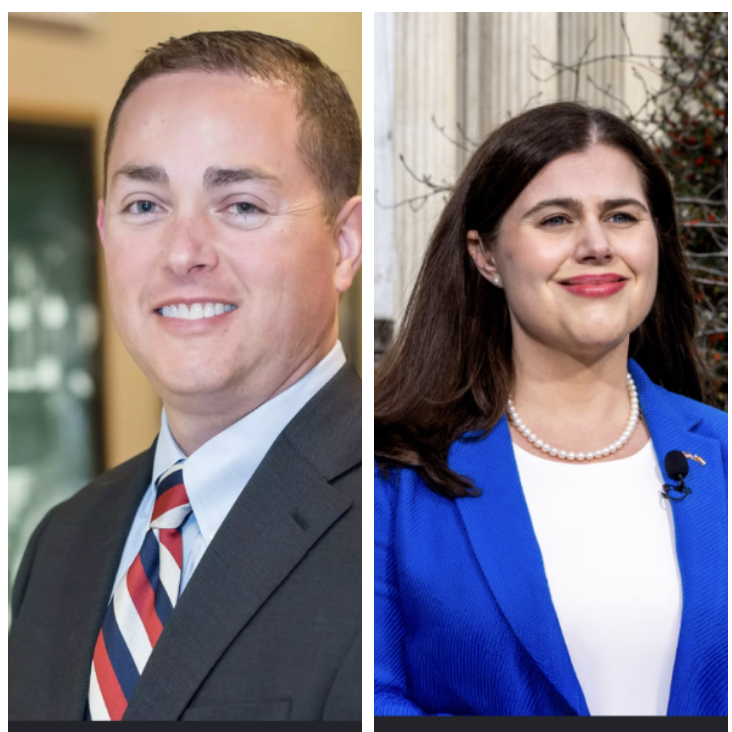
The two major-party candidates for attorney general — Republican Michael Allen, the district attorney for Teller and El Paso counties, and Democratic Secretary of State Jena Griswold — on Thursday outlined their priorities at the Colorado Water Congress. Griswold attended...
Denver named finalist for 2028 Democratic Convention site
Thelma Grimes
thelma.grimes@coloradopolitics.com
Updated 6 days ago
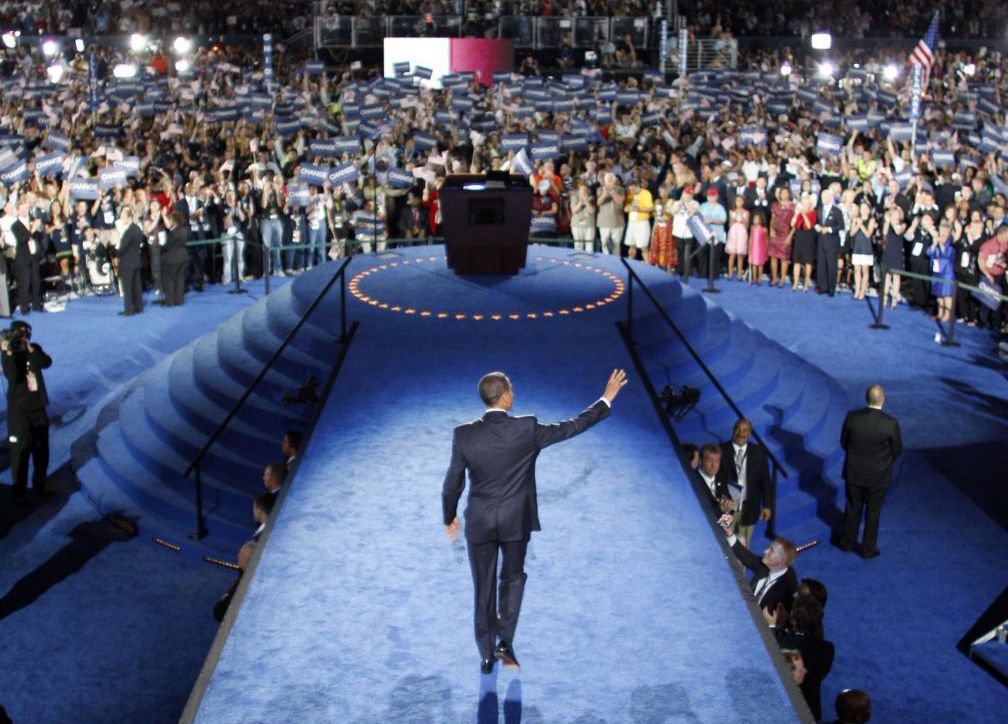
The Mile High City competes with Boston and Philadelphia The list of cities being considered to host the 2028 Democratic National Convention has narrowed even further, with Denver making the cut as one of the final three, along with Boston...
GOP gubernatorial candidate Victor Marx pushes aggressive water-storage expansion at Colorado Water Congress
Marianne Goodland
marianne.goodland@coloradopolitics.com
Updated 7 days ago
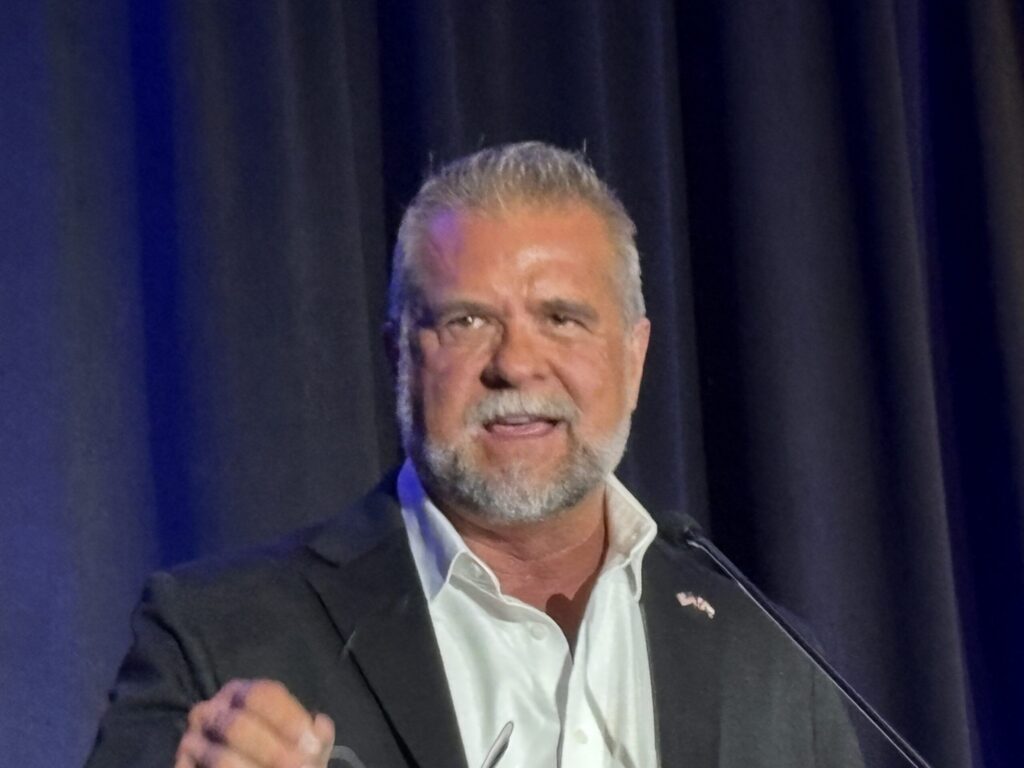
Victor Marx, the Republican nominee for governor, took the spotlight Wednesday during the opening day of the Colorado Water Congress, laying out how he says the state should approach its water future. Marx told the standing-room-only audience in Steamboat Springs...
U.S. Rep. Lauren Boebert stresses storage, forest health and Upper Basin rights at Colorado Water Congress
Marianne Goodland
marianne.goodland@coloradopolitics.com
Updated 6 days ago
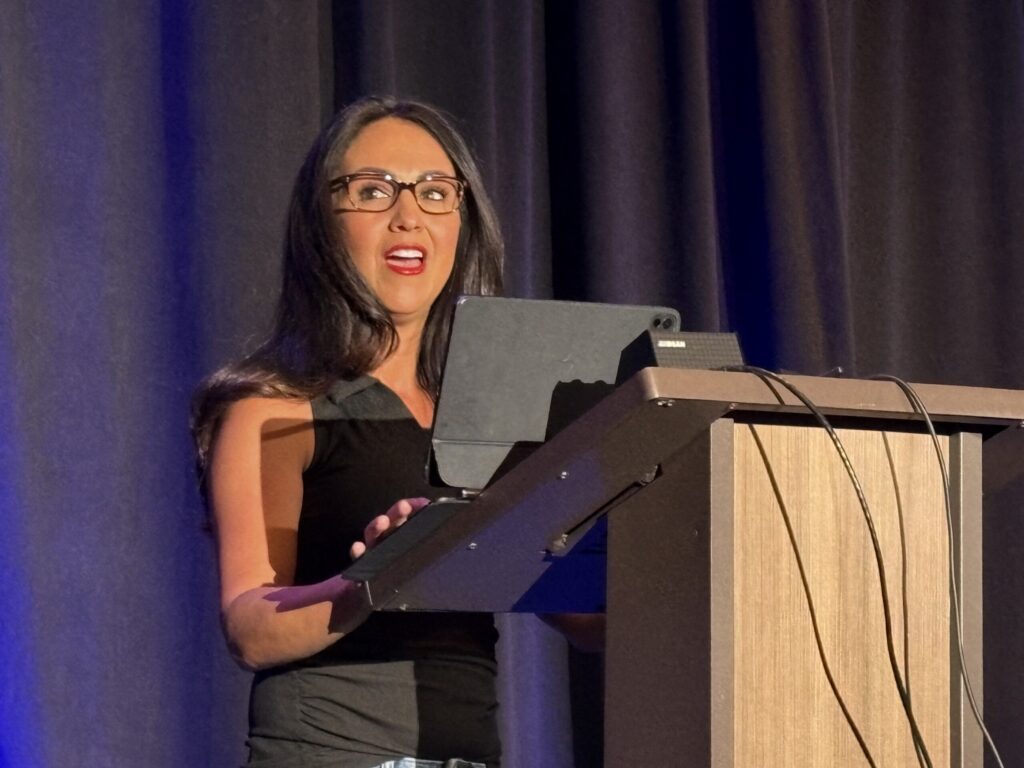
Republican U.S. Rep. Lauren Boebert used her brief Wednesday appearance at Colorado Water Congress to tout her record on delivering water projects for the state and her district. Boebert, who is running for her second term representing the 4th Congressional...
Colorado House Democrats’ caucus finances under scrutiny as ethics case against leader advances
Marianne Goodland
marianne.goodland@coloradopolitics.com
Updated 4 days ago
Democratic lawmakers told a legislative ethics panel that a leader’s management of caucus finances left them with unanswered questions, disputed reimbursements and a breakdown in communication that ultimately triggered a formal complaint. The House Ethics Committee is examining a complaint...
Colorado lieutenant governor candidate Markert says early discipline and key mentors set his course
Marianne Goodland
marianne.goodland@coloradopolitics.com
Updated 1 week ago
Editor’s note: This is the first installment in a three-part series examining Colorado’s candidates for lieutenant governor. In this piece, Colorado Politics speaks with George Markert, the Republican running mate to gubernatorial candidate Victor Marx. Marx is competing against Democrat...
PREV
PREVIOUS

Walmart not liable for detaining customer who refused to show receipts, appeals court agrees
A man who repeatedly attempted to walk out of Walmart stores without showing his receipts, then sued the company when employees detained him on suspicion of shoplifting, cannot hold Walmart liable for false imprisonment, Colorado’s second-highest court ruled on Thursday. William Montgomery has filed a deluge of lawsuits in state and federal court alleging the […]
Colorado Democrats cast reluctant votes to raise debt limit as state Republicans splinter | TRAIL MIX
Colorado’s seven congressional Democrats all voted in favor of a plan to raise the country’s debt ceiling this week, calling the compromise legislation flawed but necessary to avoid default and avert an economic disaster. To hear them tell it, U.S. Sens. Michael Bennet and John Hickenlooper, and U.S. Reps. Diana DeGette, Joe Neguse, Jason Crow, […]