

Polis, Hancock urge feds to help with ‘ocean of needs’ as 200 immigrants arrive each day

Colorado officials on Monday pleaded for help from the federal government, saying they anticipate an “ocean of needs” with the expected spike of immigrants arriving in Denver beginning this month.
A Trump-era policy that effectively kept border crossings low is expiring this week. Already, Denver officials began to see more immigrants arriving last week.
In a letter to U.S. Department of Homeland Security, Mayor Michael Hancock and Gov. Jared Polis urged to the federal government to take action and provide additional resources as Title 42 expires on Thursday.
“We implore the U.S. Department of Homeland Security (DHS) and relevant federal partner agencies to bolster direct support for non-border jurisdictions that are struggling to meet the immense human need resulting from continued migrant arrivals,” they said in their letter to Alejandro Mayorkas Secretary, the U.S. Department of Homeland Security.
“Despite the clear federal responsibility for immigration policy and border security in the United States, the responsibility for recent arrivals has fallen on cities and states across the nation including Denver, the State of Colorado and local non-governmental agencies (NGOs). As a result, we experienced a significant and unreimbursed drain of local financial resources that unfairly and disproportionately impacts our residents.”
For the past four days, Denver said more than 200 new immigrants arrived every day from America’s southern border, a significant increase from the 20-30 people who came to to Denver for much of March and April.
Currently, more than 800 people are housed in four migrant shelters operating in Denver. The shelters are at near-capacity, and officials called on other partners, specifically faith-based communities, to provide overnight shelters for immigrants who are scheduled to leave Denver the next day.
Below are the most up-to-date numbers as of May 7:
-
Immigrants who arrived overnight: 241
-
Immigrants in city emergency shelters: 123
-
Immigrants in partner emergency shelters: 630
-
Total number of immigrants served by the city since Dec. 9: 8,123
Hancock and Polis noted the Colorado state government already spent $8.35 million, while Denver has expended more than $14 million since December 2022 to provide shelter, food and support to more than 7,000 immigrants.
“While Federal partners point to the Emergency Food and Shelter Program – Humanitarian (EFSP-H) to help us with expenses, the program is not equipped to keep up with the veritable ocean of human needs as arrivals continue,” they said. “We were encouraged by the increase in funding in the federal fiscal year 2023. But, we are extremely disappointed that the EFSP-H funded neither the City of Denver nor the State of Colorado adequately despite several requests and applications for funding. EFSP-H funded less than four percent of these massive cost.”
They added: “For perspective, EFSP-H reimbursed the City of Denver for one week’s worth of services. We remain deeply concerned that our jurisdictions will not be fairly reimbursed for shouldering this unprecedented federal responsibility.”
The two officials said non-border states, such as Colorado, are “very much impacted by this crisis” and that additional funding from the feds is “essential to caring for the needs of immigrants while maintaining solvency of our local finances.”
Since December, Denver has accommodated more than 7,700 immigrants, costing the city more than $14 million through May 5, officials said.
City officials said the immigrants pick Denver because of El Paso’s relative proximity to Denver, at least in terms of being able to get to the city by bus with relative ease. Organizations that support the immigrant community also highlight the resources and diversity in the community, as well as its status as a “sanctuary city,” as reasons attracting the immigrants to Denver.
Beginning on May 8, Denver will follow updated federal guidance to provide emergency shelter only to newly-arriving migrants who have been encountered by U.S. immigration officials and only “if there is capacity” to accommodate them. The city said it would continue to connect each immigrant who arrives in Denver to support services and resources. All arriving immigrants – or existing emergency shelters – will get backpacks with hygiene products, the city added.
Last week, the city said two of its four immigrant shelters are already filled, while the remaining two very soon won’t be able to accommodate more people.
The inpouring of immigrants fleeing Central and South America – particularly Venezuela – is emblematic of the U.S. border crisis with Mexico, a humanitarian crisis that has spilled over into other cities, including Denver, which is more than 600 miles from the Mexican border in El Paso, Texas.
Indeed, cities feel the inescapable brunt of the crisis.
At one point, Hancock said that Denver’s finances “are at the brink.”
“And as mayor and as members of City Council, as agency leaders, we’ve got to be honest and say we can’t do any more. We have come to that point,” he said, blaming the unfolding crisis in his city on the nation’s broken immigration system, saying cities are taking “the brunt” of the federal government’s failures.



10th Circuit dismisses Tina Peters’ challenge to confinement as moot
Michael Karlik
michael.karlik@coloradopolitics.com
Updated 12 hours ago
The Denver-based federal appeals court granted the state’s unopposed request on Wednesday to dismiss former Mesa County clerk Tina Peters’ challenge to her confinement as moot. Although Peters received a commutation of her prison sentence last month from Gov. Jared...

Federal judge declines to recuse from death penalty case after Supermax visit
Michael Karlik
michael.karlik@coloradopolitics.com
Updated 13 hours ago
A federal judge declined to recuse herself last month from a death penalty case arising out of Colorado’s “Supermax” prison, finding that her tour of the facility earlier this year did not bias her decision-making. U.S. District Court Judge Charlotte...

Colorado legislators, candidates differ over social media regulations for minors
Bethany Johnson
bethany.johnson@denvergazette.com
Updated 12 hours ago
Following the 2020 accidental overdose of her daughter, Colorado’s Patti Lujan is still pursuing a lawsuit against Snapchat, the social media platform she claims connected her daughter with a drug dealer, police said. Lujan, like many parents, is looking for...

Colorado state Senate: Meet the primary election candidates
Marianne Goodland
marianne.goodland@coloradopolitics.com
Updated 11 hours ago
Colorado’s June 30 primary features a slate of state Senate contests, with several incumbents stepping aside and competitive fields emerging in both parties. These are some of the races to watch as voters begin to submit ballots. Senate District 3:...

Top five hot mic moments from world leaders at G7 Summit
David Zimmermann Washington Examiner
davidzimmermannwashingtonexaminer@wpstage.coloradopolitics.com
Updated 15 hours ago
As the 52nd annual G7 Summit came to a close on Wednesday in France, world leaders not only discussed diplomacy front and center, but also engaged in lighter conversations on the sidelines. There were many hot-mic moments in which President Donald...
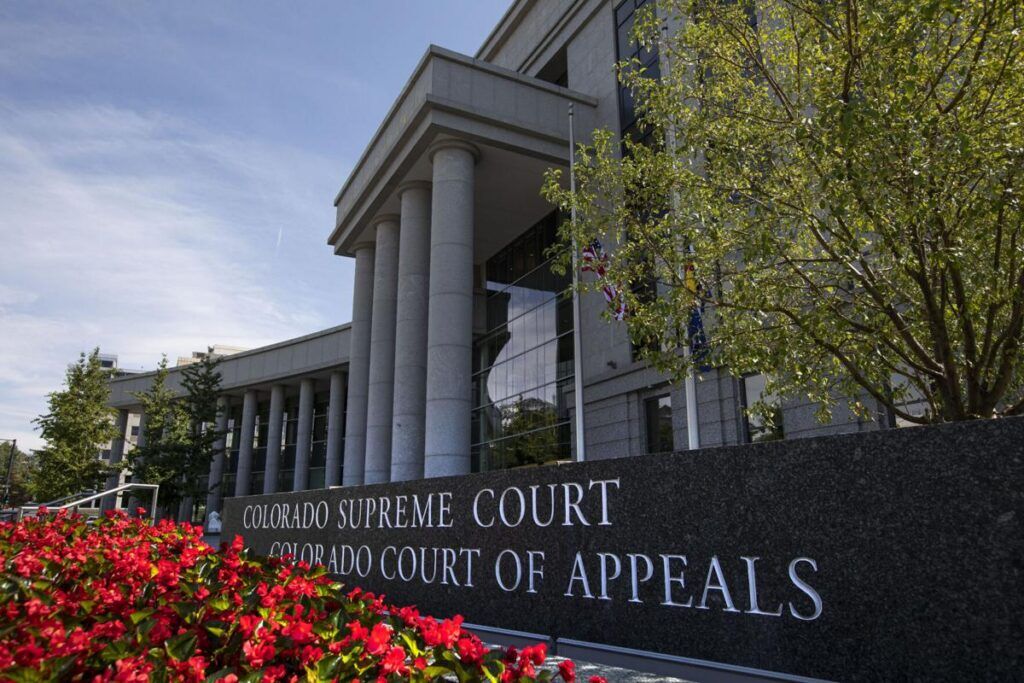
Appeals court clarifies offense of impersonating a peace officer
Michael Karlik
michael.karlik@coloradopolitics.com
Updated 18 hours ago
Colorado’s second-highest court clarified this month that a person commits the offense of impersonating a peace officer if they engage in “any conduct” while pretending to be law enforcement. In a case out of El Paso County, Richard James Coulier...

Hickenlooper raises $900K since April, heads into primary with almost $3 million on hand
Ernest Luning
ernest.luning@coloradopolitics.com
Updated 13 hours ago
U.S. Sen. John Hickenlooper raised just over $900,000 for his reelection bid in the 10-week pre-primary reporting period, the Colorado Democrat’s campaign said Wednesday. The campaign finished the period with almost $3 million in the bank, with more than 80%...
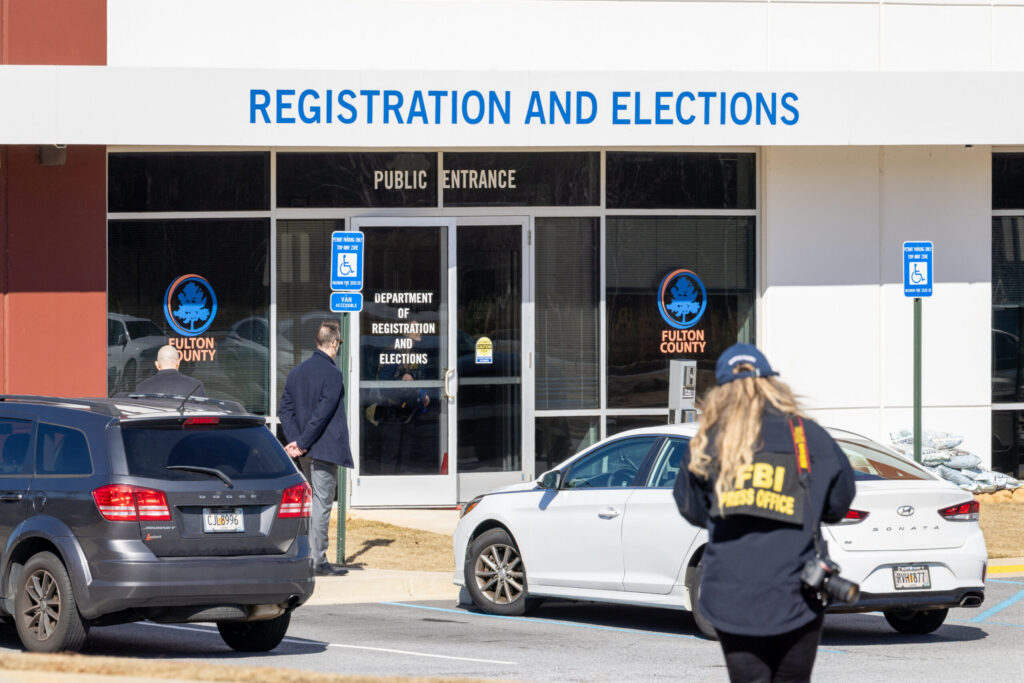
Four takeaways from Georgia, DC, Alabama, and Oklahoma primary elections
Rena Rowe, Washington Examiner
rena.rowe.washington.examiner@gazetteedit.wpenginepowered.com
Updated 17 hours ago
Voters across the country delivered a mixed verdict in a series of high-profile primary contests Tuesday, elevating political outsiders, boosting progressive candidates in deep-blue jurisdictions, and offering fresh clues about President Donald Trump’s hold on the GOP ahead of the...

Trump and Obama lock horns as White House tries to sell new Iran deal
NAOMI LIM Washington Examiner
naomi-lim-washington-examiner@coloradopolitics.com
Updated 17 hours ago
Former President Barack Obama‘s reemergence is looming over President Donald Trump‘s peace deal with Iran as the incumbent tries to sell his deal to an increasingly skeptical public after the nearly four-month war. Obama’s return to the headlines as he...

Littleton approves $1M for Starlight affordable housing project
Nicholas Fogleman
nicholas.fogleman@denvergazette.com
Updated 20 hours ago
The Littleton City Council on Tuesday approved a $1 million funding request to support construction of a new affordable housing development known as the Starlight Apartments. The council authorized the contribution from the city’s Affordable Housing Fund for the project,...
PREV
PREVIOUS

Update on federal judges, state Supreme Court hears oral arguments | COURT CRAWL
Welcome to Court Crawl, Colorado Politics’ roundup of news from the third branch of government. A new federal judge took the bench in Colorado as another awaits action in the U.S. Senate, plus the state Supreme Court heard oral arguments in several criminal cases and one very consequential civil matter. Status update on federal judges […]

Colorado lawmakers face six dozen outstanding bills in session's final hours
The 2023 legislative session ends at midnight today, Monday, May 8. In that time, lawmakers will have to work through a remaining 72 bills as of Monday morning. For the 2023 session, 617 bills have been introduced, according to the Office of Legislative Legal Services. The last bill introduced in the Senate, SB 306, would […]