

Update on federal judges, state Supreme Court hears oral arguments | COURT CRAWL

Welcome to Court Crawl, Colorado Politics’ roundup of news from the third branch of government.
A new federal judge took the bench in Colorado as another awaits action in the U.S. Senate, plus the state Supreme Court heard oral arguments in several criminal cases and one very consequential civil matter.
Status update on federal judges
? Last week, Colorado’s federal trial court welcomed U.S. Magistrate Judge Susan Prose, who formerly defended the Federal Bureau of Prisons against lawsuits from inmates. She was named to the bench in December. If you’re wondering why it took six months for Prose to take her seat, it’s because she was awaiting the completion of her background check. She succeeds now-U.S. District Court Judge Nina Y. Wang.
? Meanwhile, the clock is ticking on the nomination of U.S. Magistrate Judge S. Kato Crews to the district court bench. The White House selected him earlier this year for a vacancy that will arise in June, but Crews’ nomination is stalled in the Senate Judiciary Committee.
? There are two factors preventing Crews from advancing. First, U.S. Sen. Dianne Feinstein, D-Calif., has been gone for months due to medical issues, leaving the Judiciary Committee without its Democratic majority. Second, Republicans have indicated they will not lend their support to Crews, based on his botched answer to a legal question during his confirmation hearing.
? Nonetheless, for the moment, Colorado’s federal judiciary is in decent shape numbers-wise, with the only vacancy being for a part-time magistrate judge position in Grand Junction formerly held by now-U.S. District Court Judge Gordon P. Gallagher.

A slate of oral arguments
? The state Supreme Court heard arguments in multiple cases last week, and considered a question that has strong ramifications for Colorado as a recreation-oriented state: Can members of the public challenge their exclusion from privately-owned riverbeds on the theory that the state actually owns such real estate?
? In a criminal appeal, some justices appeared receptive to the notion that, if someone pleads guilty to an offense while insisting they are innocent, there should be strong evidence supporting the plea in order for it to be valid.
? The Supreme Court wasn’t thrilled to be weighing in on a question with very little precedent: Whether judges, not juries, can transform a misdemeanor conviction to a felony based on the defendant’s prior convictions alone.
? On a field trip to Grand Junction, the justices heard arguments about whether a search warrant served on Google, used to identify suspects through their key word searches, is too broad to be compliant with the Fourth Amendment.
When prosecutors hide evidence
? Earlier this year, former D.C. public defender Thomas L. Dybdahl, who now lives in Boulder, published a book about the U.S. Supreme Court’s landmark decision Brady v. Maryland. The Brady case obligates prosecutors to turn over evidence favorable to the defense that is relevant to the defendant’s guilt or sentencing. In a Q&A with Colorado Politics, Dybdahl explained how Brady, six decades later, isn’t a panacea for disclosure after all. Here is an excerpt:
Colorado Politics: In talking about the role of judges in evaluating Brady material and ensuring compliance with the Brady rule, it’s very much after-the-fact. Is there anything trial judges can do while the case is unfolding to ensure compliance with Brady?
Thomas Dybdahl: There’s certainly more that judges could do. In a typical case, assuming a competent defense lawyer and a good prosecutor, you make Brady demands or requests in a letter prior to trial. Sometimes we would list a whole range of material that we believed would be Brady, and we asked that it be disclosed in a timely way.
Certainly judges can get very involved in that, or at least by saying to the prosecutor, “All right, this looks appropriate to me, this request. Have you provided all this information? Have you asked your police officers, your detectives that are working with you, to disclose any of this kind of information?”

Because certainly one of the issues is police do not always give all their information to the prosecutor – and it’s not a defense to a Brady violation to say, “I didn’t know.”
Judges could absolutely take a much stronger role in saying, “I want you to certify to me in open court on the record that you have sought out, asked for, all of this kind of Brady information and disclosed it.” And if they do that, certainly a prosecutor is on notice that he or she better do that or down the road there might be more trouble if something else comes out.
Newest appellate judge likes to learn
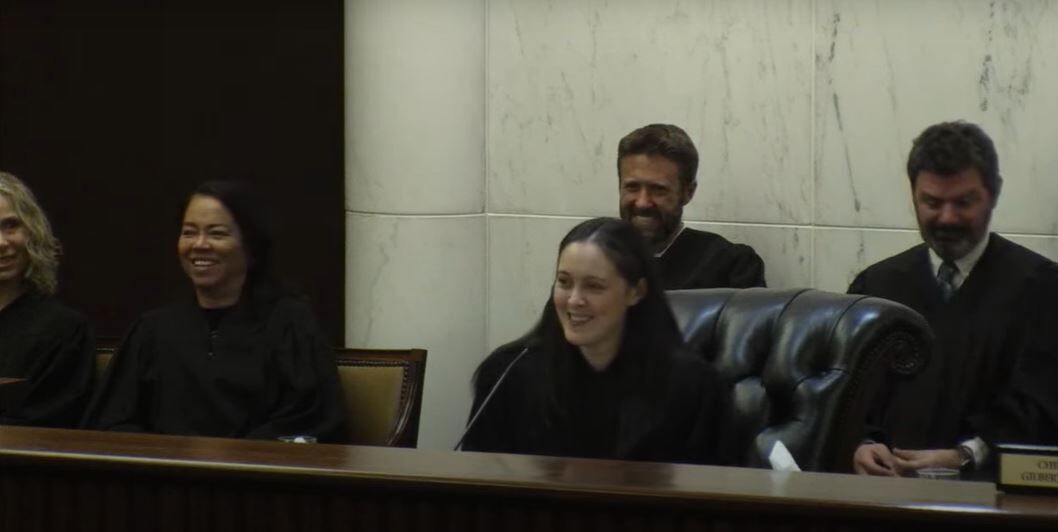
? The newest member of Colorado’s Court of Appeals, Judge Katharine E. Lum, held her formal swearing-in ceremony in late April and gave a glimpse into her personal life. One of the few appellate judges with family law experience, Lum has done pro bono work on criminal appeals and landlord-tenant disputes. She’s also a rock climber and someone whose drawing skills are apparently impressive.
? In her application to join the court, Lum wrote about her enjoyment in learning new things and her “ability to absorb them relatively easily.” During her swearing-in ceremony, she called her colleagues’ attention to the plight of litigants who represent themselves in court, and implored judges to remember the humanity of those folks.
? “Even though we can’t always address every argument, we can take care not to be dismissive in our tone,” she said. “Even though we cannot necessarily construct a winning argument for a self-represented litigant, nor can we reject their contention simply because they cannot articulate it like a lawyer.”
Heard on appeal
? An Aurora police officer acted unconstitutionally when he patted down a teenager for weapons, the Court of Appeals ruled. While the officer did find a gun, he failed to establish that he believed the teen was armed and dangerous at the time.
? A Boulder County judge gave a potentially coercive instruction to a deadlocked jury, the Court of Appeals determined, reversing the defendant’s sex assault convictions.
? The statements a dissatisfied customer made publicly about a plumbing and heating business were “substantially true” and didn’t amount to defamation, the Court of Appeals found.
In federal news
? Even though King Soopers changed course once it was sued, a federal judge determined the union representing grocery store workers hadn’t established the company was irreparably harming them by assigning union work to outside contractors.
? A federal judge previously refused to dismiss a defamation lawsuit against a conservative podcaster stemming from his promotion of an unproven conspiracy theory about the 2020 presidential election. Now the judge has rejected the defendant’s request to pause the case while he appeals.

Vacancies and appointments
? The governor has appointed criminal defense and domestic relations attorney Jeremy P. Boyce to the Crowley County Court, where he will succeed retiring Judge Richard D. Medina.
? Applications are due by May 25 to succeed District Court Judge Robert Lochary, who is resigning from the First Judicial District bench (Jefferson and Gilpin counties). He has been on the court less than four years, and was recently retained in the 2022 election.
Miscellaneous proceedings
? The Colorado Commission on Judicial Discipline has recommended a public censure of former Chief Justice Nathan B. Coats for failing to perform his administrative duties competently, in apparently the first discipline of any state Supreme Court justice.
? An “innovation zone” is challenging the Denver Public Schools board’s decision to revoke the zone’s status as a programming provider, suing the district under a recently enacted state law.
? This Friday, representatives from the National Center for DWI Courts will be in Larimer County to recognize the Eighth Judicial District’s DUI Recovery Court as one of a handful of courts to serve as a model for alternative resolution of drunk driving cases.


10th Circuit dismisses Tina Peters’ challenge to confinement as moot
Michael Karlik
michael.karlik@coloradopolitics.com
Updated 11 hours ago
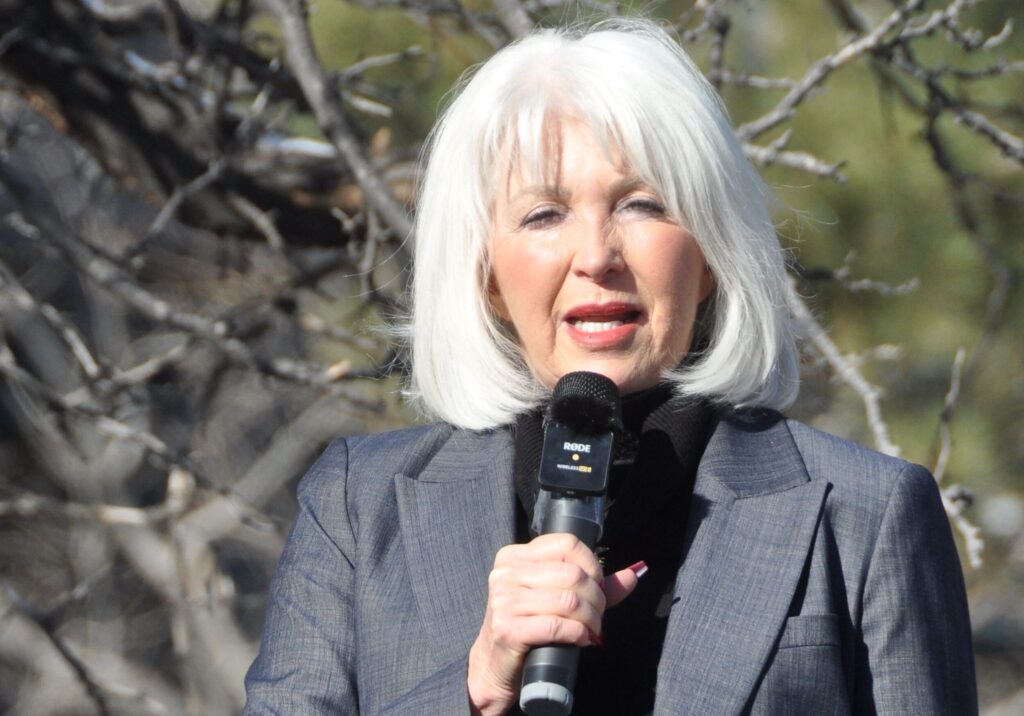
The Denver-based federal appeals court granted the state’s unopposed request on Wednesday to dismiss former Mesa County clerk Tina Peters’ challenge to her confinement as moot. Although Peters received a commutation of her prison sentence last month from Gov. Jared...
Federal judge declines to recuse from death penalty case after Supermax visit
Michael Karlik
michael.karlik@coloradopolitics.com
Updated 12 hours ago
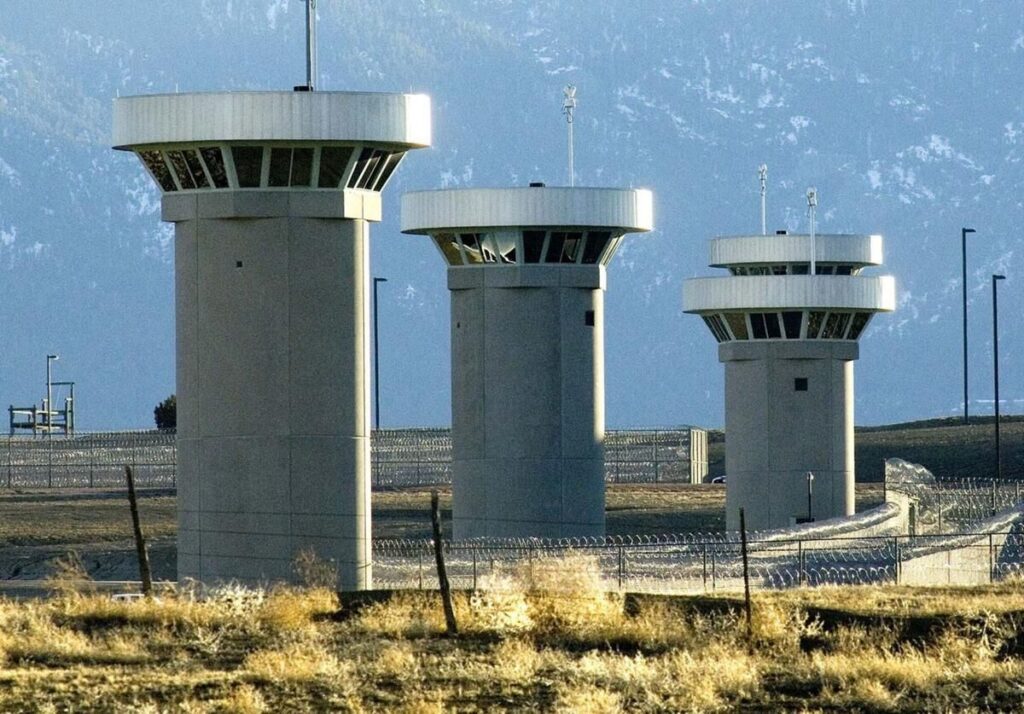
A federal judge declined to recuse herself last month from a death penalty case arising out of Colorado’s “Supermax” prison, finding that her tour of the facility earlier this year did not bias her decision-making. U.S. District Court Judge Charlotte...
Appeals court clarifies offense of impersonating a peace officer
Michael Karlik
michael.karlik@coloradopolitics.com
Updated 16 hours ago
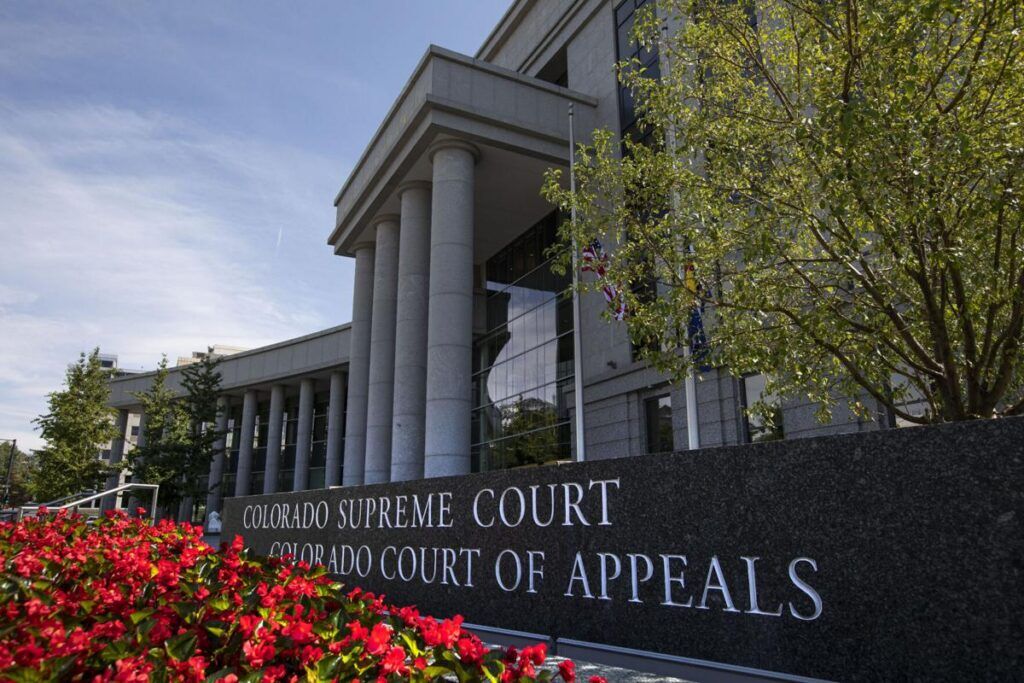
Colorado’s second-highest court clarified this month that a person commits the offense of impersonating a peace officer if they engage in “any conduct” while pretending to be law enforcement. In a case out of El Paso County, Richard James Coulier...
Colorado Supreme Court reverses 2 Chaffee County judges for imposing fee on habeas petitioner
Michael Karlik
michael.karlik@coloradopolitics.com
Updated 2 days ago
The Colorado Supreme Court rejected two separate appeals earlier this month from an incarcerated defendant seeking immediate release from prison, but concluded that two Chaffee County judges incorrectly required him to prepay filing fees for his cases. David J. Gottorff...
Weld County judge wrongly denied bail to murder defendant in gap between law change
Michael Karlik
michael.karlik@coloradopolitics.com
Updated 1 day ago
Colorado’s second-highest court ruled this month that a Weld County judge was wrong to deny bail to a murder defendant in the window between the state Supreme Court’s recognition of the right to bail and the voters’ subsequent overruling of...
Defendants acquitted by insanity are eligible for records-sealing, appeals court says
Michael Karlik
michael.karlik@coloradopolitics.com
Updated 10 hours ago
Colorado’s second-highest court clarified last month that defendants who are found not guilty by reason of insanity are eligible to have their criminal records sealed from public view. Judges must seal criminal records if, among other things, a defendant is...
Colorado Supreme Court shuts down ‘new form of representation’ in postconviction cases
Michael Karlik
michael.karlik@coloradopolitics.com
Updated 2 days ago
While unrepresented defendants in postconviction proceedings are permitted to have a court-appointed attorney investigate and augment their claims, that is not the case when a private lawyer authors the original petition, the Colorado Supreme Court decided on Monday. In contrast...

Colorado State Shooting Association files constitutional challenge to firearms dealer law
Marissa Ventrelli
marissa.ventrelli@coloradopolitics.com
Updated 2 days ago
A firearms group has filed a lawsuit challenging a recently signed law expanding regulations for firearms dealers in Colorado. House Bill 26-1126 clarifies that firearms dealers must hold both a federal and state license to operate. The bill also allows the...
Colorado justices walk back appeals court’s expansion of rezoning via ballot box
Michael Karlik
michael.karlik@coloradopolitics.com
Updated 3 days ago
The Colorado Supreme Court ruled on Monday that rezonings of planned-unit developments cannot occur through a vote at the ballot box, reversing an appellate decision that found such changes were fair game for a popular vote. In contrast to traditional,...
Colorado Supreme Court recognizes right to self-defense in workplace
Michael Karlik
michael.karlik@coloradopolitics.com
Updated 2 days ago
The Colorado Supreme Court recognized on Monday that there is a right to self-defense in the workplace for which employers may not terminate workers so long as they lawfully exercise that right. The court’s majority in the 5-2 decision cautioned...
PREV
PREVIOUS

Colorado property owners can defer tax payments, but it's too late to apply for this year
With homeowners facing a sticker shock in property taxes, state treasury officials reminded residents they can opt to defer payments. But it’s too late to apply this year, so property owners will have to wait for next year. Tax deferral is traditionally designed to help older Coloradans and active military personnel, but Colorado lawmakers expanded the […]

Polis, Hancock urge feds to help with 'ocean of needs' as 200 immigrants arrive each day
Colorado officials on Monday pleaded for help from the federal government, saying they anticipate an “ocean of needs” with the expected spike of immigrants arriving in Denver beginning this month. A Trump-era policy that effectively kept border crossings low is expiring this week. Already, Denver officials began to see more immigrants arriving last week. In […]