

Governor OK’s funding for summer food assistance for Wyoming kids | OUT WEST ROUNDUP

WYOMING
Governor funds kids’ summer meals
Gov. Mark Gordon secured funding for a summer food assistance program for kids and directed its implementation through an executive order.
After the Wyoming legislature declined to fund the SUN Bucks program—designed to provide summer food assistance to roughly 32,000 children—the governor said he has found funding to keep it going this summer.
The Summer Electronic Benefits Transfer program, also known as SUN Bucks, provides eligible school-aged children with funds to help pay for food during the summer months. According to the department’s biennium budget request, the program offers $120 per child each summer to qualifying families.
The Wyoming Department of Family Services requested more than $3.5 million in additional funding for the program, with support from Gordon. Despite that backing, the legislature ultimately left it out of the final 2027–2028 biennium budget.
The governor signed an executive order on April 15 directing the agency to begin preparations for the 2026 summer program, which starts in June.
According to the department’s request, the funding would help ensure roughly 32,000 eligible children have access to food throughout the summer months.
Not all of the funding would be needed annually, as $1.6 million would be one-time costs to establish the technology system needed to distribute benefits. About $1.9 million would be an ongoing state expense. The program is funded equally by state and federal dollars.
The news release and executive order do not specify how much funding the governor is providing for the program, nor do they identify the source of the funds.
Lawmakers set interim priorities
CHEYENNE — On the heels of the 2026 session, state legislative leaders got back to work on April 1 to outline their priorities for the rest of the year until the 2027 legislative session.
A wide array of topics was proposed, including ongoing ones such as continued dives into Wyoming’s elections and gambling industry, as well as new topics like removing the speed bumps from the garage under the state Capitol and creating Olympic curling stones in Wyoming.
The Wyoming Legislature’s Management Council met in Cheyenne to discuss the proposals that were submitted by the state’s 19 committees of state lawmakers before the end of the 2026 legislative session.
Representing the Joint Corporations, Elections and Political Subdivisions Committee presented a list that placed fraud protection and election reviews ahead of 911 funding and electricity rates. After a Republican lawmaker asked why election reform bills were being prioritized over the “safety and reliability” of 911 and rising electric bills, members voted to elevate electricity and Public Service Commission issues to the committee’s top priority.
A co-chair of the Joint Minerals, Business and Economic Development Committee, meanwhile, said that the panel wanted to explore sourcing curling stones in-state, noting they can cost up to $10,000 each and adding there is a global supply shortage.
The Joint Education Committee plans to study the “educational basket of goods” and the impact of artificial intelligence in classrooms. The Select Committee on Blockchain, for its part, saw a topic regarding data center water consumption struck from its list, with the Management Council deciding that such utility-heavy issues belonged in the Minerals Committee instead.
NEW MEXICO
Indian Health tackles building backlog
SANTA ANA PUEBLO — The U.S. agency that provides health care to Native Americans has a facilities problem. Buildings in its inventory are decades-old, dilapidated and don’t have enough space to care for a growing population.
In early March, Santa Ana Pueblo Gov. Myron Armijo took federal officials from the U.S. Indian Health Service and the Department of Health and Human Services on a tour of a location just outside Albuquerque, where patients are to receive everything from dialysis and diabetes care to optometry services.
Set to break ground in 2027, the 235,000-square-foot center will be run by the IHS. Tribal leaders hope it will relieve pressure on the aging and overextended Albuquerque Indian Health Center, a federal facility originally built 90 years ago, where some patients report waiting months for an appointment.
The Albuquerque facility was among more than 60 clinics and hospitals the agency identified for replacement in 1993 due to their age, condition and inability to serve a growing population. It remains on the list along with six other projects scattered around Arizona and New Mexico.
In February, HHS Secretary Robert F. Kennedy Jr. pledged $1 billion toward those long-delayed projects, including $22 million for the Santa Ana Pueblo center. The agency estimates $8 billion is needed to tackle all remaining projects on the 1993 list.
The IHS serves 2.8 million Native American and Alaska Native patients at 21 hospitals and 78 smaller health centers nationwide. The average age of those facilities is around 40 years old and one-third are in “poor” physical condition, according to a 2023 U.S. Government Accountability Office report.
NEBRASKA
Student from China faces photos charges
A college student from China has been charged with illegally taking photos of U.S. military planes in Nebraska during a multistate road trip that included a stop at an Air Force base in South Dakota.
Tianrui Liang, 21, was arrested April 7 at a New York airport while trying to leave the U.S. for Glasgow, Scotland, where he attends school, the FBI said in a court filing.
Liang admitted that he got out of a car on a public road in late March and took photos of an RC-135, a reconnaissance aircraft, and an E-4B at Offutt Air Force Base near Omaha, the FBI said.
The E-4B, known as the “Nightwatch”, can serve as an airborne command center for a president and military officials in times of emergency, according to the Air Force.
The FBI said it’s illegal to photograph or sketch defense installations without approval. Images of both planes are available online.
Liang told investigators that it was ”legal to take pictures of the sky, but he knew it was illegal to take pictures of the planes on the ground,” the FBI said. The FBI said they were for his personal collection.
Liang’s attorney, Jeff Thomas, declined to comment on April 21.
Liang flew to Vancouver, British Columbia, in Canada on March 26 and met a friend who is a college student in New York, the FBI said. They drove across the U.S. border in Washington state before Liang drove alone to see Ellsworth Air Force Base in South Dakota, according to the affidavit.

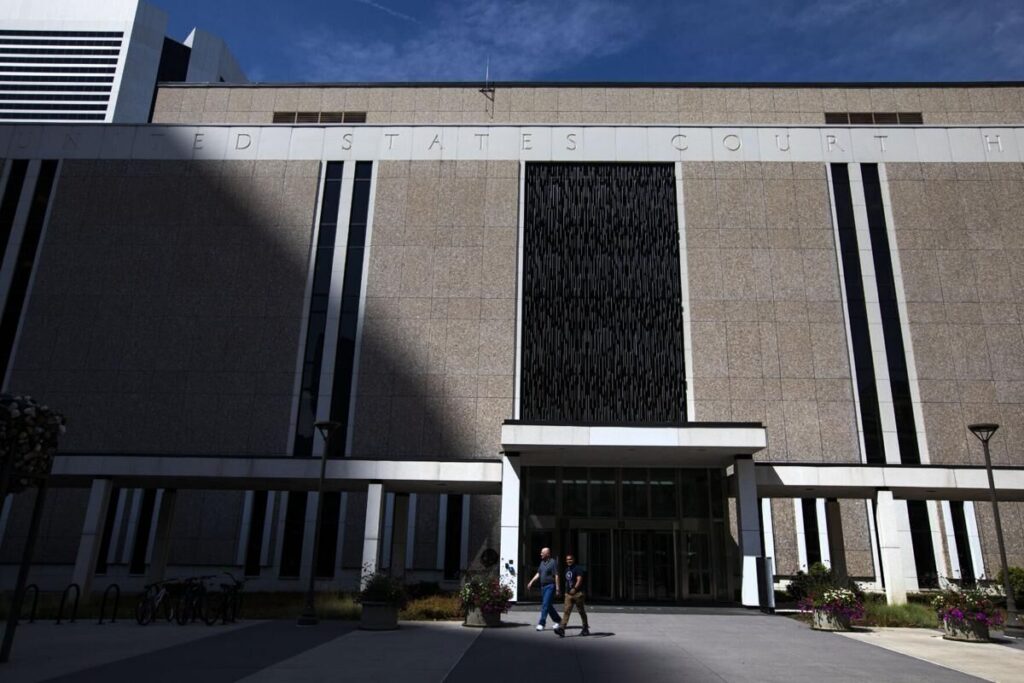
Federal judge dismisses ex-Colorado judicial discipline director’s conspiracy lawsuit
Michael Karlik
michael.karlik@coloradopolitics.com
Updated 2 hours ago
A federal judge dismissed a lawsuit from Colorado’s former judicial discipline director on Tuesday, finding that he failed to adequately state claims for conspiracy or constitutional violations. Christopher S.P. Gregory, who served as the executive director of the Colorado Commission on Judicial...
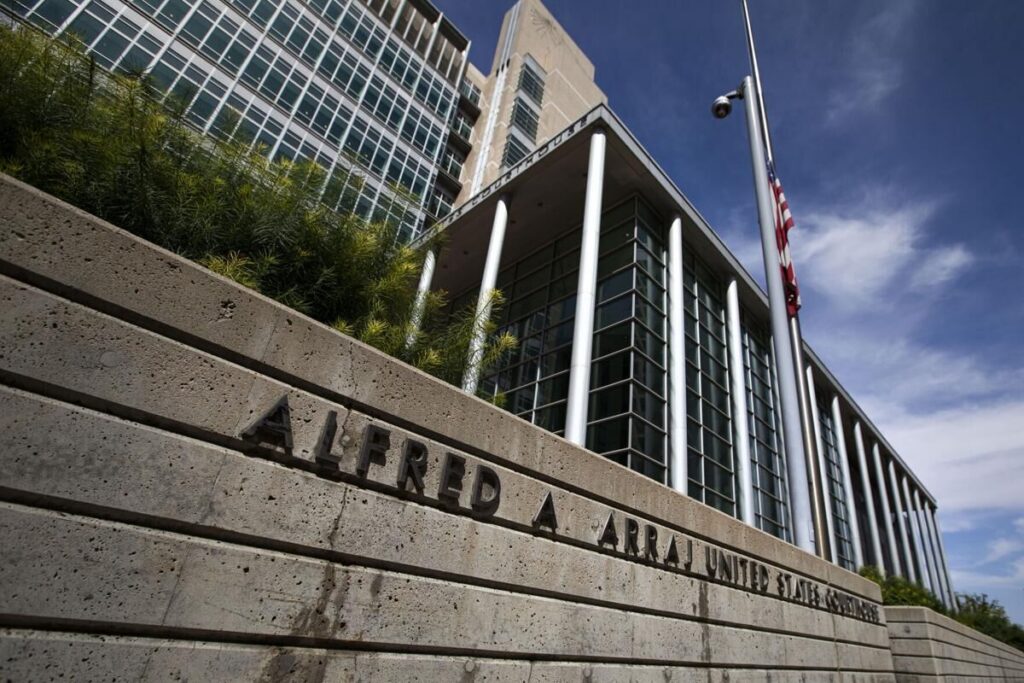
Federal judge allows retaliation claims to proceed against prison officials
Michael Karlik
michael.karlik@coloradopolitics.com
Updated 3 hours ago
A federal judge agreed last week that a man incarcerated at Sterling Correctional Facility had credibly alleged that employees retaliated against him for filing grievances, including by taking away his disability accommodations and turning off his electricity. Louis Peoples Jr.,...

Treasury releases five-step guidance for employers to make contributions to Trump Accounts
Christian Datoc
christian-datoc@coloradopolitics.com
Updated 3 hours ago
Treasury Secretary Scott Bessent published new guidance Tuesday outlining the specific steps employers must take to contribute to employee Trump Accounts. The accounts, one of the most popular provisions included in President Donald Trump’s One Big Beautiful Bill Act, are...

DPS to refinance bonds to create capacity for future borrowing
Nico Brambila
nico.brambila@denvergazette.com
Updated 53 minutes ago
Less than two years after voters approved a record $975 million school bond, Denver Public Schools (DPS) is refinancing older debt — a move district officials say will save taxpayers money while creating capacity for another bond election. DPS has...

Russia frees imprisoned US Marine over health concerns
Brady Knox
brady-knox@coloradopolitics.com
Updated 4 hours ago
Russia freed former U.S. Marine Robert Gilman upon the urging of U.S. officials so he could receive medical care in the United States. Gilman, 32, was released after 1,666 days in prison, having been arrested on Jan. 17, 2022. Eric...

Colorado students push AI task force as schools navigate new tech era
Marissa Ventrelli
marissa.ventrelli@coloradopolitics.com
Updated 7 minutes ago
A group of students is urging lawmakers to establish a task force on artificial intelligence in education to advise districts on how to ensure that pupils and educators use the technology effectively without becoming overly reliant on it. The students...

Parker data center could get $19M tax rebate from Douglas County
Nicholas Fogleman
nicholas.fogleman@denvergazette.com
Updated 6 hours ago
At a time when Denver and Front Range governments are restricting or banning data center development, Douglas County commissioners are poised to approve a $19.3 million tax rebate agreement Tuesday for a new data center under construction in Parker. The...

Denver City Council rejects contract that would have given video maker 8-year deal
Deborah Grigsby
deborah.smith@denvergazette.com
Updated 9 hours ago
Denver’s Office of Human Resources will have to get creative to attract new city employees and place them in “hard-to-fill” jobs after a proposed five-year contract extension, valued at $600,000, failed to gain favor with the Denver City Council. The...
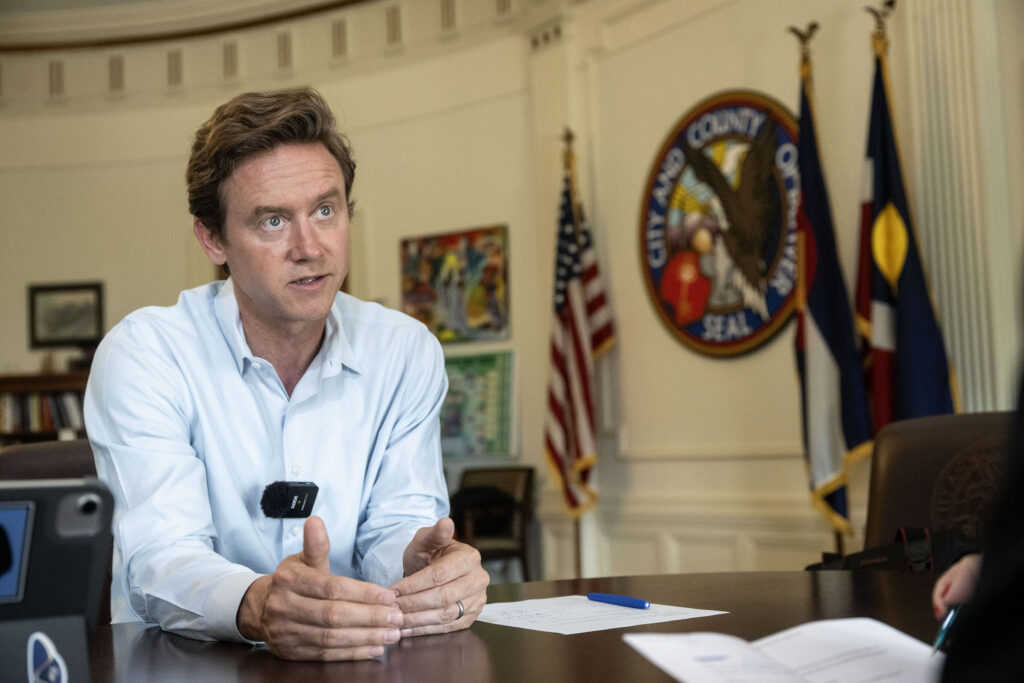
Denver Mayor Mike Johnston files to run for reelection in 2027
Michael Braithwaite
michael.braithwaite@gazette.com
Updated 9 hours ago
Denver Mayor Mike Johnston officially filed his paperwork Monday to run again for Denver’s mayoral office next year. The filing comes weeks after Johnston confirmed to The Denver Gazette that he would seek reelection as he focuses the final year...

U.S. Rep. Lauren Boebert’s son arrested, faces charges of sexual exploitation of minor
Matt Kyle
matt.kyle@denvergazette.com
Updated 22 hours ago
U.S. Rep. Lauren Boebert’s son Tyler Jay Boebert has been arrested and accused of recording and sharing a video depicting himself having intercourse with a minor, according to court records. The case originated in Garfield County in Western Colorado and...
PREV
PREVIOUS

Trump says suspect was armed with multiple weapons at White House correspondents' dinner
WASHINGTON (AP) — President Donald Trump is addressing reporters at the White House after he and other top leaders of the United States were evacuated from an annual dinner of White House correspondents on Saturday night after a shooting incident outside the ballroom. The shooting suspect was identified as Cole Tomas Allen, 31, of Torrance, […]

Denver City Council: Scooters, syringes, fancy airport lawyers
The Denver City Council returns this week with a 24-page agenda packed with a variety of interesting items for consideration. From the Community Planning and Housing Committee comes a $3.4 million contract between the City and Jewish Family Service of Colorado to provide rapid rehousing support for at least 55 homeless individuals or families living […]