

Judge throws out political signage dispute from Elizabeth recall election
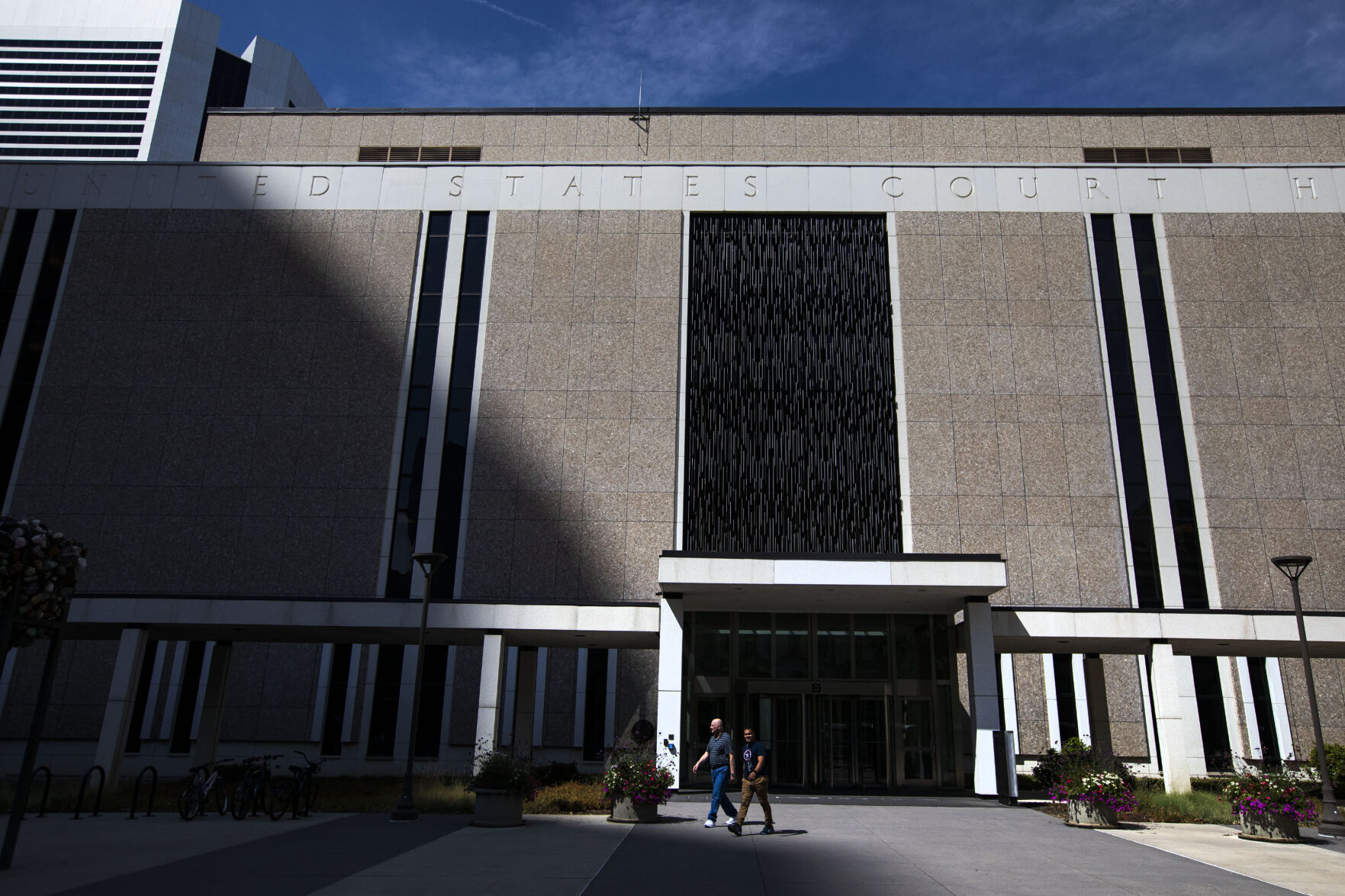
A federal judge has dismissed a lawsuit from a former elected official in Elizabeth who alleged town leaders violated his rights when a police officer removed several of his signs for failing to comply with the municipal code.
Jason Weiss, a former member of the town’s board of trustees, ran against then-Mayor Megan Vasquez in a 2020 recall election. Following his loss, Weiss sued Vasquez, the clerk, the police chief and two police officers based on the removal of his political signage from private property.
On Tuesday, U.S. District Court Judge Charlotte N. Sweeney threw out the lawsuit, agreeing with a magistrate judge’s conclusions that Weiss failed to state a claim that town officials violated his constitutional rights. Moreover, he neglected to properly notify the officer who confiscated Weiss’ signs about the lawsuit.
According to his complaint, Weiss claimed a violation of his free speech and due process rights because several of his political signs “were found in the trunk” of Sgt. Sean Bigler’s patrol vehicle in March 2020. Weiss also alleged the entire section of the Elizabeth Municipal Code pertaining to political signage was not a permissible regulation under the First Amendment.
The town officials pointed out Weiss had not described their personal involvement in any alleged constitutional violation. They also said Weiss had not specifically identified which provision of the town code he believed was unconstitutional.
“Rather than identifying any restriction, the Town is left to speculate what aspect of its municipal code is constitutionally deficient,” lawyers for the town defendants wrote.
In response, Weiss attempted to introduce new information. He attached a police report from Officer J. Rogers, one of the defendants, that showed Rogers was the one who had removed Weiss’ signs for failing to comply with the requirement that their date of placement be marked in the corner. Weiss also cited a memorandum from the town directing property owners to be notified prior to the removal of noncompliant signage.
“The Town of Elizabeth, through its ‘Town staff’, failed to provide Mr. Weiss with the bare minimum requirements of due process before his signs were removed from private property and destroyed,” wrote attorney J. Richard Kunckel.
In analyzing the lawsuit, U.S. Magistrate Judge N. Reid Neureiter initially observed that, for reasons that were unclear, Weiss had never notified Rogers of the lawsuit. Therefore, Rogers could not be held liable for removing the signs.
Neureiter also agreed Weiss had not shown how the other town officials personally participated in any violation, nor had Weiss met the requirements for alleging alleging a conspiracy. As for his claim that portions of the municipal code were unconstitutional, Neureiter noted Weiss appeared to belatedly raise a different grievance: that Rogers did not follow the code closely enough.
“Mr. Weiss seemingly argues that his constitutional rights were violated because Officer Rogers – who, again, is not a party to this suit – violated the Town’s policy of notifying landowners of any code violation,” Neureiter wrote on Oct. 6. “In other words, he does not challenge the Town’s notice requirements. Instead, he asserts his rights were violated when the Town’s written notice requirements were not followed by a Town employee.”
Weiss filed a brief objection to Neureiter’s analysis, but Sweeney adopted the magistrate judge’s recommendation to dismiss the case. Even if it was clear what portions of the code Weiss was challenging, she wrote, Weiss had not shown how the town was liable for an unconstitutional policy, rather than “the individual actions of an office who violated the town’s policy of notifying landowners of a code violation.”
The case is Weiss v. Vasquez et al.


10th Circuit partially revives lawsuit over 2020 Denver protest injuries
Michael Karlik
michael.karlik@coloradopolitics.com
Updated 8 hours ago
The Colorado-based federal appeals court revived a man’s claims against Denver on Friday after concluding a trial judge resolved the case in the city’s favor without analyzing two of the three instances of alleged excessive force and other constitutional violations....
Federal judges find Colorado immigration judge violated several orders
Michael Karlik
michael.karlik@coloradopolitics.com
Updated 9 hours ago
Multiple federal judges in Colorado have freed people from immigration custody after determining that one immigration judge violated their directives for properly conducting bond hearings. For nearly a year, Colorado’s U.S. District Court has faced a flood of “habeas corpus” petitions...

Misconduct complaints from ex-Colorado judicial discipline director dismissed against federal judges
Michael Karlik
michael.karlik@coloradopolitics.com
Updated 1 day ago
The administrative body for the Denver-based federal appeals court upheld a finding last week that misconduct complaints against Colorado’s chief federal trial judge and the chief appeals judge warranted dismissal and appeared to be a “litigation tactic” by the complaining...

First-ever Red Rocks naturalization ceremony draws most diverse group of new citizens
Michael Karlik
michael.karlik@coloradopolitics.com
Updated 10 hours ago
Colorado’s federal trial court held its first-ever naturalization ceremony for nearly 300 new citizens on Thursday at Red Rocks Park and Amphitheatre. “We’re doing it to commemorate the 250th anniversary of the Declaration of Independence and the United States. Red...
Jeffco taxpayers could be on the hook for a possible child sex assault settlement
Matt Kyle
matt.kyle@denvergazette.com
Updated 14 hours ago
Taxpayers may end up on the hook for a child sexual assault settlement, possibly worth up to $15 million, after Jeffco Public Schools failed to notify its insurance company in a timely manner about the case. The incident stems from...
10th Circuit finds no fair housing violation by Littleton landlord for worker’s alleged rape of tenant
Michael Karlik
michael.karlik@coloradopolitics.com
Updated 8 hours ago
The Denver-based federal appeals court concluded on Monday that Littleton’s housing authority could not be held liable for a maintenance worker’s alleged rape of a tenant, as the worker’s employment did not provide any special access to the victim. A...

Jeffco Public Schools sues Trump administration to protect funding after alleged transgender policies violation
Matt Kyle
matt.kyle@denvergazette.com
Updated 2 days ago
In the wake of several threats by the Trump administration to revoke federal funding, Jeffco Public Schools filed a lawsuit against the Department of Education seeking to protect that badly needed money. Jeffco has been under investigation by the DOE’s...

Denver detox center did not violate man’s rights with 10-hour hold, 10th Circuit says
Michael Karlik
michael.karlik@coloradopolitics.com
Updated 3 days ago
The Colorado-based federal appeals court concluded on Tuesday that Denver’s detoxification facility did not violate a man’s rights by holding him against his will for 10 hours until his blood alcohol content was projected to reach zero. Unusually, Brian Garrett’s...

Federal judge clarifies ex-GOP treasurer candidate’s burden to prove defamation claims
Michael Karlik
michael.karlik@coloradopolitics.com
Updated 3 days ago
A federal judge clarified last week that businessman and former Republican statewide candidate Brian Watson will need to surmount a higher hurdle in proving his claim that a party guest’s alleged description of him as a “criminal” amounted to defamation....
Colorado board permits state to appeal injunction against arthritis drug price cap
Marissa Ventrelli
marissa.ventrelli@coloradopolitics.com
Updated 4 days ago
A Colorado board voted Friday to allow the Attorney General’s Office to fight an injunction against a price cap on a drug that treats arthritis. A U.S. district court judge had granted the company Amgen a preliminary injunction, temporarily blocking...
PREV
PREVIOUS

'Our work begins now' | CAPITOL QUOTES
The first week of the 2023 legislative session saw big promises and elicited big emotions from members of the Colorado legislature. Newly-inducted state leaders attempted to set the tone for the year ahead with days of opening speeches, ranging from the dozens of incoming freshmen state lawmakers to the reelected governor. Here are some of […]

Land swap completed for construction of renewable energy campus in Golden
Gov. Jared Polis’ plan to build an epicenter for renewable energy development took another step forward on Thursday, with the completion of land swaps for his Global Energy Park to be constructed on. The “Glo Park” campus is intended to house companies and universities focused on the development of and transition toward clean, renewable, sustainable and […]