

SCOTUS decision on gun rights does not shield nonviolent felons from disarmament, judge finds
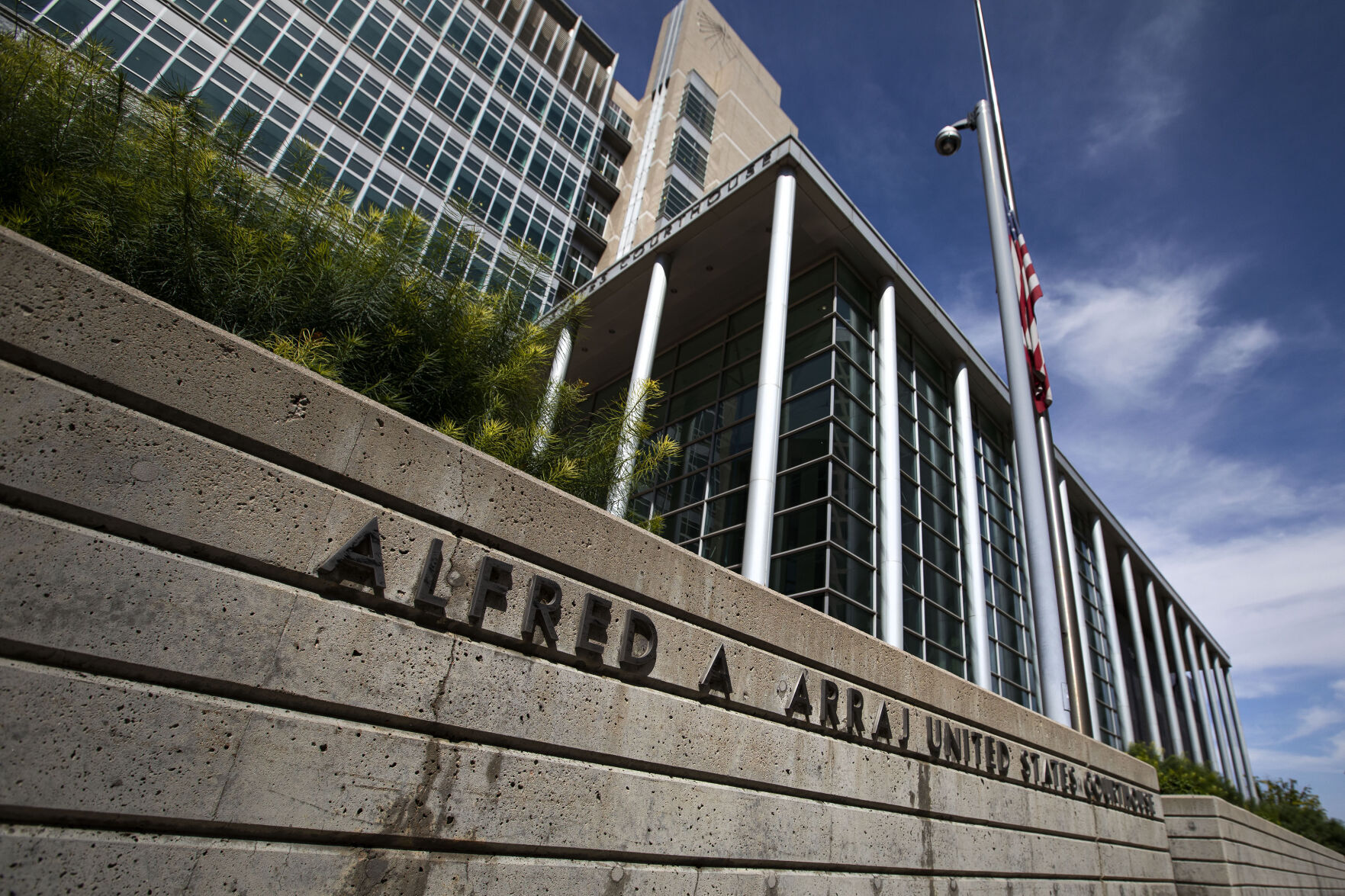
Although the U.S. Supreme Court recently made it easier to strike down gun safety regulations under the Second Amendment, a federal judge has rejected the claim that the longstanding ban on firearm possession by felons – even nonviolent ones – is unconstitutional.
Last week, U.S. District Court Judge Regina M. Rodriguez declined to dismiss the criminal charge against Joshua Willis for possessing a firearm and ammunition despite his prior felony convictions. While Willis attempted to argue the nonviolent nature of his previous offenses should not bar him from gun ownership, Rodriguez noted that other courts have examined the issue and concluded “unvirtuous citizens” have historically been subject to disarmament laws.
“While the Court need not accept this theory outright, its support among courts and scholars serves as persuasive evidence that the scope of the Second Amendment was understood to exclude more than just individually identifiable dangerous individuals,” she wrote in a Nov. 23 order.
At the same time, Rodriguez appeared to anticipate she would not have the last word on the legal question, adding that Willis “has preserved this issue for future decision by higher courts.”
Rodriguez’s ruling is the second in recent weeks from Colorado’s federal trial court to interpret the constitutionality of the ban on felons possessing firearms. In a separate criminal case earlier in November, U.S. District Court Judge Charlotte N. Sweeney agreed that such prohibitions had historical roots in the Founding period and also seemed to have the endorsement of the modern Supreme Court.
Unlike that case, however, Willis went further by contending the felon disarmament law violated the Second Amendment as specifically applied to him, a nonviolent offender.
The challenges to the federal ban on felons’ firearm possession – and to numerous other gun safety laws across the country – began after the Supreme Court’s decision this June in New York State Rifle & Pistol Association, Inc. v. Bruen. The court’s conservative majority voided New York’s licensing regime for the public carry of weapons, but also laid down a new legal framework for analyzing the constitutionality of gun regulations broadly.
The government, when defending the constitutionality of a firearm law, “must demonstrate that the regulation is consistent with this Nation’s historical tradition of firearm regulation,” wrote Justice Clarence Thomas for the majority.
He added that if a law addresses a “general societal problem that has persisted since the 18th century,” the lack of a regulation from the 1700s comparable to a modern restriction is “relevant evidence” that current policies are unconstitutional.
To date, Bruen has successfully been the basis for multiple lawsuits in Colorado and elsewhere. Federal judges have temporarily blocked local bans on “assault weapons” from being implemented in Boulder County, and another lawsuit is underway seeking to strike down Colorado’s prohibition on large-capacity gun magazines, which the legislature enacted following the 2012 mass murder at an Aurora movie theater.
A grand jury indicted Willis earlier this year for possessing a firearm despite his prior felony convictions. On Oct. 31, Willis moved to dismiss the indictment, arguing Bruen‘s requirement of a historical tradition rendered unconstitutional the law he was charged with violating, which dates to 1938. He also claimed the Second Amendment’s right to keep and bear arms applies to “the people” generally, without an exception for felons.
“Because the amendment’s ‘plain text’ does not differentiate between convicted felons and other members of ‘the people,’ a total prohibition on firearm possession by felons therefore presumptively violates the Second Amendment,” wrote Assistant Federal Public Defender Stephanie Snyder.
She continued to explain that, even if felon disarmament laws were part of the country’s historical tradition, they applied only to people “deemed dangerous by the state.” Willis’ prior convictions for trespass, impersonation and aggravated motor vehicle theft reportedly did not involve violence or the use of a weapon.
Snyder referenced extensively a 2019 dissenting opinion authored by Justice Amy Coney Barrett, who at the time was a judge on the federal appeals court based in Chicago. The case involved a Second Amendment challenge to felon disarmament prior to the Bruen decision, and Barrett was the only member of the three-judge appellate panel who believed the federal law and a related Wisconsin state prohibition could be unconstitutional as applied to a man convicted solely of mail fraud.
“History is consistent with common sense: it demonstrates that legislatures have the power to prohibit dangerous people from possessing guns. But that power extends only to people who are dangerous,” she wrote. “Founding-era legislatures did not strip felons of the right to bear arms simply because of their status as felons.”
The government responded to Willis’ motion by pointing out the Bruen case involved “law-abiding” gun owners, and had no bearing on convicted felons.
The “historical tradition also dictates that unvirtuous individuals, such as the defendant, should be disarmed,” wrote Assistant U.S. Attorney Kelly Churnet.
Two days after the government submitted its brief in Willis’ case, the U.S. Court of Appeals for the Third Circuit, based in Philadelphia, became the first federal appeals court to weigh in on the constitutionality of the felon disarmament law post-Bruen. A three-judge panel ticked through the history of firearm regulations in the colonial and Founding periods, beginning with efforts to keep Black and American Indian people from owning guns to Revolution-era requirements for white men to pledge allegiance to their newly-independent states or “be disarmed.”
“We draw three critical lessons,” the panel wrote. “First, legislatures traditionally used status-based restrictions to disqualify categories of persons from possessing firearms. Second, they did so not merely based on an individual’s demonstrated propensity for violence, but rather to address the threat purportedly posed by entire categories of people to an orderly society and compliance with its legal norms.”
Finally, legislatures had “both authority and broad discretion to determine when individuals’ status or conduct evinced such a threat sufficient to warrant disarmament.” The panel consequently upheld the constitutionality of the federal felon disarmament law, including for nonviolent offenders.
Rodriguez, the district judge, opted to adhere to the Third Circuit’s reasoning and join the other trial judges across the country who also found the law constitutional. She cited historical interpretations of the Second Amendment that linked the right to possess firearms with the ability of a citizen to be law-abiding.
“The Court finds that the government has satisfied its burden to demonstrate that Founding-era precedent exists for disarming nonviolent individuals,” Rodriguez wrote.
The case is United States v. Willis.


Colorado justices say insurers may access policyholders’ medical info in denied-benefits litigation
Michael Karlik
michael.karlik@coloradopolitics.com
Updated 1 day ago
The Colorado Supreme Court declined on Monday to expand its narrow prohibition on insurance companies accessing policyholders’ medical information, clarifying that a dispute over an insurer’s bad-faith decision to deny benefits is the only situation where a company is limited...

Colorado Supreme Court declines to loosen requirements for insurance company defendants
Michael Karlik
michael.karlik@coloradopolitics.com
Updated 5 hours ago
The Colorado Supreme Court declined last week to reconsider its longstanding expectations for insurance company defendants, and agreed that an insurer failed to properly raise its defenses against a policyholder’s breach-of-contract lawsuit. When an insured driver has an accident with...

Teen defendant properly transferred from youth detention to jail, Colorado justices conclude
Michael Karlik
michael.karlik@coloradopolitics.com
Updated 1 day ago
Colorado law required the transfer of a teenage murder suspect from youth detention to the county jail when he turned 18, the state Supreme Court ruled last week. Prosecutors have accused Issac James Lawrence of killing a younger boy and attempting to...
Divided Colorado Supreme Court finds parental anonymity in ‘safe haven’ law
Michael Karlik
michael.karlik@coloradopolitics.com
Updated 4 hours ago
Parents who surrender their newborns under Colorado’s “safe haven” law are entitled to anonymity and confidentiality in any subsequent adoptive proceedings involving the child, the state Supreme Court ruled on June 8. Colorado’s law, like its counterparts across the country,...
Safe2Tell tip, corroborated details provided grounds to search backpack, Colorado justices rule
Michael Karlik
michael.karlik@coloradopolitics.com
Updated 3 hours ago
The Colorado Supreme Court decided this month that a tip submitted through the state’s confidential school safety system, plus a Douglas County administrator’s corroboration of some details, provided reasonable suspicion to search a student’s backpack for drugs. Someone submitted a...
Appeals court finds opening in Colorado Supreme Court’s framework for child neglect cases
Michael Karlik
michael.karlik@coloradopolitics.com
Updated 2 days ago
Colorado’s second-highest court squeezed through an opening last week in a controversial state Supreme Court decision from 2025, concluding that the justices had not prohibited a child’s legal representative from being the one to request termination of parental rights in...
Colorado Supreme Court upholds police search of car based on arm movements
Michael Karlik
michael.karlik@coloradopolitics.com
Updated 5 hours ago
The Colorado Supreme Court decided last week that Denver officers’ search of a vehicle was constitutional, based on their perception of the occupants’ arm movements that a trial judge found to not be credible. Officers Keegan Grubb and Richard Eberharter...
10th Circuit tosses Pueblo County sheriff defendants’ appeal in fatal shooting lawsuit
Michael Karlik
michael.karlik@coloradopolitics.com
Updated 3 hours ago
The Denver-based federal appeals court rejected an attempt from Pueblo County sheriff’s employees on Wednesday to rely on their own version of the facts to escape liability for fatally shooting an unarmed man outside a middle school. A trial judge...
Colorado justices uphold strict interpretation of consumer protection law against debt collector
Michael Karlik
michael.karlik@coloradopolitics.com
Updated 5 hours ago
The Colorado Supreme Court concluded last month that a debt collector failed to comply with state law by suing a woman for an unpaid credit card debt without documentation that it owned her account. Portfolio Recovery Associates LLC filed a...
Colorado justices say judges can nearly eliminate parenting time without it being a ‘restriction’
Michael Karlik
michael.karlik@coloradopolitics.com
Updated 5 hours ago
The Colorado Supreme Court concluded last month that judges can reduce the number of days a parent spends with their child post-divorce to just above zero without it rising to the level of a “restriction” that requires more rigorous justification...
PREV
PREVIOUS

Arron Julian to head state Office of Liaison for Missing or Murdered Indigenous Relatives
The Colorado Department of Public Safety announced Wednesday that Arron Julian has been hired as the director of the newly formed Office of Liaison for Missing or Murdered Indigenous Relatives within the Division of Criminal Justice. His first day was Nov. 21, 2022. The office, one of more than a dozen new offices and agencies […]

Colorado offers $6.9 million in grants for fentanyl investigations
Law enforcement agencies throughout Colorado can now apply for grants to fund investigations into fentanyl-related deaths, injuries and supply chains. Applications opened Tuesday for $6.86 million to be distributed through the Synthetic Opiate Poisoning Investigation and Distribution Interdiction Grant Program – created by the passage of House Bill 1326 in May, a sweeping measure to […]