

Weld County judge violated law with serial restitution orders, appeals court finds

A Weld County judge violated the state’s law on restitution when he repeatedly increased the amount of money owed to the victim years after the defendant’s conviction, Colorado’s second-highest court has found.
Under the law, judges are permitted to sentence defendants to pay financial restitution to their victims in the future to cover therapy or other treatment. But they must do so “in addition to or in place of a specific amount of restitution.”
Former District Court Judge Thomas J. Quammen ordered Daniel Rigg to pay a specific restitution amount following his sexual assault conviction, but he nonetheless issued a half-dozen more orders increasing Rigg’s restitution payments to cover his victim’s therapy. Quammen believed it was clear that restitution is “always going to be ongoing” for such cases.
But a three-judge panel of the Court of Appeals concluded Quammen’s actions did not comply with the law’s directive for judges to explicitly order ongoing payments at the time of sentencing.
“While we recognize our duty to construe the statute liberally, we decline to construe it so liberally that we allow trial courts to violate its plain language,” wrote Judge Terry Fox in the Oct. 13 opinion.
A jury convicted Rigg in January 2011 of sexual assault on a child, incest and other charges. He received a sentence of 36 years to life in prison.
At Rigg’s sentencing hearing, Quammen asked if the prosecution would request that Rigg pay restitution. The prosecutor responded in the affirmative, but needed time to “finalize” invoices.
“The court finds that there will be restitution in this case,” Quammen said. The prosecution then asked for $4,120 to pay for therapy costs for the victim, the victim’s brother and the victim’s mother. Quammen issued an order on May 13, 2011 requiring Rigg to pay that exact amount.
However, three months later, the district attorney’s office sought an additional $900 in restitution. In September, prosecutors filed another request for money. Between late 2011 and October 2013, the prosecution submitted several more requests for therapy payments, which Quammen granted, bringing Rigg’s total financial obligation to $7,090.
It took until March 14, 2013, however, for Quammen to explicitly order that Rigg’s restitution payments would be ongoing to cover victim treatment, pursuant to state law.
A new lawyer was assigned to Rigg’s case and, upon learning of Quammen’s serial restitution orders, the attorney asked for a hearing.
“I don’t know if there was any finding by the court as to whether or not there would be sort of ongoing restitution,” the lawyer said. “My understanding is that there was not such a finding.”
“Well, I did make such a finding as I find in all of these cases because restitution is always going to be ongoing when you have a victim of a sexual assault on a child who’s in therapy,” Quammen responded. He added that “there is language in those orders that says there is going to be ongoing restitution.”
Turning to the Court of Appeals, Rigg argued state law required Quammen to issue a restitution order at the time of his sentencing. Although Quammen could have indicated that restitution would be ongoing to reimburse the victim’s therapy costs, he did not.
In defending the restitution orders, the government insisted it was understood at the time of the first order that prosecutors would continue to ask for ongoing reimbursement of the victim’s treatment.
“An order is only ‘final” when nothing further remains to be done,” wrote Assistant Attorney General Rebecca L. Williams. “Here, the trial court’s initial order did not explicitly address or resolve the prosecution’s repeated requests for ongoing restitution to cover the victim’s future mental health treatment. Therefore, the order was not conclusive of the issues presented and left more to be done.”
The Court of Appeals acknowledged the prosecution had alerted the judge up front of its intention to seek ongoing restitution.
“But when the court ordered the (prosecution’s) specific amount of restitution without any mention of reserving future restitution, Rigg’s obligation to pay a specific amount, rather than an ongoing amount, became final,” Fox noted.
The appellate panel overturned Quammen’s unlawful restitution orders and directed Rigg to pay the originally-ordered amount of $4,120.
The case is People v. Rigg.


Federal judge green-lights civil trial against ex-Fort Collins DUI officer
Michael Karlik
michael.karlik@coloradopolitics.com
Updated 2 days ago
A federal judge ruled on Thursday that Fort Collins’ former “DUI officer” will face a civil trial for allegedly investigating a motorist for impaired driving without any reasonable suspicion to do so. In recent years, several people arrested by Officer...

Colorado Supreme Court suspends Mesa County judge pending misconduct investigation
Michael Karlik
michael.karlik@coloradopolitics.com
Updated 1 day ago
The Colorado Supreme Court suspended Mesa County Court Judge Michael J. Grattan on Thursday amid a misconduct investigation. The court’s Sept. 10 order gave Grattan 21 days to explain why his paid suspension should not continue through the end of...
Colorado Supreme Court changes course, dismisses case about special district bonds
Michael Karlik
michael.karlik@coloradopolitics.com
Updated 1 day ago
The Colorado Supreme Court declined on Friday to decide a dispute between a large-scale Commerce City development and the various districts financing it, after initially showing interest in the ongoing case. Colorado has roughly 2,800 special districts, which are local...
10th Circuit tosses GEO Group’s pretrial appeal in human trafficking lawsuit
Michael Karlik
michael.karlik@coloradopolitics.com
Updated 3 days ago
The Denver-based federal appeals court dismissed an attempt by The GEO Group on Wednesday to appeal a trial judge’s non-existent decision two months before the company is scheduled to face a civil trial over alleged trafficking violations at the Aurora...
Denver sues Trump to block armed ICE agents from polling sites
Deborah Grigsby
deborah.smith@denvergazette.com
Updated 3 days ago
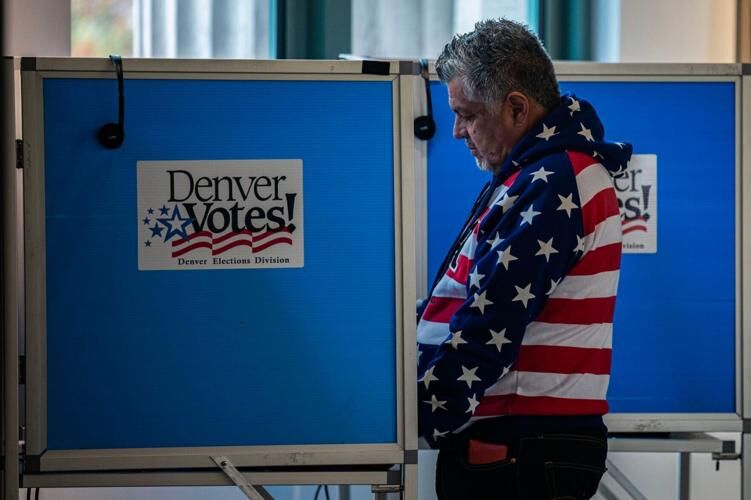
The city of Denver, along with several groups, sued the Trump administration Thursday, seeking to block U.S. Immigration and Customs Enforcement officers who are armed from polling sites during the upcoming midterm elections. In fact, there are no official orders...
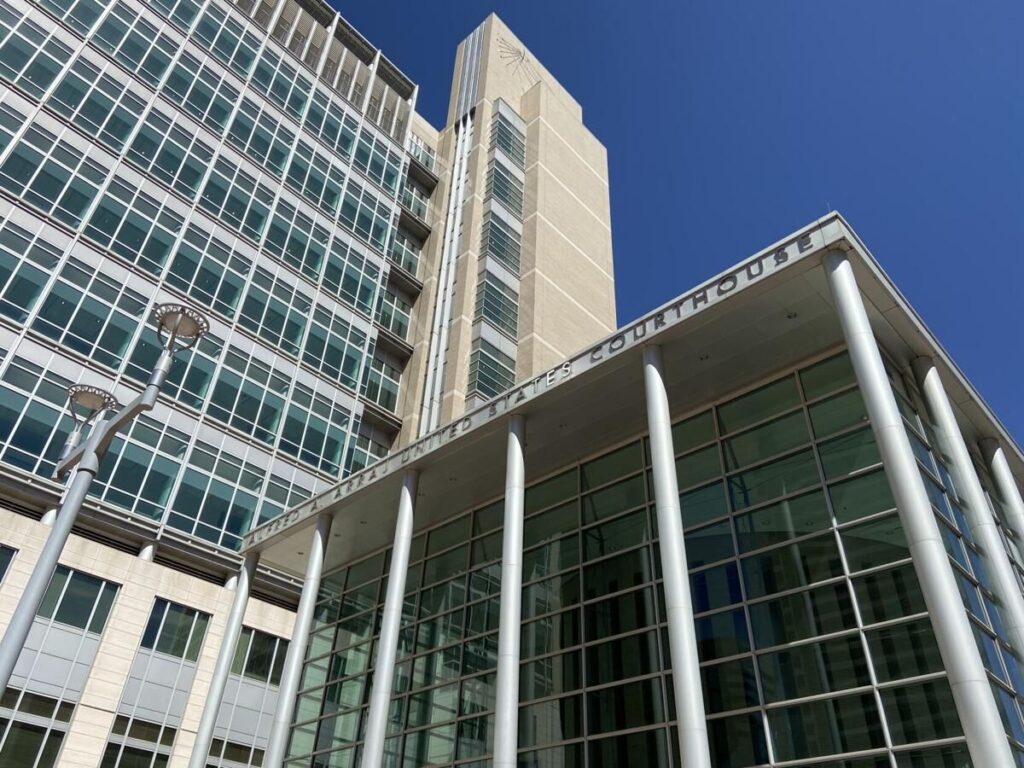
Federal judge takes no action against ICE in Colorado after hearing about mistakes, not ‘blatant violations’
Michael Karlik
michael.karlik@coloradopolitics.com
Updated 1 day ago
A federal judge declined to take action against U.S. Immigration and Customs Enforcement on Thursday after hearing that a pattern of alleged lawbreaking amounted to mistakes and a misunderstanding of the government’s position in court. For nearly a year, Colorado’s...
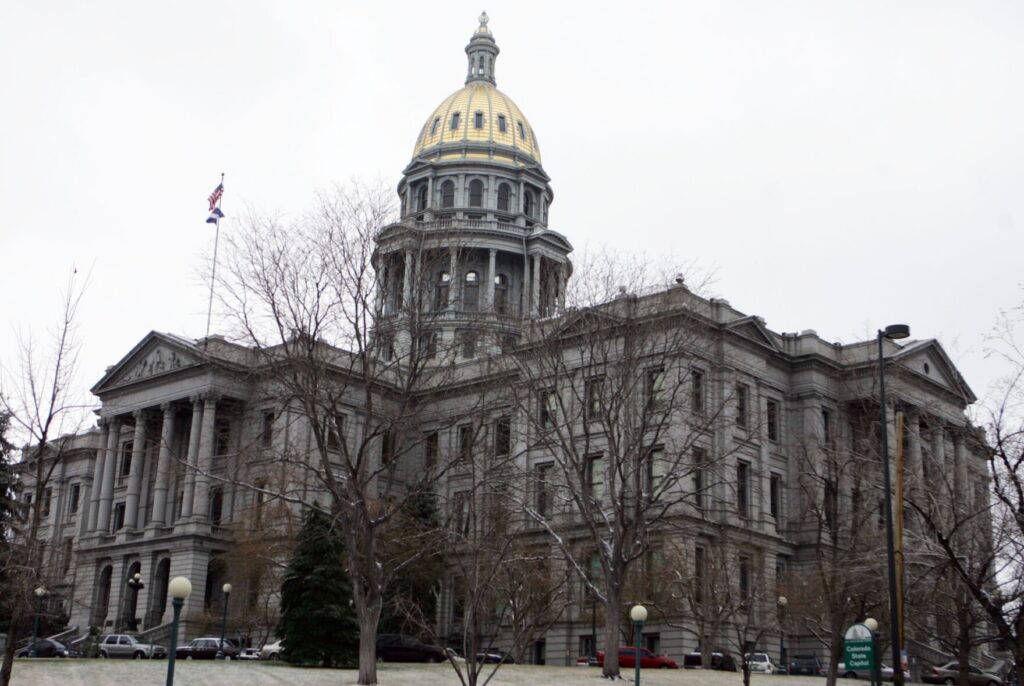
Colorado doctors, dentists challenge state law on gender‑transition services in new federal lawsuit
Marissa Ventrelli
marissa.ventrelli@coloradopolitics.com
Updated 1 day ago
A group of Christian doctors and dentists has filed a federal lawsuit challenging a Colorado law they say requires them to provide gender‑transition services that conflict with their religious and ethical beliefs. The lawsuit, filed by the Christian Medical and...
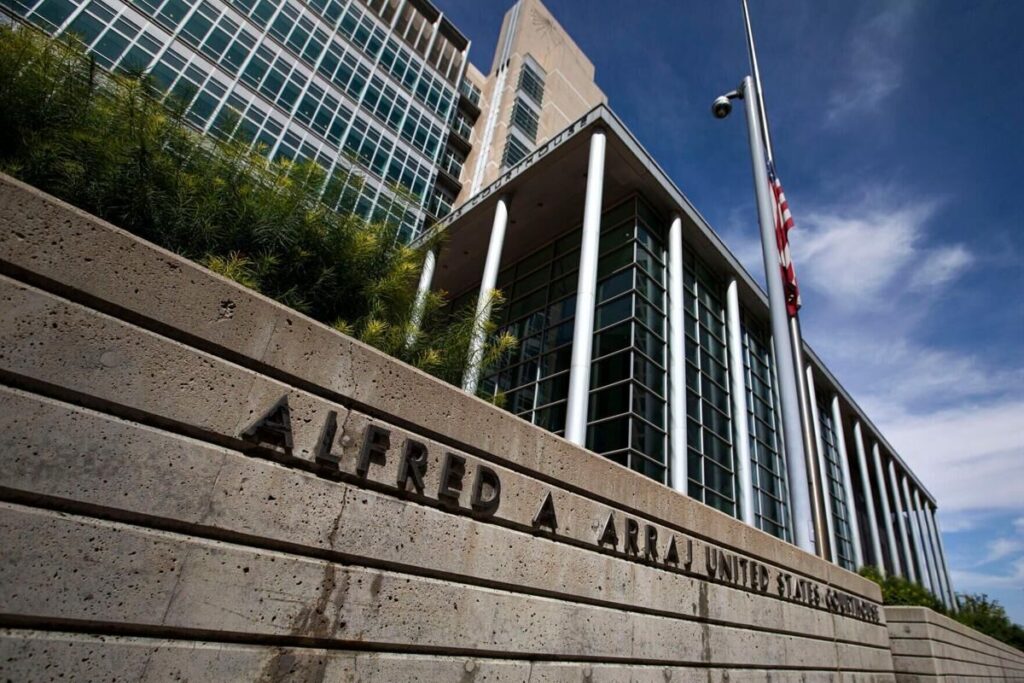
Federal judge directs plaintiff to revise complaint alleging Denver officers’ constitutional violations
Michael Karlik
michael.karlik@coloradopolitics.com
Updated 1 day ago
A federal judge directed a plaintiff to revise his allegations on Wednesday to more precisely state what two Denver officers and the city itself allegedly did to violate his constitutional rights by facilitating his prosecution for murder until prosecutors dropped...
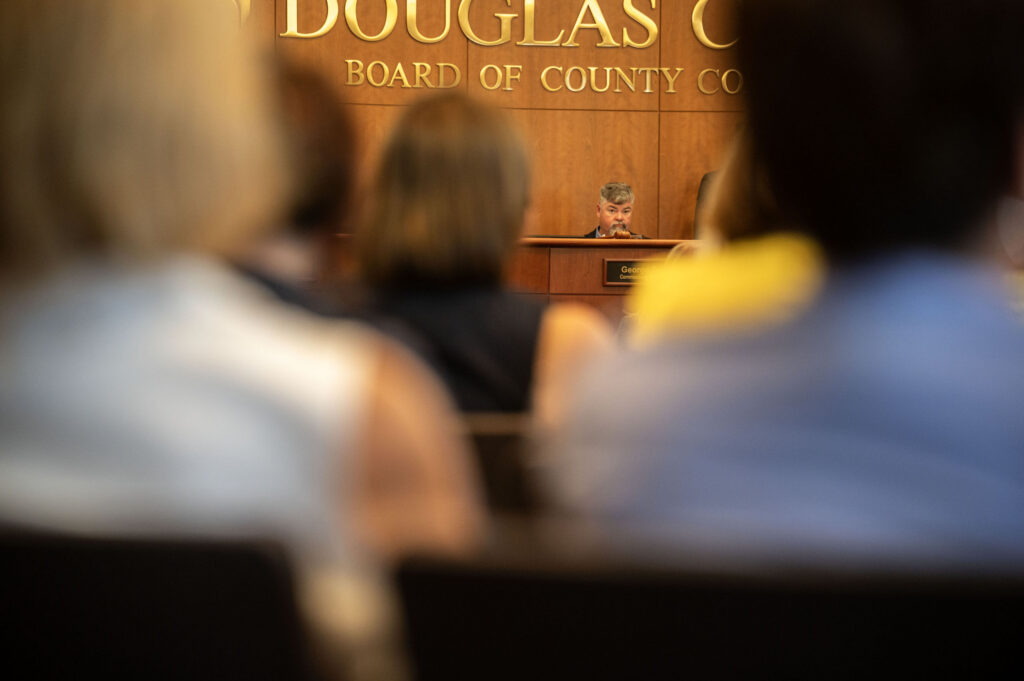
Lawsuit challenges Douglas County commissioners’ ballot actions
Nicholas Fogleman
nicholas.fogleman@denvergazette.com
Updated 3 days ago
A new lawsuit against Douglas County commissioners seeks to invalidate the board’s intervention in efforts to expand the commission from three members to five and restore the original ballot language approved by more than 20,000 petition signers. The suit marks...
Federal judge explores new sanctions against ex-Colorado judicial discipline director
Michael Karlik
michael.karlik@coloradopolitics.com
Updated 1 day ago
A federal judge on Wednesday directed Colorado’s former judicial discipline director, for the third time this year, to explain why she should not sanction him for his latest conduct in his litigation against the state’s judiciary. Christopher S.P. Gregory, who served...
PREV
PREVIOUS

Denver voters embrace library upgrades tax
Denver voters Tuesday overwhelmingly approved a new property-owner tax that will inject $32 million into the city’s library system, according to early unofficial results Wednesday. Question 21 was passing 65% to 35% early Wednesday, with 122,281 votes counted, according to Denvervotes.org. The Denver City Council voted 11-1 in August to put the property tax hike […]

Knowing little, yet knowing everything | SONDERMANN
Eric Sondermann With caffeine at the ready as I fire up the keyboard very early Wednesday morning, we know precious little about ultimate control of the United States Senate and House. The balance of power remains still up in the air. Yet, at the same time, we know everything. Whichever party turns out to be […]