

ELECTION 2022 | CU poll shows top Democratic incumbents leading among likely Colorado voters
Top-ticket Democratic incumbents hold double-digit leads over their Republican challengers among likely Colorado voters, a new poll from the University of Colorado Boulder’s nonpartisan American Politics Research Lab shows.
The annual Colorado Political Climate Survey also found strong support among likely voters for ballot measures to fund free meals for public school students and to permit grocery stores to sell wine if they’re already licensed to sell beer.
A majority of Coloradans agree elections are conducted fairly and accurately, and a majority agree Joe Biden legitimately won election as president, though the pollsters found deep partisan divides on the questions. Across partisan lines, however, big majorities expressed concern about the national and state economies and the cost of living in Colorado.
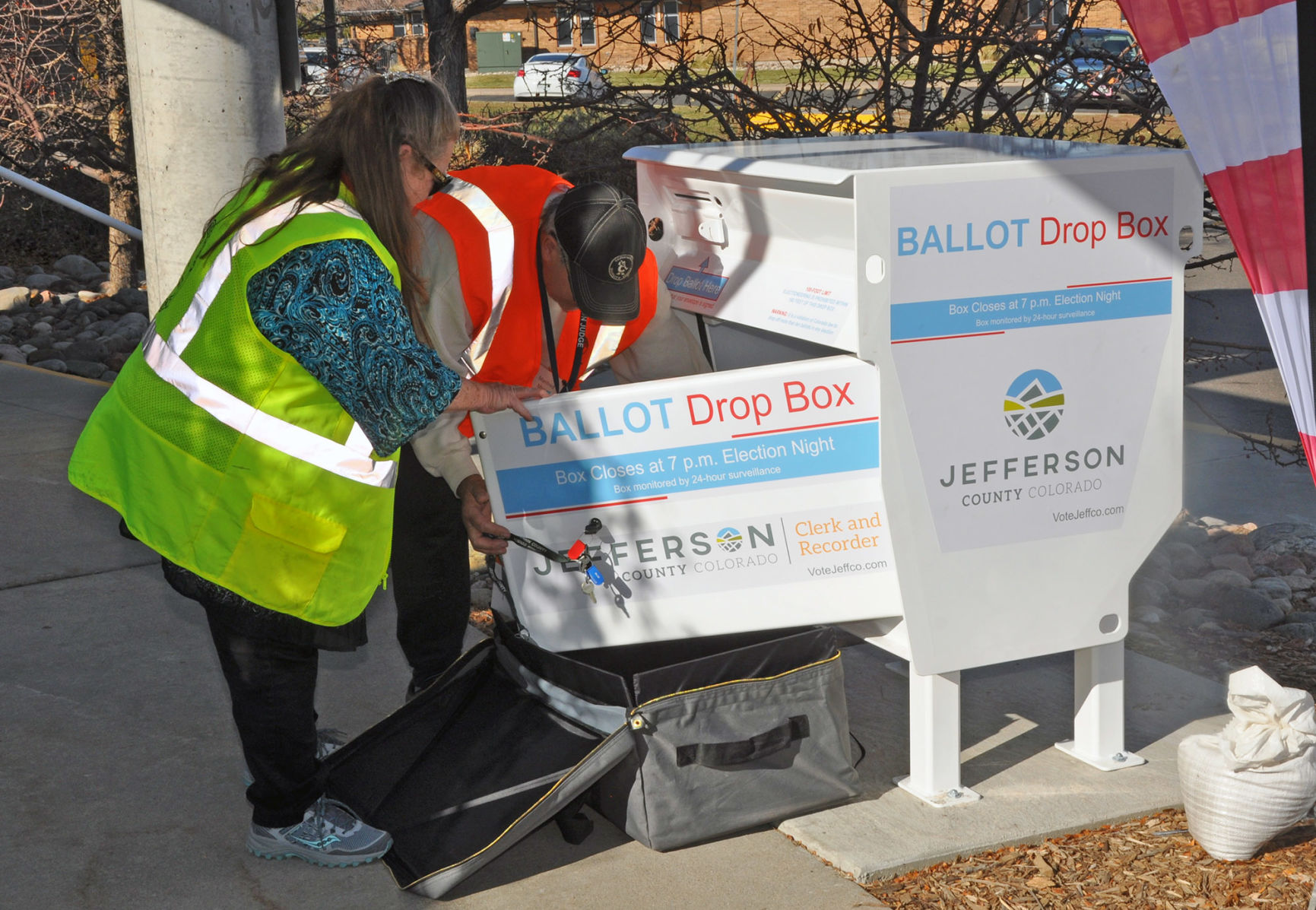
Colorado voters began receiving mail ballots on Oct. 17, and in-person early voting sites opened statewide on Oct. 24. Voters have until 7 p.m. Nov. 8 to return their ballots to county clerks.
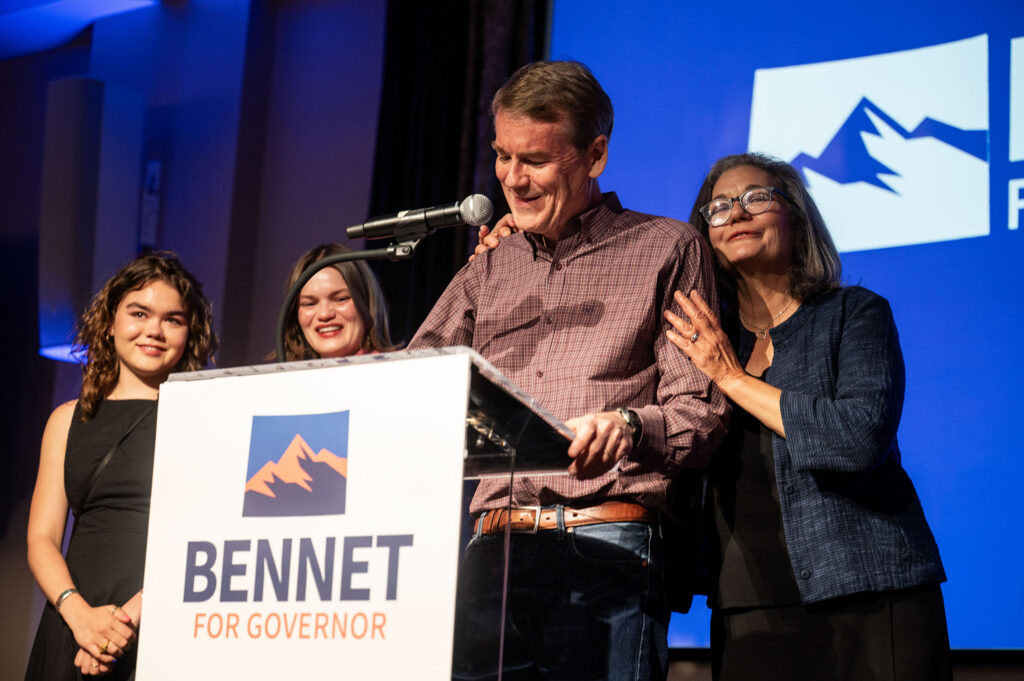
The CU poll, released Wednesday, found Democratic Gov. Jared Polis with a 16-point lead over Republican nominee Heidi Ganahl, 57% to 41%, with 2% saying they prefer someone else. In similar results, Democratic U.S. Sen. Michael Bennet leads GOP challenger Joe O’Dea, 56% to 42%, with 2% supporting another candidate.
In the prominent down-ballot contest for secretary of state, Democratic incumbent Jena Griswold holds a slightly narrower lead over Republican Pam Anderson, 54% to 43%, with 3% opting for another candidate.
All three Democrats hold wide leads among women, with Polis leading 63% to 35% among likely female voters, Bennet leading 62% to 36% in the same group, and Griswold ahead, 61% to 35%.
The survey, in its seventh year, polled a representative statewide sample of 800 Colorado residents from Oct. 11-19 using online interviews conducted for the academic organization by YouGov, a market research company. Pollsters said the margin of error for the statewide contests and ballot measures – based on a sample of likely voters – is plus or minus 4.42 percentage points, while the margin of error for the general population polled on the other questions is plus or minus 4.31 percentage points.
Of the likely voters polled, 46% said they identified as Democrats, including those who said they lean toward the party, and 38% identify as Republicans, including leaners, while 16% identify as “pure” independents who don’t lean toward either major party.
Polis and Bennet have consistently led their opponents in publicly released polls. Five nonpartisan surveys conducted in October showed Polis leading Ganahl by margins ranging from 13 to 18 points, according to the election data analysts at FiveThirtyEight.com. In the U.S. Senate race, the same site says six nonpartisan polls conducted in October found Bennet with leads ranging from 7 to 18 points.
A poll released Tuesday, conducted by Emerson College for The Hill and Denver’s Fox31, showed Polis up by 13 points over Ganahl, 54% to 41%. The same poll showed Bennet leading O’Dea by 8 points, 51% to 43%.
A handful of recent surveys conducted by GOP pollsters have shown tighter races, including an internal Trafalgar Group poll released by the Ganahl campaign on Monday that showed the Democrat leading by 8 points, 50% to 42%. Another Trafalgar Group poll released Wednesday showed O’Dea trailing Bennet by just 2 points, 46% to 48%.
The CU survey found broad support cutting across party lines for a trio of statewide ballot measures.
Proposition GG, which would require future ballot questions that involve the state’s individual income tax rate to include a table showing how the changes would affect taxpayers at various income levels, is supported by 64% of likely voters, with 13% opposed and 23% undecided, the poll found.
Proposition 125, to allow sales of wine at stores licensed to sell beer, is poised to pass, with 67% in favor and 20% opposed. Just 13% were undecided.
The closely watched Proposition FF, which would finance free meals for all public school students by limiting income tax deductions for high-income individuals, also appears on track to pass, with 64% support, though the pollsters noted that wording the question differently – leading with the tax increase, then mentioning the free meals – increased opposition by nearly 10 points, from 21% to 30%.
The CU survey also gauged Coloradans’ opinion on a range of political questions, with respondents expressing more confidence in Colorado’s election system than they have toward elections on a national level. The poll also found state residents sharply divided along partisan lines on elections and the economy.
Asked whether they feel elections would be conducted fairly and accurately, 71% agreed they would be in Colorado, while just 54% feel the same about elections nationally. For instance, fully 92% of self-identified Democrats said Colorado elections would be fair and accurate, but only 57% of self-identified Republicans agreed.
The same partisan split appeared on a question about the legitimacy of the 2020 presidential election. A majority of 63% of Coloradans agree Biden won enough votes to be elected, fair and square, with 95% of Democrats agreeing but only 34% of Republicans agreeing.
The FiveThirtyEight website gives YouGov a “B+” grade for historical accuracy and methodology, determining the company called races correctly 89% of the time across 455 recent surveys.



Democratic group aims Spanish-language TV ad at Gabe Evans in Colorado’s battleground 8th CD
Ernest Luning
ernest.luning@coloradopolitics.com
Updated 2 days ago
A national group tied to House Democratic leadership launched a six-figure Spanish-language TV ad in Colorado this week targeting Republican U.S. Rep. Gabe Evans and the GOP’s signature budget legislation. The 30-second spot is part of $15 million in new...
Judge dismisses lawsuit seeking records from Colorado Democratic group
Marianne Goodland
marianne.goodland@coloradopolitics.com
Updated 2 days ago
A lawsuit seeking to obtain records from Democratic lawmakers affiliated with a caucus has been thrown out by a Denver District Court judge. On July 17, Judge Ericka Englert dismissed the April lawsuit filed by progressive activist Derrick Blanton, who...

Right-to-natural-gas proposal in Colorado qualifies for ballot
Marissa Ventrelli
marissa.ventrelli@coloradopolitics.com
Updated 3 days ago
A citizen initiative that seeks to enshrine the right to natural gas has qualified for the November ballot, Colorado’s election office confirmed on Thursday. Petitions containing signatures for Initiative No. 177 were turned in to the Secretary of State’s Office for review...
What happens if voters pass Colorado’s two competing income tax measures?
Marianne Goodland
marianne.goodland@coloradopolitics.com
Updated 3 days ago
The battle between two competing ballot measures — one seeking to cap Colorado’s income tax rate, the other pushing for a tiered system depending on income levels — might come down to whichever ballot proposal gets one more vote. The...

National House Democrats add Colorado seats held by Lauren Boebert, Jeff Hurd to target list
Ernest Luning
ernest.luning@coloradopolitics.com
Updated 2 days ago
The national House Democrats’ campaign arm on Wednesday added the Colorado congressional district held by Republican U.S. Reps. Jeff Hurd and Lauren Boebert to the list of targeted seats the party believes are vulnerable in this year’s midterms. The Democratic...
Bennet settles campaign finance complaints, admits violating state law
Marianne Goodland
marianne.goodland@coloradopolitics.com
Updated 4 days ago
U.S. Sen. Michael Bennet’s gubernatorial campaign has agreed to pay a $7,433 fine for using his Senate campaign account to pay for gubernatorial campaign travel expenses. The July 31 settlement includes an admission by Bennet and his campaign that they...
Federal judge rejects DOJ bid to force Colorado to hand over voter information
Marissa Ventrelli
marissa.ventrelli@coloradopolitics.com
Updated 4 days ago
A U.S. district court judge has dismissed a lawsuit filed by the U.S. Department of Justice against Colorado Secretary of State Jena Griswold for refusing to provide the agency with personal voter information. Last December, the DOJ’s Civil Rights Division asked...

Group submits signatures for proposed Colorado graduated income tax
Marianne Goodland
marianne.goodland@coloradopolitics.com
Updated 5 days ago
The measure, which eliminates Colorado’s flat tax, is expected to raise $2 billion in new revenue The proposal to amend the Colorado constitution to change the state’s flat rate into a graduated income tax came in under the wire Monday,...

Democratic group maps out path to Colorado House and Senate supermajorities
Marissa Ventrelli
marissa.ventrelli@coloradopolitics.com
Updated 6 days ago
A national organization that works to elect Democrats to state legislatures has its sights on Colorado, unveiling a road map to establish a supermajority in both the House and Senate. Democrats have held a majority in the House since 2013...

Republican Victor Marx taps George Markert as his lieutenant governor pick in Colorado’s gubernatorial race
Ernest Luning
ernest.luning@coloradopolitics.com
Updated 1 week ago
Colorado Republican gubernatorial nominee Victor Marx named George Markert, a retired Marine colonel, as his running mate for lieutenant governor Friday morning, saying the former U.S. Senate candidate will bring “exceptional character, proven leadership and a lifetime of serving others”...
PREV
PREVIOUS
Judge rebuffs GOP candidate's request to be exempt from spending limits
A federal judge on Wednesday rejected a Republican candidate’s request to spend freely in the final days of the election, after he had inadvertently signed up for voluntary spending limits when he registered his candidacy. U.S. District Court Judge Nina Y. Wang refused to grant a preliminary injunction to Paul Archer of Centennial, who is […]
Colorado scientists use AI for improved wildfire forecasts
This model, depicting 2020’s East Troublesome Fire’s spread as viewed from Grand Lake, is the latest from a new AI driven modeling system known as WRF-Fire that the National Center for Atmospheric Research developed. NCAR scientists say the improved modeling system will increase their ability to predict wildfire paths, volatility and more by utilizing satellite imagery […]