

Appeals court finds Fremont County judge wrongfully excluded evidence of prison culture from trial

A Fremont County judge wrongly excluded expert testimony about prison culture from a criminal trial, including an inmate’s incentive not to “snitch,” the state’s Court of Appeals ruled last week.
Because the testimony would have cast doubt on the defendant’s confession to possessing contraband in prison, the appellate court ordered a new trial for Jeremy B. Marsden.
In reviewing Marsden’s case, the appellate judges relied heavily on the 1986 U.S. Supreme Court decision of Crane v. Kentucky. After a 16-year-old confessed to police to a multitude of unsolved offenses, including those where the details of the actual crime did not match up with the confession, the defense attempted to introduce testimony to explain why the teenager’s statements to police were unreliable.
Although the Kentucky state courts sided against the defendant, the Supreme Court held that the “physical and psychological environment” of a confession is relevant not only to the question of whether the confession is voluntary, but whether the defendant is guilty at all.
While Marsden was incarcerated in Cañon City in June 2018, his cellmate was giving a tattoo to another detainee, which is a prohibited activity. A corrections officer spotted them, removed the detainees who were performing the tattooing and searched the cell.
She found several contraband items on the side of the room for Marsden’s cellmate. On his side, the corrections officer located a scissors blade modified to resemble a knife, plus a handful of other sharp items. She confronted Marsden in a common area and asked him about the improvised knife.
Allegedly fearful of being labeled a snitch, Marsden took responsibility for the knife and said he used it to repair radios and televisions.
Marsden gave a total of four confessions to possessing the knife, although he changed his explanation for what the knife was used for. Reportedly, beginning the day after the incident, other inmates started yelling at Marsden to “keep it true” and “don’t rat.”
Prosecutors charged Marsden with possession of contraband. At trial, the government relied heavily on Marsden’s confession. However, the defense countered the confession was false because Marsden feared being labeled a snitch in prison. He reportedly had seen other inmates be assaulted for providing incriminating information against fellow detainees.
Marsden attempted to call Edwin Herndon as an expert witness. Herndon worked for 14 years as a criminal investigator within the corrections department, reportedly conducting over 1,100 investigations – 560 of which involved contraband.
Herndon was prepared to testify about the “inherent influences” within prisons that diminish the credibility of inmates’ statements. Prisoners can be more afraid of other detainees than they are of corrections officers, Herndon believed, and he would not trust the answers an inmate gives in front of other inmates. Statements made in Department of Corrections investigations are “inherently less credible” because of prisoners’ desire to avoid the label of “snitch.”
However, District Court Judge Lynette M. Wenner ruled Herndon could not testify, citing a “danger of confusion” to the jury and the delay the testimony would cause.
“I’m not finding that the culture of the DOC is relevant,” she said.
On appeal, the government argued Wenner properly excluded the testimony, likening it to prohibitions on expert statements that vouch for the credibility of sex assault victims.
But a three-judge panel for the Court of Appeals disagreed with that argument, noting Herndon’s testimony was not intended to comment on whether Marsden was telling the truth, but rather to educate jurors about the environment of Marsden’s confession.
“This testimony had at least some tendency to make it more probable that Marsden’s inculpatory statements were false – that he claimed ownership of the contraband due to fear of violent retaliation had he told the authorities that the contraband belonged to his cellmate and other inmates learned of his cooperation,” wrote Judge Ted C. Tow III in the Oct. 27 opinion.
Tow added that it was possible, had jurors heard the expert’s testimony, they would have acquitted Marsden of the contraband charge. Therefore, his inability to present evidence explaining the physical and psychological environment for his confession violated his constitutional right to present a complete defense, and the panel reversed Marsden’s conviction.
The case is People v. Marsden.


Federal judge green-lights civil trial against ex-Fort Collins DUI officer
Michael Karlik
michael.karlik@coloradopolitics.com
Updated 23 hours ago
A federal judge ruled on Thursday that Fort Collins’ former “DUI officer” will face a civil trial for allegedly investigating a motorist for impaired driving without any reasonable suspicion to do so. In recent years, several people arrested by Officer...

Colorado Supreme Court suspends Mesa County judge pending misconduct investigation
Michael Karlik
michael.karlik@coloradopolitics.com
Updated 1 day ago
The Colorado Supreme Court suspended Mesa County Court Judge Michael J. Grattan on Thursday amid a misconduct investigation. The court’s Sept. 10 order gave Grattan 21 days to explain why his paid suspension should not continue through the end of...
Colorado Supreme Court changes course, dismisses case about special district bonds
Michael Karlik
michael.karlik@coloradopolitics.com
Updated 22 hours ago
The Colorado Supreme Court declined on Friday to decide a dispute between a large-scale Commerce City development and the various districts financing it, after initially showing interest in the ongoing case. Colorado has roughly 2,800 special districts, which are local...

10th Circuit tosses GEO Group’s pretrial appeal in human trafficking lawsuit
Michael Karlik
michael.karlik@coloradopolitics.com
Updated 2 days ago
The Denver-based federal appeals court dismissed an attempt by The GEO Group on Wednesday to appeal a trial judge’s non-existent decision two months before the company is scheduled to face a civil trial over alleged trafficking violations at the Aurora...
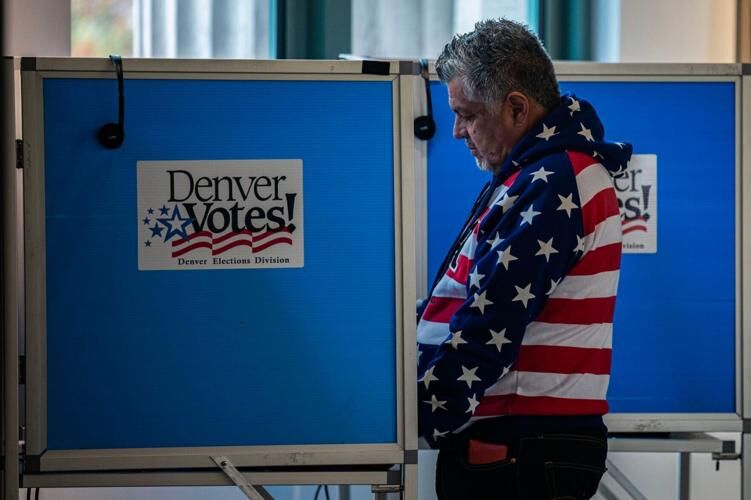
Denver sues Trump to block armed ICE agents from polling sites
Deborah Grigsby
deborah.smith@denvergazette.com
Updated 2 days ago
The city of Denver, along with several groups, sued the Trump administration Thursday, seeking to block U.S. Immigration and Customs Enforcement officers who are armed from polling sites during the upcoming midterm elections. In fact, there are no official orders...
Federal judge takes no action against ICE in Colorado after hearing about mistakes, not ‘blatant violations’
Michael Karlik
michael.karlik@coloradopolitics.com
Updated 20 hours ago
A federal judge declined to take action against U.S. Immigration and Customs Enforcement on Thursday after hearing that a pattern of alleged lawbreaking amounted to mistakes and a misunderstanding of the government’s position in court. For nearly a year, Colorado’s...
Colorado doctors, dentists challenge state law on gender‑transition services in new federal lawsuit
Marissa Ventrelli
marissa.ventrelli@coloradopolitics.com
Updated 17 hours ago
A group of Christian doctors and dentists has filed a federal lawsuit challenging a Colorado law they say requires them to provide gender‑transition services that conflict with their religious and ethical beliefs. The lawsuit, filed by the Christian Medical and...
Federal judge directs plaintiff to revise complaint alleging Denver officers’ constitutional violations
Michael Karlik
michael.karlik@coloradopolitics.com
Updated 21 hours ago
A federal judge directed a plaintiff to revise his allegations on Wednesday to more precisely state what two Denver officers and the city itself allegedly did to violate his constitutional rights by facilitating his prosecution for murder until prosecutors dropped...
Lawsuit challenges Douglas County commissioners’ ballot actions
Nicholas Fogleman
nicholas.fogleman@denvergazette.com
Updated 2 days ago
A new lawsuit against Douglas County commissioners seeks to invalidate the board’s intervention in efforts to expand the commission from three members to five and restore the original ballot language approved by more than 20,000 petition signers. The suit marks...
Federal judge explores new sanctions against ex-Colorado judicial discipline director
Michael Karlik
michael.karlik@coloradopolitics.com
Updated 2 days ago
A federal judge on Wednesday directed Colorado’s former judicial discipline director, for the third time this year, to explain why she should not sanction him for his latest conduct in his litigation against the state’s judiciary. Christopher S.P. Gregory, who served...
PREV
PREVIOUS
State Supreme Court rules judge properly barred defendant's wife from courtroom
Even though an Arapahoe County judge made no mention of longstanding U.S. Supreme Court precedent on courtroom closures when he decided to exclude a defendant’s wife from the majority of her husband’s criminal trial, Colorado’s highest court has decided, 6-1, the banishment was nevertheless proper. The Sixth Amendment guarantees criminal defendants a public trial, and […]

Colorado leaders mourn passing of House Minority Leader Hugh McKean
The news of House Minority Leader Hugh McKean’s death came as a shock to Colorado’s political community, which found itself in mourning on Sunday. McKean had attended a Republican rally in Loveland just on Saturday. In an outpouring of grief and disbelief, friends and colleagues paid tribute to McKean, a man they described as a […]