

How would Weiser, Bottoms, Bennet, Kirkmeyer address Colorado’s affordability problem? | Paula Noonan
It’s decision time in Colorado as primary election ballots hit mailboxes this week. Democrats will pick their candidates in every statewide race, and Republicans select candidates for governor and Attorney General. GOP operatives wanted to exclude unaffiliated voters from their selection, but U.S. District Judge Philip Brimmer knocked down that wish. The election ends June 30.
Democratic and Republican gubernatorial candidates have faced off in several debates, with Victor Marx, Republican for governor, ghosting most of them. A ghosting is a gaslighting. While Marx has ginned up $2.6 million in contributions to state Sen. Barbara Kirkmeyer’s $567,000 and to state Rep. Scott Bottoms’ $211, 000, he hasn’t shown his face where it counts, in front of voters. The prediction markets indicate Marx’s tough-guy coy strategy won’t work.
Both Kirkmeyer and Bottoms have actual legislative voting records on hundreds of bills. Marx has none of that. The final votes on bills represent the scale of difference between Bottoms and Kirkmeyer, a consideration for Republican primary voters as they decide which candidate can succeed in the general election.
Bottoms is on the very conservative side of the political scale and Kirkmeyer, as a member of the Joint Budget Committee responsible for cross-party decisions, seems more center-right. It’s a Democratic legislature, so bills at the final vote have mostly gotten through the Democrats’ gauntlet. Bottoms is about 30% to 70% Yes-to-No on final votes on these bills in the 2025 and 2026 General Assemblies. Kirkmeyer is the opposite, at about 70% to 30% Yes-to-No over the two years. To get a deeper sense of the scale, Democrats are typically above 90% in Yes votes.
The Rocky Mountain PBS debate sponsored by the CO Women’s Chamber of Commerce and The Women’s Foundation revealed one firmly-held, common position between Bottoms and Kirkmeyer: their commitment to holding the ground on TABOR no matter the economic conditions of the state.
Kirkmeyer emphasized her support for Medicaid and public-school funding, asserting both could and should be fully funded. She cites her Joint Budget Committee experience. She knows where programs and money are mismanaged, she says, and she’ll fix that to balance the state’s $1 billion budget shortfall.
Bottoms stated his commitment to funding childcare and health care. He blamed regulation and majority rule by Democrats for funding and program deficiencies placing barriers to women’s careers. Neither Kirkmeyer nor Bottoms described what they would do if deregulation and correcting mismanagement can’t produce enough money.
Both Democratic candidates want to “reform” TABOR. They are not looking to eliminate the public vote on taxes. They’re exploring ideas to remove the inflation and population growth caps that constrain revenue.
U.S. Sen. Michael Bennet is open-minded about a progressive income tax. Attorney General Phil Weiser believes changes to constitutional tax policy won’t occur until the public is brought along. He wants to conduct civic town halls on tax policy to listen to Coloradans about their ideas for changes to the 40-year-old TABOR budget buster.
Based on their commitments to fully funding Medicaid and public education and finding money for universal childcare, both candidates need to figure out a way to bring more cash into the system.

At the same time, all four candidates at the RMPBS debate want to make Colorado “affordable.” Housing is the principal issue on affordability, according to the candidates and everyone else. Kirkmeyer and Bottoms want to reduce housing costs by reducing regulations. Kirkmeyer refers to the increased cost of building housing brought on by the Public Utility Commission’s rule to exclude natural gas from new construction. Bottoms just speaks to general regulation brought on by Democrats, and he wants to get rid of all of it.
The question for the two Republicans is whether reducing regulations is sufficient to improving housing affordability with rising interest rates pushing buyers out of the market. Weiser agrees state and local government affect new housing costs with permit fees for starter homes set at the same rate as “mega mansions.”
Bennet wants to figure out a way to ensure Coloradans don’t have to spend more than 30% of their income on housing whether renting or owning. That will be a serious job. It may be easier to find ways to enable firefighters, law enforcement and teachers to live in the communities they serve, a priority for the Democrats. Weiser suggests down-payment support for these public servants.
Candidates will have to be more creative for housing solutions than reducing regulations and throwing pennies into a wish fountain. Weiser notes bringing modular homes to market can reduce construction cost by 20% and speed construction by 30%.
Reducing housing costs is especially challenging as the haves don’t want to give up what they have. The city of Lakewood recently voted down density housing that would theoretically relieve some cost pressure. Gov. Jared Polis has butted heads with cities and counties on the issue. Cities and counties, citing local control, have held their own.
The debates haven’t addressed the ongoing challenges around fully funding public education. That argument contains many taxing problems, especially what to do about property and income taxes. It’s also about our future.
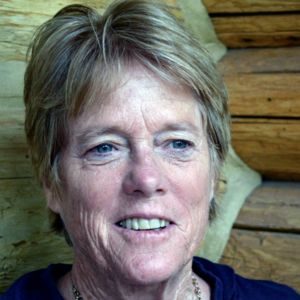
Paula Noonan owns CapitolCommons.ai, the state’s premier legislature tracking platform.

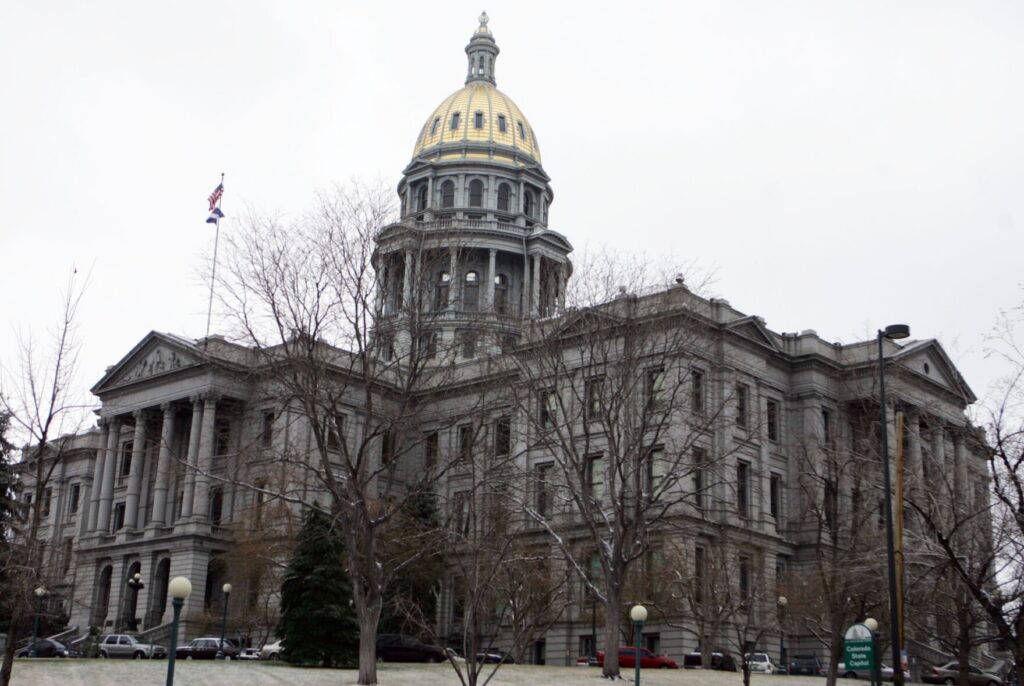
Colorado doctors, dentists challenge state law on gender‑transition services in new federal lawsuit
Marissa Ventrelli
marissa.ventrelli@coloradopolitics.com
Updated 2 hours ago
A group of Christian doctors and dentists has filed a federal lawsuit challenging a Colorado law they say requires them to provide gender‑transition services that conflict with their religious and ethical beliefs. The lawsuit, filed by the Christian Medical and...
Colorado ed department must up its competence to prevent waste, fraud, abuse | Paula Noonan
Paula Noonan
paula-noonan@coloradopolitics.com
Updated 5 hours ago
The Colorado Department of Education let $24 million fly from its checking accounts from January 2017 through June 2026 to CHE, aka Colorado Homeschool Enrichment. The details show how easily CHE and Education Re-Envisioned BOCES re-envisioned how to convert public...
Remember the injustice of forced unionism | GUEST COLUMN
Colorado Politics
colorado-politics@coloradopolitics.com
Updated 6 hours ago
By Mark Mix This Labor Day we celebrated the men and women whose hard work keeps the country running. But in Colorado, many of those same workers face a real threat: pay union dues or lose their job. That’s because...
Should we always blame voters for low civic participation in elections? | GUEST COLUMN
Roland Halpern
roland-halpern@coloradopolitics.com
Updated 16 hours ago
This year, like every election cycle, we hear the same complaints — enough citizens don’t vote. Voter turnout is too low. People are disengaged. Citizens are shirking their civic responsibility. If only voters cared more, democracy would work better. Fair...
Colorado joins lawsuit challenging changes to Endangered Species Act
Marissa Ventrelli
marissa.ventrelli@coloradopolitics.com
Updated 23 hours ago
Colorado once more joined a coalition of states challenging the Trump administration — this time on proposed rules regarding the Endangered Species Act. The pair of lawsuits challenge new rules made under Interior Secretary Doug Burgum, who earlier said the...

Boebert challenger Eileen Laubacher says she’ll ‘break through the noise’ in Democrat’s 1st TV ad
Ernest Luning
ernest.luning@coloradopolitics.com
Updated 3 hours ago
Democratic congressional candidate Eileen Laubacher says she’ll take a different approach than her opponent in a campaign ad released Wednesday that opens with a cacophonous series of videos featuring Republican U.S. Rep. Lauren Boebert. “Eileen’s had enough of the noise...

Lori Gimelshteyn on 3 ballot measures to ‘let kids be kids’ | The OpEdge Podcast
Tony Olivero
tony.olivero@gazette.com
Updated 6 hours ago
Lori Gimelshteyn — board member of Protect Kids Colorado and executive director of the Colorado Parent Advocacy Network — joins The OpEdge to discuss three measures headed to Colorado voters this November. Gimelshteyn tells host and investigative columnist Jimmy Sengenberger...
A path toward justice and public safety | PODIUM
Anthony Hartsook
ahartsockop@gmail.com
Updated 5 hours ago
Strangulation can be one of the most dangerous forms of assault; despite the lack of visible ailments it is accompanied by. Though strangulation leaves no broken bones, bruises or visible wounds, it is one of the strongest predictors of future...
From moving people to managing them | GUEST COLUMN
Michael Hancock
michael-hancock@coloradopolitics.com
Updated 2 days ago
Transportation policy used to have a fairly uncomplicated purpose: move people safely, efficiently and reliably. Build roads where people drive. Maintain bridges before they fail. Add capacity where growth overwhelms the system. Provide transit where it makes sense. Infrastructure was...
Disgraced ex-CBI analyst Missy Woods sentenced to prison in DNA scandal
Jenny Deam
jenny.deam@gazette.com
Updated 2 days ago
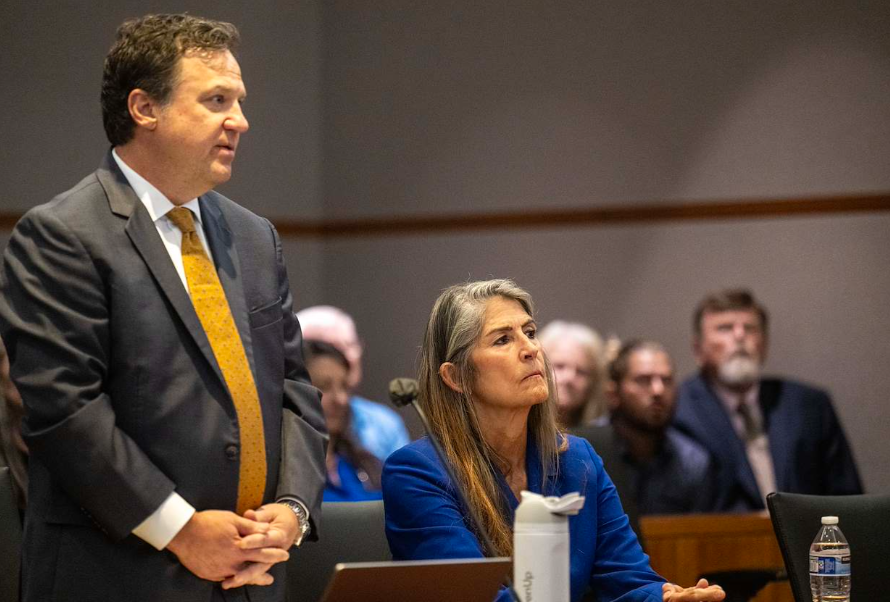
A Jefferson County district court judge on Tuesday sentenced a disgraced former Colorado Bureau of Investigation DNA analyst to a decade in prison for altering and deleting data in scores of criminal cases over several years. Jefferson County District Judge...
PREV
PREVIOUS

The new Trustees Report is a wake-up call for Congress | GUEST COLUMN
By Sara Schueneman Every year, the Social Security Trustees Report provides an important snapshot of the long-term outlook for one of America’s most popular and important initiatives. This year’s report sends a clear message: Congress needs to act. The latest projections show Social Security’s Trust Fund reserves are expected to be depleted by 2034. That […]

Bennet campaign finance case delayed again as Colorado Elections Division amends complaint
A campaign‑finance complaint alleging that U.S. Sen. Michael Bennet’s Senate committee improperly paid for travel tied to his gubernatorial bid won’t get a public hearing until after the June 30 primary. The latest development followed months of delays and a late‑May amended filing by a state election office. Four complaints have been filed against the […]