

State Supreme Court rules judge properly barred defendant’s wife from courtroom

Even though an Arapahoe County judge made no mention of longstanding U.S. Supreme Court precedent on courtroom closures when he decided to exclude a defendant’s wife from the majority of her husband’s criminal trial, Colorado’s highest court has decided, 6-1, the banishment was nevertheless proper.
The Sixth Amendment guarantees criminal defendants a public trial, and the U.S. Supreme Court has recognized the purposes behind the constitutional protection: It reminds prosecutors and judges of their responsibility to the defendant, and discourages perjury from witnesses. Colorado’s Supreme Court has further noted that the presence of a defendant’s family members in particular reminds the trial participants of their obligation to treat the defendant fairly.
The question for the state’s justices was whether excluding Yolanda Cruse from the courtroom where her husband, Christopher Nicholas Cruse, and his co-defendant, Terrel Shameek Turner, were on trial amounted to an unconstitutional closure of the courtroom.
Because it was reasonable for the trial judge to bar Yolanda Cruse after she caused a disruption, the majority concluded there was no Sixth Amendment violation.
“Jury trials are fragile enough without loose cannons,” wrote Justice William W. Hood III in the Oct. 31 opinion.
Hood conceded District Court Judge Ben L. Leutwyler, in excluding Cruse, did not reference the U.S. Supreme Court’s 1984 ruling in Waller v. Georgia, which laid out specific factors for trial judges to consider when deciding whether to close a courtroom to one or more people.
Justice Richard L. Gabriel, writing in dissent, worried the Colorado Supreme Court’s majority had undermined the Sixth Amendment’s protections and the Waller decision by looking the other way on Leutwyler’s failure to apply the relevant factors.
The trial judge “does not appear to have recognized that Waller even applied in this case, much less made any findings – explicit, implicit, or otherwise – under Waller,” Gabriel wrote.
Cruse and Turner stood trial in 2017 for the robbery of a marijuana dispensary where Cruse worked. On the third morning, the prosecutor informed Leutwyler that Yolanda Cruse had been arrested for “an encounter” with a witness and a victim coordinator in the hallway outside the courtroom. The prosecutor explained Cruse would have a “mandatory protection order” barring her from any contact with the victim advocate and, consequently, from being in the courtroom.
Christopher Cruse’s attorney objected to excluding Yolanda Cruse, citing the Sixth Amendment’s public trial guarantee. Turner’s lawyer declined to take a position due to a lack of information about the incident.
Leutwyler read Yolanda Cruse’s arrest affidavit, believed there was probable cause of a crime and ordered her excluded from the courtroom for the remainder of the trial.
“Ms. Cruse has forfeited her right to be present in this trial because she has interfered with the orderly presentation of the evidence,” Leutwyler said. “The court finds that I have an obligation to ensure a fair trial for all parties, and that includes ensuring the safety of all participants in the trial.”
Yolanda Cruse was not present for three-and-a-half days of trial, encompassing the testimony of 15 witnesses, the defense’s entire presentation, closing arguments and the verdict. The jury found Turner and Christopher Cruse guilty.
On appeal, the Court of Appeals noted the state Supreme Court had recently joined a majority of other states in recognizing the exclusion of a single person from a trial, known as a partial courtroom closure, can violate the Sixth Amendment rights of a defendant. Under the Waller ruling, Leutwyler needed to analyze whether the prosecution had an “overriding interest” in closing the courtroom, whether excluding Yolanda Cruse from the remainder of the trial was as narrow a solution as possible and whether any alternatives existed.
A three-judge panel for the appellate court concluded Leutwyler had not done so.
The lack of any information about the original hallway encounter involving Yolanda Cruse, wrote Chief Judge Gilbert M. Román in Turner’s appeal, “does not support a conclusion that wife’s exclusion was for cause and necessary to maintain courtroom decorum.”
During oral arguments in the cases earlier this year, the justices grappled with how to balance the duty of trial judges to quash disruptions while at the same time honoring the procedural requirements of Waller.
“I worry about taking away any control or authority from the trial court judge because control of the courtroom is paramount,” said Justice Carlos A. Samour Jr.
Ultimately, the majority reached a compromise position. It rejected the government’s argument that excluding a disruptive spectator “for cause” should not require judges to examine the Waller factors. A trial judge is permitted to address an immediate threat and restore order, Hood explained, but an analysis of the Waller factors is mandatory.
Examining the evidence, the Supreme Court’s majority believed Leutwyler’s actions complied with Waller.
A trial judge “shouldn’t have to wonder whether a party who has allegedly exhibited such volatility might do so again in a way that could endanger or distract other trial participants,” Hood wrote. “And it is of little consequence that the encounter occurred in the hallway just outside the courtroom rather than in the courtroom itself. The same concerns exist.”
Hood, a former trial judge in Denver, was joined in his opinion by two of the three other former trial judges on the court – Samour and Justice Maria E. Berkenkotter. Chief Justice Brian D. Boatright, a former trial judge in Jefferson County, wrote separately to advocate for giving judges even more authority to handle disruptions.
“When trial judges exclude people from the courtroom for their own conduct, that exclusion is not a closure that implicates the Sixth Amendment or Waller,” Boatright wrote. He believed it was “unrealistic and unnecessary” to require judges to address the Waller factors for clear instances of courtroom disruption.
“To me, when a spectator threatens a witness, the trial court shouldn’t have to conduct a mini-trial – it should exclude the spectator and move the real trial forward,” he added.
Gabriel, in his dissent, reminded his colleagues that the Supreme Court did not actually know what Yolanda Cruse had done in the hallway because there was no detailed description in the court record. Nor was any protection order in place at the time Leutwyler made his ruling.
Although Leutwyler had concluded Cruse’s behavior interfered with the presentation of evidence, Gabriel found it unclear what facts he had relied upon.
“Indeed, it would appear that, under the majority’s rationale, any allegation by a prosecutor that a witness misbehaved toward another witness, whether inside or outside a courtroom, could, in the trial court’s discretion, potentially justify the total exclusion of the misbehaving witness from the entirety of a trial,” he wrote, “regardless of any other facts and in spite of the importance of the Sixth Amendment right to a public trial.”
The cases are People v. Turner and People v. Cruse.


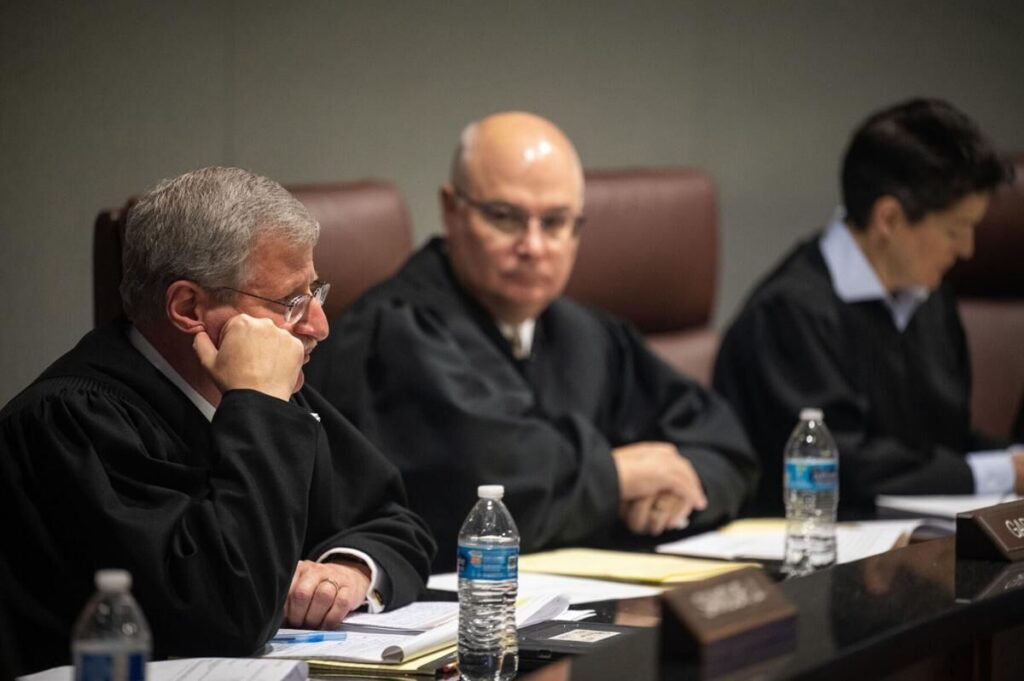
Colorado Supreme Court concerned about police overreach in interrogations
Michael Karlik
michael.karlik@coloradopolitics.com
Updated 7 hours ago
Some members of the Colorado Supreme Court appeared hesitant on Tuesday to endorse the ability of police to interrogate a suspect after they have obtained a court order authorizing only the collection of physical evidence. Under Colorado’s criminal rules, law...
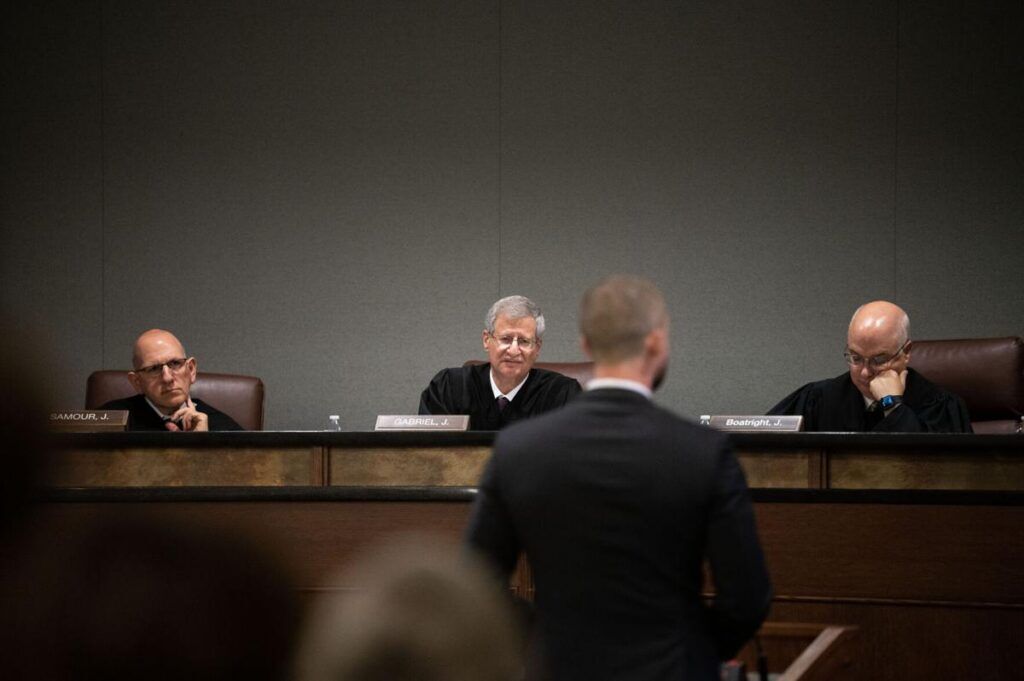
Colorado Supreme Court considers new requirement for leaving-the-scene convictions
Michael Karlik
michael.karlik@coloradopolitics.com
Updated 8 hours ago
In 2006, the Colorado Supreme Court ruled that leaving the scene of an accident resulting in serious injury is a “strict liability” offense, meaning a person is guilty solely through their conduct, without the need for prosecutors to prove the...
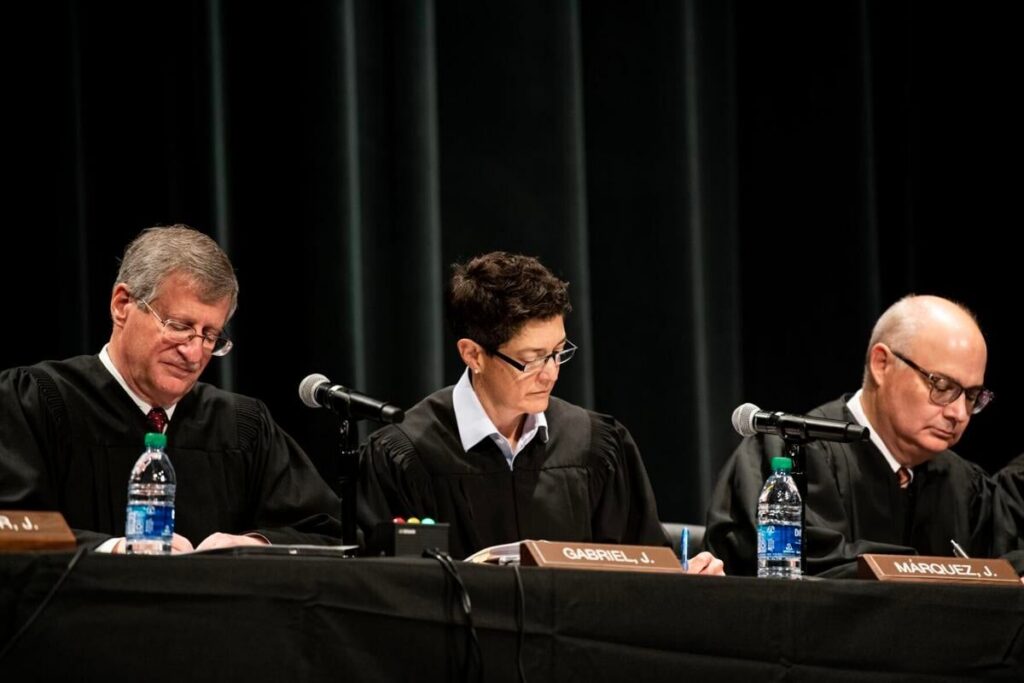
Colorado Supreme Court weighs trans rights case involving Children’s Hospital and federal threats
Michael Karlik
michael.karlik@coloradopolitics.com
Updated 1 day ago
Some members of the Colorado Supreme Court expressed discomfort on Tuesday with having to decide whether to order Children’s Hospital Colorado to resume providing certain services to transgender children, which could trigger a “death sentence” if the federal government imposes...
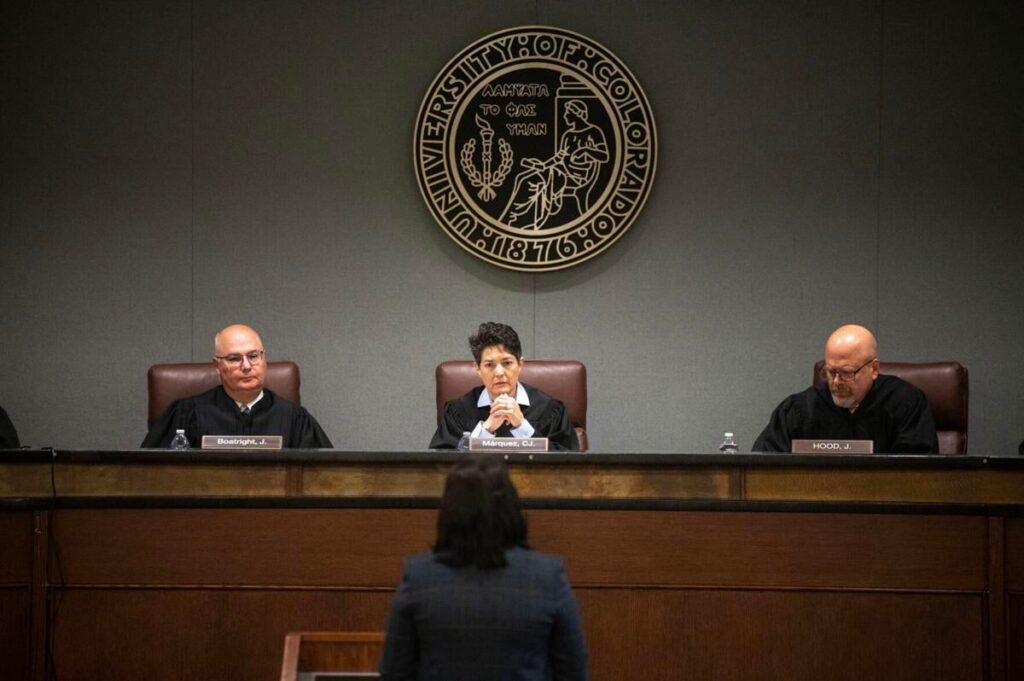
Colorado justices weigh constitutionality of unique disclosure requirement for ballot measures
Michael Karlik
michael.karlik@coloradopolitics.com
Updated 1 day ago
Members of the Colorado Supreme Court considered on Tuesday whether a unique feature of the state’s campaign finance system categorically violates the First Amendment by requiring the disclosure of a ballot measure committee’s legal representative on advertisements. No on EE...

Colorado justices block injured plaintiff from suing, despite alleged concealment by Manitou Springs
Michael Karlik
michael.karlik@coloradopolitics.com
Updated 2 days ago
The Colorado Supreme Court ruled on Monday that a woman injured on a Manitou Springs sidewalk could not sue the allegedly responsible entity, the city of Colorado Springs, even though she did not learn until too late of an agreement...
Divided Colorado Supreme Court opens door to experts’ views on children’s truthfulness
Michael Karlik
michael.karlik@coloradopolitics.com
Updated 1 day ago
The Colorado Supreme Court ruled on Monday that experts may, in certain situations, tell jurors whether child witnesses exhibited signs of being coached by adults, without running afoul of the general prohibition on witnesses testifying about the truthfulness of other...

State Supreme Court to hold oral arguments, federal judges find fault with bond hearings | COURT CRAWL
Michael Karlik
michael.karlik@coloradopolitics.com
Updated 2 days ago
Welcome to Court Crawl, Colorado Politics’ roundup of news from the third branch of government. The state Supreme Court will resume hearing oral arguments tomorrow, plus some federal judges are raising the alarm about immigration judges’ handling of bond hearings....
Douglas County seeks state Supreme Court review in open meeting case
Nicholas Fogleman
nicholas.fogleman@denvergazette.com
Updated 2 days ago
The Douglas County Board of Commissioners intends to petition the Colorado Supreme Court to review a recent court decision that found the board had violated the Colorado Open Meeting Law. The case stems from 11 “closed, unnoticed” meetings held by...
10th Circuit provides guidance on police searches of cloud-based data
Michael Karlik
michael.karlik@coloradopolitics.com
Updated 5 days ago
The Denver-based federal appeals court provided guidance to law enforcement agencies on Monday for ensuring that searches of cloud-based accounts comply with the Fourth Amendment’s requirements. A three-judge panel of the U.S. Court of Appeals for the 10th Circuit noted...
Federal judge releases man after 2 immigration judges disobey order
Michael Karlik
michael.karlik@coloradopolitics.com
Updated 5 days ago
A federal judge released a man from immigration detention on Thursday after two different immigration judges disobeyed his order in the same case. “At this point, the Court has granted Respondents two bites at the apple to prove detention of...
PREV
PREVIOUS

Colorado's rental assistance program to no longer accept applications
Colorado’s temporary short-term emergency rental assistance program will no longer accept applications after 11:59 p.m. on Nov. 15. The program has used almost all the federal funds received through acts of Congress, according to a press release. While applications for the program will cease in just two weeks, funding will continue to be payed to […]

Appeals court finds Fremont County judge wrongfully excluded evidence of prison culture from trial
A Fremont County judge wrongly excluded expert testimony about prison culture from a criminal trial, including an inmate’s incentive not to “snitch,” the state’s Court of Appeals ruled last week. Because the testimony would have cast doubt on the defendant’s confession to possessing contraband in prison, the appellate court ordered a new trial for Jeremy […]