

Appeals court reverses convictions after El Paso judge denied fair trial to defendant

An El Paso County judge misapplied the law and allowed harmful information to be heard at the defendant’s trial, Colorado’s second-highest court concluded last week in reversing the convictions of Israel Santillan Lopez.
Further, the prosecution acknowledged Lopez was correct that District Court Judge Marcus Henson also omitted a key element of the crime of felony menacing when he instructed the jury. But because the Court of Appeals sided with Lopez for other reasons, it did not address the faulty instruction.
In February 2018, a judge issued a protection order against Lopez preventing him from contacting or harassing his girlfriend. Nevertheless, the two signed a lease in July of that year and moved into an apartment together. In October 2018, Lopez asked the girlfriend to move out.
On Oct. 10, the girlfriend became upset about a household issue and the verbal fight escalated into a physical one. According to her, Lopez dragged her, strangled her, punched and hit her and threatened to kill her while holding a shotgun. She lost consciousness two or three times and suffered a broken jaw.
In Lopez’s telling, the girlfriend attacked him first. She tried to shoot him with his shotgun, but he wrestled it from her. The girlfriend fled and Lopez also sustained injuries.
Prosecutors charged Lopez with several offenses, including assault, menacing, violating a protection order and possession of a weapon by a previous offender.
The defense attempted to bifurcate the trial, meaning the jury would first decide the outcome of the assault and menacing offenses, then it would hear about the protection order and weapon charges. Lopez’s attorneys argued that if jurors heard about Lopez being prevented from contacting the girlfriend or having a prior conviction, they could conclude he was more likely to commit the serious offenses because he had a bad character.
Also, they added, the presence of a protection order was not at all related to whether Lopez committed menacing or assault.
Although Henson agreed to separate the weapon possession charge from the others, he said he felt obligated to keep the remaining offenses together.
“There is obviously some prejudice” to Lopez, he acknowledged before denying the request.
Lopez’s jury delivered a mixed verdict, convicting him of the lesser offense of second-degree assault and also of violating the protection order. Prosecutors dismissed the weapon charge and the jury never considered it.
On appeal, Lopez again argued Henson should have bifurcated the protection order charge because Colorado law and the criminal rules of procedure permit courts to do so when “justice so requires.” This was such a case, he maintained, because jurors were allowed to hear that a judge had already deemed Lopez a danger to his girlfriend by issuing the protection order.
The government defended Henson’s handling of the issue, albeit by relying on a legal doctrine that the Colorado Supreme Court has since repealed. The Colorado Attorney General’s Office also argued the jury’s acquittal on some charges and conviction on others showed jurors did, in reality, know how to keep evidence separate as instructed.
The Court of Appeals disagreed. A three-judge panel noted Henson himself had admitted there was “some prejudice” to Lopez by lumping the menacing and assault charges with the violation of a protection order.
“This suggests that the court recognized that because the protection order implicates prior criminality against the same victim in this case, evidence of the protection order is inherently prejudicial and likely to be improperly used as character evidence,” wrote Judge Terry Fox in the Sept. 15 opinion.
The panel was also unconvinced the jurors could keep the evidence and legal theories for the protection order separated from the other offenses. Fox noted the prosecutor told jurors Lopez “wasn’t even supposed to be in contact with (the victim) when he gave her the beating of her life.”
Because the protection order was legally irrelevant to whether Lopez injured his girlfriend, the comments “were highly prejudicial,” Fox added.
Lopez also contended his conviction for felony menacing with the shotgun could not stand because Henson actually gave the jury instructions for misdemeanor menacing – leaving out the key element for a felony that Lopez use a deadly weapon. The attorney general’s office agreed this was a mistake, and asked the appeals court to give prosecutors the choice of trying Lopez again or simply letting Lopez stand convicted of a misdemeanor.
The appellate panel did not address the menacing instruction, as it agreed to reverse Lopez’s convictions based on the bifurcation error alone.
The case is People v. Lopez.

10th Circuit finds no fair housing violation by Littleton landlord for worker’s alleged rape of tenant
Michael Karlik
michael.karlik@coloradopolitics.com
Updated 15 hours ago
The Denver-based federal appeals court concluded on Monday that Littleton’s housing authority could not be held liable for a maintenance worker’s alleged rape of a tenant, as the worker’s employment did not provide any special access to the victim. A...
Denver detox center did not violate man’s rights with 10-hour hold, 10th Circuit says
Michael Karlik
michael.karlik@coloradopolitics.com
Updated 2 days ago
The Colorado-based federal appeals court concluded on Tuesday that Denver’s detoxification facility did not violate a man’s rights by holding him against his will for 10 hours until his blood alcohol content was projected to reach zero. Unusually, Brian Garrett’s...

Federal judge clarifies ex-GOP treasurer candidate’s burden to prove defamation claims
Michael Karlik
michael.karlik@coloradopolitics.com
Updated 2 days ago
A federal judge clarified last week that businessman and former Republican statewide candidate Brian Watson will need to surmount a higher hurdle in proving his claim that a party guest’s alleged description of him as a “criminal” amounted to defamation....
Colorado board permits state to appeal injunction against arthritis drug price cap
Marissa Ventrelli
marissa.ventrelli@coloradopolitics.com
Updated 2 days ago
A Colorado board voted Friday to allow the Attorney General’s Office to fight an injunction against a price cap on a drug that treats arthritis. A U.S. district court judge had granted the company Amgen a preliminary injunction, temporarily blocking...

Federal judge rejects constitutional claims, ‘expressions of hatred’ by Club Q defendant
Michael Karlik
michael.karlik@coloradopolitics.com
Updated 3 days ago
A federal judge rejected a defendant’s claims that he received constitutionally ineffective assistance of counsel while facing federal hate crime and firearms charges for murdering five people at a Colorado Springs LGBTQ nightclub in 2022. Anderson Lee Aldrich is serving...

Divided 10th Circuit upholds Colorado congestion fee on car rentals
Michael Karlik
michael.karlik@coloradopolitics.com
Updated 2 days ago
The Denver-based federal appeals court concluded on Monday that a 2024 “congestion impact fee” that lawmakers imposed on short-term vehicle rentals did not conflict with a federal prohibition on certain airport-related charges. Beginning in the 1970s, Congress began limiting the...
10th Circuit dismisses woman’s lawsuit following 10-year attempt to undo restraining order
Michael Karlik
michael.karlik@coloradopolitics.com
Updated 6 days ago
The Denver-based federal appeals court rejected a woman’s challenge on Friday to a restraining order imposed on her more than a decade ago, finding that she cannot credibly claim she will be prosecuted for violating the restraining order through her...
10th Circuit dismisses woman’s lawsuit following 10-year attempt to undo restraining order
Michael Karlik
michael.karlik@coloradopolitics.com
Updated 6 days ago
The Denver-based federal appeals court rejected a woman’s challenge on Friday to a restraining order imposed on her more than a decade ago, finding that she cannot credibly claim she will be prosecuted for violating the restraining order through her...
Colorado equal pay law does not require plaintiffs to allege gender-based retaliation, appeals court finds
Michael Karlik
michael.karlik@coloradopolitics.com
Updated 5 days ago
The 2019 Colorado law aimed at rooting out pay discrimination on the basis of sex does not require a plaintiff to allege their employer retaliated against them for sex- or gender-related reasons, the state’s second-highest court decided on Thursday. Lawmakers...
Hudson faces lawsuit over ICE detention facility
Nicole C. Brambila
nicole-c-brambila@coloradopolitics.com
Updated 6 days ago
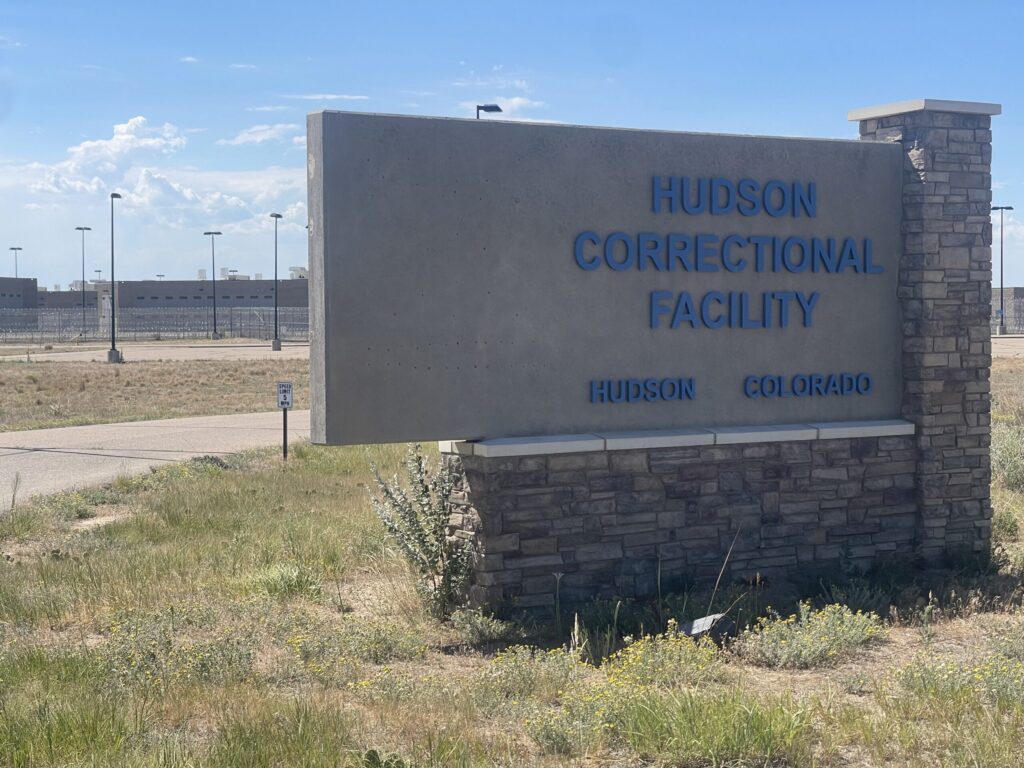
A nonprofit organization filed a lawsuit against the Town of Hudson Wednesday, challenging plans to reopen a former federal prison in the town as a U.S. Immigration and Customs Enforcement detention facility. Together Colorado, along with Janet E. Carlson, filed...
PREV
PREVIOUS

Cory Gardner endorses GOP congressional candidate Erik Aadland in Colorado's 7th CD
Republican congressional candidate Erik Aadland won a formal endorsement on Monday from former U.S. Sen. Cory Gardner, who called the Army veteran “exactly who we need to bridge the divides and fight for our values.” A former project manager for an oil and gas company and first-time candidate from Pine, Aadland is running against state […]

Appeals court grants new trial to man who represented self in Adams County
Although the prosecution, the trial judge and even one of the defendant’s own lawyers believed Scott Daniels Barkley was manipulating his criminal case, the state’s Court of Appeals overturned his convictions last week after taking issue with Barkley’s representation of himself at trial. There is a constitutional right to counsel in criminal cases, but a […]