

Another criminal conviction reversed in Adams County due to judge’s improper comments
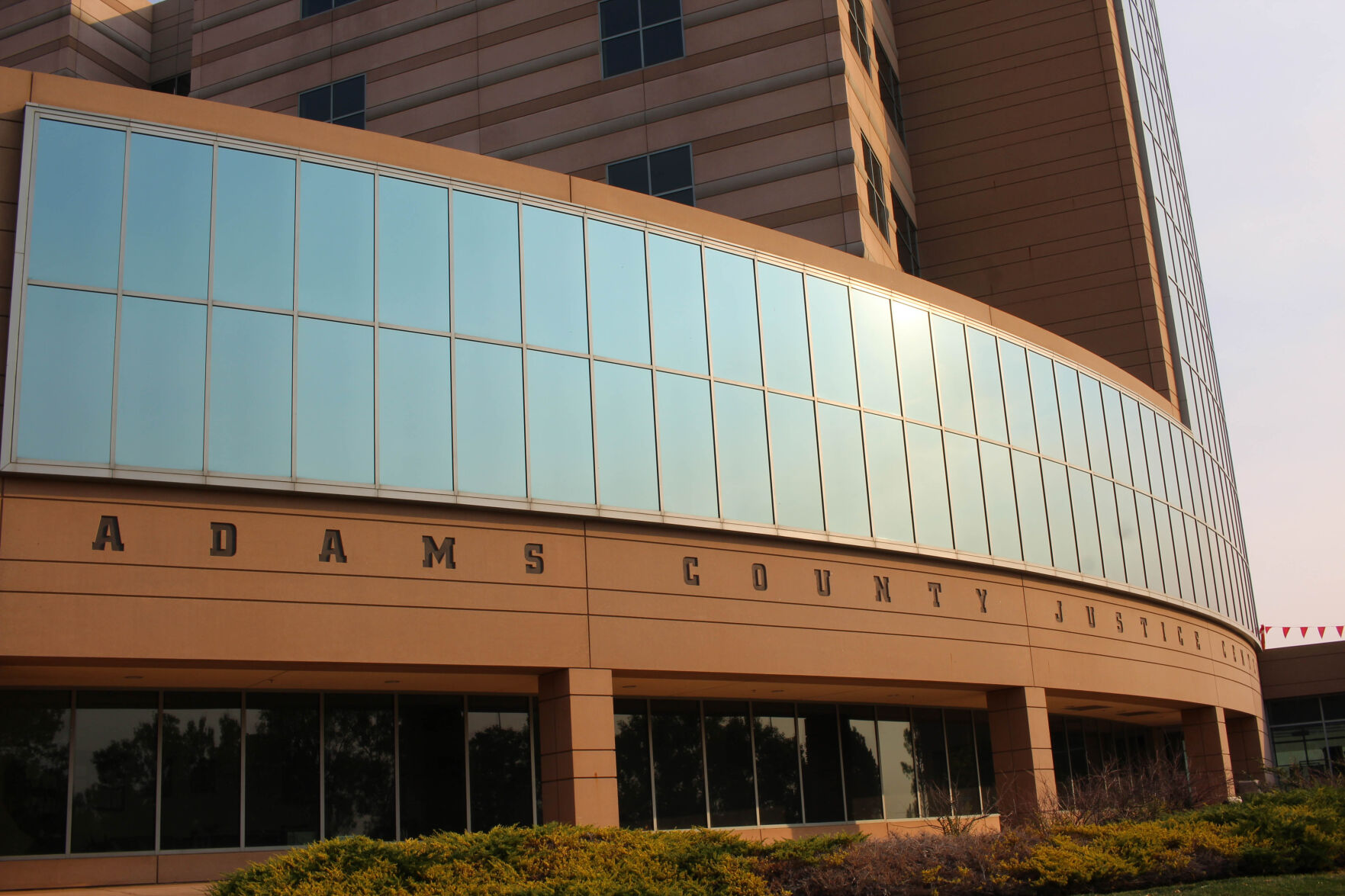
For the fourth time in six months, a criminal conviction has been overturned because an Adams County judge erroneously explained the concept of reasonable doubt to jurors in a manner that lowered the prosecution’s burden of proof.
Last week, the state’s Court of Appeals ordered a new trial for Joshua W. Moore because of comments District Court Judge Robert W. Kiesnowski Jr. made during jury selection while attempting to describe reasonable doubt in plain English.
In more than 30 cases since 2010, overwhelmingly from Adams County, the Court of Appeals generally upheld defendants’ convictions while advising trial judges not to freelance with their own analogies for reasonable doubt. Then in January of this year, the Colorado Supreme Court issued its decision in Tibbels v. People, reversing the defendant’s conviction and laying down a new rule for when judges’ illustrations cross the line.
In Tibbels, Kiesnowski also presided over the criminal trial and read jurors the legal definition of reasonable doubt, which involves a doubt that “would cause reasonable people to hesitate to act in matters of importance to themselves.”
“Now, you’re all sitting there saying what the hell does that mean,” Kiesnowski continued. He then provided an example of a family seeking to buy a new home and encountering their “perfect” house. But in the basement, the family sees a crack in the foundation of the home from floor to ceiling.
“And structurally it’s significant. Are you going to buy that house?” Kiesnowski asked. One juror responded in the negative.
“OK. You’ve got a reason,” the judge replied. “And that’s causing you to hesitate, causing you to pause with going forward with a home purchase. This is my example of reasonable doubt.”
The defendant, Ernest Joseph Tibbels, appealed his conviction, claiming Kiesnowski’s analogy reduced the prosecution’s burden of proof to find him guilty. The Supreme Court agreed, explaining that Kiesnowski had first called the legal definition of reasonable doubt into question, then used his analogy to define reasonable doubt as “structurally significant.” Finally, he implied the jury should begin with the assumption Tibbels was guilty, only to acquit him if they discovered a “crack in the foundation” of the case.
During Moore’s trial, Kiesnowski repeated almost word-for-word the reasonable doubt illustration he used in Tibbels’ case. Moore appealed his vehicular eluding and related convictions to the Court of Appeals, which upheld the judgment in November 2019. A three-judge panel at the time called Kiesnowski’s analogy improper and “obvious error,” but did not believe his comments undermined the fairness of Moore’s trial and cast doubt on the guilty verdict.
Moore appealed to the Supreme Court, which held the request for review until it could resolve the Tibbels case. After its ruling earlier this year, the Supreme Court returned Moore’s case to the Court of Appeals for re-examination.
Despite the almost identical nature of the two cases, the Colorado Attorney General’s Office argued against overturning Moore’s convictions, saying Kiesnowski had reminded the jury following his analogy that Moore was innocent until proven guilty. The Court of Appeals was unpersuaded.
“(A)dvising the jury that the presumption of innocence remains with the defendant until he is proven guilty beyond a reasonable doubt does not define reasonable doubt for the jury or explain how to apply it,” wrote Judge David J. Richman in the June 30 opinion. “Thus, we conclude that there is a reasonable likelihood that the jury was left with the impression that the judge’s crack-in-the-foundation illustration accurately explained the concept of ‘reasonable doubt,’ when, of course, it did not.”
In the wake of the Tibbels decision, the Court of Appeals reversed two other convictions out of Adams County because of judges’ improper reasonable doubt analogies. Including Tibbels, Moore’s appeal marks the fourth reversal of a criminal conviction in six months as a result of the same error by Adams County judges.
A spokesperson for Brian Mason, the district attorney for the 17th Judicial District, offered no comment on the trend. Colorado Politics asked Chief Judge Don Quick whether he believed judges in his jurisdiction have now ceased the practice of giving erroneous reasonable doubt illustrations to jurors.
“The bench in the 17th Judicial District discussed the Tibbels decision when it came out last January and have been complying with its instructions,” Quick responded in an email.
The case is People v. Moore.

10th Circuit dismisses woman’s lawsuit following 10-year attempt to undo restraining order
Michael Karlik
michael.karlik@coloradopolitics.com
Updated 1 day ago
The Denver-based federal appeals court rejected a woman’s challenge on Friday to a restraining order imposed on her more than a decade ago, finding that she cannot credibly claim she will be prosecuted for violating the restraining order through her...
10th Circuit dismisses woman’s lawsuit following 10-year attempt to undo restraining order
Michael Karlik
michael.karlik@coloradopolitics.com
Updated 1 day ago
The Denver-based federal appeals court rejected a woman’s challenge on Friday to a restraining order imposed on her more than a decade ago, finding that she cannot credibly claim she will be prosecuted for violating the restraining order through her...
Colorado equal pay law does not require plaintiffs to allege gender-based retaliation, appeals court finds
Michael Karlik
michael.karlik@coloradopolitics.com
Updated 12 hours ago
The 2019 Colorado law aimed at rooting out pay discrimination on the basis of sex does not require a plaintiff to allege their employer retaliated against them for sex- or gender-related reasons, the state’s second-highest court decided on Thursday. Lawmakers...
Hudson faces lawsuit over ICE detention facility
Nicole C. Brambila
nicole-c-brambila@coloradopolitics.com
Updated 2 days ago
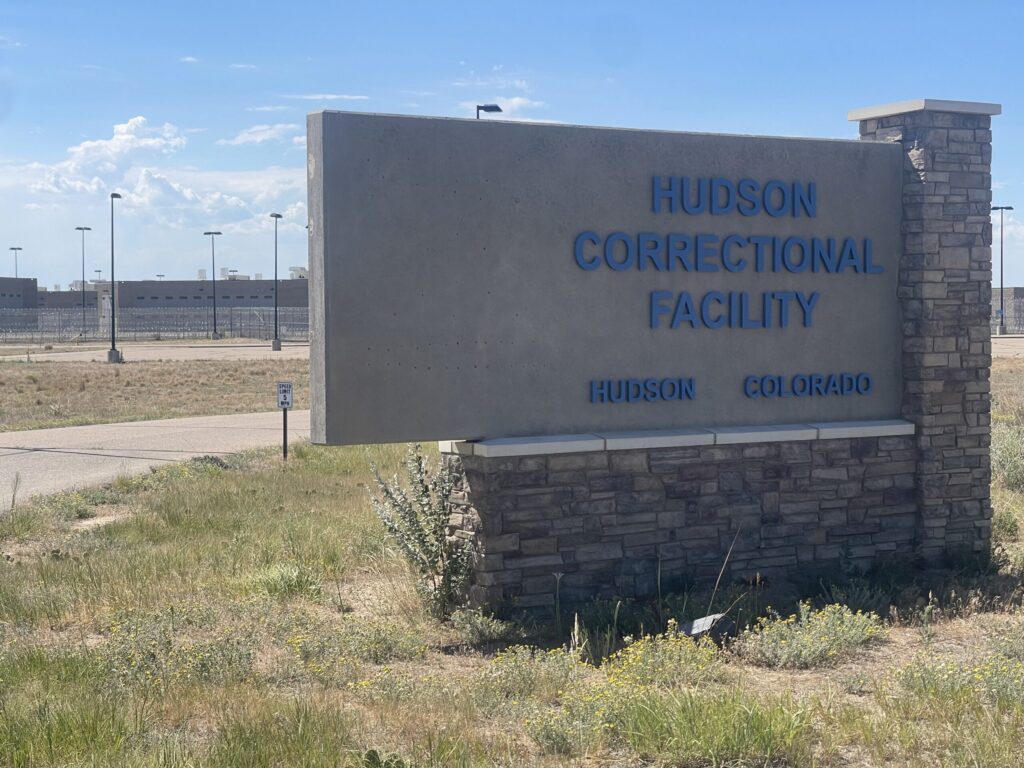
A nonprofit organization filed a lawsuit against the Town of Hudson Wednesday, challenging plans to reopen a former federal prison in the town as a U.S. Immigration and Customs Enforcement detention facility. Together Colorado, along with Janet E. Carlson, filed...
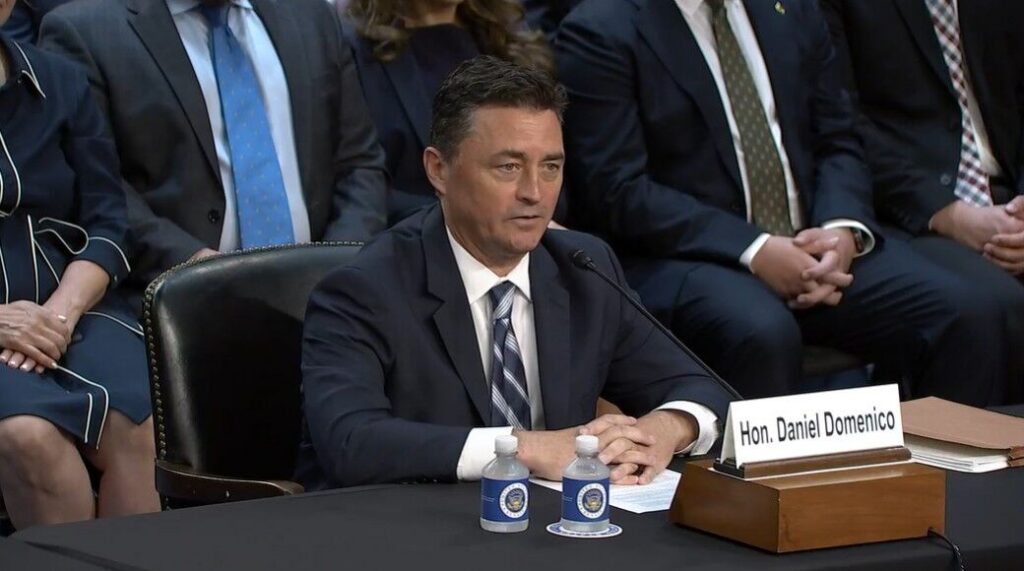
Senate committee advances Trump’s 10th Circuit nominee, as Domenico responds to questions about delays
Michael Karlik
michael.karlik@coloradopolitics.com
Updated 2 days ago
The U.S. Senate Judiciary Committee advanced President Donald Trump’s nominee to the Denver-based federal appeals court on Thursday by a party-line vote of 12-10. U.S. District Court Judge Daniel D. Domenico, who was Trump’s first-term appointee to Colorado’s federal trial...
Colorado justices to hear embryonic donation dispute
Michael Karlik
michael.karlik@coloradopolitics.com
Updated 2 days ago
The Colorado Supreme Court announced on Monday that it will decide whether lower court judges properly applied its framework for adjudicating disputes over the fate of pre-embryos, in which one person wants to use them to become a parent and...

Isolation, emotion, persona: Colorado judicial programming prepares people for life on the bench
Michael Karlik
michael.karlik@coloradopolitics.com
Updated 2 days ago
As a trial judge and now as a member of the Colorado Supreme Court, Justice Carlos A. Samour Jr. has heard the view that being a judge is isolating. “In neither court have I felt isolated. I’ve always interacted a...

Federal judge dismisses Colorado county sheriff’s challenge to law limiting immigration cooperation
Michael Karlik
michael.karlik@coloradopolitics.com
Updated 12 hours ago
A federal judge dismissed a challenge from Mesa County Sheriff’s Office leaders last week to a Colorado law limiting public employees’ cooperation with immigration authorities, concluding that the plaintiffs did not allege they engage in any conduct that the law...
10th Circuit raises bar for fraud victims to sue debt collectors over inaccurate information
Michael Karlik
michael.karlik@coloradopolitics.com
Updated 8 hours ago
The Denver-based federal appeals court wiped away a jury’s $500,000 award to a fraud victim on Monday and made it more difficult for consumers to hold companies liable for disseminating inaccurate credit information. The Fair Credit Reporting Act regulates credit...
Montezuma County judge’s censure, suspension approved by discipline panel
Michael Karlik
michael.karlik@coloradopolitics.com
Updated 3 days ago
A three-member disciplinary panel accepted, on Monday, an agreement between a Montezuma County judge and the Colorado Commission on Judicial Discipline that specifies he will receive a censure, a suspension, and additional education for his admitted instances of misconduct. Under...
PREV
PREVIOUS

10th Circuit divided on whether judge sentenced Denver man too harshly
When Rhyan Littlejohn-Conner appeared for sentencing before U.S. District Court Senior Judge R. Brooke Jackson in June of last year, he faced a range of 84 to 105 months in prison for the crime of possession of ammunition by a convicted felon. Littlejohn-Conner’s attorney asked the judge for a lesser sentence, saying his client’s use […]

10th Circuit reinstates student's First Amendment lawsuit over anti-Semitic 'joke'
A Cherry Creek High School student has credibly alleged school officials violated his First Amendment rights when they expelled him for an offensive social media post, the federal appeals court based in Denver decided on Wednesday. The U.S. Court of Appeals for the 10th Circuit reinstated the lawsuit of a teenager identified as C.G., largely […]