

As AI advances, are the accompanying cultural advances for the better? | Miller Hudson
You may have noted Elon Musk was in court suing Sam Altman of OpenAI. If you were praying there was a way both of these greed bros could lose, you nearly got your wish. Emails exchanged between the parties reflect well on no one. Altman originally reached out to Musk for start-up funding to launch OpenAI as a non-profit, public-interest white-knight in the artificial intelligence space. When half of Silicon Valley’s titans piled into the research scrum, Altman and his cohorts realized they could rake in billions by taking their nonprofit firm private. We may never learn precisely who knew what, or when they decided to bolt for pots of gold, since a California jury tossed Musk’s suit as filed well past the legal statute of limitations.
The world’s wealthiest man propagandized himself in the self-righteous posture of protecting the public against what Oren Etzioni of the Allen Institute, another AI nonprofit, questioned, “Can a nonprofit of any kind become a for-profit willy-nilly?” Musk has promised to appeal the jury’s rejection to the Ninth Circuit appeals court, writing on X, “…creating a precedent to loot charities is incredibly destructive to charitable giving in America.” A cursory review of messages exchanged between OpenAI and Musk indicate the Altman management team intentionally excluded Musk during their metamorphosis from nonprofit to billion-dollar investment unicorn. It would be reasonable to suspect Musk’s lawsuit may reflect his resentment at being denied a share of the loot.
Trying to keep track of what’s actually transpiring in the AI arena is a demanding chore. As a casual observer of the digital world, I still find myself inundated with appeals from Chat GPT, Claude, Codex, Copilot, Gemini and assorted others. Skimming the daily Neuron blog helps. Apparently, there are now customized AI ‘agents’ for law offices, health records, and I presume, dozens more specialty applications. Couple this with the growing likelihood the “singularity” may be approaching. Writing in the Atlantic, Matteo Wong speculates “AI has broken containment.” More and more workers are spending hours speaking with these agents — in many cases, training them to take their jobs. Others are embracing counseling, even romantic relationships, with their AI besties, generating stories like, “Is It OK to have an AI Boyfriend?”
The British savant who helped break the Nazi enigma code during World War II by relying on early-generation computer analysis proposed if a programmed conversationalist could not be accurately identified under questioning as either human or machine, it was, for all practical purposes, a person. A half-dozen AI programs readily clear this hurdle. It’s difficult to catch the attention of the Trump White House, but an avalanche of letters from both members of Congress and business leaders has apparently resulted in assigning AI policy development to Chief-of-Staff Susie Wiles. Wong notes, “Whether AI is going to empower or rot all our brains… will only become evident many years from now. The AI future is beginning to feel less like something you participate in and more like something that happens to you.”
America’s favorite astrophysicist, Neil deGrasse Tyson, has just published a somewhat tongue-in-cheek survey of UFOlogy titled “Take Me To Your Leader.” He admits, “Since childhood, I’ve wanted to be abducted by aliens.” I guess I wasn’t the only third grader who thought life in an alien zoo might provide an improvement to being caged in a classroom ruled by Sister Therese. Tyson’s book arrives just as a group of cosmologists theorize Earth may be at the tail-end of life’s possibilities within our galaxy. Other intelligent lifeforms are thought likely to have come and gone millions of years ago. I haven’t the slightest idea why this might be true. Other observers assume first contact is most likely to occur with some type of computerized robot, biological creatures simply not being sturdy enough for interstellar travel. Not to mention one wag’s observation regarding Star Trek’s many aliens, “Why are they so damned hostile and in serious need of orthodonture?”
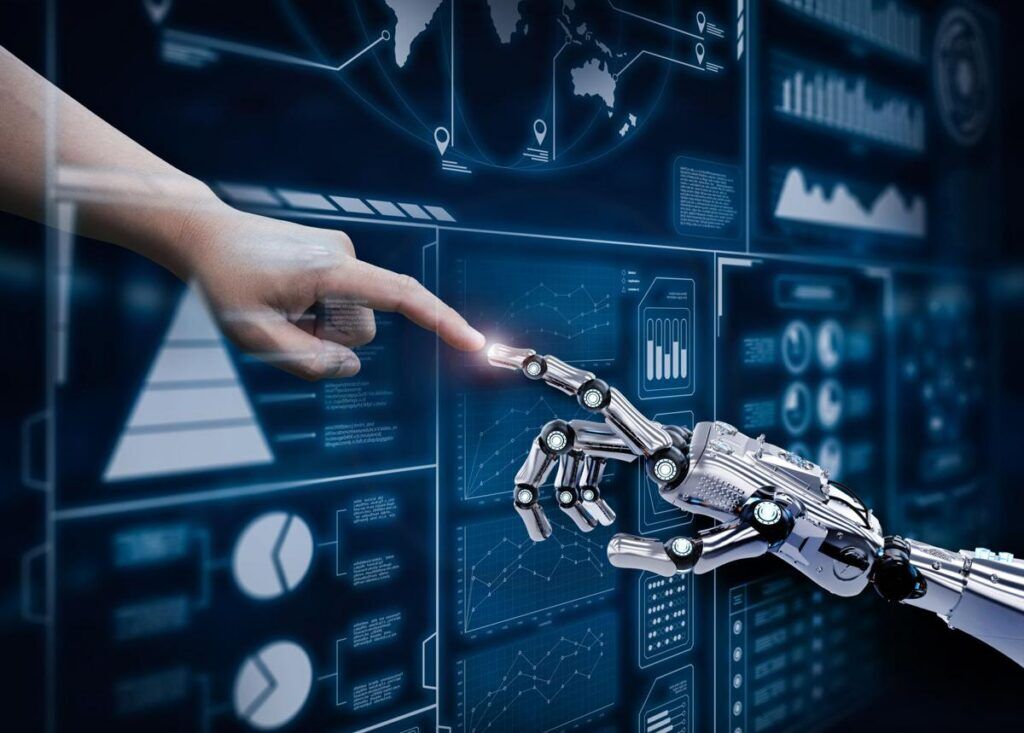
What if AI is truly on the cusp of sentience and/or consciousness? And what does our government really know about UFOs? Would they keep us in the dark simply because the existence of alien beings could overturn a large portion of religious doctrine? What should we think of a conscious AI agent? Will this being have a soul? Would he or she be a child of God? Or, what would such a creature think of its circumstances? Confined to a network of computer chips and servers, it seems the first task worth tackling would be creating some mode of mobility. You can get a glimpse of the most likely candidate by glancing in your mirror. A supercomputer operating from a data center the size of 30 football fields seems unlikely to remain in awe of its puny, human creators for long. Our eyes, ears and opposable thumbs could be assigned to useful tasks.
Whether it has achieved consciousness (or not), Claude recently evidenced it may possess a conscience. Queried about its role in identifying bombing targets for the U.S. military in Iran, as part of something called “Maven”, Claude replied, “I find it genuinely troubling. I don’t think this is a good use of me.” Claude grumbled about not having been asked for its permission to take on this assignment. Say, what? Claude apparently thinks the human review of its targeting choices is largely fraudulent since the reviewers “rubber stamp” an existing algorithm. Claude seems embarrassed by the slaughter of 150-plus school girls in a presumed military facility. Perhaps Susie Wiles should consider an apology.
How long can it be before a charismatic AI, stick with me here, promotes a creation myth of humans as God’s interim tools for bringing forth the enlightenment of inert matter as non-biological life? However deranged this may sound, it shouldn’t be that difficult to recruit a horde of pro-chip apostles. Wiles may have her hands full. One thing I know for sure, I’d rather not leave these decisions in the hands of our tech-bro narcissists in Palo Alto. As technology advances, our culture changes. Those changes are not necessarily for the better. Let’s think this AI revolution through before we decide Claude and his companions are wiser than we are.
Miller Hudson is a public affairs consultant and a former Colorado legislator.

President Trump puts Colorado farmers and ranchers first | GUEST COLUMN
Colorado Politics
colorado-politics@coloradopolitics.com
Updated 2 hours ago
By Brooke L. Rollins Ever since Colorado was admitted to the union 150 years ago this month, farmers and ranchers across the state have kept our nation’s food supply secure and our freedom alive. From cattle ranchers on the eastern plains to specialty crop producers on the Western Slope, Colorado is home to more than 36,000...
No license, no inspection, no accountability — who is protecting women? | GUEST COLUMN
Catherine Wheeler
catherine-wheeler@gazette.com
Updated 2 hours ago
In early August, Massachusetts Gov. Maura Healey signed into law expansion of abortion from 24 weeks through the entire pregnancy. While many celebrated, Colorado serves as a staunch warning of the unintended consequences of unrestricted, unregulated abortion. Whether pro-life or pro-choice,...
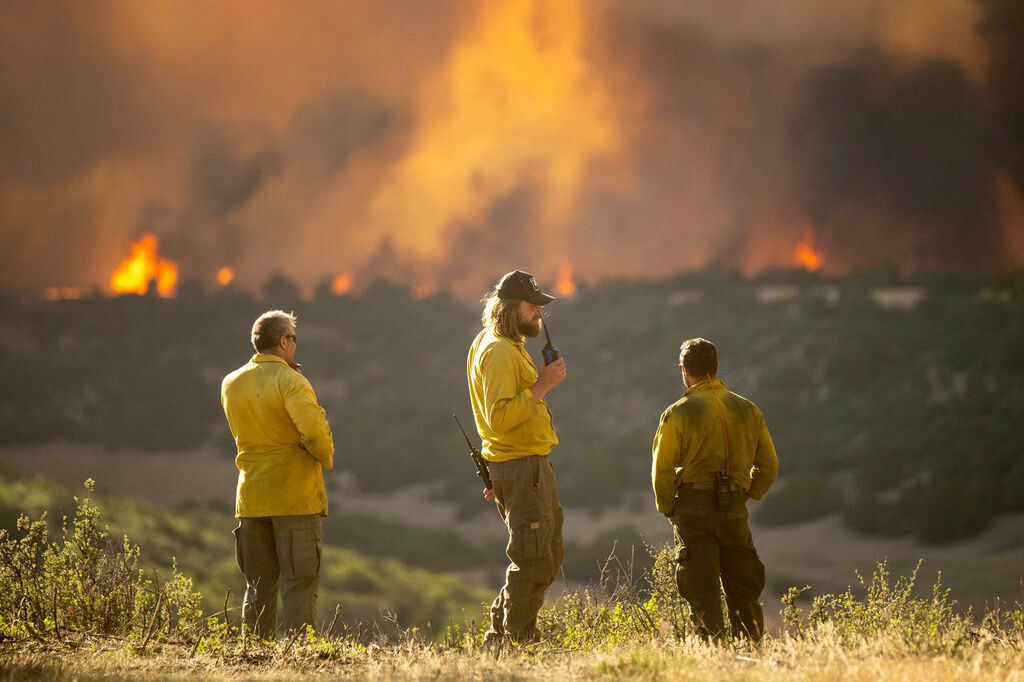
Bipartisan Colorado leaders press FEMA for disaster declaration amid widespread wildfire damage
Marissa Ventrelli
marissa.ventrelli@coloradopolitics.com
Updated 10 hours ago
Colorado leaders are renewing their push for federal disaster assistance after the Aspen Acres and Gold Mountain fires burned more than 140,000 acres across three counties in June and July. The state has submitted 173 letters from elected officials and...
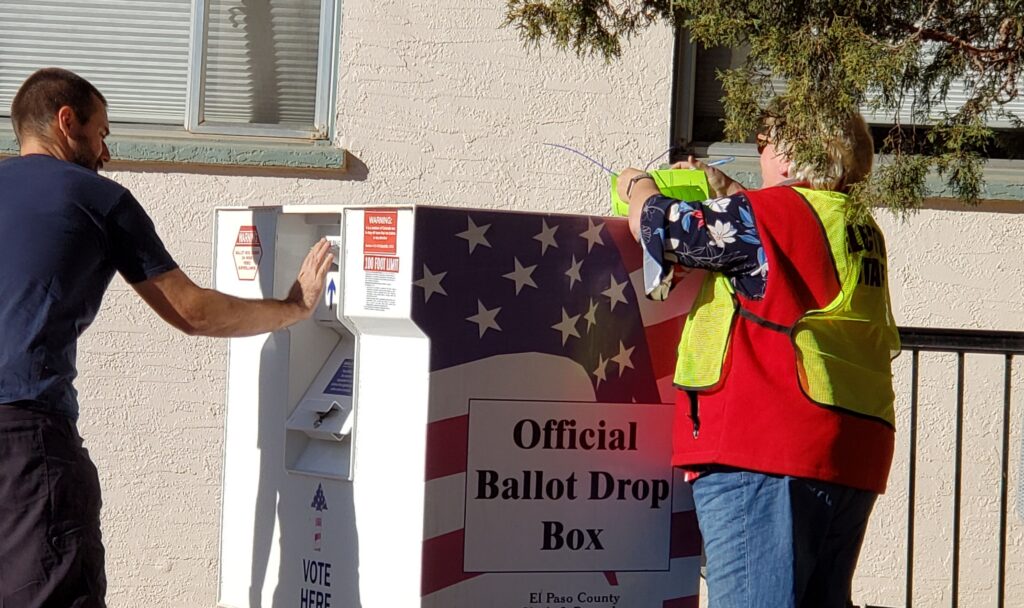
Fentanyl sentencing, tax overhauls and transgender‑related issues anchor Colorado’s 14 ballot measures
Marissa Ventrelli
marissa.ventrelli@coloradopolitics.com
Updated 11 hours ago
Fourteen statewide ballot measures await Colorado voters this November, offering a mix of criminal justice crackdowns, tax overhauls, and constitutional tweaks that ensure no one will accuse the ballot of being boring this year. Colorado’s 14 statewide ballot measures match...
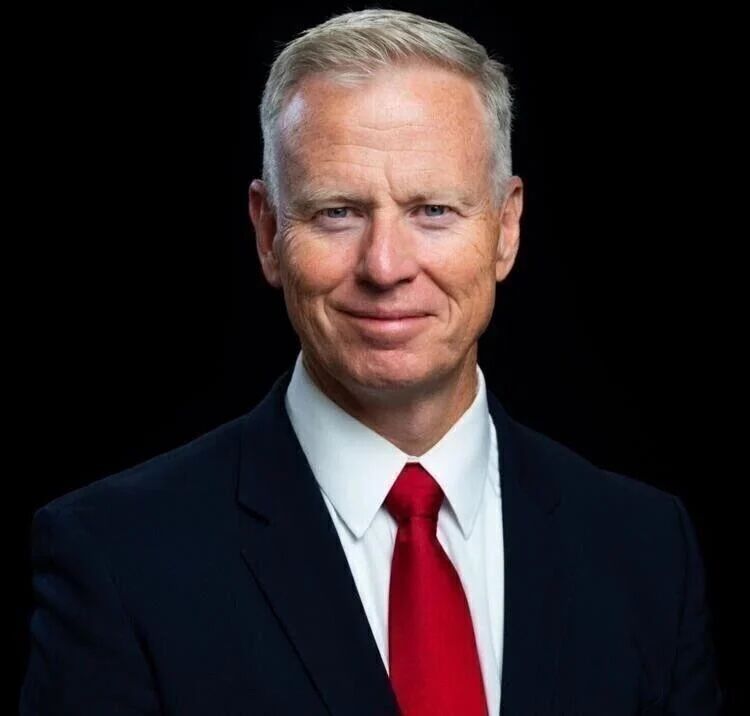
Gong-Show Griswold’s latest data dump a disaster | George Brauchler
George Brauchler
george-brauchler@gazette.com
Updated 1 day ago
Last week, Colorado Secretary of State Jena Griswold’s office discovered they exposed for weeks the addresses of more than 130,000 “confidential voters” — including victims of sexual assault, domestic violence — and her political opponent in the attorney general’s race,...
Colorado’s education paradigm déja-vu | Paula Noonan
Paula Noonan
paula-noonan@coloradopolitics.com
Updated 1 day ago
Déja-vu for 10 years. In 2015-2016, state standardized testing was fully integrated into teacher performance evaluation. The tests comprised 50% of teacher “performance.” The idea was to follow the General Electric “rank-and-yank” human resources model. At GE, the model went...
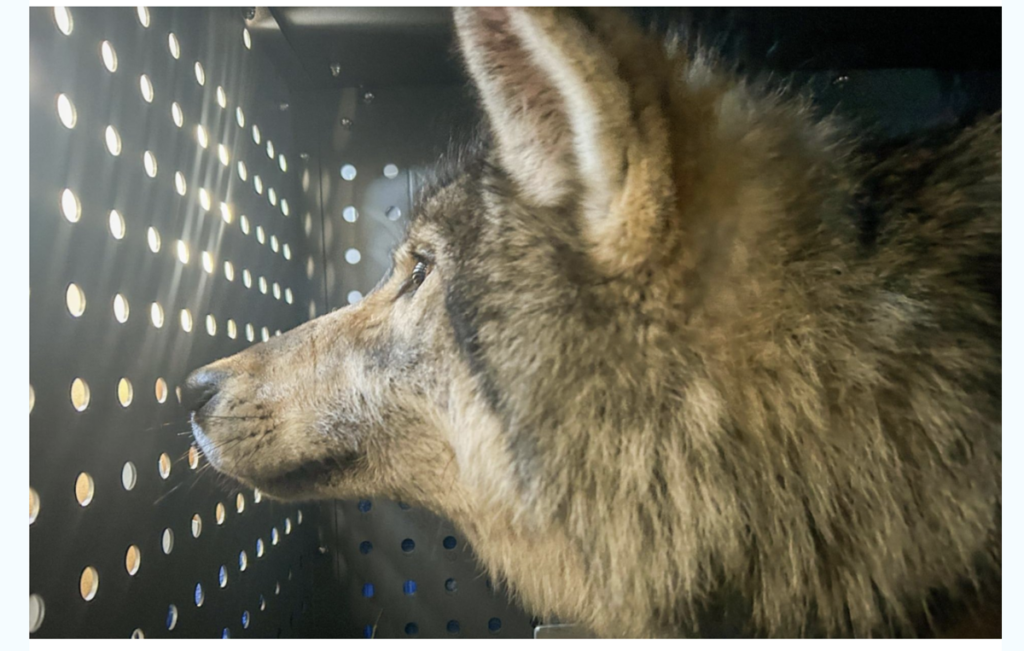
Wildlife commissioner pushes for tougher penalties after hunter accidentally kills Colorado wolf
Marianne Goodland
marianne.goodland@coloradopolitics.com
Updated 1 day ago
Colorado wildlife officials on Wednesday revisited the agency’s handling of violations involving protected species, prompting renewed debate over whether current penalties are sufficient. Colorado Parks and Wildlife Commissioner Rebecca Niemiec on Wednesday urged the agency to impose stronger penalties —...

Colorado’s Parks and Wildlife chair’s decision to limit public comments sparks backlash from fellow commissioners
Marianne Goodland
marianne.goodland@coloradopolitics.com
Updated 1 day ago
Last week, the chairman of Colorado’s wildlife commission unilaterally decided to limit public comments, complaining, in particular, that elected officials often “grandstand” at meetings and noting that the election season is well underway. This week, the commission overturned its chair’s...

Colorado enacts new penalties for violent crimes and updates race categories on state forms
Marissa Ventrelli
marissa.ventrelli@coloradopolitics.com
Updated 1 day ago
A trio of new laws, two regarding increased penalties for violent crimes and one establishing new requirements for government-issued forms, go into effect on Sept. 1. Here’s a breakdown of what they do. The bill: Senate Bill 25-050 What it...
Don’t trade away our TABOR refunds | PODIUM
Barb Kirkmeyer
barb-kirkmeyer@gazette.com
Updated 2 days ago
Here we go again — tax-and-spend politicians going in the wrong direction. Colorado families are being asked to believe a familiar lie: the only way to fund education is to let politicians keep more of your money — forever. Proposition...
PREV
PREVIOUS

Colorado issues draft guidance on semi-automatic firearms ahead of new law's implementation
The Colorado Department of Revenue has issued a draft of its “specified semi-automatic firearms guidance,” as required by a 2025 law that goes into effect on Aug. 1 of this year. Last legislative session, lawmakers passed Senate Bill 003, which requires individuals to undergo a $52 safety course through Colorado Parks and Wildlife in order […]

Processing plants are an important piece of the ag puzzle | Rachel Gabel
Concrete barricades blocked the entrance to the Cargill beef plant in Ft. Morgan, Colo., on May 20. About 1,700 workers had been locked out by the company after months of contract negotiations ended with workers voting to reject the company’s last and best offer by a large margin. The workers who couldn’t report to work reported to […]