

Lawmakers urge Supreme Court committee to address racial bias in jury selection
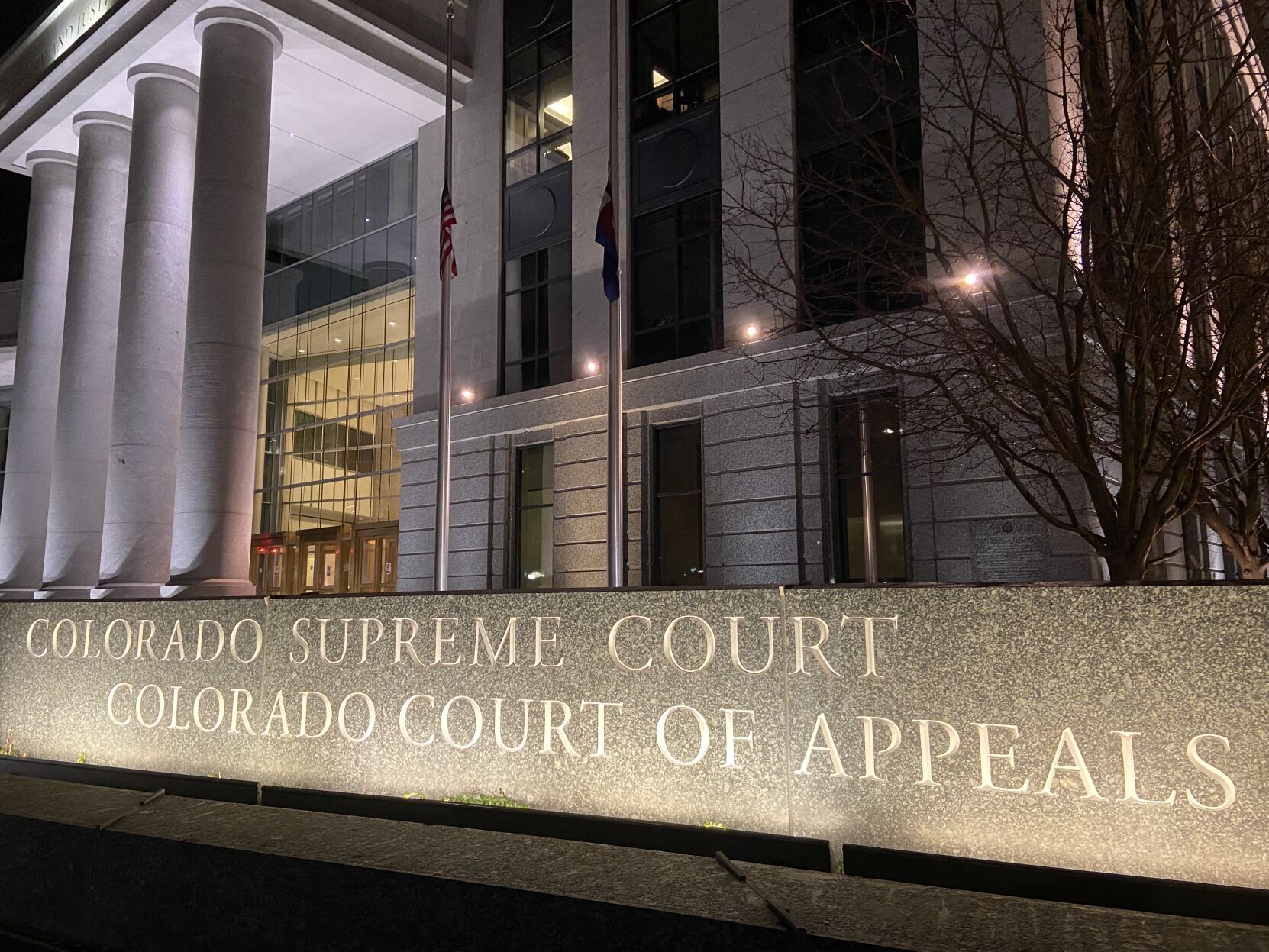
Four Democratic lawmakers have written to the Colorado Supreme Court’s criminal rules committee urging it to address racial bias in jury selection following resistance from prosecutors to a legislative proposal on the subject.
Last month, the sponsors of Senate Bill 128 declined to move forward with their legislation after all 22 elected district attorneys registered their opposition. SB 128 sought to make it harder for attorneys to dismiss people of color during jury selection based on factors that, while not explicitly racial, still correlate with race.
On March 16, the sponsors wrote to the Advisory Committee on the Rules of Criminal Procedure, asking it to resurrect a proposal it considered last year addressing racial bias that closely resembled SB 128. The Supreme Court, however, rejected the proposed changes to criminal procedure Rule 24, which governs jury selection, because the justices wanted to see more consensus.
“The communities we represent interpreted the Court’s prior refusal to even solicit input from the public about the proposed amendments to Crim.P. 24 as a clear message that its members have no interest in addressing racial bias in our criminal courts in any meaningful way,” wrote Sens. Pete Lee, D-Colorado Springs, and Julie Gonzales, D-Denver, and Reps. Jennifer Bacon, D-Denver, and Steven Woodrow, D-Denver.
The legislators included a veiled ultimatum to the criminal rules committee, conveying their hope that the judicial branch could change the rule before the next legislative session “so that introducing legislation on this issue next year is unnecessary.”
The committee will discuss the letter at its next meeting on Friday.
Both SB 128 and the proposal to change Rule 24 were intended to address the use of peremptory challenges in jury selection. In contrast with for-cause dismissals of jurors, parties do not need to give a reason to dismiss, or strike, someone from the jury pool using a peremptory challenge.
In 1986, the U.S. Supreme Court decided in Batson v. Kentucky that intentional dismissals of jurors based on race were unconstitutional. Now, using a procedure known as a “Batson challenge,” parties may be able to prevent the dismissal of a juror of color if they can demonstrate that the juror’s race motivated the strike.
Using a three-step process, trial judges first need to determine if there is a sufficient allegation of racial bias under a Batson challenge, then ask the party seeking to strike the juror to provide “race-neutral” explanations for the dismissal. The judge then weighs the circumstances and decides whether purposeful racial discrimination is occurring.
Critics of Batson challenges point out that lawyers may be able to mask race discrimination by coming up with alternative reasons for a dismissal, and that the Batson process does not account for juror strikes motivated by implicit bias. Others, including the Colorado Supreme Court itself, have acknowledged a perception that granting a Batson challenge is akin to calling a lawyer racist for attempting to remove a juror of color.
“(A) finding of discriminatory purpose based on race is not the same as a finding that the proponent of the strike is racist,” wrote Justice Maria E. Berkenkotter in an opinion earlier this year.
In 2018, the Washington Supreme Court adopted a rule change that placed new guardrails on jury selection. Specifically, Washington’s “general rules” now list reasons that are presumptively invalid for striking a juror because they have historically been used against people of color. Having prior contact with law enforcement officers, living in a “high-crime” neighborhood and not being a native English speaker are not, on the surface, sufficient justifications to dismiss a juror.
The Washington rule also prohibits parties from excusing a juror based on body language, demeanor or inattentiveness without corroboration from the judge or the opposing party about the behavior.
Although several defense attorneys spoke in support of Colorado’s SB 128, saying people of color should not be excluded from jury service because of their lived experiences, prosecutors believed the proposal went too far.
The legislators noted in their March 16 letter that no prosecutors had subsequently written to them with suggestions for improving SB 128 since its hearing before the Senate Judiciary Committee, although district attorneys at the time agreed that racial bias was problematic.
It would “seem that commitment would have prompted them to work constructively to amend our bill, but that was not the case,” the letter reads.
The lawmakers offered several observations to the criminal rules committee should it mount a second attempt at changing Rule 24. First, they advocated for replacing the existing protocol under Batson of evaluating intentional racial discrimination with a new standard that asks whether an objective observer could view race or ethnicity as a factor in a juror’s dismissal.
In addition, the lawmakers suggested the committee explore adding protections based on sex, although they clarified that their focus was on the historical exclusion of jurors of color.
Finally, the letter implied that the General Assembly would be interested in seeing statistics on juror strikes presented at annual oversight hearings, and the judicial branch should be prepared to answer questions about Rule 24.
“Collecting data on the race of citizens struck from jury panels by peremptory challenges is a simple task, as other states have proven. And that data is critical to crafting a well-informed solution to a problem that even those who opposed our bill admit exists,” the letter concluded.

Federal judge green-lights excessive force, retaliation claims for trial against Fort Collins officers
Michael Karlik
michael.karlik@coloradopolitics.com
Updated 1 day ago
A federal judge green-lit a jury trial last week against multiple Fort Collins police officers on claims that they used excessive force on one man who was standing unarmed in his underwear, and retaliated against another man for exercising his...

10th Circuit revives wage violation lawsuit against Papa John’s operator
Michael Karlik
michael.karlik@coloradopolitics.com
Updated 2 days ago
The Denver-based federal appeals court on Tuesday reinstated a former Papa John’s delivery driver’s lawsuit alleging violations of federal and state wage law. Steve Mighell worked for one month at a Denver Papa John’s location in summer 2023. He alleged...
Colorado appeals judge’s delays in releasing opinions noted by performance commission
Michael Karlik
michael.karlik@coloradopolitics.com
Updated 1 day ago
The citizen-led performance commission that provides guidance to voters about whether to retain members of Colorado’s second-highest court raised concerns by judges and attorneys that Judge Elizabeth L. Harris sometimes struggles with releasing opinions promptly. Harris, who joined the Court...
Colorado judge explores sanctions against DOJ, ICE for rearresting man 4 days after release on bond
Michael Karlik
michael.karlik@coloradopolitics.com
Updated 2 days ago
A federal judge in Colorado is considering sanctions against the government after immigration agents rearrested a man four days after an immigration judge found him suitable for release on bond. On July 28, U.S. Magistrate Judge N. Reid Neureiter ordered...
Divided disciplinary panel censures Montezuma County judge after agreement reached
Michael Karlik
michael.karlik@coloradopolitics.com
Updated 2 days ago
A disciplinary panel formally imposed a public censure, suspension, and further training on Montezuma County Court Judge Ian J. MacLaren on Tuesday by a 2-1 vote. Under constitutional Amendment H, which voters adopted in November 2024, MacLaren was set to...
Colorado’s Western Slope magistrate judges describe unique role in federal judiciary
Michael Karlik
michael.karlik@coloradopolitics.com
Updated 4 days ago
Two of Colorado’s federal judges stationed on the Western Slope spoke to lawyers on Wednesday about their unique roles, the ways their workloads differ, and the need for more criminal defense lawyers to take cases outside the Front Range. “Here...
Denver sues Philip Morris, other tobacco companies over cigarette butt litter
Deborah Grigsby
deborah.smith@denvergazette.com
Updated 3 days ago
Denver is demanding that some of the biggest tobacco companies in the world pay for the cleanup of discarded cigarette butts on its streets, following a similar campaign that cities in other states have pursued. Denver’s lawsuit, filed this week...
Federal judge rules that request for bond hearing not necessary to challenge immigration detention
Michael Karlik
michael.karlik@coloradopolitics.com
Updated 2 days ago
A federal judge in Colorado ruled last week that it is not mandatory for a person to seek a bond hearing with an immigration judge before they challenge the lawfulness of their detention in federal court. For the past year,...
Boulder Valley School District introduces new policies following antisemitism lawsuit
Marissa Ventrelli
marissa.ventrelli@coloradopolitics.com
Updated 2 days ago
The chief of Boulder Valley School unveiled new policies for the 2026-2027 school year following a lawsuit filed on behalf of a student alleging antisemitic harassment. In June, the Anti-Defamation League filed a federal civil rights complaint against the school...

Colorado NRA chapter seeks injunction against new gun‑training requirement
Marissa Ventrelli
marissa.ventrelli@coloradopolitics.com
Updated 4 days ago
The Colorado chapter of the National Rifle Association is seeking an injunction to stop the state from enforcing a new law that took effect earlier this month. The new law requires anyone buying or selling certain firearms to first complete...
PREV
PREVIOUS
Progressive group pulls endorsement from DeGette primary challenger Neal Walia
The Colorado affiliate of the progressive Working Families Party on Wednesday rescinded its endorsement of congressional candidate Neal Walia, one day after the Denver Democrat qualified by petition to challenge U.S. Rep. Diana DeGette in the 1st Congressional District primary election. Noting that it’s the first time the Colorado group has taken back an endorsement, Kiera […]

DaVita case heads to jury: 'There's not a bro code exception'
Jurors will now decide whether Denver-based kidney care company DaVita, Inc. and its former leader, Kent Thiry, are guilty of violating a century-old federal antitrust law by conspiring to prevent DaVita employees from being recruited for other job opportunities. Prosecutors with the U.S. Department of Justice and defense attorneys for DaVita and Thiry delivered nearly […]