

City contractor dismissed from lawsuit over Denver’s encampment sweeps

A federal judge has dismissed Denver’s hazardous materials contractor from the federal lawsuit that is challenging the constitutionality of the city’s encampment-clearing tactics and seeking to restrict future seizures of property.
One of the defendants named in the lawsuit, Environmental Hazmat Services, is a Wheat Ridge company whose contract with Denver entails clearing encampments for homeless residents, storing or throwing away items, and performing inventory of seized property. EHS insisted that it was not the cause of any constitutional violations because it was acting at the direction of the city.
U.S. District Court Judge William J. Martínez agreed with the company, finding the allegations insufficient to establish that EHS knew the city was providing inadequate notice of “sweeps” or in any way abusing its authority.
“To be sure, Plaintiffs have alleged throughout the Complaint that EHS, in conjunction with the City, seized and discarded Plaintiffs’ property without notice,” Martínez wrote in a March 18 order. “Critically, however, there is simply no factual basis to conclude that EHS knew or reasonably should have known that its actions were potentially violating Plaintiffs’ constitutional rights.”
The plaintiffs, who are a group of Denver residents subjected to encampment sweeps, initially filed suit in October 2020 against Mayor Michael Hancock, individual Denver police officers, Colorado State Patrol troopers and others. The lawsuit alleged unlawful seizures under the Fourth Amendment, deprivation of property without due process, and violations of rights under state law due to the sweeps.
“Additionally, the sweeps have devastating effects on Denver’s homeless population’s mental and physical health through the interruption of their sleep,” wrote lawyers for the plaintiffs. “Schizophrenia-like symptoms are associated with lack of sleep, as are increases in anxiety, memory loss, and depression. And, police contact, and the fear of police contact, substantially undermines the sleeping-related health of Denver’s homeless residents.”
Allegedly, Denver’s actions violated a 2019 agreement known as the Lyall settlement, which placed parameters on large-scale cleanups and regular clearings of public rights of way. Denver had agreed to provide at least seven days’ notice prior to a large-scale cleanup, information about the retrieval of property and storage space, among other requirements.
In January of last year, Martínez granted a preliminary injunction to the plaintiffs in response to the allegations that the city was sweeping encampments without proper notice and seizing property without due process. The judge directed the city to provide seven days’ notice not only for large-scale cleanups, but also for “temporary area restrictions” that the department of health ordered with little warning.
Martínez did allow the city to clear encampments with as little as 48 hours notice, but mandated that Denver post its justification for doing so online prior to the sweeps.
The defendants appealed to the U.S. Court of Appeals for the 10th Circuit, arguing Martínez improperly went beyond the terms of the Lyall settlement. The plaintiffs countered that Denver only wanted to avoid providing notice of sweeps to prevent interference from protestors. A three-judge panel heard oral arguments in the case in November but has not yet issued a decision.
In EHS’ motion to dismiss the claims against it, the company argued it was not a party to the Lyall settlement and could not be held responsible for failing to abide by its terms.
“On a job-by-job basis, EHS would have to decide whether to follow Denver’s instructions and face exposure to litigation from Plaintiffs, or refuse to perform under its contract, thereby breaching it and suffering the related consequences. For good reason, lawsuits creating this impossible choice have been rejected in the Tenth Circuit,” wrote attorneys for the company.
The plaintiffs, meanwhile, alleged that EHS stood “side-by-side” with Denver in conducting the encampment sweeps and should not be allowed to say the company was “just following orders.”
Martínez noted that while there were allegations of EHS employees seizing and discarding personal property, there was no suggestion EHS knew it was violating anyone’s constitutional rights.
Denver has also filed a motion to dismiss the claims against the mayor and city employees, and the Colorado Attorney General’s Office has submitted a similar motion to dismiss the claims against the state troopers. The motions, filed in March of last year, are still awaiting rulings from Martínez.
Andy McNulty, an attorney for the plaintiffs, indicated the judge may be waiting for the 10th Circuit’s decision before acting on the government’s motions. He said that courts have held a “just following orders” defense is not a basis for violating constitutional rights, and he would look to appeal EHS’ dismissal from the lawsuit.
Last September, the Denver City Council voted to extend the city’s contract with EHS to October 2023, despite hearing opposition from those with concerns about encampment sweeps. The agreement continues EHS’ obligation of collecting, storing and returning property, and requires that the company “take steps to prevent or avoid interaction with members of the public on behalf of the City at a clean-up site.”
Notably, the contract also requires the city to provide a copy of the Lyall settlement and train EHS on its obligations.
The case is Denver Homeless Out Loud et al. v. City and County of Denver et al.

For KHN

10th Circuit dismisses woman’s lawsuit following 10-year attempt to undo restraining order
Michael Karlik
michael.karlik@coloradopolitics.com
Updated 2 days ago
The Denver-based federal appeals court rejected a woman’s challenge on Friday to a restraining order imposed on her more than a decade ago, finding that she cannot credibly claim she will be prosecuted for violating the restraining order through her...
10th Circuit dismisses woman’s lawsuit following 10-year attempt to undo restraining order
Michael Karlik
michael.karlik@coloradopolitics.com
Updated 2 days ago
The Denver-based federal appeals court rejected a woman’s challenge on Friday to a restraining order imposed on her more than a decade ago, finding that she cannot credibly claim she will be prosecuted for violating the restraining order through her...
Colorado equal pay law does not require plaintiffs to allege gender-based retaliation, appeals court finds
Michael Karlik
michael.karlik@coloradopolitics.com
Updated 17 hours ago
The 2019 Colorado law aimed at rooting out pay discrimination on the basis of sex does not require a plaintiff to allege their employer retaliated against them for sex- or gender-related reasons, the state’s second-highest court decided on Thursday. Lawmakers...
Hudson faces lawsuit over ICE detention facility
Nicole C. Brambila
nicole-c-brambila@coloradopolitics.com
Updated 2 days ago
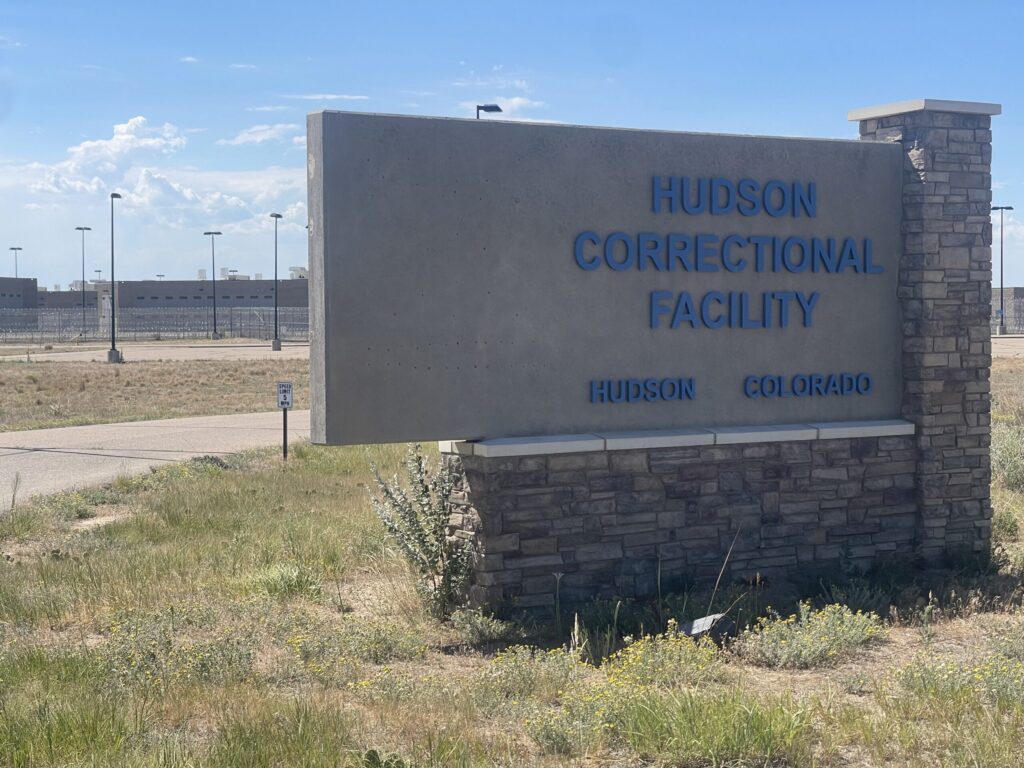
A nonprofit organization filed a lawsuit against the Town of Hudson Wednesday, challenging plans to reopen a former federal prison in the town as a U.S. Immigration and Customs Enforcement detention facility. Together Colorado, along with Janet E. Carlson, filed...
Senate committee advances Trump’s 10th Circuit nominee, as Domenico responds to questions about delays
Michael Karlik
michael.karlik@coloradopolitics.com
Updated 2 days ago
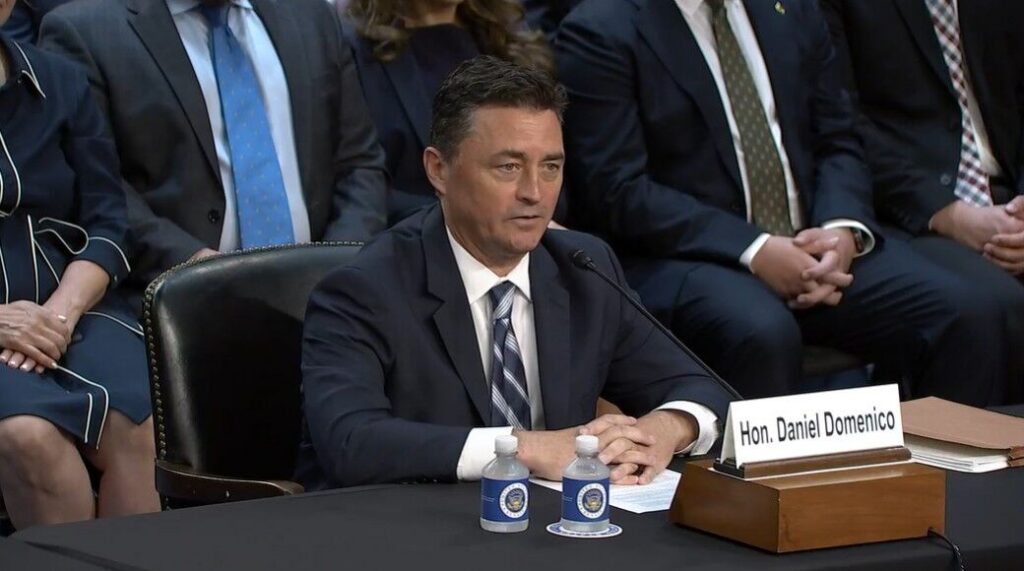
The U.S. Senate Judiciary Committee advanced President Donald Trump’s nominee to the Denver-based federal appeals court on Thursday by a party-line vote of 12-10. U.S. District Court Judge Daniel D. Domenico, who was Trump’s first-term appointee to Colorado’s federal trial...
Colorado justices to hear embryonic donation dispute
Michael Karlik
michael.karlik@coloradopolitics.com
Updated 2 days ago
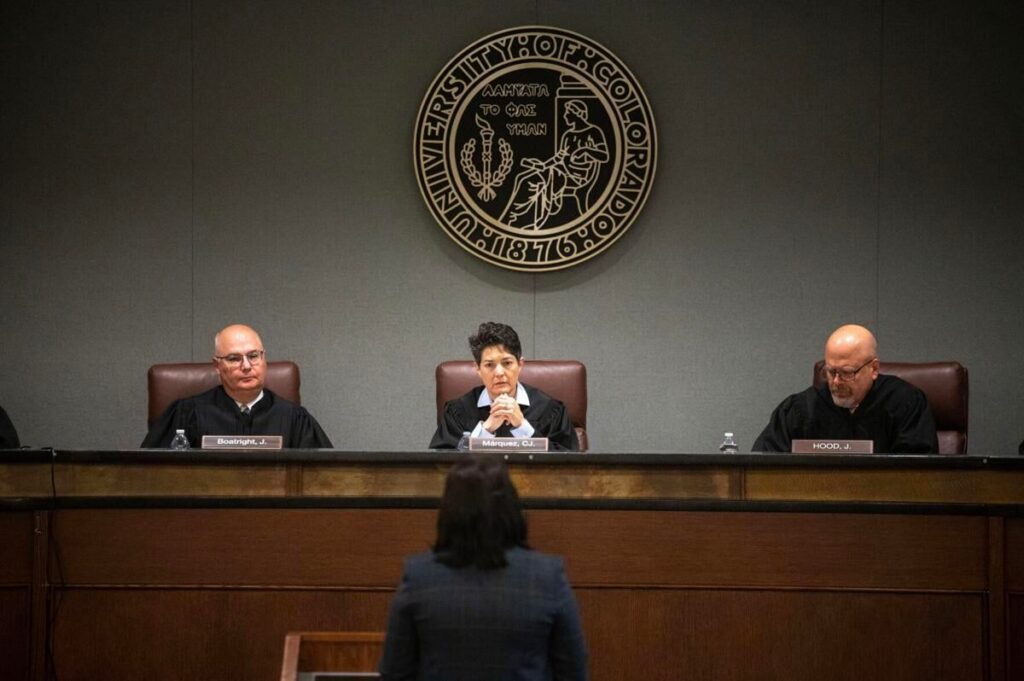
The Colorado Supreme Court announced on Monday that it will decide whether lower court judges properly applied its framework for adjudicating disputes over the fate of pre-embryos, in which one person wants to use them to become a parent and...

Isolation, emotion, persona: Colorado judicial programming prepares people for life on the bench
Michael Karlik
michael.karlik@coloradopolitics.com
Updated 3 days ago
As a trial judge and now as a member of the Colorado Supreme Court, Justice Carlos A. Samour Jr. has heard the view that being a judge is isolating. “In neither court have I felt isolated. I’ve always interacted a...

Federal judge dismisses Colorado county sheriff’s challenge to law limiting immigration cooperation
Michael Karlik
michael.karlik@coloradopolitics.com
Updated 17 hours ago
A federal judge dismissed a challenge from Mesa County Sheriff’s Office leaders last week to a Colorado law limiting public employees’ cooperation with immigration authorities, concluding that the plaintiffs did not allege they engage in any conduct that the law...
10th Circuit raises bar for fraud victims to sue debt collectors over inaccurate information
Michael Karlik
michael.karlik@coloradopolitics.com
Updated 13 hours ago
The Denver-based federal appeals court wiped away a jury’s $500,000 award to a fraud victim on Monday and made it more difficult for consumers to hold companies liable for disseminating inaccurate credit information. The Fair Credit Reporting Act regulates credit...
Montezuma County judge’s censure, suspension approved by discipline panel
Michael Karlik
michael.karlik@coloradopolitics.com
Updated 4 days ago
A three-member disciplinary panel accepted, on Monday, an agreement between a Montezuma County judge and the Colorado Commission on Judicial Discipline that specifies he will receive a censure, a suspension, and additional education for his admitted instances of misconduct. Under...
PREV
PREVIOUS

Bennet challenger Joe O'Dea hits airwaves with Spanish-language radio ad
Republican U.S. Senate candidate Joe O’Dea has released a Spanish-language radio ad narrated by his wife, whose grandparents immigrated to the United States from Mexico in the early part of the last century, his campaign said. O’Dea, a wealthy construction company owner and one of seven GOP candidates running against Democratic U.S. Sen. Michael Bennet, […]

Douglas County school board member blasts 'unethical' board actions, won't attend contract meeting
One Douglas County school board member blasted the district’s selection of its new superintendent in an email to media Tuesday morning, saying he would boycott Tuesday night’s meeting because of the board’s recent actions. In an email, board member David Ray wrote that he would skip the meeting, at which the board later approved soon-to-be […]