

Colorado’s energy policies are becoming a national security risk | OPINION

By William L. Shelton
The Colorado Public Utilities Commission is on the verge of making decisions that could have immediate, real-world consequences for every resident in the state, and for the security of our nation. These decisions could restrict energy companies’ ability to add critically needed capacity to our electric grid.
This issue is not just theoretical, it’s personal to most Coloradans. After years of delayed investments in our energy infrastructure, our system is under strain. If policymakers and regulators move forward with additional constraints, Coloradans may feel the direct consequences sooner than we’d like including reduced grid reliability and increased risk of brownouts or blackouts (a la California).
After 38 years in uniform, I’ve seen firsthand how reliable energy powers the nerve centers of modern warfare. Among many other functions, these Colorado-based operations centers are not just obscure tech facilities, they process intelligence, provide the GPS signal, detect cyber intrusions, monitor missile launches and enable encrypted communications that keep U.S. military operations running across every corner of the globe.
Colorado is home to some of the most strategically important military headquarters and installations in the country, including North American Aerospace Defense Command, U.S. Northern Command, U.S. Space Command, Peterson Space Force Base, Buckley Space Force Base, Schriever Space Force Base, Fort Carson and the U.S. Air Force Academy. Colorado’s military supports such things as defending the North American continent, global missile warning, satellite operations, cyber defense and officer training, all cornerstones of America’s security architecture.
I’ve seen firsthand how technological superiority protects American service members on the battlefield and deters our adversaries. Maintaining that superiority requires constant investment, not only in weapons systems, but also in the computing power, energy infrastructure, and digital resilience that support the American way of warfare.
You simply cannot conduct intelligence processing, track missile launches across the planet, enable encrypted communications, or support the billions of users of GPS on an unstable grid. And you certainly cannot deter adversaries if systems are widely recognized as vulnerable to disruption. For those missions that must be available 24/7, in the event of brownouts or blackouts, backup power consists of diesel generators, with much greater pollution consequences.
Policymakers must understand and recognize the implications of restricting energy development, particularly given our state’s current and increasing role in national defense. The stakes are no longer abstract.
If you value reliable power, economic stability, and a strong national defense, now is the time to make your voice heard. When it comes to protecting the United States, we should be expanding our grid’s capabilities, not limiting the power production that keeps our nation safe.
General William Shelton is a retired Air Force Commander. During his Air Force career, General Shelton was a Space Shuttle controller for the first 18 missions, commander of Global Positioning System operations during the initial deployment of the constellation and commander of the Air Force’s largest ballistic missile wing.


Immigration reporting measure fuels debate over Colorado’s role with ICE
Marissa Ventrelli
marissa.ventrelli@coloradopolitics.com
Updated 4 hours ago
A coalition of advocacy groups and several district attorneys rallied outside the Colorado Capitol on Thursday to oppose a ballot measure that, if approved by voters in November, would require state and local law enforcement to cooperate with federal immigration...

Ballot measure aims to shift Colorado sporting goods tax revenue to land, water and wildfire projects
Marissa Ventrelli
marissa.ventrelli@coloradopolitics.com
Updated 4 hours ago
Colorado voters this November will decide whether to direct a share of sales tax revenue from sporting goods — including bicycles and skiing equipment — toward land and water conservation, wildfire prevention and expanding outdoor recreation. Supporters say the measure...

Fighting for every Colorado rural hospital on the eastern plains | GUEST COLUMN
Colorado Politics
colorado-politics@coloradopolitics.com
Updated 2 days ago
By Lauren Boebert After touring Melissa Memorial Hospital in Holyoke and Wray Community District Hospital — two of more than a dozen rural hospitals in my district — I was again reminded why I fight for them in Washington. The...

Fix Colorado without shortchanging taxpayers | GUEST COLUMN
Colorado Politics
colorado-politics@coloradopolitics.com
Updated 1 day ago
By Lisa Frizell If we truly want to fix Colorado, we must respect taxpayers, demand accountability and prioritize classroom results. Proposition NN fails the test. The far left put forth this measure, presenting it as the only way to fund public...

New anti-gun legislation is about preventing firearm ownership, not safety | GUEST COLUMN
Colorado Politics
colorado-politics@coloradopolitics.com
Updated 2 days ago
By Ava Flanell It’s been a little more than a month since the most radical anti-gun legislation went into effect in Colorado history: Senate Bill 25-003. Originally intended as an “assault weapons ban,” Colorado Democrat sponsors settled for a complicated...
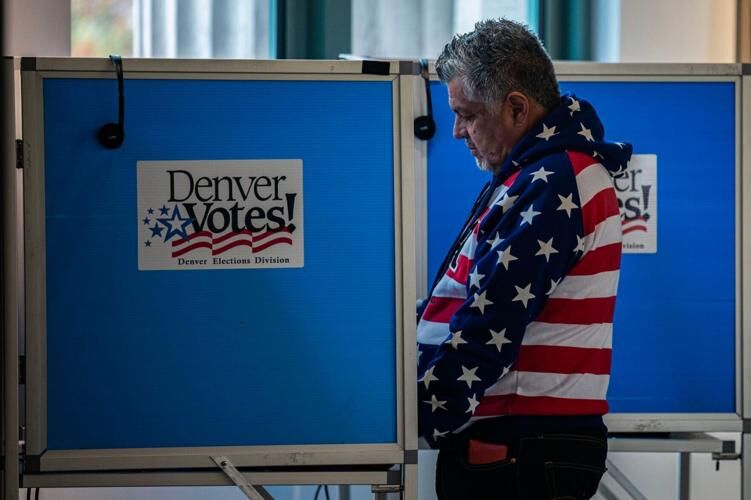
Denver sues Trump to block armed ICE agents from polling sites
Deborah Grigsby
deborah.smith@denvergazette.com
Updated 2 days ago
The city of Denver, along with several groups, sued the Trump administration Thursday, seeking to block U.S. Immigration and Customs Enforcement officers who are armed from polling sites during the upcoming midterm elections. In fact, there are no official orders...
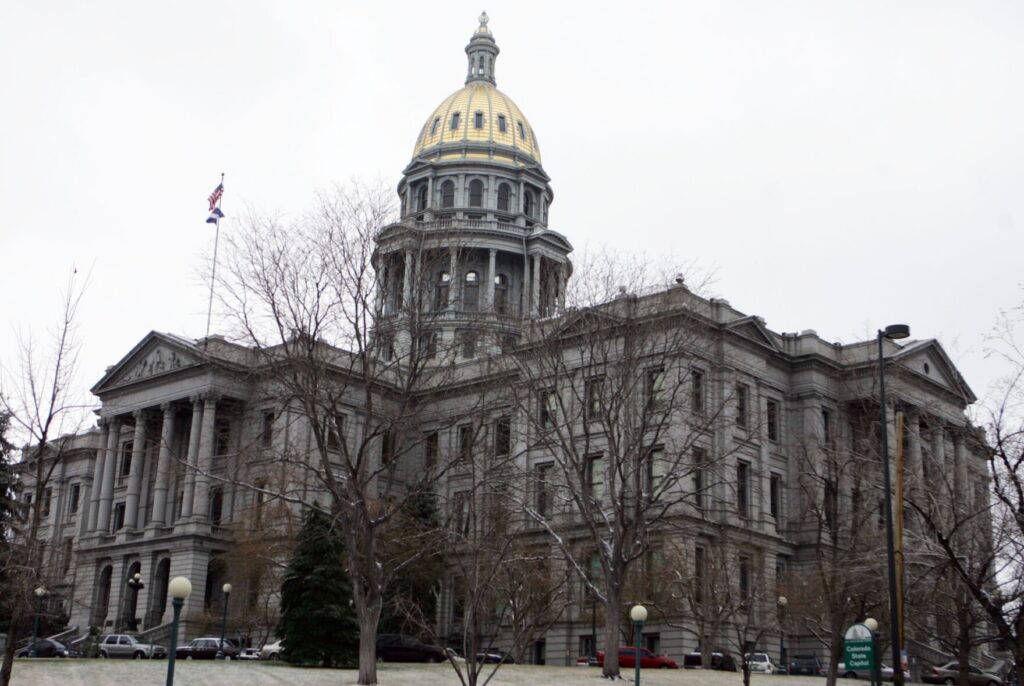
Colorado doctors, dentists challenge state law on gender‑transition services in new federal lawsuit
Marissa Ventrelli
marissa.ventrelli@coloradopolitics.com
Updated 1 hour ago
A group of Christian doctors and dentists has filed a federal lawsuit challenging a Colorado law they say requires them to provide gender‑transition services that conflict with their religious and ethical beliefs. The lawsuit, filed by the Christian Medical and...
Colorado ed department must up its competence to prevent waste, fraud, abuse | Paula Noonan
Paula Noonan
paula-noonan@coloradopolitics.com
Updated 2 days ago
The Colorado Department of Education let $24 million fly from its checking accounts from January 2017 through June 2026 to CHE, aka Colorado Homeschool Enrichment. The details show how easily CHE and Education Re-Envisioned BOCES re-envisioned how to convert public...
Remember the injustice of forced unionism | GUEST COLUMN
Colorado Politics
colorado-politics@coloradopolitics.com
Updated 3 days ago
By Mark Mix This Labor Day we celebrated the men and women whose hard work keeps the country running. But in Colorado, many of those same workers face a real threat: pay union dues or lose their job. That’s because...

Should we always blame voters for low civic participation in elections? | GUEST COLUMN
Roland Halpern
roland-halpern@coloradopolitics.com
Updated 3 days ago
This year, like every election cycle, we hear the same complaints — enough citizens don’t vote. Voter turnout is too low. People are disengaged. Citizens are shirking their civic responsibility. If only voters cared more, democracy would work better. Fair...
PREV
PREVIOUS
Good intentions don't always equal good laws | OPINION
By Bob Gardner I served in the statehouse for 16 years. I have been a practicing lawyer for more than 30 years. In that time, I must have seen thousands of bills introduced with seemingly good intentions but leading to disastrous consequences. The worst of those almost aways had the somewhat curious quality of uniting […]
A workhorse emerges in Colorado's 3rd Congressional District? | Hal Bidlack
Do we have a workhorse emerging from Colorado’s Third Congressional District? I’m not sure, but an interesting bit of legislation U.S. Rep. Jeff Hurd introduced is at least a bit suggestive he just might be in Washington, D.C. to get work done, even if the cameras are not aimed his way. As my regular reader […]