

State employees do not have right to rescind their resignation, appeals court says

State agencies do not have to honor an employee’s request to withdraw their resignation, the Court of Appeals has ruled.
A three-judge panel for the appellate court considered whether the state constitution, which guarantees that employees in the Colorado personnel system hold their jobs “during efficient service or until reaching retirement age,” allows workers to change their minds after deciding to quit. The panel concluded the constitution does not provide employees with a right to rescind their resignation and retain their jobs.
“Although the constitution creates a comprehensive framework to ensure that a certified employee is only terminated from the state personnel system for just cause,” wrote Judge Dennis A. Graham in a Feb. 24 opinion, “neither the constitution nor the statute addressing resignation … contains any provisions related to an employee’s right to withdraw a voluntary resignation before it becomes effective.”
The case of Doris McCauley, a former driver license examiner with the Division of Motor Vehicles, unusually featured the Colorado Attorney General’s Office representing parties on both sides of the issue. The Colorado State Personnel Board contended that the absence of a rule governing resignations meant employees alone control the decision about when to leave. The DMV, on the other hand, maintained that the lack of a rule indicated there was no responsibility to honor McCauley’s attempt to take back her resignation announcement.
“For state classified employees, the right to make a decision does not always include a right to withdraw it,” wrote attorneys for the DMV.
McCauley, who worked in Montrose, informed her supervisor on Feb. 12, 2014 that she was considering leaving as she had received a job offer elsewhere. On the Department of Revenue’s website, McCauley saw Rule 7-5 from the employee handbook, which allowed employees to withdraw their resignation within two business days after giving notice.
She did not realize, however, that the State Personnel Board had repealed that rule the prior year.
After McCauley submitted a notice that she would leave her job effective Feb. 28, she changed her mind and asked to withdraw her resignation. The operations director contacted the human resources department about what to do, and learned there was no requirement to accept McCauley’s withdrawal. The DMV opted against letting her withdraw the resignation and McCauley’s last day was Feb. 28.
McCauley challenged that decision, and an administrative law judge determined that employees in the state’s personnel system control when they will resign, unless state law or a rule of the personnel board dictates otherwise. A different administrative judge agreed, believing the failure to accept McCauley’s resignation amounted to an involuntary separation that failed to follow a different personnel rule.
The decision reinstated McCauley’s employment and awarded back pay and attorney fees. The State Personnel Board upheld the administrative law judge’s conclusions, reversing only the attorney fees. In January 2020, the judge awarded McCauley approximately $78,000.
The DMV argued to the Court of Appeals that the administrative law judge’s decision had effectively created a new rule for the state personnel system outside of the normal rulemaking process, requiring agencies to accept withdrawals of resignations. In contrast, the personnel board had purposefully repealed Rule 7-5 as the only mechanism for allowing workers to take back their resignation announcements.
“The state personnel system is designed to protect state-certified employment from arbitrary, political or capricious actions of others. It is not designed to protect employees from the consequences of their own decision to end state employment,” Special Assistant Attorney General Stephen J. Woolsey argued to the panel.
“They have a property interest in continued employment under the constitution. So why doesn’t that property interest include the right to withdraw a voluntary resignation?” asked Judge Rebecca R. Freyre.
Judge Anthony J. Navarro wondered why the court should not consider McCauley’s separation involuntary, given that she had ultimately asked not to leave her job.
“Because a later decision to change your mind doesn’t render the first decision involuntary,” Woolsey responded.
The panel also questioned the State Personnel Board’s argument that the constitution provides employees total control over the duration of their employment in the absence of layoffs or misconduct, but that the board is simultaneously permitted to issue rules regarding resignations and withdrawals.
“Why would a board rule trump a constitutional right?” Navarro asked.
Assistant Attorney General Amy Lopez replied that the personnel board’s power to make rules also lies within the constitution.
The Court of Appeals concluded that the administrative law judge was wrong to find the constitution protects an employee’s right to withdraw their resignation, when, in fact, there was no law or rule that required state agencies to accept such withdrawals. If the court were to force the state to honor workers’ changes of heart, “notices of resignation would be rendered meaningless.”
“It is also apparent that McCauley may have believed she was forced to resign,” wrote Graham, a retired judge who sat on the panel at the chief justice’s assignment. However, “the record before us does not demonstrate that McCauley was forcefully terminated or coerced to tender her voluntary resignation.”
The case is McCauley v. Colorado Department of Revenue et al.


Appeals court cites week-old Colorado law to reinstate child neglect case at child, father’s request
Michael Karlik
michael.karlik@coloradopolitics.com
Updated 2 hours ago
Colorado’s second-highest court invoked a new state law for the first time on Thursday and reinstated a child neglect case that both the child and her father wished to reopen. House Bill 1227 took effect on Aug. 12, reversing a...
Schoolchildren’s presence at child sex-related trial did not harm Arapahoe County defendant, appeals court says
Michael Karlik
michael.karlik@coloradopolitics.com
Updated 4 hours ago
Colorado’s second-highest court decided on Thursday that the presence of a group of schoolchildren on the first day of a child sexual exploitation trial did not violate an Arapahoe County defendant’s constitutional right to a fair trial. Prosecutors charged Jerry...
Colorado Supreme Court names William Hood as next chief justice
Michael Karlik
michael.karlik@coloradopolitics.com
Updated 1 hour ago
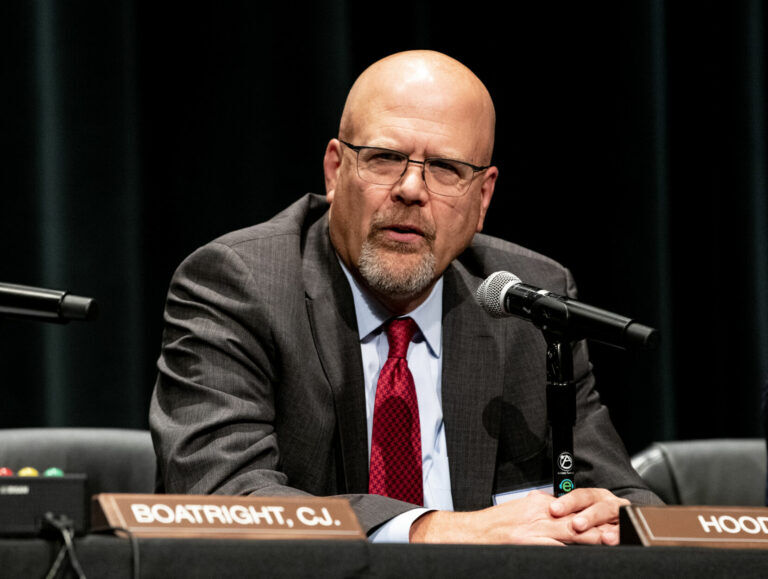
The Colorado Supreme Court has selected Justice William W. Hood III to be the next chief justice, the judicial branch announced on Friday. Hood will succeed Chief Justice Monica M. Márquez, who took over the role in July 2024. “I...

Appeals court upholds Park County trophy hunting conviction
Michael Karlik
michael.karlik@coloradopolitics.com
Updated 7 hours ago
Colorado’s second-highest court clarified on Thursday that a defendant may stand convicted under the state’s trophy hunting laws if he abandons a bear carcass but returns later to remove the meat. Under Colorado law, it is a felony to detach...
Judge grants partial injunction to GEO in fight against state health inspection law
Kyla Pearce
kyla.pearce@gazette.com
Updated 22 hours ago
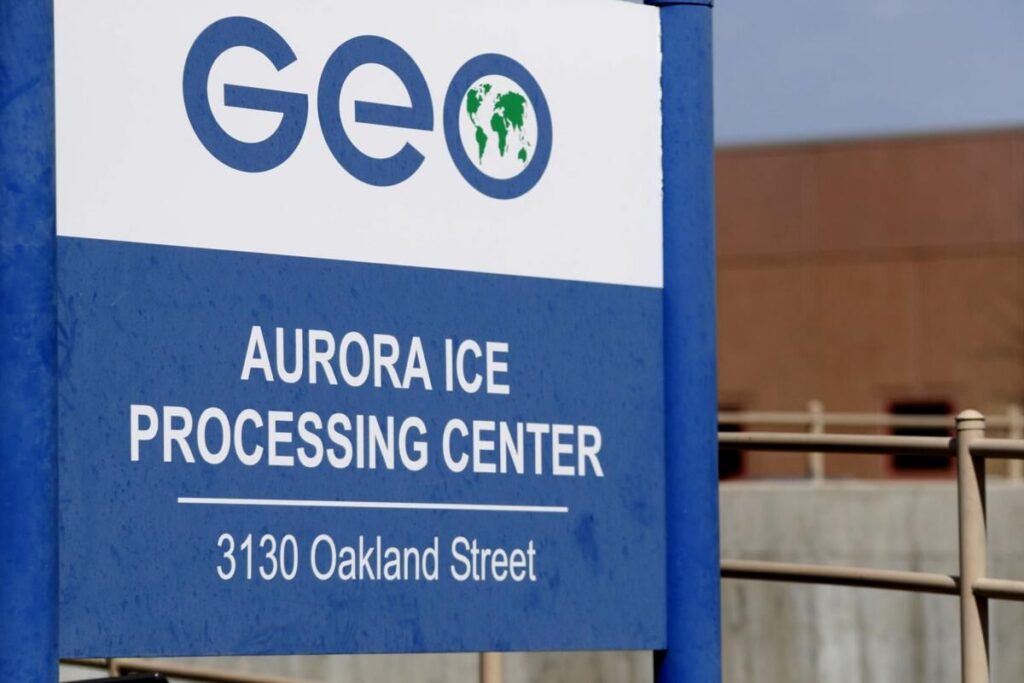
A judge ruled Thursday that The GEO Group does not have to follow parts of a new state law requiring more frequent health and safety inspections at the U.S. Immigration and Customs Enforcement processing center in Aurora. Under the order...

Parker man faces 20 years to life for serial sexual assaults
Nicholas Fogleman
nicholas.fogleman@denvergazette.com
Updated 1 day ago
A 25-year-old Parker man who sexually assaulted three women in 2025 pleaded guilty Wednesday and will serve 20 years to life in prison. Javier Rodriguez-Andrade pleaded guilty to charges stemming from three sexual assaults involving women ages 19 to 24. ...
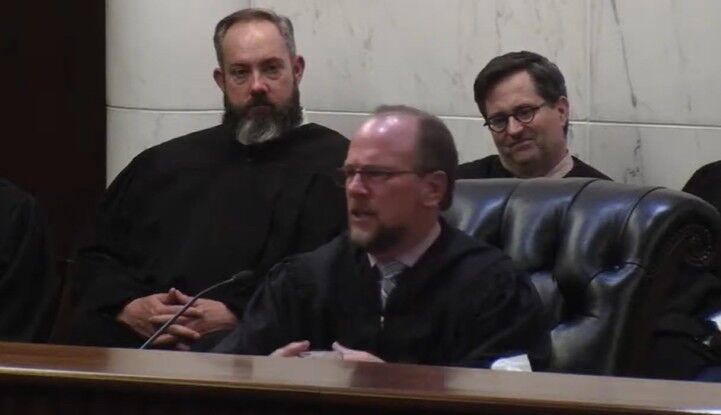
Divided appeals court upholds warrantless DNA collection in Colorado cold case, cautions of government overreach
Michael Karlik
michael.karlik@coloradopolitics.com
Updated 22 hours ago
Colorado’s second-highest court upheld the warrantless collection of a suspect’s DNA from a discarded soda can as constitutional on Thursday, while warning about potential abuse of DNA privacy in the absence of further guardrails. By 2-1, a three-judge Court of...
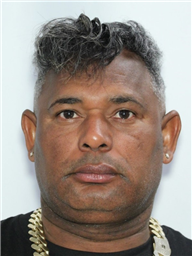
Man charged in Northglenn homicide of wife
Matt Kyle
matt.kyle@denvergazette.com
Updated 1 day ago
A man has been formally charged with murder and burglary relating to a homicide last week in Northglenn. Alexei Munive-Rodriguez, 48, was arrested Sunday after he was at large following the homicide, which occurred Friday. Police were dispatched around 10:30...

10th Circuit grants immunity to officers for fatal Manitou Springs shooting
Michael Karlik
michael.karlik@coloradopolitics.com
Updated 7 hours ago
The Denver-based federal appeals court ruled on Wednesday that responding officers from Manitou Springs and El Paso County cannot be held constitutionally liable for shooting and killing a man after a 20-minute standoff. Wilford Deweese allegedly pulled out a gun...
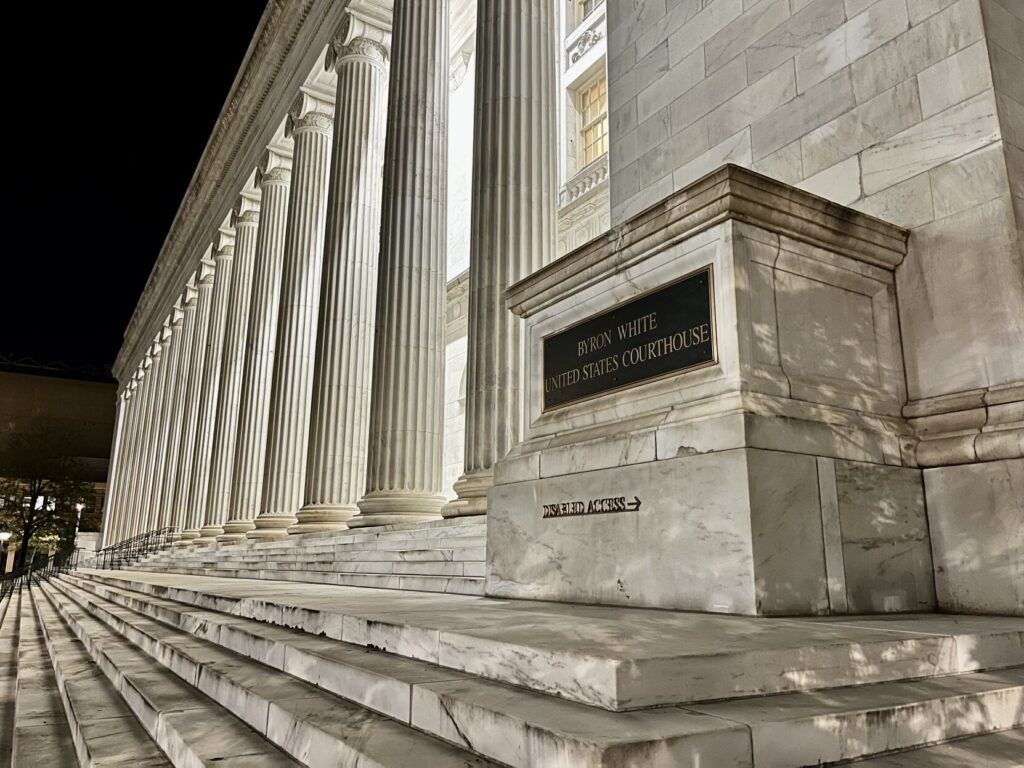
10th Circuit rejects invitation for full-court review of tax-avoidance case
Michael Karlik
michael.karlik@coloradopolitics.com
Updated 2 days ago
The Denver-based federal appeals court declined to reconsider the standards for holding entities liable for their tax-avoidance schemes, with a majority of judges voting against full-court review on Monday. In April, a three-judge panel of the U.S. Court of Appeals...
PREV
PREVIOUS

Legal disputes mean a delay in Marshall fire cleanup as officials play blame game
Charred piles of furniture, cars, fenceposts and foundations destroyed by the Marshall fire will stay put for a while longer as disputes over the multimillion dollar debris cleanup contract are assessed. This means that Boulder County residents who had hoped to begin rebuilding by July 1, the original proposed date for completion of the Debris […]

Bill addressing crime prevention through safer streets clears first committee
One of Democrats’ signature public safety bills for the 2022 session won a 3-2 party-line approval in committee Thursday, but only after a tough grilling from one of the panel’s Republican members. Dubbed “Crime Prevention Through Safer Streets,” Senate Bill 1, which is also a key part of Gov. Jared Polis’ public safety package, allocates $10.3 […]