

Bill addressing crime prevention through safer streets clears first committee
One of Democrats’ signature public safety bills for the 2022 session won a 3-2 party-line approval in committee Thursday, but only after a tough grilling from one of the panel’s Republican members.
Dubbed “Crime Prevention Through Safer Streets,” Senate Bill 1, which is also a key part of Gov. Jared Polis’ public safety package, allocates $10.3 million in one-time general fund grant money that, if enacted, would be administered through the Colorado Department of Public Safety with two temporary employees.
The grant program would improve public safety by making critical upgrades to neighborhoods, sponsors said.
Sen. Janet Buckner, D-Aurora, one of the cosponsors, called it crime prevention through environmental design during the Senate Local Government Committee.
She said the strategy is recognized as an effective tool in reducing crime. The ideas around environmental design include more or better lighting at streets or where building entrances are placed, as well as fence signs, she said, adding there may be parking lots or building entrances that obscure a line of sight, and that increases the risk for crime.
This isn’t about code enforcement, Buckner added.
Co-sponsor Sen. Nick Hinrichsen, D-Pueblo, cited his experience in his day job as an operations supervisor for Pueblo Transit and noted how crews go out early in the morning to clean up trash, including needles, or remove graffiti from public bus stops.
“When you feel safe at a bus stop,” you feel safer in the surrounding area, he said, adding the concept for SB 1 is much the same.
Under the bill, local governments would come up with grant proposals for physical upgrades to address areas with high crime. The process would include an advisory board, as well as approval from Department of Public Safety, Buckner said.
The bill was amended to address one of the early complaints about SB 1 – the exclusion of rural communities. One amendment requires a rural representative on an advisory board. Another amendment makes it clear that the grants cannot be used to hire law enforcement personnel, Buckner said.
Local governments in rural communities and their community partners often lack the personnel to write grant applications, according to Eric Bergman of Colorado Counties, Inc.
Sen. Barbara Kirkmeyer, R-Brighton, who spent 19 years as a Weld County commissioner, peppered the sponsors, as well as witnesses, with questions primarily on the issue of local land use or zoning codes.
Are local governments not already using those codes as tools in crime prevention or do they not understand that crime is occurring in their communities? she asked.
In response to a question from Kirkmeyer, Aurora City Councilwoman Angela Lawson, who supports the bill, said her local government does have land use codes that address buildings, fences, pavement signs, exterior street lighting and landscaping. Aurora’s police also provide an analysis of crime and where it occurs in the city, as well as community policing programs, she said.
But Lawson said her community has faced an upswing in crime, and the bill would give communities like hers a much-needed resource to help reverse increasing crime trends. The bill would help them identify high-crime areas and the best way to use grant dollars for improving those areas, she said.
Lawson said she and another council member went to the northwest Colfax corridor on Tuesday, spending five hours talking to business owners. Later that night, there were break-ins in some of the businesses, she said.
“It’s lack of resources,” Lawson said. “We’re [short] police officers. Resources are just not there.”
Testifying against the bill, Denise Maes of Servicios de la Raza, said that while she acknowledged the bill’s intent, it does not require community involvement. Even the amendment says communities may be involved – but it’s not a mandate, she said.
The bill also lacks accountability, she said. Once the millions of dollars have been spent, the recipients will simply be asked how public safety has been improved, which she said makes the grants a blank check for local governments.
Christie Donnor of the Colorado Criminal Justice Reform Coalition echoed some of the concerns. The theory of crime prevention through environmental design is what brought “broken windows policing,” she said. There are a lot of ways this could go badly, she said.
“It’s awful when things are done to community in the name of helping them,” she said.
Bergman, whose organization seeks amendments to the bill, said his members are concerned the money will go only to Front Range communities and leave out rural areas. Small towns have the same public safety issues as their urban cousins, such as better lighting and design, Bergman said.
Kirkmeyer asked Bergman the same question about land use codes. Bergman said having a code is one thing, but rural communities might not have the resources to make those changes, particularly given other priorities.
“This bill is about the intention to make safer streets,” Kirkmeyer said. “If you’re telling me local communities don’t want to make it their No. 1 priority, then I’m wondering why … You can’t get economic development if you don’t have safer streets and safe neighborhoods.”
She said communities can change building and land use codes to accomplish that happen.
Kirkmeyer argued that while the bill has good intentions, it also infringes on the responsibility of local governments, such as safety and crime prevention, which, she reiterated, can be addressed through building, land use and zoning codes.
“These are things local governments should be doing already,” she asid.
Both the Colorado Municipal League and Colorado Department of Public Safety testified in favor of the bill. Joe Thome, who heads the department’s Division of Criminal Justice, estimated the $10.3 million would provide “dozens and dozens” of grants.
Ignacio Ortez of the Colorado chapter of the American Institute of Architects, said improving the physical environment of “crime-susceptible areas” will dissuade potential offenders.
“The appearance of a place is a factor” and easier to secure when properly maintained, he said.
He cited Union Station, which saw more crimes when the downtown emptied out during COVID-19.
On the flip side, he pointed to RTD’s 15L East Colfax bus and street shelters in Denver and Aurora as examples of the safer streets concept, where shelters are transparent and lit at night with security cameras.
And people like them, he said.
The bill now moves on to the Senate Appropriations Committee.


10th Circuit grants immunity to officers for fatal Manitou Springs shooting
Michael Karlik
michael.karlik@coloradopolitics.com
Updated 9 hours ago
The Denver-based federal appeals court ruled on Wednesday that responding officers from Manitou Springs and El Paso County cannot be held constitutionally liable for shooting and killing a man after a 20-minute standoff. Wilford Deweese allegedly pulled out a gun...
10th Circuit rejects invitation for full-court review of tax-avoidance case
Michael Karlik
michael.karlik@coloradopolitics.com
Updated 6 hours ago
The Denver-based federal appeals court declined to reconsider the standards for holding entities liable for their tax-avoidance schemes, with a majority of judges voting against full-court review on Monday. In April, a three-judge panel of the U.S. Court of Appeals...
GOP gubernatorial candidate Victor Marx pushes aggressive water-storage expansion at Colorado Water Congress
Marianne Goodland
marianne.goodland@coloradopolitics.com
Updated 10 hours ago
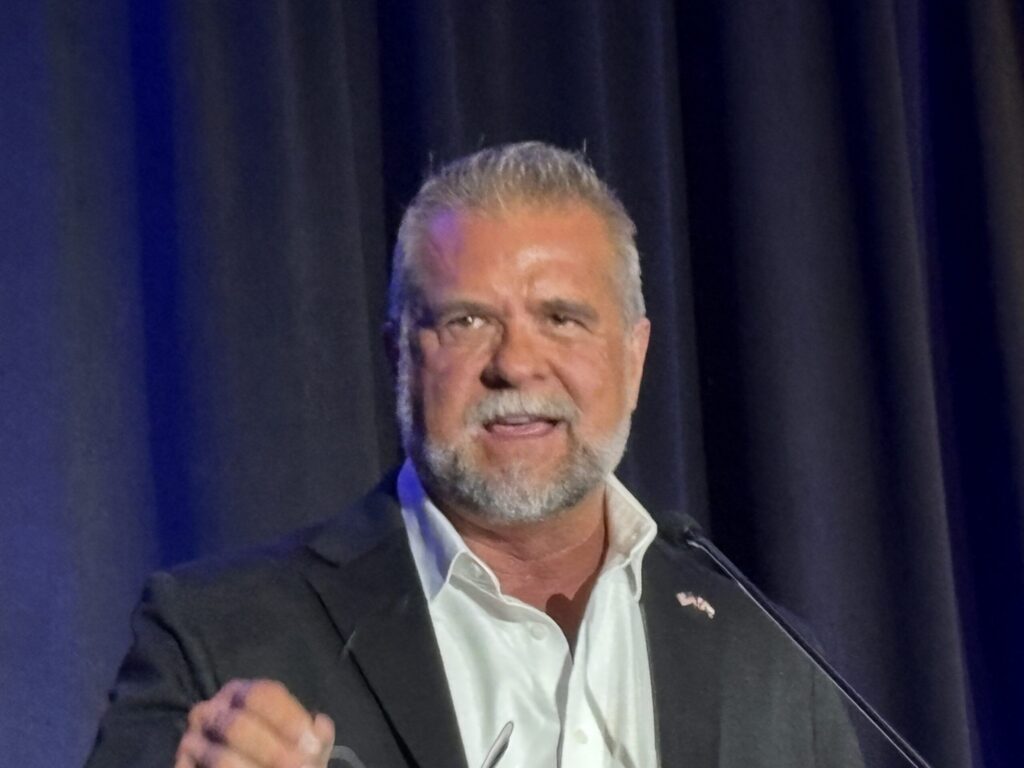
Victor Marx, the Republican nominee for governor, took the spotlight Wednesday during the opening day of the Colorado Water Congress, laying out how he says the state should approach its water future. Marx told the standing-room-only audience in Steamboat Springs...

Colorado AG sues GEO Group over noncompliance with tuberculosis investigation
Kyla Pearce
kyla.pearce@gazette.com
Updated 8 hours ago
The Colorado Attorney General’s Office on Wednesday filed a lawsuit against GEO Group, which operates the Aurora ICE Processing Center, alleging the company failed to comply with a state tuberculosis investigation. Weiser’s lawsuit demands that GEO provide “critical information” needed...
U.S. Rep. Lauren Boebert stresses storage, forest health and Upper Basin rights at Colorado Water Congress
Marianne Goodland
marianne.goodland@coloradopolitics.com
Updated 9 hours ago
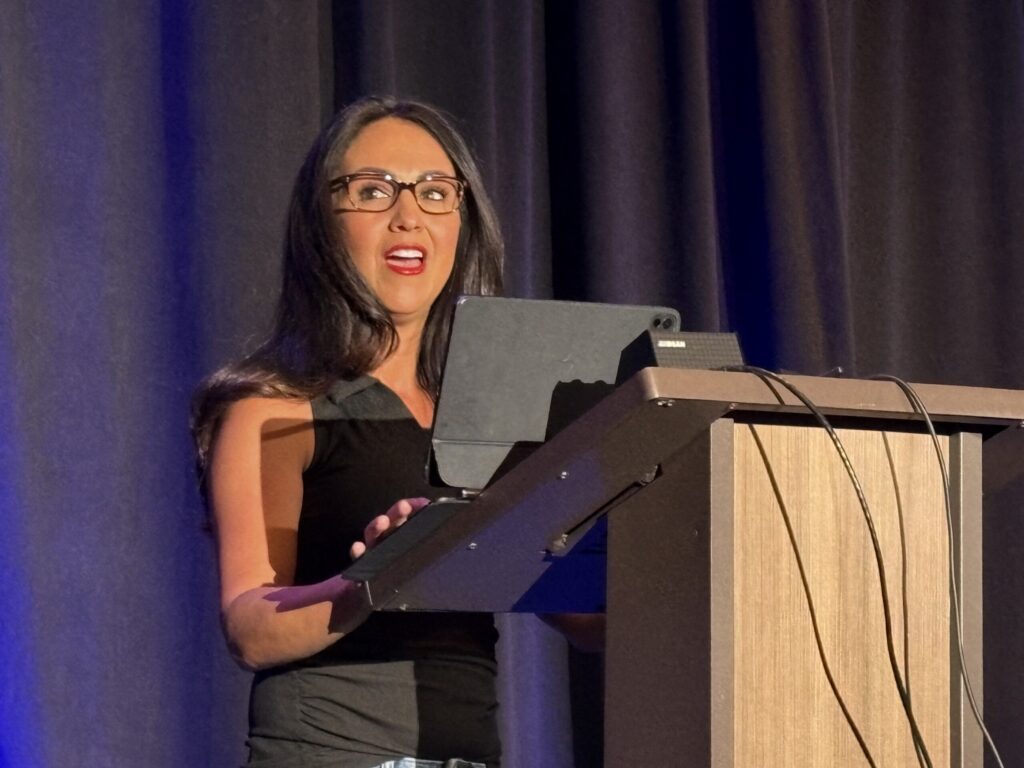
Republican U.S. Rep. Lauren Boebert used her brief Wednesday appearance at Colorado Water Congress to tout her record on delivering water projects for the state and her district. Boebert, who is running for her second term representing Colorado’s 4th Congressional...

Trump has a 96% endorsement success rate. Here are the Republicans he’s backed who have lost
Mabinty Quarshie
mabinty-quarshie@coloradopolitics.com
Updated 12 hours ago
President Donald Trump’s 2026 primary endorsement success rate remains staggeringly high, but the president has seen a growing number of losses stack up in recent weeks. According to Ballotpedia, Trump has endorsed in 313 U.S. Senate, U.S. House, and state...
Colorado judge blasts state forensics lab in dismissing child sex case
Jenny Deam
jenny.deam@gazette.com
Updated 7 hours ago
In a potentially widely consequential action, a Weld County district judge dismissed a child sexual assault case, citing the ongoing scandal at the Colorado Bureau of Investigation’s forensic lab that “has left a dark mark on the history of Colorado...

Colorado officials urge stronger water safety after 8 drownings and multiple Front Range rescues
Elizabeth Pond
elizabeth.pond@denvergazette.com
Updated 6 hours ago
At least eight people have drowned in Front Range waters since mid-March, including two at Eleven Mile Reservoir, three at Cherry Creek Reservoir, one at Rockbridge Lake and two at Lake Pueblo State Park. In the wake of these deaths,...

Vehicle registration crackdown across Front Range starts next week
Nick Smith
nick-smith@coloradopolitics.com
Updated 14 hours ago
Colorado drivers with expired tags or unregistered vehicles still have time to get registered before a scheduled enforcement crackdown starts next week. According to an announcement from the Colorado Springs Police Department, a multi-agency enforcement effort will happen across the...

Aurora grapples with affordable housing needs, deficits
Kyla Pearce
kyla.pearce@gazette.com
Updated 14 hours ago
Aurora is grappling with affordable housing needs as demand for project funding increases and the state cuts grant money. Currently, the city needs about 12,000 affordable housing units, Martin Petrov at Aurora Housing Authority told members of the Housing, Neighborhood...
PREV
PREVIOUS

State employees do not have right to rescind their resignation, appeals court says
State agencies do not have to honor an employee’s request to withdraw their resignation, the Court of Appeals has ruled. A three-judge panel for the appellate court considered whether the state constitution, which guarantees that employees in the Colorado personnel system hold their jobs “during efficient service or until reaching retirement age,” allows workers to […]

Senate panel advances remedy for immigration consequences of guilty pleas
A Senate panel unanimously advanced legislation Thursday that, if enacted, would allow immigrants who plead guilty to certain crimes a way to remedy resulting immigration consequences. Senate Bill 103 would let criminal defendants challenge their guilty pleas for municipal offenses and class 1 or 2 misdemeanors if they had not been advised of the immigration […]