

COURT CRAWL | Status of federal judges, conflict-of-interest review indicates no bias

Welcome to Court Crawl, Colorado Politics’ roundup of news from the third branch of government. Last week, Colorado got one new federal judicial nominee, one new federal magistrate judge, and one nominee still stuck in the Senate. Plus, a conflict-of-interest review of one judge’s ruling came back clean.
Status of federal judges
? The president has nominated another person to a lifetime appointment on Colorado’s federal trial court: U.S. Magistrate Judge Nina Y. Wang. As a magistrate judge since 2015, Wang has handled many of the same types of duties as a district court judge, including deciding the outcome of civil cases. Colorado Politics previously reported that magistrate judges in Colorado have occasionally received nominations to the U.S. District Court bench, but none of them has succeeded in winning Senate confirmation to date.
? If confirmed, Wang would succeed U.S. District Court Judge Christine M. Arguello in July. Arguello is an appointee of former President George W. Bush. Wang is the Biden administration’s third nominee to the seven-member trial court, and his fourth federal judicial nomination overall for Colorado. It’s no secret that President Joe Biden has focused on appointing women and people of color to the bench, but what’s striking is that Biden has already nominated as many women to Colorado’s U.S. District Court as all previous presidents combined.

? At the same time, another judicial nominee remains bogged down in the Senate. Last week, Charlotte N. Sweeney‘s nomination received a tie vote in the Senate Judiciary Committee, which is evenly divided between Democratic and Republican members. Readers may recall the same thing happened in December during the previous session of Congress.
? What happens now? Well, the Senate will still have to vote on cloture and then on the nomination vote itself. But in instances where a committee fails to support a nomination, the majority leader must schedule an additional vote to discharge the nomination from committee. The result is extra delay on a nomination that no senator, to the knowledge of the Court Crawl, has stated a reason for opposing.
On an absolutely unrelated note, public approval of Congress is down to 18%.

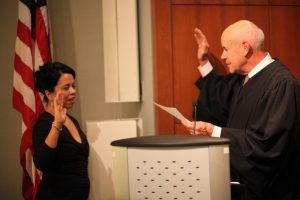
? Wrapping up personnel news at the U.S. District Court, Deputy Attorney General Maritza Dominguez Braswell has been hired as the newest magistrate judge for an eight-year term. She succeeds Kathleen M. Tafoya, who is based in Colorado Springs.
No bias detected
? In September, the Wall Street Journal revealed that 131 federal judges around the country had handled cases in which they actually had an undisclosed financial investment in one of the parties. Among those was Colorado’s U.S. District Court Senior Judge R. Brooke Jackson, who neglected to recuse himself from at least 36 cases involving corporations like Pfizer or Facebook in which he or his wife held stock.
? The clerk of the district court has sent letters to the parties in those cases notifying them of the financial conflicts of interest. Last week, one of Jackson’s colleagues, Senior Judge John L. Kane, reviewed one lawsuit involving Wells Fargo that Jackson dismissed. Despite Jackson’s investment in Wells Fargo, Kane found no bias, and called Jackson’s conclusions “unassailable.”
What’s new in the appellate courts?
? The Colorado Supreme Court has agreed to hear five appeals implicating the insanity defense, the evidence prosecutors need to prove a prior offense, the ability of defendants to question an alternate suspect on the witness stand, and two cases involving oil and gas disputes.
? The Court of Appeals was concerned that Adams County prosecutors were trying to get a judge to agree that medical marijuana use was sufficient grounds to revoke someone’s probation – even though that’s not what the law says.
? A Colorado Springs police officer testified that he recognized a bag of cocaine from 14 months earlier, even though he hadn’t logged it into evidence and it was unclear what happened to the bag after he handed it to another officer at the crime scene. The Court of Appeals reversed the defendant’s drug conviction because the chain of custody was broken.
? Although the Court of Appeals said a state trooper could not tell the jury about how the defendant fit within the trooper’s “profile” of a drug courier, the appeals court said it was fine how the trooper used that profile to detain the defendant in the first place.
Six-figure settlement against top Mesa County judge
? Elson Foster filed a federal lawsuit after he was arrested seven times in Mesa County based on an expired protection order. Essentially, after Foster finished his sentence, the court did not void the protection order against Foster in its computer system, leading police to arrest him for violating conditions that were not actually in effect.
? Foster sued Chief Judge Brian J. Flynn, who was informed about the risk of wrongful arrests and allegedly failed to fix the problem. A magistrate judge had harsh words for Flynn over the summer while recommending the lawsuit be allowed to proceed for violations of Foster’s constitutional rights.

? Now, the state has settled the lawsuit with Foster for $100,000. Separately, the Department of Corrections has agreed to regularly share information with the Judicial Department about who is being released from custody or finishing parole, so that protection orders can be updated.
Miscellaneous decisions
? Jury trials in Denver have now been postponed through Feb. 11 due to continuously high COVID-19 caseloads.
? A federal judge found the City and County of Denver legitimately fired an employee not because she was white, but because she was falsely presenting herself as a police officer.
? Although Westminster had conduct-related reasons for terminating a police officer, a federal judge determined that a jury could plausibly find disability discrimination was behind the decision.
? There were factual discrepancies of what happened the night an Adams County deputy fatally shot a 19-year-old man. Therefore, a federal judge decided a jury would need to hear the excessive force lawsuit.


Colorado board permits state to appeal injunction against arthritis drug price cap
Marissa Ventrelli
marissa.ventrelli@coloradopolitics.com
Updated 7 hours ago
A Colorado board voted Friday to allow the Attorney General’s Office to fight an injunction against a price cap on a drug that treats arthritis. A U.S. district court judge had granted the company Amgen a preliminary injunction, temporarily blocking...

Federal judge rejects constitutional claims, ‘expressions of hatred’ by Club Q defendant
Michael Karlik
michael.karlik@coloradopolitics.com
Updated 7 hours ago
A federal judge rejected a defendant’s claims that he received constitutionally ineffective assistance of counsel while facing federal hate crime and firearms charges for murdering five people at a Colorado Springs LGBTQ nightclub in 2022. Anderson Lee Aldrich is serving...

Divided 10th Circuit upholds Colorado congestion fee on car rentals
Michael Karlik
michael.karlik@coloradopolitics.com
Updated 3 hours ago
The Denver-based federal appeals court concluded on Monday that a 2024 “congestion impact fee” that lawmakers imposed on short-term vehicle rentals did not conflict with a federal prohibition on certain airport-related charges. Beginning in the 1970s, Congress began limiting the...
10th Circuit dismisses woman’s lawsuit following 10-year attempt to undo restraining order
Michael Karlik
michael.karlik@coloradopolitics.com
Updated 3 days ago
The Denver-based federal appeals court rejected a woman’s challenge on Friday to a restraining order imposed on her more than a decade ago, finding that she cannot credibly claim she will be prosecuted for violating the restraining order through her...
10th Circuit dismisses woman’s lawsuit following 10-year attempt to undo restraining order
Michael Karlik
michael.karlik@coloradopolitics.com
Updated 3 days ago
The Denver-based federal appeals court rejected a woman’s challenge on Friday to a restraining order imposed on her more than a decade ago, finding that she cannot credibly claim she will be prosecuted for violating the restraining order through her...
Colorado equal pay law does not require plaintiffs to allege gender-based retaliation, appeals court finds
Michael Karlik
michael.karlik@coloradopolitics.com
Updated 2 days ago
The 2019 Colorado law aimed at rooting out pay discrimination on the basis of sex does not require a plaintiff to allege their employer retaliated against them for sex- or gender-related reasons, the state’s second-highest court decided on Thursday. Lawmakers...
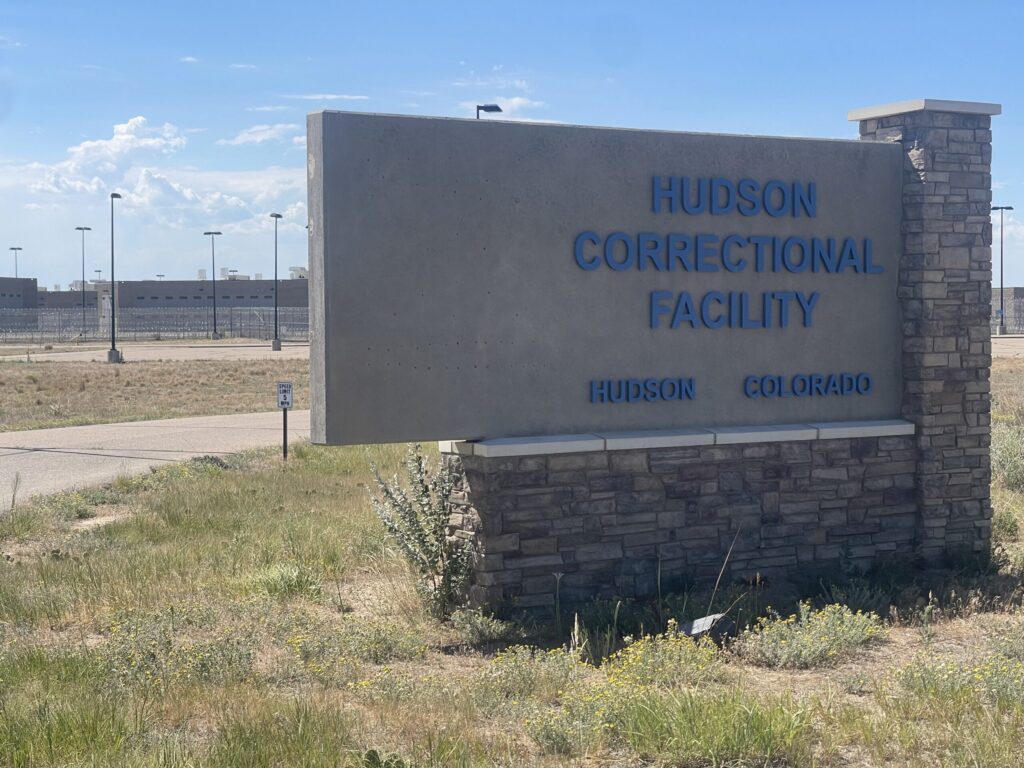
Hudson faces lawsuit over ICE detention facility
Nicole C. Brambila
nicole-c-brambila@coloradopolitics.com
Updated 4 days ago
A nonprofit organization filed a lawsuit against the Town of Hudson Wednesday, challenging plans to reopen a former federal prison in the town as a U.S. Immigration and Customs Enforcement detention facility. Together Colorado, along with Janet E. Carlson, filed...
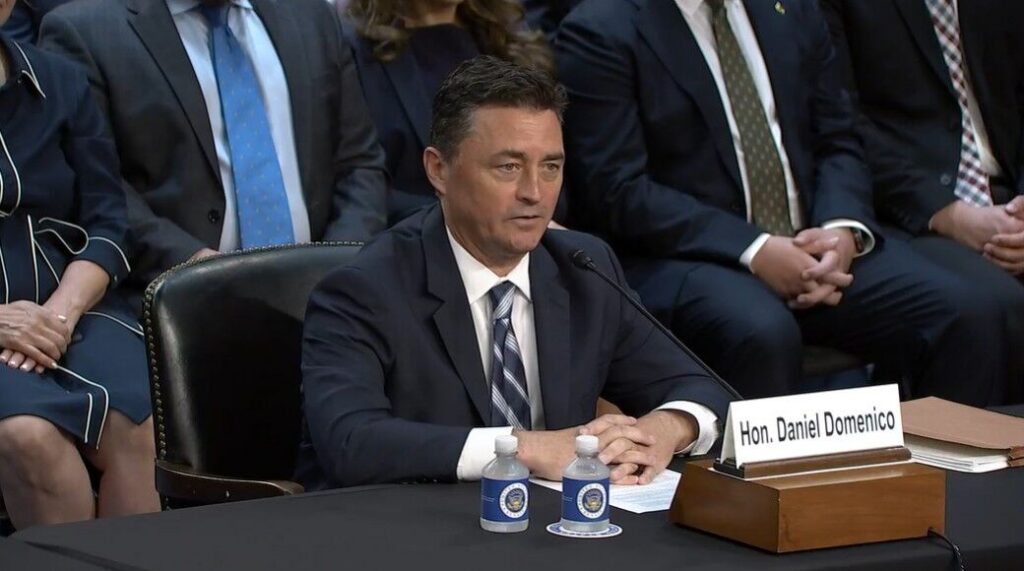
Senate committee advances Trump’s 10th Circuit nominee, as Domenico responds to questions about delays
Michael Karlik
michael.karlik@coloradopolitics.com
Updated 4 days ago
The U.S. Senate Judiciary Committee advanced President Donald Trump’s nominee to the Denver-based federal appeals court on Thursday by a party-line vote of 12-10. U.S. District Court Judge Daniel D. Domenico, who was Trump’s first-term appointee to Colorado’s federal trial...
Colorado justices to hear embryonic donation dispute
Michael Karlik
michael.karlik@coloradopolitics.com
Updated 4 days ago
The Colorado Supreme Court announced on Monday that it will decide whether lower court judges properly applied its framework for adjudicating disputes over the fate of pre-embryos, in which one person wants to use them to become a parent and...
Isolation, emotion, persona: Colorado judicial programming prepares people for life on the bench
Michael Karlik
michael.karlik@coloradopolitics.com
Updated 4 days ago
As a trial judge and now as a member of the Colorado Supreme Court, Justice Carlos A. Samour Jr. has heard the view that being a judge is isolating. “In neither court have I felt isolated. I’ve always interacted a...
PREV
PREVIOUS

State AG: Smash and grab Colorado bicycle theft ring has ties to Mexico
Just after midnight on Nov. 19, 2019, a huge, banana-yellow moving truck with the company name “Denver Small Moves” emblazoned on the side circled a neighborhood bicycle shop. Surveillance video shows a man dressed in black get out of the truck and creep across the sidewalk, casing the expensive merchandise in the store windows of […]

Denver suspends jury trials until Feb. 11 citing COVID-19
Jury trials in Denver won’t resume until at least Feb. 11 due to the recent surge of COVID-19 cases caused by the omicron variant. Chief Judge Michael A. Martinez with the Second Judicial District, which includes Denver, made the executive order on Friday. He wrote while cases have began to slightly decrease, local health official […]