

Conservative groups, free speech advocates line up behind Colorado woman’s SCOTUS appeal
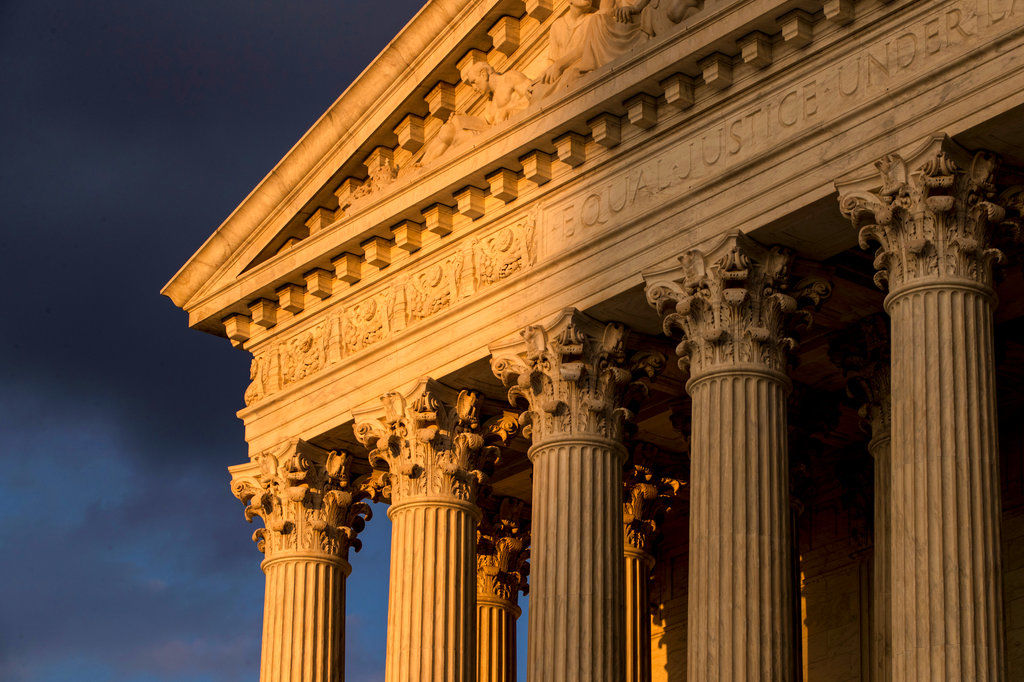
Dozens of groups, ranging from free speech scholars and state attorneys general to all three of Colorado’s Republican members of Congress, have submitted briefs to the U.S. Supreme Court urging it to hear the appeal of a Colorado woman whose Christian faith will not permit her to create wedding websites featuring same-sex couples.
Lorie Smith is petitioning the nation’s highest court after the federal appeals court based in Denver ruled in July that Colorado’s anti-discrimination law compelled her to create content for same-sex and opposite-sex weddings alike. Smith, the owner of graphic and website design company 303 Creative, maintained that the government could not force her to violate her religious beliefs, specifically that marriage is between a man and a woman.
The Colorado Attorney General’s Office and other defenders of the Colorado Anti-Discrimination Act believe the law is narrowly-tailored to ensure businesses do not discriminate based on a protected characteristic: sexual orientation.
Smith’s backers, though, argue her First Amendment rights are paramount.
Anti-discrimination laws “are important tools to eliminate specific kinds of invidious discrimination. But the First Amendment’s Free Speech Clause forbids States from using public-accommodation laws to compel the expression of citizens who create custom speech for a living,” wrote the attorneys general of 16 states, led by Nebraska and Arizona.
Fifteen U.S. senators and 29 U.S. representatives, all Republicans, also submitted a brief suggesting Colorado could exempt “message-based services” from the the anti-discrimination law, which would leave “the vast majority” of LGBTQ protections in place. U.S. Reps. Lauren Boebert, Ken Buck and Doug Lamborn were among the signatories to the brief.
More bluntly, one collection of conservative groups – including one whose website links to an article titled “Is Voting Democrat an Evil Act in God’s Eyes?” – called state anti-discrimination laws “a step on the road to Fascism.”
By a 2-1 decision, a panel for the 10th Circuit upheld CADA, as the state’s anti-discrimination law is known, while acknowledging that it compelled Smith to endorse a viewpoint at odds with her religious beliefs. The dissenting member of the panel, Chief Judge Timothy M. Tymkovich, blasted the majority’s reasoning for forcing her to deliver a “government-approved message.”
“This is viewpoint discrimination on steroids,” argued the Institute for Faith and Family and the Jewish Coalition for Religious Liberty in their Supreme Court brief. Quoting from Tymkovich, an appointee of President George W. Bush, the groups wondered whether the 10th Circuit decision meant Colorado could compel Muslim or atheist artists to also create products that were at odds with their belief systems.
The brief also contended that the same free speech protections that allowed LGBTQ Americans to gain rights in recent decades were now being denied to others.
Through CADA, a group of 17 First Amendment scholars elaborated, “Colorado has inserted itself into the marketplace of ideas. Acting not as an umpire calling balls and strikes, but rather as a censor, Colorado targets specific speech based on the content of the speaker’s expression.” The scholars also rejected the 10th Circuit majority’s belief that because Smith is participating in the marketplace, rather than doing charity work, the state may regulate her speech-based services.
Under CADA, it is illegal to deny access to goods and services in places of public accommodation, meaning businesses, based on sexual orientation. Smith maintains she will not discriminate against LGBTQ clients, only that she seeks to advertise on her company website that she will not design wedding websites for marriages that are not between a man and a woman.
The case is reminiscent of the Supreme Court’s 2018 decision in Masterpiece Cakeshop v. Colorado Civil Rights Commission, in which a Lakewood baker refused to create a wedding cake for a same-sex couple. Although the Court’s majority concluded it was “unexceptional that Colorado law can protect gay persons,” it decided in favor of the cake shop for reasons specific to that case.
The justices have agreed to hear at least four religious liberty cases in their current term, which include questions of state funding for faith-based curricula and whether religious advisors can be in contact with death row inmates in Texas at the time of their execution.
The Colorado Attorney General’s Office has until Dec. 8 to respond to Smith’s Supreme Court petition.
The case is 303 Creative et al. v. Elenis et al.

Colorado justices say insurers may access policyholders’ medical info in denied-benefits litigation
Michael Karlik
michael.karlik@coloradopolitics.com
Updated 4 hours ago
The Colorado Supreme Court declined on Monday to expand its narrow prohibition on insurance companies accessing policyholders’ medical information, clarifying that a dispute over an insurer’s bad-faith decision to deny benefits is the only situation where a company is limited...
Colorado Supreme Court declines to loosen requirements for insurance company defendants
Michael Karlik
michael.karlik@coloradopolitics.com
Updated 2 hours ago
The Colorado Supreme Court declined last week to reconsider its longstanding expectations for insurance company defendants, and agreed that an insurer failed to properly raise its defenses against a policyholder’s breach-of-contract lawsuit. When an insured driver has an accident with...

Teen defendant properly transferred from youth detention to jail, Colorado justices conclude
Michael Karlik
michael.karlik@coloradopolitics.com
Updated 9 hours ago
Colorado law required the transfer of a teenage murder suspect from youth detention to the county jail when he turned 18, the state Supreme Court ruled last week. Prosecutors have accused Issac James Lawrence of killing a younger boy and attempting to...
Divided Colorado Supreme Court finds parental anonymity in ‘safe haven’ law
Michael Karlik
michael.karlik@coloradopolitics.com
Updated 2 hours ago
Parents who surrender their newborns under Colorado’s “safe haven” law are entitled to anonymity and confidentiality in any subsequent adoptive proceedings involving the child, the state Supreme Court ruled on June 8. Colorado’s law, like its counterparts across the country,...
Safe2Tell tip, corroborated details provided grounds to search backpack, Colorado justices rule
Michael Karlik
michael.karlik@coloradopolitics.com
Updated 2 hours ago
The Colorado Supreme Court decided last week that a tip submitted through the state’s confidential school safety system, plus a Douglas County administrator’s corroboration of some details, provided reasonable suspicion to search a student’s backpack for drugs. Someone submitted a...
Appeals court finds opening in Colorado Supreme Court’s framework for child neglect cases
Michael Karlik
michael.karlik@coloradopolitics.com
Updated 1 day ago
Colorado’s second-highest court squeezed through an opening last week in a controversial state Supreme Court decision from 2025, concluding that the justices had not prohibited a child’s legal representative from being the one to request termination of parental rights in...
Colorado Supreme Court upholds police search of car based on arm movements
Michael Karlik
michael.karlik@coloradopolitics.com
Updated 2 days ago
The Colorado Supreme Court decided last week that Denver officers’ search of a vehicle was constitutional, based on their perception of the occupants’ arm movements that a trial judge found to not be credible. Officers Keegan Grubb and Richard Eberharter...

10th Circuit tosses Pueblo County sheriff defendants’ appeal in fatal shooting lawsuit
Michael Karlik
michael.karlik@coloradopolitics.com
Updated 2 days ago
The Denver-based federal appeals court rejected an attempt from Pueblo County sheriff’s employees on Wednesday to rely on their own version of the facts to escape liability for fatally shooting an unarmed man outside a middle school. A trial judge...
Colorado justices uphold strict interpretation of consumer protection law against debt collector
Michael Karlik
michael.karlik@coloradopolitics.com
Updated 2 days ago
The Colorado Supreme Court concluded last month that a debt collector failed to comply with state law by suing a woman for an unpaid credit card debt without documentation that it owned her account. Portfolio Recovery Associates, LLC filed a...
Colorado justices say judges can nearly eliminate parenting time without it being a ‘restriction’
Michael Karlik
michael.karlik@coloradopolitics.com
Updated 3 days ago
The Colorado Supreme Court concluded last month that judges can reduce the number of days a parent spends with their child post-divorce to just above zero without it rising to the level of a “restriction” that requires more rigorous justification...
PREV
PREVIOUS

State parks and wildlife to lift fishing closure of Yampa south of Stagecoach
The Yampa River south of Stagecoach Reservoir dam, which has been closed to fishing since May 24, is about to reopen, according to an announcement Friday from the Colorado Division of Parks and Wildlife (CPW). “Stream flow has stabilized at 40 cfs (cubic fee per second) downstream of the dam and all indications are that […]

Shad Murib stepping down as Hickenlooper's state director
U.S. Sen. John Hickenlooper’s state director, Shad Murib, is stepping down from the position after two years working for the Colorado Democrat’s campaign and Senate office, a spokeswoman said Friday. Murib, who is married to state Sen. Kerry Donovan, D-Edwards, plans to start a political consulting firm and develop business at the Donovan family’s cattle […]