

Appeals court troubled by judge’s handling of alleged picture-taking of jurors
The Court of Appeals expressed concern on Thursday that a La Plata County judge may have effectively gaslighted some jurors by saying they did not see what they thought they saw: the defense attorney discreetly taking their picture with her cell phone.
Cruz Frederick Baca, in appealing his vehicular assault and related drunk driving convictions, argued that District Court Judge William L. Herringer failed to adequately investigate and declare a mistrial after three jurors at his 2017 trial came forward alleging Baca’s lawyer used her phone to take a picture of them. Instead, the judge told the jurors they must have misread the situation.
The jurors had reported what they saw to the bailiff and asked whether photography was allowed. Herringer took the issue to the attorneys, and Baca’s lawyer denied photographing the jurors. She offered to let Herringer look at the photos on her phone, which he declined to do.
But when the defense attorney raised the possibility that the jurors’ mistaken observation might compromise Baca’s right to a fair trial, Herringer rebuffed her request to question the three jurors individually. Instead, he addressed the jury as a whole, alerting them that some jurors were “under the impression” that their pictures were taken.
“I will tell you that counsel’s indicated that that’s not the case and there must be some misunderstanding,” the judge said. “So I just wanted to assure you that that did not happen and it must have been some misinterpretation in terms of how the phone was being used.”
He added that “hopefully, that addresses it,” and asked anyone who felt the controversy affected their judgment to bring it to the court’s attention. The defense remained worried that the three jurors may not have trusted Baca’s attorney even after the judge’s comments, but Herringer denied a motion to declare a mistrial.
A three-judge panel for the Court of Appeals indicated its concern with how Herringer handled the situation, deciding that there was, in fact, the potential for jurors to harbor a bias against the defense as a result of the episode.
“The jurors were concerned enough to report the conduct to the bailiff. The allegation cannot be dismissed as a mere innocuous misunderstanding,” wrote Judge Elizabeth L. Harris in the panel’s opinion. She added that the jurors reportedly saw the lawyer point her phone in their direction and press a button – an observation that Herringer characterized as “some misinterpretation.”
“For one thing, we are skeptical that the court’s instruction would have persuaded the three jurors that they did not see what they thought they had seen,” Harris explained. “While the court has discretion to fashion an inquiry…the court does not have discretion to forgo any inquiry at all.”
Ultimately, the appeals panel decided against reversing Baca’s convictions due to overwhelming evidence that he had committed the offenses. Instead, the panel faulted Herringer for not following the protocol the Colorado Supreme Court laid out in 1991, after a local newspaper article revealed a defendant’s prior conviction in the middle of his trial. The Court determined that judges must analyze whether such outside information would potentially bias the jury, whether any juror learned of the information and, if so, whether it affected their ability to be fair.
In Baca’s case, the alleged picture-taking may have had a prejudicial effect. The fact that Herringer put the burden on jurors to self-report their doubts instead of investigating for himself was insufficient, Harris wrote.
The incident illustrates how technology in courtrooms, even in the hands of attorneys, can cause logistical headaches or worse. In 2018, WGLT radio in Illinois reported that surreptitious use of cell phones was beginning to affect witnesses, rather than jurors. Witness intimidation was a principle reason for the decision to ban cell phones at the McClean County courthouse in central Illinois.
“We had instances of people filming testimony on their phone and then posting it online to intimidate people,” county Sheriff Jon Sandage said. “Not only is it a security issue for witnesses, but it could also be a security issue for courthouse staff.”
The incident in La Plata County more closely resembled the circumstances that a federal appeals court based in Virginia considered last year. In that instance, a juror reported that family or witnesses for the defendants photographed or recorded her with their phones in the courthouse hallway. Although the trial judge was concerned about juror intimidation, there was no investigation into how the allegations affected the rest of the jury. That, the appeals court said, was a mistake.
The case is People v. Baca.

10th Circuit rebuffs government, rules against shift to mandatory immigration detention
Michael Karlik
michael.karlik@coloradopolitics.com
Updated 11 hours ago
The Denver-based federal appeals court ruled on Tuesday against the government’s broad assertion of authority to keep people in immigration custody without the opportunity to demonstrate their suitability for release on bond. Although the regional appeals courts have reached different...
Appeals court revives tenants’ lawsuit over landlords’ illegal fee demands
Michael Karlik
michael.karlik@coloradopolitics.com
Updated 8 hours ago
Colorado’s second-highest court revived a proposed class-action lawsuit against landlords and other entities last month, concluding that state law did not permit the practice of demanding that tenants pay attorney fees in certain eviction proceedings. In 2021, lawmakers enacted a...
Appeals court reverses Jeffco assault convictions due to omitted jury instruction
Michael Karlik
michael.karlik@coloradopolitics.com
Updated 8 hours ago
Colorado’s second-highest court agreed last month that a Jefferson County defendant’s assault convictions could not stand because his jury should have been allowed to consider whether he used force against a bar patron to defend his girlfriend from inappropriate touching....
Colorado Supreme Court tosses man’s lawsuit over daughter’s traffic death
Michael Karlik
michael.karlik@coloradopolitics.com
Updated 7 hours ago
The Colorado Supreme Court applied a confusing matrix of conditions and deadlines in state law to conclude on Monday that a man waited too long to sue after his daughter was rendered unconscious and later died from a vehicle accident....
U.S. Supreme Court upholds state laws banning transgender girls and women from school athletic teams
Nico Brambila
nico.brambila@denvergazette.com
Updated 11 hours ago
WASHINGTON • The U.S. Supreme Court on Tuesday upheld state laws barring transgender girls and women from playing on school athletic teams. The court’s conservative majority ruled that state bans in Idaho and West Virginia don’t violate the U.S. Constitution...
Colorado Supreme Court upholds child abuse convictions despite faulty jury instruction
Michael Karlik
michael.karlik@coloradopolitics.com
Updated 2 days ago
The Colorado Supreme Court decided on Monday that a San Miguel County jury properly convicted a defendant of child abuse resulting in death, even though the instructions potentially allowed jurors to avoid finding that the child abuse resulted in death....
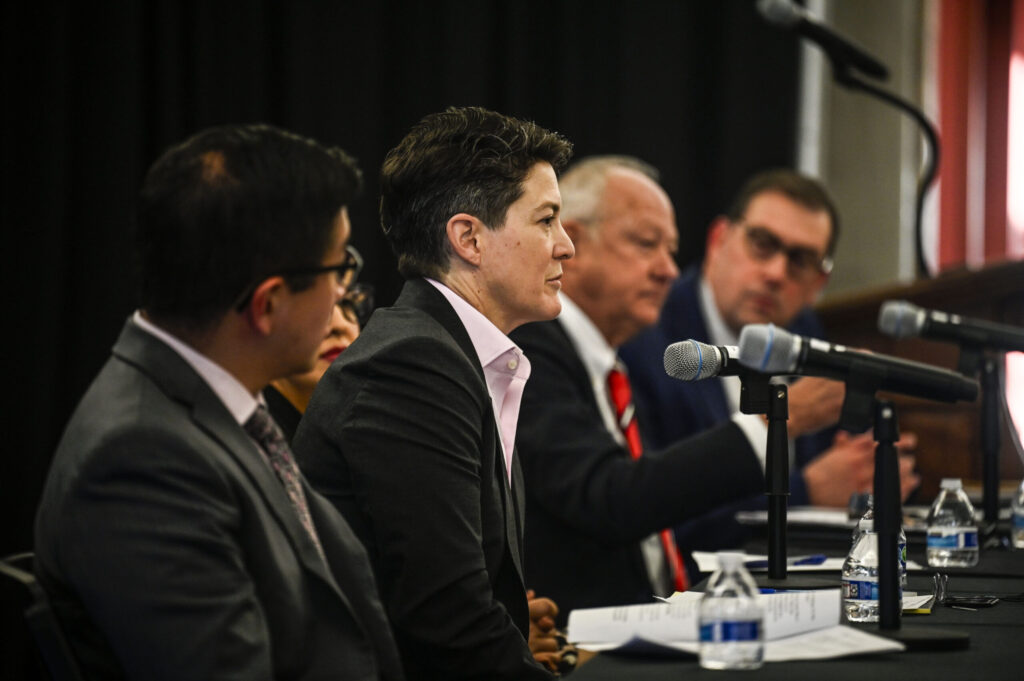
Colorado justices say group that spent $4M on ballot initiatives does not have to disclose donors
Michael Karlik
michael.karlik@coloradopolitics.com
Updated 2 days ago
The Colorado Supreme Court ruled on Monday that an organization that spent $4 million to advocate on ballot initiatives in the 2020 election is not required to disclose its donors and spending. The Supreme Court acknowledged that multiple factors suggested...
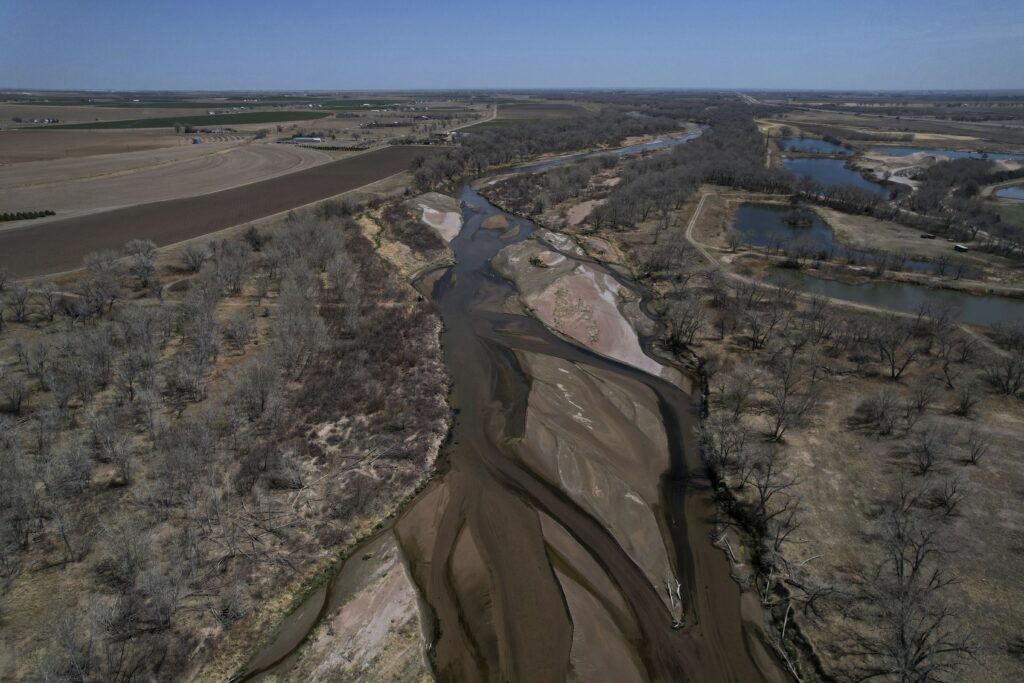
Colorado–Nebraska water clash heads to US Supreme Court as canal fight intensifies
Marianne Goodland
marianne.goodland@coloradopolitics.com
Updated 2 days ago
The U.S. Supreme Court on Monday agreed to hear Nebraska’s lawsuit against Colorado over the Perkins County canal, a move that advances a legal dispute likely to take years to resolve. The proposed Perkins County canal would run through land...
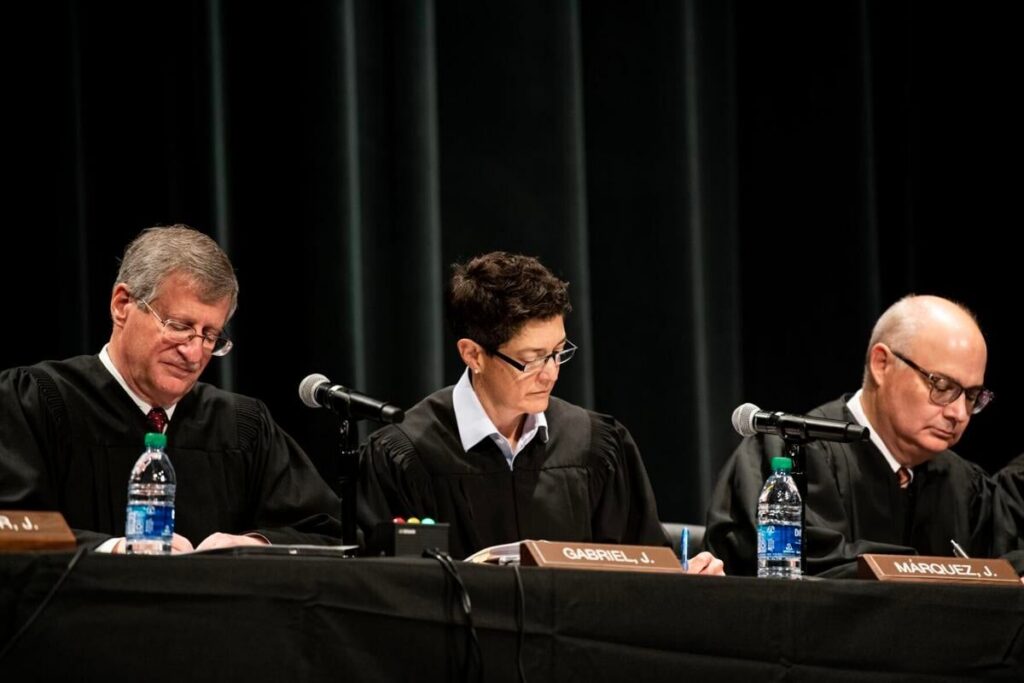
Colorado Supreme Court: Redistricting plans for 2028 election cannot proceed under state constitution
Michael Karlik
michael.karlik@coloradopolitics.com
Updated 1 day ago
The Colorado Supreme Court blocked all attempts at redrawing congressional district boundaries for the 2028 election from reaching the ballot on Monday, concluding each of the proposed ballot measures violated the constitutional single-subject requirement. The court considered five distinct but...
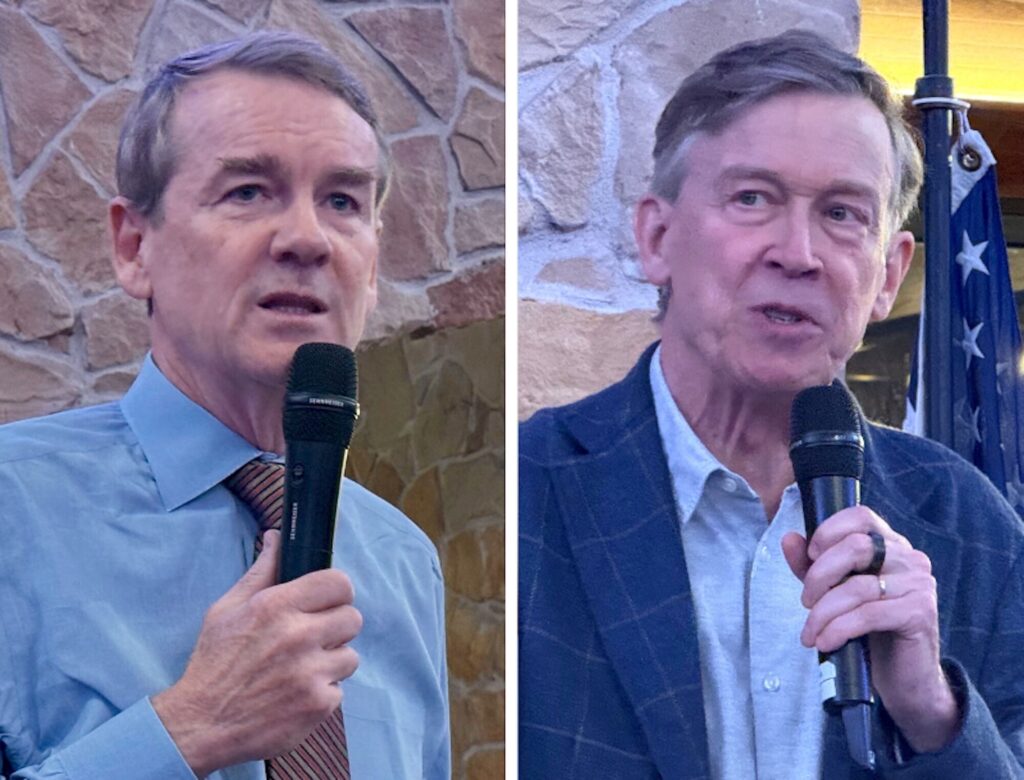
Bennet, Hickenlooper to vote against Trump’s 10th Circuit nominee from Colorado
Michael Karlik
michael.karlik@coloradopolitics.com
Updated 4 days ago
Colorado’s two Democratic senators will not vote to confirm President Donald Trump’s nominee to a vacancy on the Denver-based federal appeals court. Trump has selected U.S. District Court Chief Judge Daniel D. Domenico, who he appointed as a federal trial...
PREV
PREVIOUS

NONPROFIT REGISTER | Fundraiser celebrates ‘Unbreakable’ spirits that help teen moms achieve success
HOPE HOUSE COLORADO Denver News: There are 2,300 babies born to teen moms every year in Colorado, and while each set of circumstances is different there is no getting around the fact that support is critical to the well-being of both mother and child. And this is where Hope House Colorado comes in. The Arvada-based nonprofit, […]

City Council committee approves contract for citywide STAR expansion
Denver City Council’s Safety, Housing, Education & Homelessness Committee on Wednesday approved on consent a nearly $1.4 million contract with Mental Health Center of Denver to expand citywide its civilian-led responder program for low-level, nonviolent situations. The contract negotiated by the Denver Department of Public Health and Environment is worth $1,391,579 and runs through 2022. The Support […]