

Appeals court finds El Paso judge mistakenly instructed jury, orders lower sentence for sex assault

A man convicted of sexual assault and serving a prison sentence of six years to life will have his sentence reduced, after the Court of Appeals determined an El Paso County judge failed to give the jury complete instructions.
Manuel Jose Menendez received two convictions for sexual assault and unlawful sexual contact stemming from the December 2016 rape of an extremely intoxicated woman in the Colorado Springs area. An element of both offenses was that the victim was unable to understand what was happening, but the jury could enhance Menendez’s sentence to that of a higher-level offense if they also found he applied force while committing the act.
The Court of Appeals found sufficient evidence that the victim could not consent, and that Mendendez was aware she could not understand what she was doing. However, the three-judge panel on Thursday agreed with Menendez that then-District Court Judge Larry E. Schwartz did not properly tell the jury what to do when considering whether Menendez applied force.
Schwartz described every element of each offense to the jurors, while reminding them that prosecutors must prove all elements beyond a reasonable doubt. But Schwartz did not direct them to follow that standard for Menendez’s application of force, nor did the paperwork for the jury indicate that requirement.
The jury’s conclusion that Menendez had applied force meant he was sentenced under a higher range. He received a two indeterminate prison terms of six years to life, to be served concurrently. The appellate panel decided the sentences could not stand: first, because there was little reason to believe the jury determined Menendez used force beyond a reasonable doubt without an instruction to do so. Second, the evidence against him was not overwhelming, meaning a faulty instruction would have had a larger effect.
The Fourth Judicial District Attorney’s Office, which includes El Paso County, could not say on Friday what the new sentence would likely be.
The case is People v. Menendez.
Colorado Politics Must-Reads:

10th Circuit rebuffs government, rules against shift to mandatory immigration detention
Michael Karlik
michael.karlik@coloradopolitics.com
Updated 7 hours ago
The Denver-based federal appeals court ruled on Tuesday against the government’s broad assertion of authority to keep people in immigration custody without the opportunity to demonstrate their suitability for release on bond. Although the regional appeals courts have reached different...
Appeals court revives tenants’ lawsuit over landlords’ illegal fee demands
Michael Karlik
michael.karlik@coloradopolitics.com
Updated 4 hours ago
Colorado’s second-highest court revived a proposed class-action lawsuit against landlords and other entities last month, concluding that state law did not permit the practice of demanding that tenants pay attorney fees in certain eviction proceedings. In 2021, lawmakers enacted a...
Appeals court reverses Jeffco assault convictions due to omitted jury instruction
Michael Karlik
michael.karlik@coloradopolitics.com
Updated 4 hours ago
Colorado’s second-highest court agreed last month that a Jefferson County defendant’s assault convictions could not stand because his jury should have been allowed to consider whether he used force against a bar patron to defend his girlfriend from inappropriate touching....
Colorado Supreme Court tosses man’s lawsuit over daughter’s traffic death
Michael Karlik
michael.karlik@coloradopolitics.com
Updated 3 hours ago
The Colorado Supreme Court applied a confusing matrix of conditions and deadlines in state law to conclude on Monday that a man waited too long to sue after his daughter was rendered unconscious and later died from a vehicle accident....
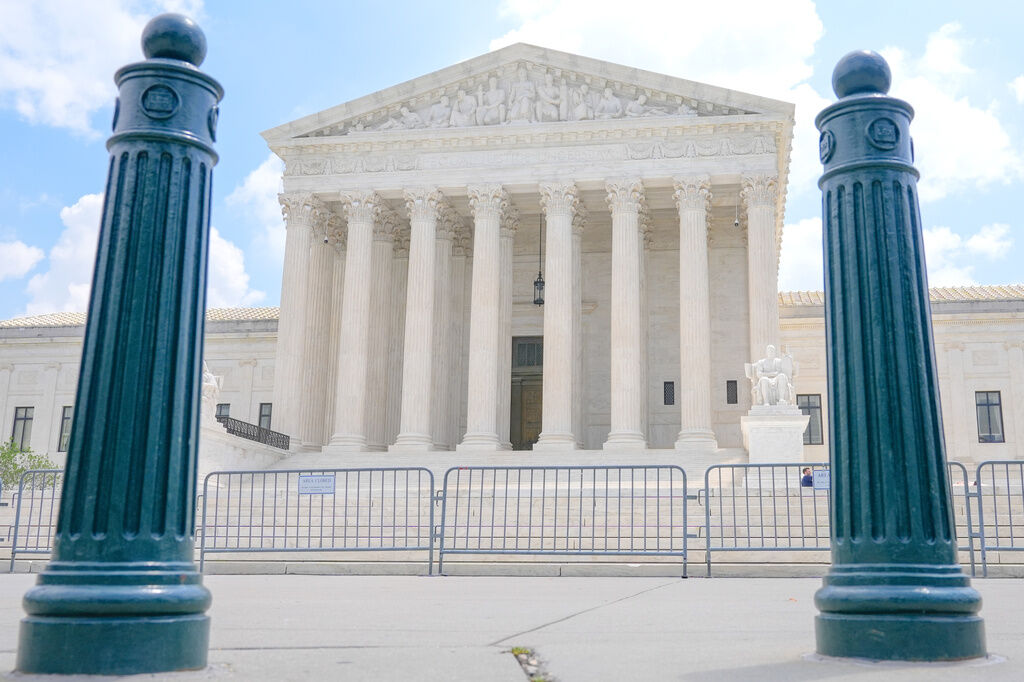
U.S. Supreme Court upholds state laws banning transgender girls and women from school athletic teams
Nico Brambila
nico.brambila@denvergazette.com
Updated 7 hours ago
WASHINGTON • The U.S. Supreme Court on Tuesday upheld state laws barring transgender girls and women from playing on school athletic teams. The court’s conservative majority ruled that state bans in Idaho and West Virginia don’t violate the U.S. Constitution...
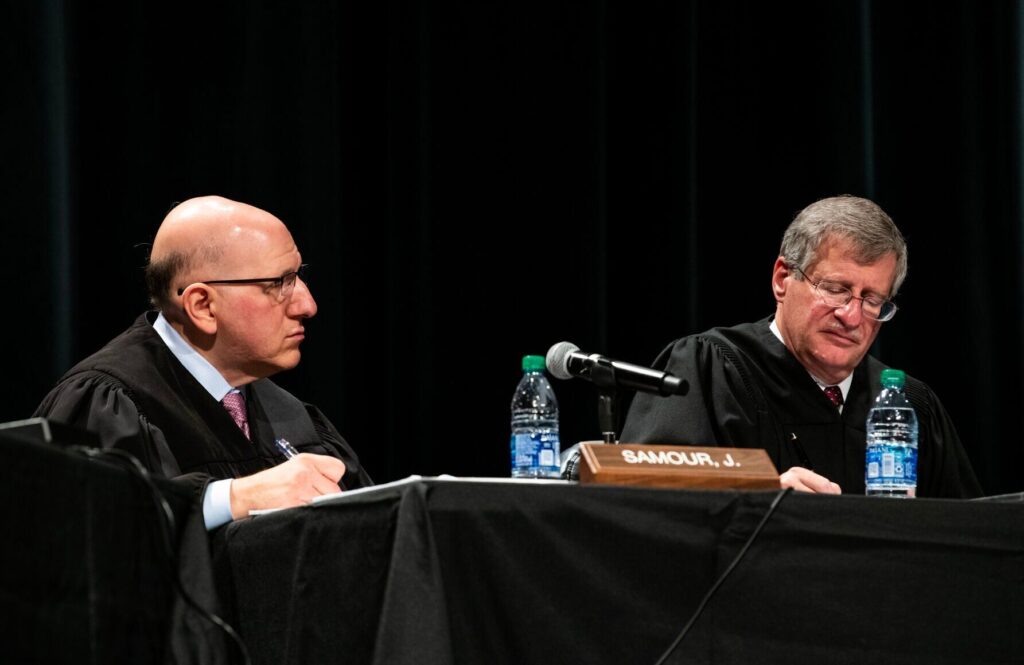
Colorado Supreme Court upholds child abuse convictions despite faulty jury instruction
Michael Karlik
michael.karlik@coloradopolitics.com
Updated 1 day ago
The Colorado Supreme Court decided on Monday that a San Miguel County jury properly convicted a defendant of child abuse resulting in death, even though the instructions potentially allowed jurors to avoid finding that the child abuse resulted in death....
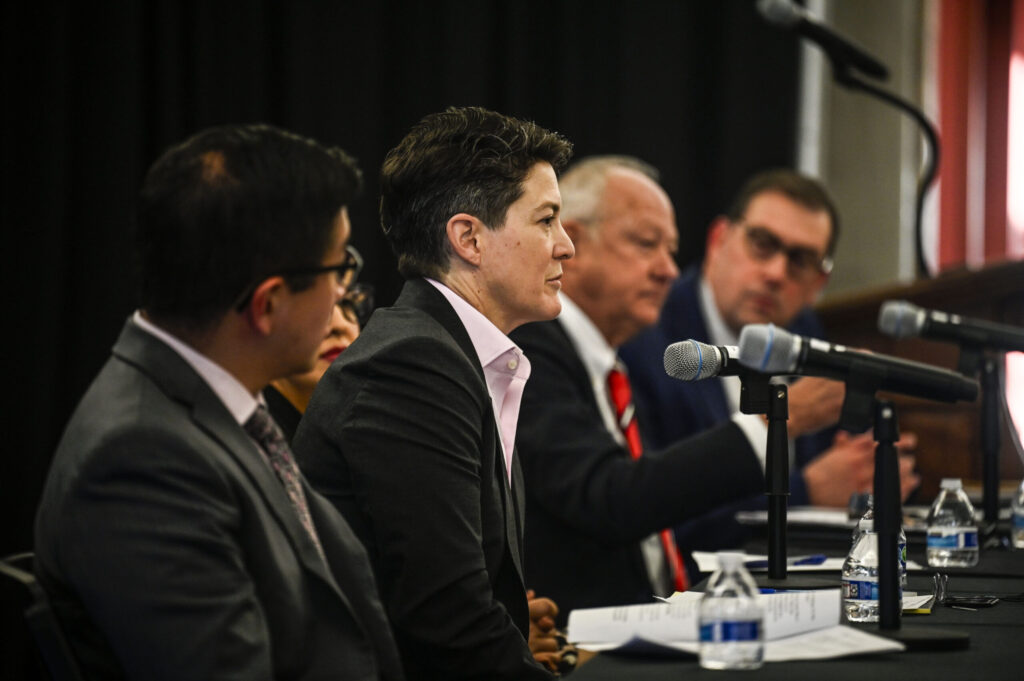
Colorado justices say group that spent $4M on ballot initiatives does not have to disclose donors
Michael Karlik
michael.karlik@coloradopolitics.com
Updated 2 days ago
The Colorado Supreme Court ruled on Monday that an organization that spent $4 million to advocate on ballot initiatives in the 2020 election is not required to disclose its donors and spending. The Supreme Court acknowledged that multiple factors suggested...
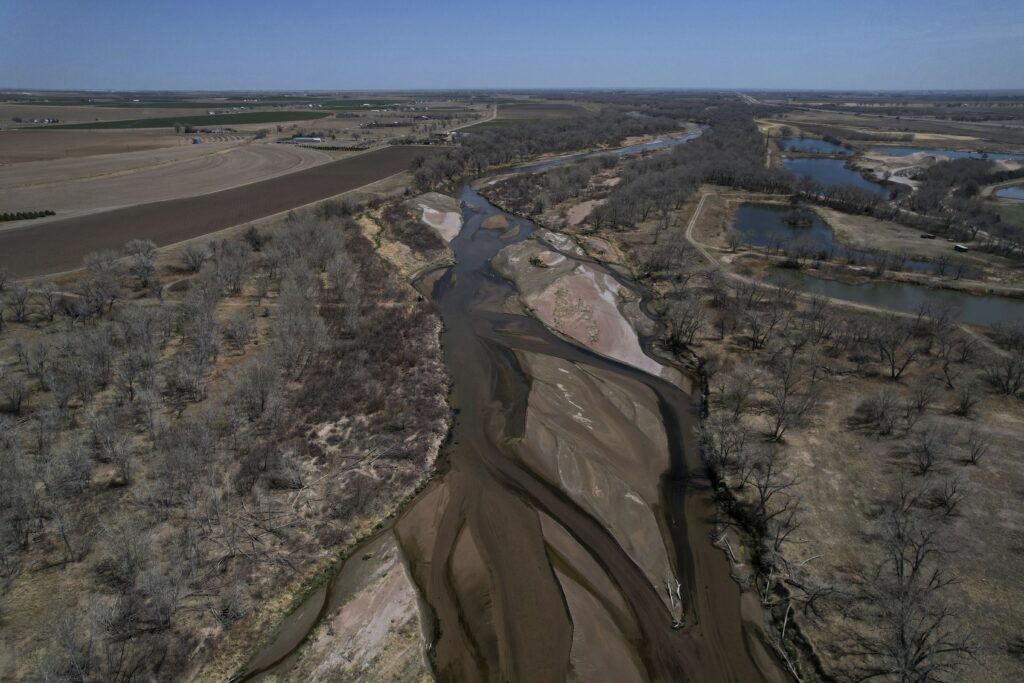
Colorado–Nebraska water clash heads to US Supreme Court as canal fight intensifies
Marianne Goodland
marianne.goodland@coloradopolitics.com
Updated 1 day ago
The U.S. Supreme Court on Monday agreed to hear Nebraska’s lawsuit against Colorado over the Perkins County canal, a move that advances a legal dispute likely to take years to resolve. The proposed Perkins County canal would run through land...
Colorado Supreme Court: Redistricting plans for 2028 election cannot proceed under state constitution
Michael Karlik
michael.karlik@coloradopolitics.com
Updated 1 day ago
The Colorado Supreme Court blocked all attempts at redrawing congressional district boundaries for the 2028 election from reaching the ballot on Monday, concluding each of the proposed ballot measures violated the constitutional single-subject requirement. The court considered five distinct but...

Bennet, Hickenlooper to vote against Trump’s 10th Circuit nominee from Colorado
Michael Karlik
michael.karlik@coloradopolitics.com
Updated 4 days ago
Colorado’s two Democratic senators will not vote to confirm President Donald Trump’s nominee to a vacancy on the Denver-based federal appeals court. Trump has selected U.S. District Court Chief Judge Daniel D. Domenico, who he appointed as a federal trial...
PREV
PREVIOUS

No error in judge denying medical expert to Colorado inmate, appeals court says
A judge denied a Colorado inmate’s request to appoint an expert to testify about prison officials’ delay in giving him medical care. He then lost his lawsuit for failing to prove his medical claims. Now, the federal appeals court based in Denver has found no fault with that decision, even as it acknowledged the seeming […]

COURT CRAWL | Federal judges failed to recuse, 10th Circuit splits over man's confinement
Welcome to Court Crawl, Colorado Politics’ roundup of news from the third branch of government. A report about federal judges who failed to recuse themselves from cases despite having financial conflicts of interest left two Colorado judges apologizing, plus a new judge has taken office in downtown Denver. “I should have known that” • The Wall […]