

State Senate Tuesday to take on fight over Colorado Option

On Tuesday, the state Senate will take on the last major fight — and opportunity to make big changes — in House Bill 1232, the Colorado Option bill.
The bill would require healthcare providers and insurance plans to reduce premiums by 18% over three years. The commissioner of insurance would set up a standardized health plan, known as the Colorado Option, that providers, including doctors and hospitals, would be mandated to accept and insurance plans mandated to carry. The plan would be offered in the individual market, for those who must buy their own health insurance, and in the small group market, for companies with fewer than 100 employees. That’s about 15% of the total insured market. Eventually, however, supporters have said they want to see the plan offered in the large group market, for companies with 100 or more employees.
Hospitals that refuse to accept the plan could be fined $10,000 per day for the first 30 days and $40,000 per day after that. However, the bill’s fiscal note said it anticipates a high level of compliance and doesn’t expect large revenues from the fines.
Doctors and other healthcare providers that refuse to accept the plan face a maximum annual fine of $5,000 plus a warning from the commissioner of insurance, although the bill said such warning would not constitute a disciplinary action against their license.
The intent is to reduce the cost of health insurance and to address issues of equity around health care for people of color and rural Coloradans, who pay some of the highest costs for health care.
HB 1232’s trip through the General Assembly has taken months, while backers, including the Polis administration, tried to come to agreement with opponents. The best they could do, however, was get the health plans to a position of amend, and the Colorado Hospital Association to a neutral position. Doctors, including the 7,000-member Colorado Medical Society, have been opposed from the beginning and never wavered.
That could all change on Tuesday.
Among the amendments that are expected to be offered on Tuesday, one would take doctors out of the bill. That would leave hospitals with the responsibility for reducing costs that could lead to lower premiums. That’s been a major concern both for hospitals and hospital workers, whose unions have testified against the bill, fearing that hospitals, in effort to cut costs, would lay off staff.
While that amendment could bring into a position of support the last remaining wavering Democrats in the Senate, it will result in the Colorado Association of Health Plans moving to a position of opposition.
At least three Senate Democrats are believed to be on the fence about the bill: Sens. Rhonda Fields of Aurora, Joann Ginal of Fort Collins and Rachel Zenzinger of Arvada. During a May 19 hearing in the Senate Health & Human Services Committee that she chairs, Fields had nothing good to say about the bill.
“I don’t like the tone and topic in the bill,” Fields said, particularly in the fines and punishments for doctors and hospitals. “You can’t rack up penalties and think it won’t catch up with you,” she said. Fields also noted that doctors and nurses have been the heroes of COVID-19, but in the bill, it mentions you can suspend, revoke or impose conditions on a hospital’s license.
“That’s punitive and sends the wrong message when we think about the emotional and social support our doctors and healthcare providers need right now…it is sending the wrong message at the wrong time,” she said.
Fields noted she has four major hospitals in her district that provide complex care, which also isn’t addressed in the bill. This would leave them navigating in the dark.
Quality care and outcomes are also important, Fields said, that patients have good health experience with doctors and hospitals.
“I’m concerned not just with expense, but with quality healthcare outcomes,” she said. “The bill is silent on prevention in health equity, and that’s how you eliminate health disparities. It changes the course of how doctors will do business.”
Ginal, the vice-chair of the committee, also expressed reservations during that May 19 hearing, including some of the strongest objections to the bill, based largely on the bill’s mandates on physicians. The 2020 version didn’t include physicians, so “why now?” she asked. Mandatory participation and fines show an inherent weakness, according to letters Ginal said she received from doctors. The state does not have the right to force doctors to participate, and should HB 1232 pass it will end up in the courts, they told her.
HB 1232 is scheduled for second reading debate in the Senate Tuesday.


Healthcare freefall: UNC’s new medical school aims to tackle Colorado’s rural doctor shortage
Hap Fry, Special to The Gazette
hap-fry@gazette.com
Updated 2 days ago
Editor’s Note: Colorado’s healthcare system is entering a period of accelerating instability — a “tsunami,” as multiple leaders describe it — driven by collapsing hospital finances, shrinking Medicaid reimbursements, disappearing services and a political fight over who is responsible for...

Healthcare freefall: Economic ripple effects grow as Colorado hospitals face financial strain
Thelma Grimes
thelma.grimes@coloradopolitics.com
Updated 2 days ago
Colorado’s hospital systems aren’t just a network of clinics and emergency rooms — they are also one of the state’s largest economic engines. So some 10 hospitals identified at any given time as vulnerable to closure, the alarm extends far...
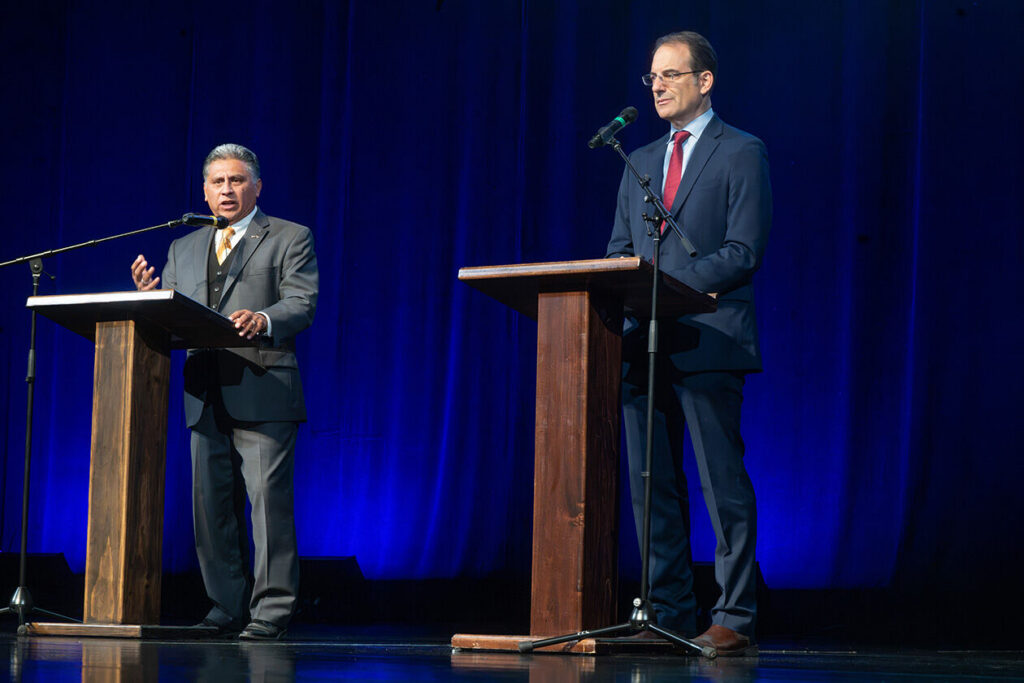
Gubernatorial candidates Phil Weiser, Greg Lopez spar, as Marx skips debate
Deborah Grigsby
deborah.smith@denvergazette.com
Updated 11 hours ago
Two of the candidates for Colorado governor squared off in a televised debate on Thursday night, when Attorney General Phil Weiser, the Democratic nominee, and former U.S. Rep. Greg Lopez, an unaffiliated candidate, delved into issues of affordability, data center...
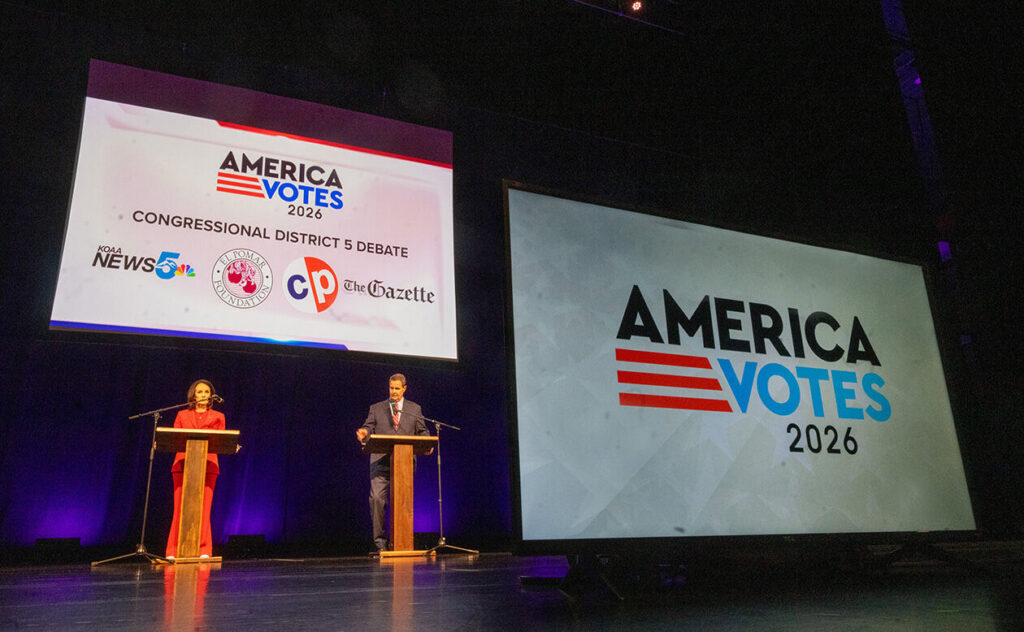
Troops, taxes, war dominate Colorado’s 5th CD debate between Jeff Crank, Jessica Killin
Deborah Grigsby
deborah.smith@denvergazette.com
Updated 12 hours ago
Republican U.S. Rep. Jeff Crank and Democratic challenger Jessica Killin on Thursday night clashed over the war in Iran, the federal budget and healthcare when they took the stage in Colorado Springs for a sold-out debate in the race to...

WATCH: Colorado gubernatorial candidates Phil Weiser, Greg Lopez face off Thursday in televised debate
Ernest Luning
ernest.luning@coloradopolitics.com
Updated 13 hours ago
Two of the candidates for governor of Colorado are set to square off in a televised debate for the first time Thursday night, when Attorney General Phil Weiser, the Democratic nominee, and former U.S. Rep. Greg Lopez, an unaffiliated candidate,...
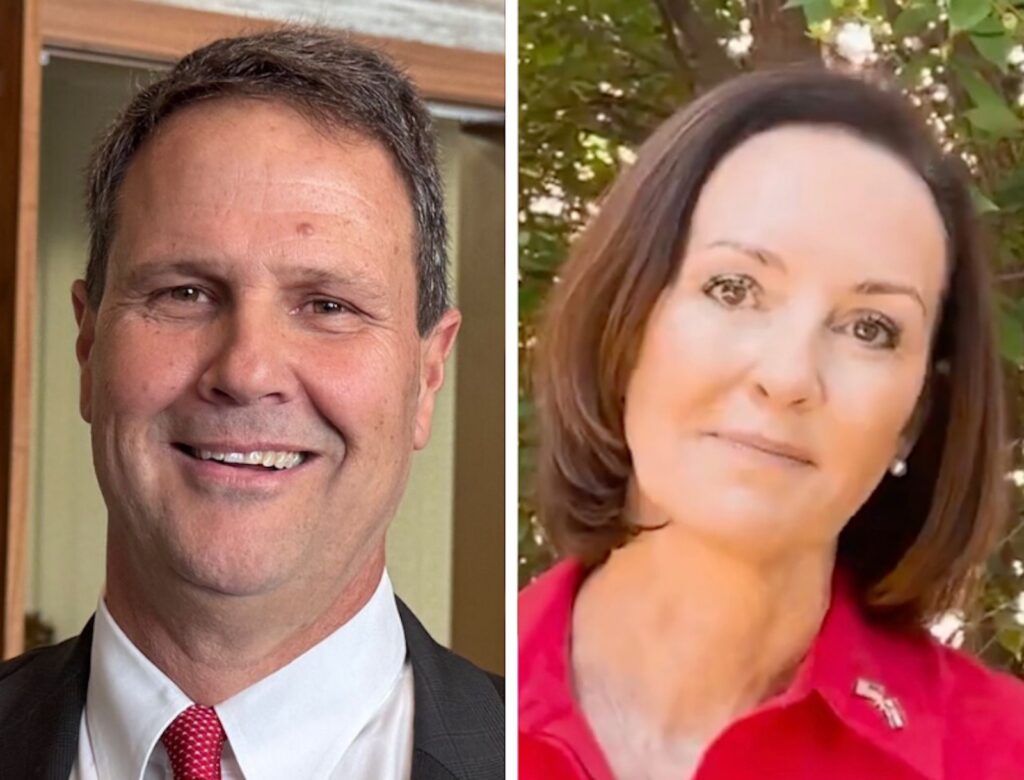
WATCH: Republican US Rep. Jeff Crank, Democratic challenger Jessica Killin debate in Colorado’s 5th CD
Ernest Luning
ernest.luning@coloradopolitics.com
Updated 14 hours ago
Republican U.S. Rep. Jeff Crank and Jessica Killin, his Democratic challenger, are scheduled to meet for a televised debate in the race to represent Colorado’s 5th Congressional District on Thursday night. The candidates are set to take the stage at...

Colorado officials warn of e-bike safety amid increase in serious youth injuries
Matt Kyle
matt.kyle@denvergazette.com
Updated 10 hours ago
Serious injuries involving e-bikes, e-scooters and children have risen significantly in Colorado over the past year and a half. Traumatic injuries involving e-bikes have risen 184%, according to Alicia Melven, Colorado injury prevention and outreach specialist for Children’s Hospital Colorado’s...

Colorado State Fair youth golf tournament celebrates 11 years
Marianne Goodland
marianne.goodland@coloradopolitics.com
Updated 17 hours ago
Twenty-eight teams tee off Friday at Walking Stick Golf Course in Pueblo for a tournament supporting 4-H, Future Farmers of America and capital improvements at the Colorado State Fair. Now in its 11th year, the Partners of Youth in Ag...

Controversial two-bag furbearer limit heads to CPW meeting under legal threat
Marianne Goodland
marianne.goodland@coloradopolitics.com
Updated 17 hours ago
Next week’s Colorado Parks and Wildlife Commission meeting in La Junta is likely to open under the cloud of threatened legal action. Safari Club International and the Sportsmen’s Alliance Foundation warned the commission this month that its July vote imposing...
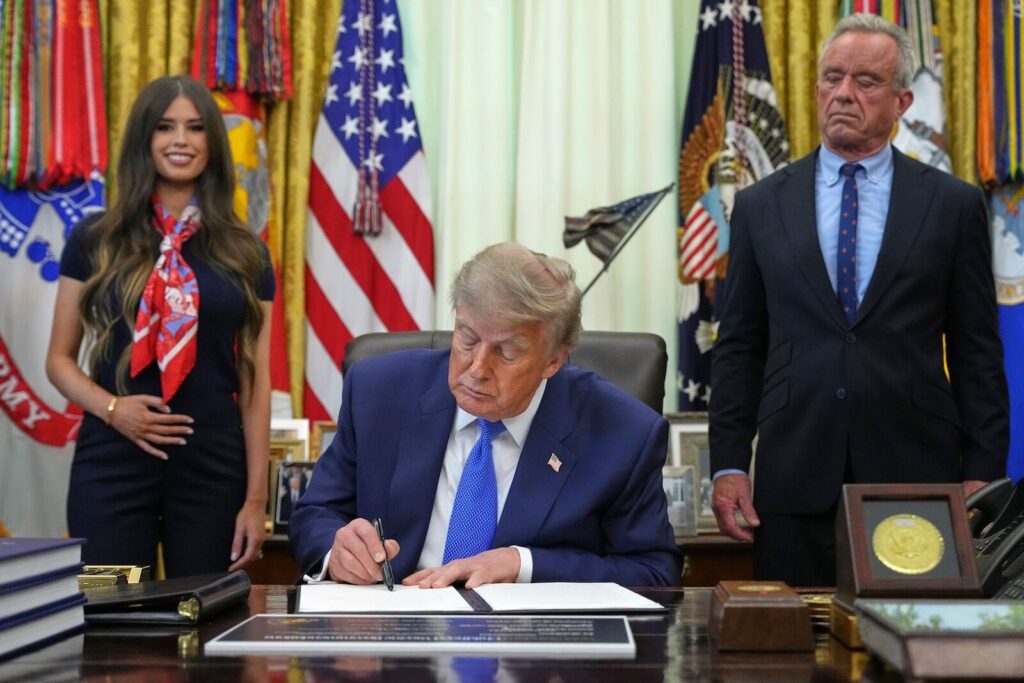
Democratic-aligned poll shows big majority of swing-seat voters support routine childhood vaccines
Ernest Luning
ernest.luning@coloradopolitics.com
Updated 19 hours ago
A new poll conducted by Democratic-aligned groups found that voters in competitive U.S. House districts — including a battleground seat in Colorado — support routine childhood vaccinations by a wide margin and oppose a recent order by President Donald Trump...
PREV
PREVIOUS
House panel advances bill allowing local governments to pass stricter gun laws
A House panel on Monday advanced a bill seeking to lift the state’s ban on local governments passing stricter gun laws than those that exist in state law over objections from Republican lawmakers. What’s more, the House State, Civic, Military and Veterans Affairs Committee approved Senate Bill 256 without amendments, setting the stage for it […]

House Finance greenlights major transportation funding legislation
The House Finance Committee Monday made major changes to Senate Bill 21-260, the bill that would push billions of dollars toward transportation projects. The bill is backed by a bipartisan coalition of elected officials, including the governor and Colorado Springs Mayor John Suthers. House Speaker Alec Garnett of Denver told the finance committee that the […]