

Leading Colorado toward modern mental health solutions | GUEST COLUMN
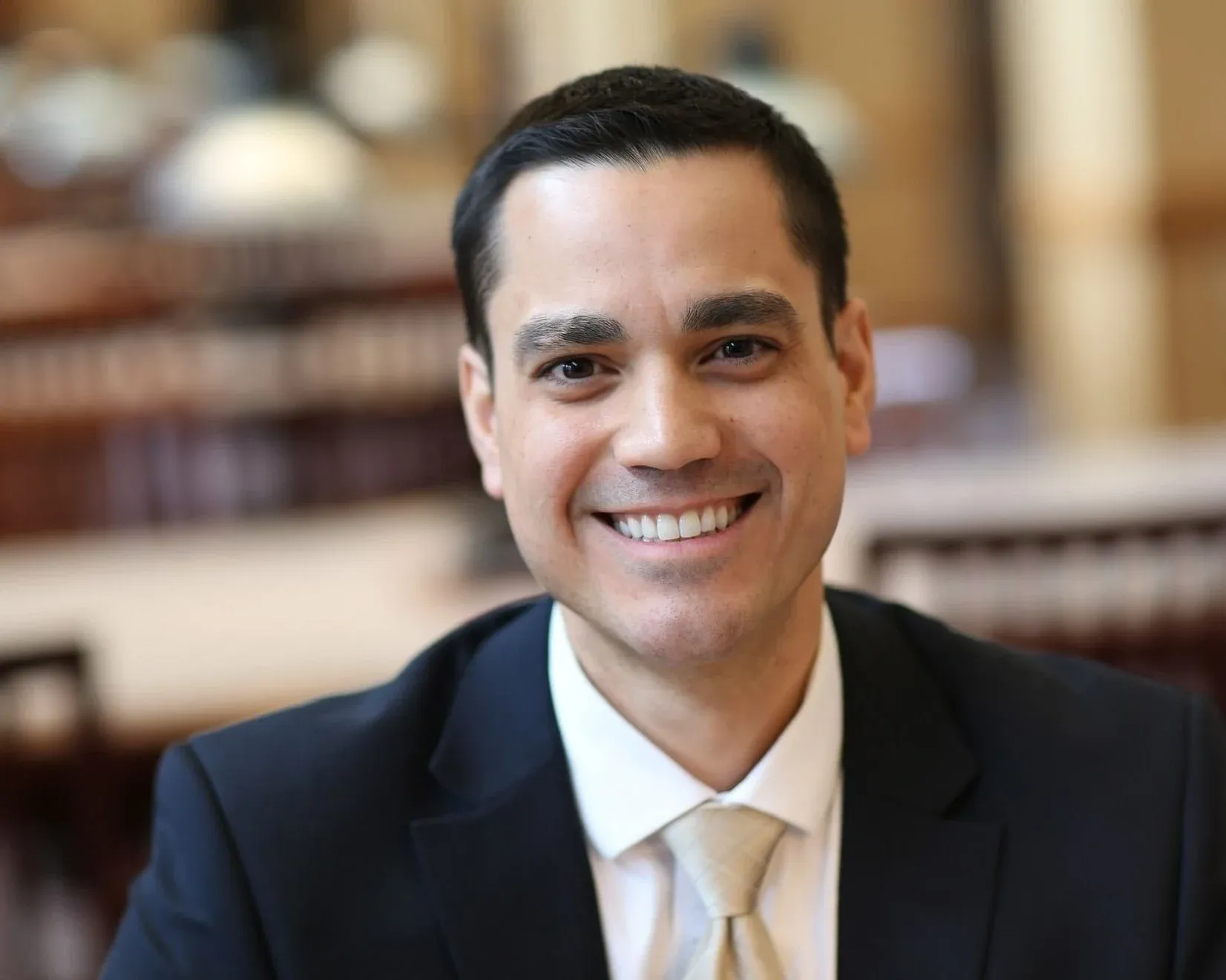
By Sean Camacho
America is facing a silent crisis. Millions of Americans are living with invisible illnesses like generalized anxiety disorder (GAD), major depressive disorder (MDD), and post-traumatic stress disorder (PTSD), which decrease quality of life and, amid limited treatment options, create a vicious cycle of endless medications and, for many people, hopeless therapies. This lack of innovation and the unwillingness to address this issue head-on, both societally and legislatively, has left nearly one in five adults in the United States suffering.
Colorado has long been seen as a leader in public health; however, when it comes to the mental health crisis, we’re falling behind. In 2024, Colorado had the second-highest prevalence of mental illness in the nation and a suicide rate 63% higher than the national average. We need to make a change and reassert ourselves as a leader in innovation and reform, and right now that leadership must be applied to mental health. But rather than wringing my hands, I took action and provided real leadership. We are starting this turnaround by championing innovative policies that improve mental health care. That’s why SB26-031 (“Use of Prescription Product with Controlled Substance” is a bill that modernizes Colorado law by ensuring automatic alignment at the state level once novel treatments are approved by the Food & Drug Administration (FDA) and rescheduled by the Drug Enforcement Administration (DEA).
At its core, this bill is straightforward. It ensures consistency with federal approval and scheduling and gives practitioners and patients dependable access to new treatments — no bureaucratic delays. Because, frankly, those who need help cannot afford to wait.
More broadly, this legislation positions Colorado as a leader in modernized mental health solutions, preserves patient access, and accelerates the pace of innovation — something the mental health space desperately needs.
The last time there was a new FDA-approved drug to treat GAD was in 2007, it has been even longer for PTSD. For patients who receive treatment for a major depressive episode, only one-third will achieve remission with current therapy options. We need breakthrough treatments.
Encouragingly, several psychedelic therapies for serious mental diagnoses have received the FDA’s Breakthrough Therapy Designation, reflecting both the urgent unmet need and promising emerging data. A new treatment class is emerging with the use of these compounds, with research illustrating enhanced areas of connection within the brain that have the potential to treat depression, anxiety and PTSD. Importantly, these emerging treatment options are not a daily prescription medication.
When there are evidence-based reasons to change the way we’re doing things, we should embrace that. We should support the evolution of mental health care; and to me as a legislator, that means passing policies that ensure timely access to safe and effective innovations. Colorado should not stand in the way of veterans or other patients seeking treatments backed by medical evidence.
As a veteran myself, I support all innovative therapies that help those who serve. Tragically, 17 veterans die by suicide every day. This is particularly personal to me: an airman who served in my unit committed suicide. These tragedies affect individuals and families across the state. If I can support legislation that helps treat PTSD and other mental health illnesses where current medications are failing, that is a responsibility I take seriously.
Beyond the personal toll, mental illness carries a steep economic cost — $282 billion per year in the United States. A modernized framework that addresses our outdated system would allow the health care system to invest more in prevention and early intervention, tackling the issue at its roots.
As a legislator, I am responsible for ensuring these difficult conversations take place. The hardest part about mental illness for many is talking about it, and collectively, we need to shed the stigma. Colorado needs to be at the forefront of modernized mental health treatments and the personal toll, mental illness carries a steep economic cost — we owe it to the thousands of Coloradans and millions of Americans who are silently fighting this battle every single day.
Senate Bill 31 will be a catalyst for change in our state. It doesn’t create or approve new treatments; it removes barriers and empowers innovation. It creates government efficiency in support of systems readiness and positions our state to keep pace with evidence-based advancements.
The mental health crisis won’t improve if we rely on the status quo. My work is about ensuring we’re ready for innovative solutions the moment they become available. Colorado is at our best when we lead, and on this, we are leading the way.
Sean Camacho represents District 6 in the Colorado House of Representatives in Denver.


Colorado, like America, past due for generational change in politics | Miller Hudson
Miller Hudson
miller-hudson@coloradopolitics.com
Updated 13 hours ago
I was 27 before I ever voted for president. At 19, in 1964, the Constitution had not yet been amended establishing 18-year-old voting eligibility. In 1968, I was serving overseas with the U.S. Navy at a time when there was...

Farmers and ranchers win on NIETC cancellation | Rachel Gabel
Rachel Gabel
rachel-gabel@coloradopolitics.com
Updated 13 hours ago
The Department of Energy rolled into Lamar last week and Office of Electricity Assistant Secretary Katie Jereza stood in her neat, green suit in front of a room filled with farmers, ranchers and landowners. The crowd was filled with straw...

Going after the wrong butts | Jon Caldara
Jon Caldara
jon-caldara@coloradopolitics.com
Updated 3 days ago
Mayor Mike Johnston proclaimed, “It is past time Big Tobacco cleaned up the big mess it’s created.” Yep. Denver is suing tobacco companies for the cigarette butts littering the city. Because Denver’s Big Mess couldn’t possibly be the fault of...

Jeff Crank, Jessica Killin set to face off in 2 debates in Colorado’s 5th Congressional District
Ernest Luning
ernest.luning@coloradopolitics.com
Updated 2 days ago
Republican U.S. Rep. Jeff Crank and Jessica Killin, his Democratic challenger, have agreed to debate twice in the weeks leading up to the general election in Colorado’s 5th Congressional District, their campaigns have said. Crank is seeking a second term...

CSI study reviews impacts of Colorado’s mandatory sex‑trafficking sentencing measure
Marissa Ventrelli
marissa.ventrelli@coloradopolitics.com
Updated 15 hours ago
A new report by the think-tank Common Sense Institute examines what could happen if Colorado voters approve Initiative No. 108, which establishes mandatory life sentences for offenders convicted of sexual trafficking of a minor. The measure is backed by Protect...
Three districts that will answer key Colorado political questions | Paula Noonan
Paula Noonan
paula-noonan@coloradopolitics.com
Updated 4 days ago
Colorado’s legislature used to be a place where neither party was dominant. Dozens of seats were competitive and House and Senate majorities switched regularly. From 2010 to 2020, the House was predominantly Democratic with one two-year assembly under Republicans. The...

‘Ticked off’: Third-party U.S. Senate candidate in Colorado launches $1.3 million TV ad campaign
Ernest Luning
ernest.luning@coloradopolitics.com
Updated 3 days ago
Bob Chew, the Forward Party nominee for U.S. Senate in Colorado, sends household objects flying in a TV ad set to run statewide through September, backed by $1.3 million in ad reservations across multiple platforms, his campaign told Colorado Politics....

Colorado shifts vaccine authority to state as Trump administration revises childhood framework
Marissa Ventrelli
marissa.ventrelli@coloradopolitics.com
Updated 4 days ago
As the Trump administration rolls out a revised childhood vaccine framework, Colorado’s law allowing the state to set its own immunization schedule has now taken effect. Issued Monday, President Donald Trump’s executive order separates childhood and adolescent vaccines into three...

Colorado NRA chapter seeks injunction against new gun‑training requirement
Marissa Ventrelli
marissa.ventrelli@coloradopolitics.com
Updated 4 days ago
The Colorado chapter of the National Rifle Association is seeking an injunction to stop the state from enforcing a new law that took effect earlier this month. The new law requires anyone buying or selling certain firearms to first complete...

Hunting is a privilege, not a constitutional right | PODIUM
Colorado Politics
colorado-politics@coloradopolitics.com
Updated 4 days ago
By Roland Halpern Colorado voters may soon be asked to place hunting and fishing in the state constitution. Proposition 302 would establish the right to hunt, fish and take wildlife using “traditional methods,” while declaring hunting and fishing are the...
PREV
PREVIOUS

Colorado’s workers can’t afford a decline in tourism | GUEST COLUMN
By Terrance Carroll Work is about more than a paycheck. It is about dignity, stability and the ability to build a life, to provide for family, to contribute to community, and to move forward with purpose. That is why we should take a closer look at how federal policy decisions, even those made with good […]

Phil Weiser defeats Michael Bennet in Colorado’s Democratic gubernatorial primary
Attorney General Phil Weiser took an early lead over three-term U.S. Sen. Michael Bennet in Colorado’s Democratic gubernatorial primary and held onto it, defeating the state’s longest-serving senator in more than 50 years to win a nomination that’s likely to land him in the governor’s office. Weiser led Bennet 55% to 45% just before 8 […]