

10th Circuit revives copyright claim on skeleton model from Colorado artist

The U.S. Court of Appeals for the 10th Circuit on Tuesday ordered further proceedings to determine whether a skeletal sculpture used in human anatomy instruction deserves copyright protection.
Balanced Body University, which is a training program for Pilates instructors from the company Fusion Pilates, bought multiple sculptures of “the Maniken.” The object resembles a model human skeleton, but is much larger and allows students to add clay to show human tissue.
Jon Zahourek, an artist and former anatomy instructor in Denver, created the first Maniken model in 1977. In 1992, he established an office and facility to manufacture the Maniken in Colorado. His company, Zahourek Systems, Inc., is registered with the secretary of state’s office.
When the university used its Manikens to advertise and instruct its students on human anatomy, Zahourek sued for copyright infringement.
A federal district court deemed that the Maniken was a “useful article,” meaning it had “an intrinsic utilitarian function that is merely to portray the appearance of a life-like form.” The U.S. Copyright Office notes that the law does not protect the “mechanical or utilitarian aspects” of such creations.
The university argued that the Maniken taught anatomy through an understanding of muscle movement, and its deployment as an educational tool meant it is a useful article.
However, the appellate panel noted that textbooks are also educational tools, but are subject to copyright because of the information they impart.
“The Maniken might be useful for teaching anatomy, but a fact finder could reasonably attribute this usefulness to the information that the Maniken conveys about human anatomy,” wrote Judge Robert E. Bacharach. “If the Maniken’s usefulness lies solely in the information it conveys, the Maniken would not be a useful article.”
According to the copyright office, a useful article may still contain copyrightable features – ones that are pictorial, graphic or sculptural in nature. The circuit panel agreed that the district court was wrong to dismiss the lawsuit without determining in depth whether the Maniken had such elements.
The Maniken’s reason for being useful to students, the court observed, could have been entirely due to the information it conveyed through its sculpted human shape. It was “not just any three-dimensional structure, and a fact finder could reasonably find that the spaces to add clay provided utility only because of the Maniken’s resemblance,” wrote Bacharach.
The case is Zahourek Systems Inc. v. Balanced Body University.


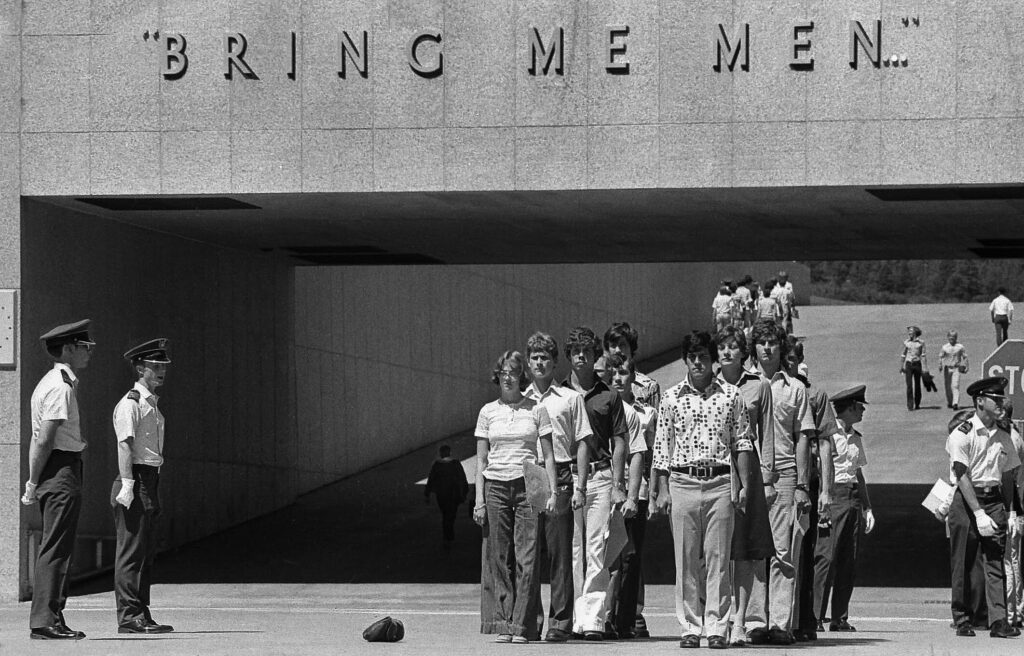
Fifty years later, women reflect on first coed class at the Air Force Academy, struggle for equality
Mary Shinn
mary-shinn@coloradopolitics.com
Updated 2 days ago
When the first female Air Force Academy cadets arrived 50 years ago this summer, they stood in front of an enormous sign on campus that read “Bring me men.” In the shadow of that sign, Kathleen Utley Kornahrens, one of...

As Lake Powell shrinks, marinas are having to adapt to dwindling water levels | OUT WEST ROUNDUP
The Associated Press
the-associated-press@coloradopolitics.com
Updated 5 days ago
ARIZONA Reservoirs near record lows PAGE — The Colorado River’s Lake Powell, the second largest reservoir in the U.S., is shrinking. A record-dry winter and extreme heat — as well as decades of overuse, chronic drought and climate change —...

A new day? Colorado’s troubled guardianship office pursues ‘cultural reset’
Marianne Goodland
marianne.goodland@coloradopolitics.com
Updated 4 days ago
Colorado’s guardianship program, long criticized for mismanagement and high staff attrition, is undergoing a “cultural reset,” as its new director works to repair partnerships and prepare for a major expansion under recent legislation. Created by lawmakers in 2017, the Office...

U.S. Senate OKs funding bill to avoid government shutdown
Wire Services
wire-services@coloradopolitics.com
Updated 2 days ago
Hemp provision became point of contention WASHINGTON • The U.S. Senate in an overnight vote Saturday approved a short-term measure to fund federal agencies into early December and avoid a government shutdown during the middle of campaign season. The late-summer...

The relevance of Watergate more than a half-century later | SONDERMANN
By Eric Sondermann
by-eric-sondermann@coloradopolitics.com
Updated 4 days ago
It was the scandal for which all other scandals are now named. In June 1972, a small group of Cuban burglars with high-level connections broke into the headquarters of the Democratic National Committee. Those headquarters were located in the Watergate...

Wirth downplays Social Security disaster talk | A LOOK BACK
Rachael Wright, Special to Colorado Politics
rachael.wright@coloradopolitics.com
Updated 4 days ago
Forty-five years ago this week: “As time goes on,” said Democratic U.S. Rep. Tim Wirth, of the 2nd Congressional District, “we are finding that the safety net, which was proposed earlier this year, has some very large holes in it,”...

Colorado Politics Calendar Aug. 10-16
Rachael Wright, Special to Colorado Politics
rachael.wright@coloradopolitics.com
Updated 4 days ago
CoPo’s weekly political calendar will help you find political and public-policy events throughout Colorado. It includes candidate and issue campaign events, public policy meetings, court hearings, state and local party conventions, assemblies, debates, rallies, parades, speaking engagements, traveling dignitary appearances,...

Democratic group aims Spanish-language TV ad at Gabe Evans in Colorado’s battleground 8th CD
Ernest Luning
ernest.luning@coloradopolitics.com
Updated 2 days ago
A national group tied to House Democratic leadership launched a six-figure Spanish-language TV ad in Colorado this week targeting Republican U.S. Rep. Gabe Evans and the GOP’s signature budget legislation. The 30-second spot is part of $15 million in new...
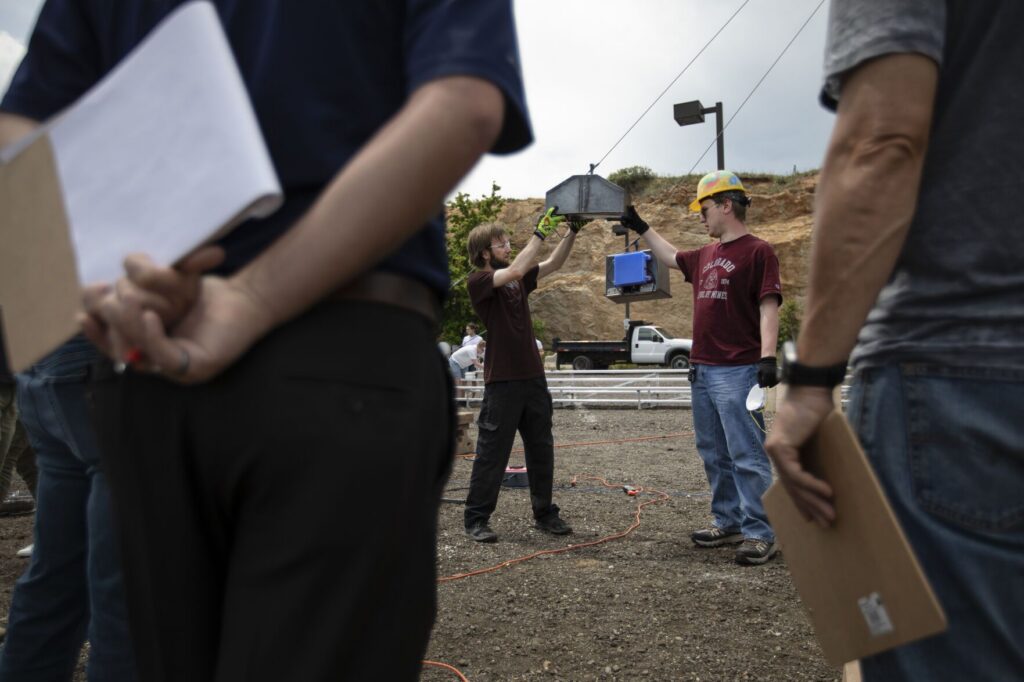
Colorado School of Mines lands major share in Trump’s $100M mining-education plan
Thelma Grimes
thelma.grimes@coloradopolitics.com
Updated 2 days ago
President Donald Trump on Friday named the Colorado School of Mines among roughly a dozen institutions that will share in a $100 million commitment “to train the next generation of American miners.” Paul Johnson, the university’s president, said he is...

Local party leaders, incoming judge among members of judicial performance commission that violated law
Michael Karlik
michael.karlik@coloradopolitics.com
Updated 2 days ago
A local Democratic leader and 2024 presidential elector. A legislative aide and leader in the Young Republicans. An incoming county court judge freshly appointed by the governor. They are among the eight members of the northeastern Colorado judicial performance commission...
PREV
PREVIOUS

State ethics commission: Ballot measure 305 isn't going to make it to the ballot
A ballot measure attempting to lengthen the statute of limitations for complaints with the Colorado Independent Ethics commission is unlikely to obtain enough signatures by the August 3 deadline, according to a staff report in Tuesday’s ethics commission meeting. Documents from the Federal Communications Commission reveal the ballot measure is a pretext for something else: […]
Neguse, DeGette tuck wilderness amendments into defense bill
Two Democratic members of Congress from Colorado were able to get their long-sought wilderness wishes into the $740 billion defense spending bill that passed the House Tuesday. U.S. Rep. Diana DeGette’s bill to protect nearly 1.4 million acres of wilderness in Colorado, California and Washington passed the House Tuesday afternoon as part of a National […]